
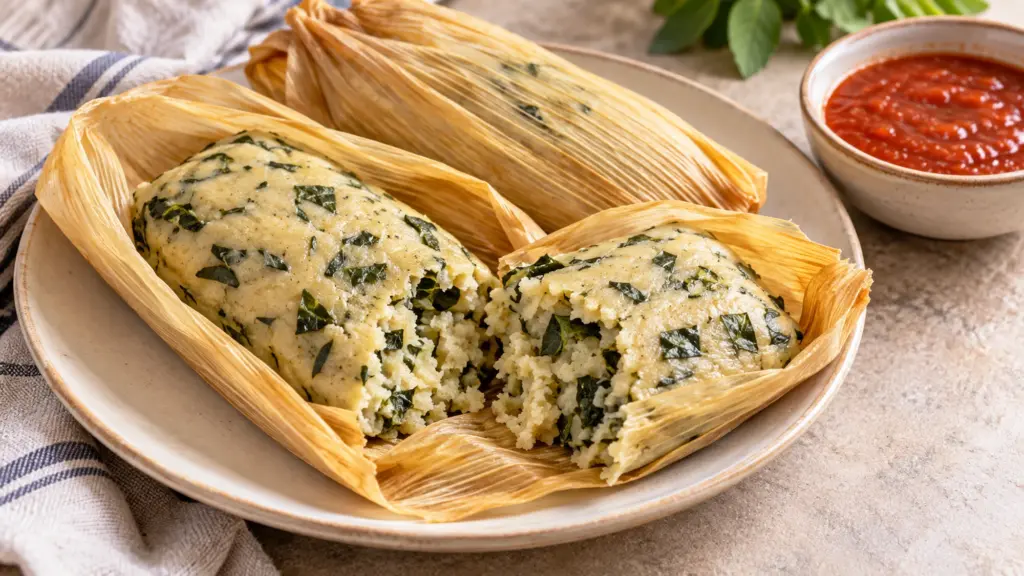
Opening a corn husk releases a little cloud of steam and the warm smell of masa. Chipilín tamales put the green leaves right into that dough, so the herbal flavor runs through every bite instead of hiding in a filling. This version makes sixteen small tamales with masa harina, lard and fresh food-grade chipilín.
Give the masa enough water to spread softly, then steam until a rested test tamal releases cleanly from its husk. A short rest after cooking matters as much as the time over the steam.
Chipilín is not a generic name for any leafy green. Buy correctly identified culinary leaves from a trusted food seller; do not forage a look-alike plant. The Guatemalan agricultural institute’s native-vegetable guide describes chipilín tamales among its traditional uses. Corn-husk wrappers keep this interpretation approachable without claiming that every region makes them the same way.
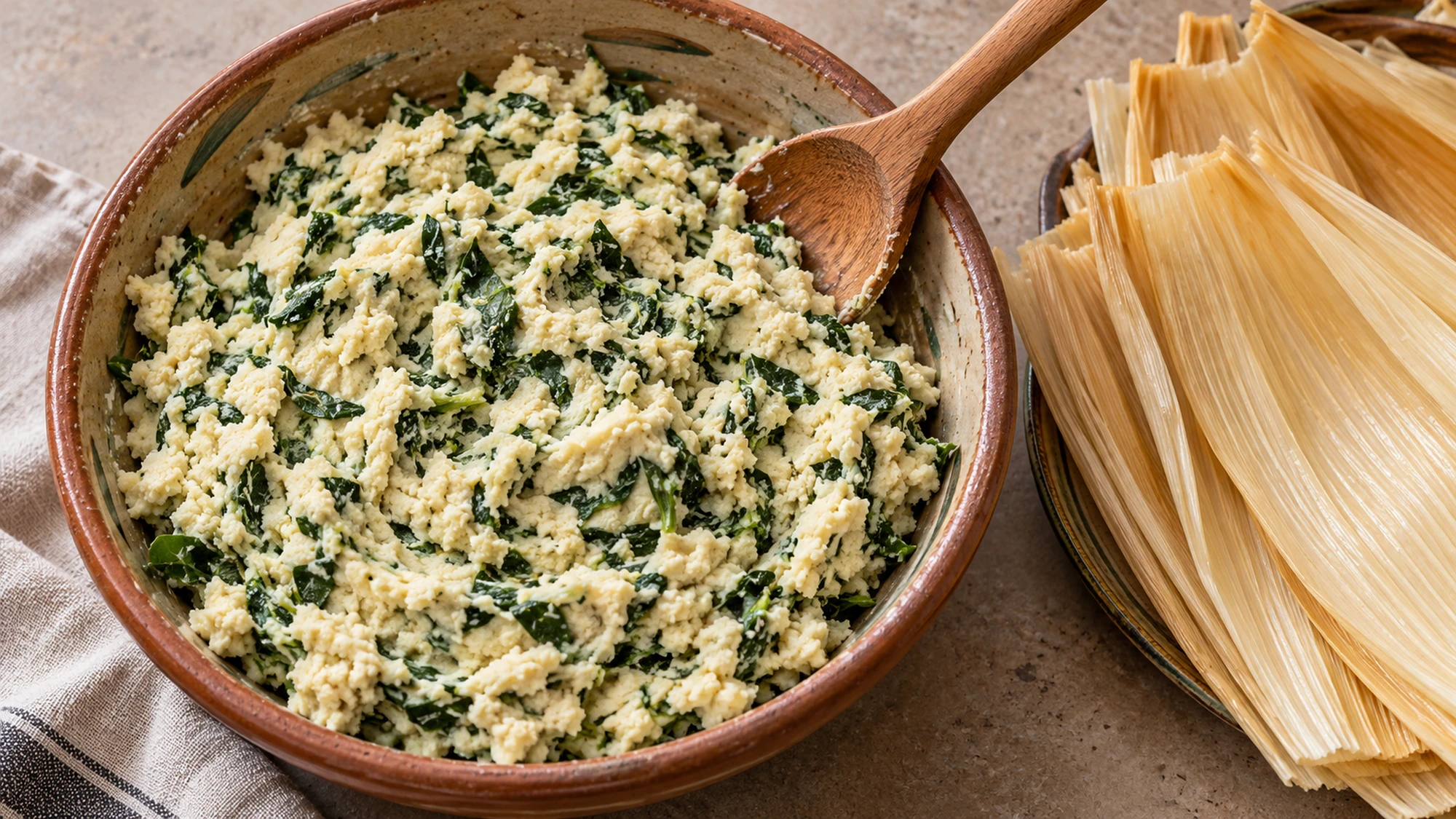
Serving Chipilín Tamales While the Masa Is Tender
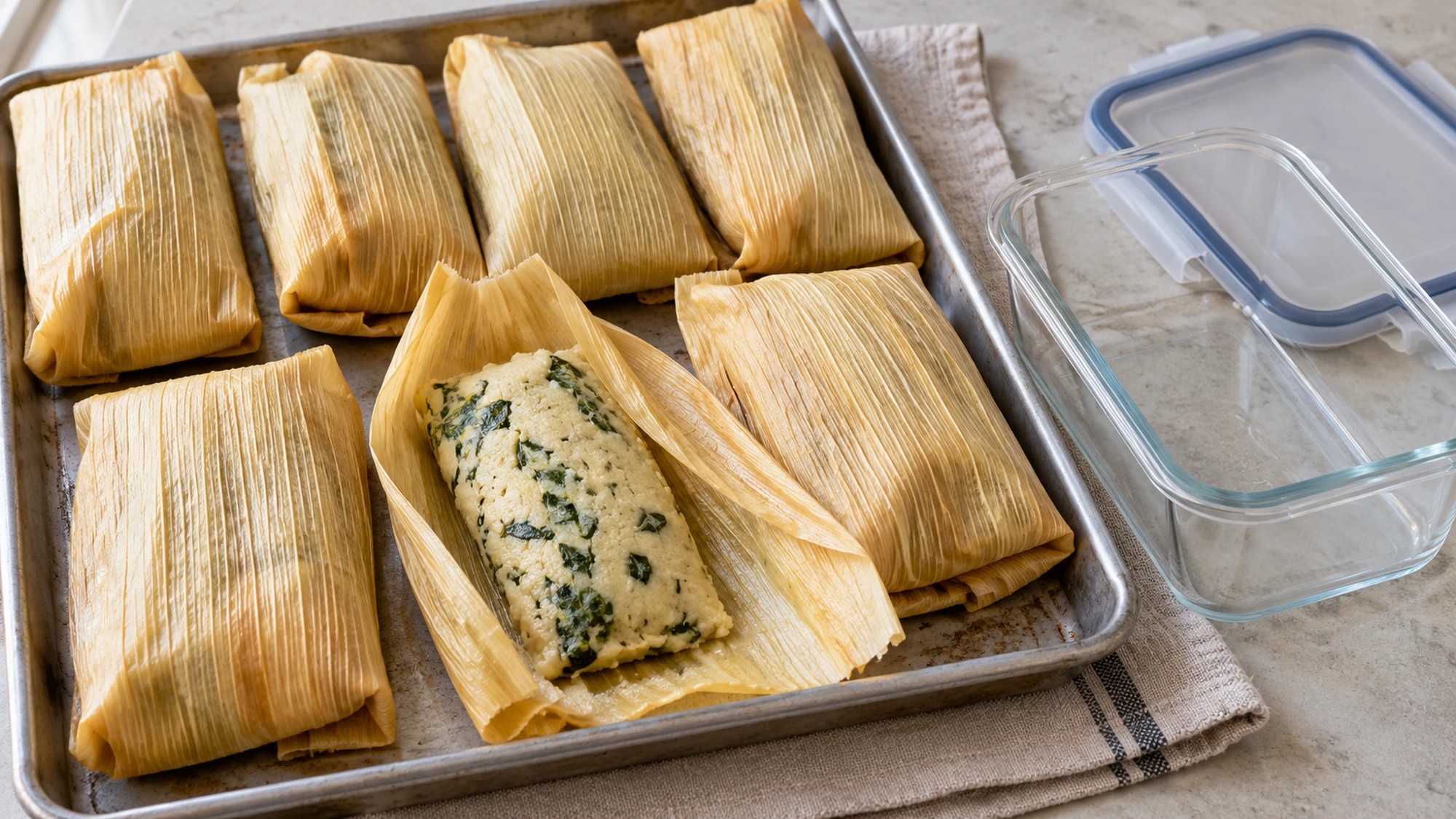
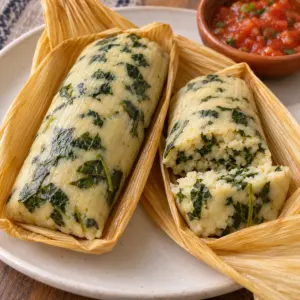
Set the tamales on a platter in their wrappers and let everyone open one at the table. The husk is packaging, not something to eat. A spoonful of tomato salsa gives the mild corn a bright contrast; put stronger chile sauces on the side so the leaves still have a chance to be noticed.
For a simple meal, add black beans and a crunchy cabbage salad. For a smaller breakfast, one or two tamales can sit beside a warm mug of atole de pinole. I’d avoid covering the whole plate in cheese and cream before tasting the masa itself.
- Use a shallow serving basket or platter so the tamales are easy to lift without squeezing them.
- Offer salsa in a separate bowl; a light spoonful moistens the cut surface without soaking the wrapper.
- For guests, mention that the dough contains pork lard even though there is no meat filling.
Keep the accompaniments simple: the contrast of soft corn, green leaves and a bright sauce is the point, not a tall stack of toppings.
Chipilín Tamales Variations and Masa Choices
Masa harina is dried nixtamalized corn flour, not ordinary cornmeal. It absorbs water differently from fresh masa, which already contains moisture. The card below is written for the dry flour; swapping in the same weight of fresh dough would change the balance considerably.
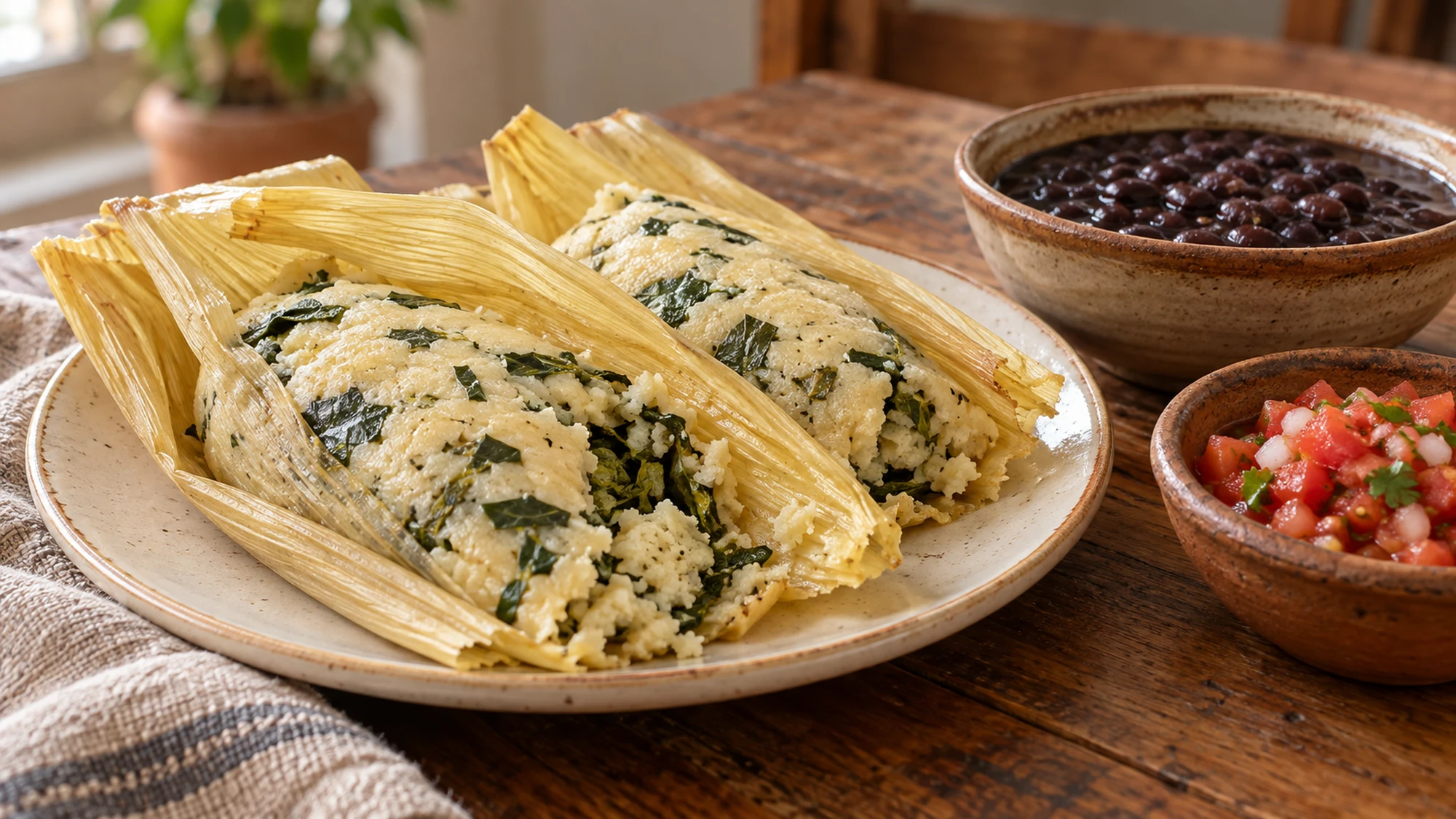
Start with the measured warm water, let the mixture hydrate, and judge it by feel. It should spread with the back of a spoon without crumbling or running. Add extra water a tablespoon at a time only when needed. Different flour brands and the moisture clinging to washed leaves can change that last adjustment.
| Choice | What changes | How to approach it |
|---|---|---|
| Fresh masa | Already contains water | Use a recipe formulated for fresh masa rather than a gram-for-gram swap. |
| Vegetable shortening | Removes the pork ingredient | Use the same weight; expect a different flavor and check the label. |
| Cheese filling | Adds salt and dairy | Try a little in individual tamales; keep plain and filled ones identifiable. |
| Spinach instead of chipilín | Changes the defining flavor | Treat it as a different leafy tamal, not an identical substitute. |
I’d make the first batch with one flour and one type of fat. It is easier to understand the dough when several substitutions are not competing for attention.
Health Benefits in the Context of the Whole Meal
Corn masa supplies carbohydrate, and the leaves contribute some protein, fiber and minerals. The INCAP food-composition tables list chipilín as a food with measurable nutrients, but the modest amount in one tamal is not the same as eating a full serving of greens.
Lard adds richness and energy. Neither the green flecks nor the steamed cooking method makes this a low-fat food. A side of beans and vegetables offers more variety than asking the tamale to do every nutritional job on the plate.
- Check the masa package if gluten avoidance matters; ingredients and manufacturing statements vary.
- Keep cheese optional and separate if serving someone who avoids milk.
- The card’s calorie estimate covers one of sixteen plain tamales, without salsa, beans or other sides.
Think of these as a corn-based part of a meal. Enjoy the leaves for their distinctive flavor without turning a traditional dish into a health promise.
Bottom Line
Refrigerate leftovers promptly in shallow covered containers at 40°F (4°C) or below. Illinois Extension recommends using cooked leftovers within three to four days and reheating to 165°F (74°C). Steam or gently microwave the tamales with moisture; dry heat alone can toughen their edges.
Soft, spreadable dough and a patient steam give chipilín tamales their tender center. Let a test tamal rest before checking it, then serve the batch warm with just enough salsa to brighten the corn.
Chipilín Tamales Recipe

Ingredients
- 400 g masa harina Dry nixtamalized corn flour; not fresh masa or cornmeal.
- 120 g pork lard Soft but not melted.
- 100 g fresh chipilín leaves Food-grade, correctly identified; remove tough stems, wash and drain.
- 600 ml warm water Plus a little more only if the dough needs it.
- 8 g fine salt
- 16 large dried corn husks Plus extras for lining the steamer; not eaten.
Equipment
- Large steamer with rack and lid
- Mixing bowls
- Hand mixer or sturdy spoon
- Kitchen scale
Instructions
- Soak corn husks in hot water for 30 minutes, weighting them with a plate. Rinse and drain. Meanwhile, remove tough stems from the chipilín, wash the leaves thoroughly, drain and chop coarsely.
- Mix masa harina with 600 ml warm water and salt. Rest 10 minutes. Beat the softened lard for 3–4 minutes until lighter, then gradually beat in the hydrated masa. Fold in chipilín. The dough should be soft and spreadable; add water a tablespoon at a time if crumbly.
- Divide the dough into 16 equal portions. Spread each portion in the center of a softened husk, leaving room at the edges and narrow end. Fold the long sides over the filling, then fold the narrow end upward. Do not wrap tightly enough to squeeze the dough out.
- Add water to the steamer below the rack and bring it to a simmer. Line the rack with spare husks. Stand tamales folded-end down with the open ends upward, leaving spaces for steam. Cover with spare husks and the lid.
- Steam over steady medium-low heat for 60–75 minutes, checking the water level and adding boiling water along the side when needed. Keep the water below the tamales and do not let the pot run dry.
- Remove one tamal carefully and rest it for 5 minutes. It is done when the masa feels set rather than wet and pulls away from the husk. If still sticky and pasty, steam the batch 10–15 minutes longer and test again.
- Turn off the heat and rest the tamales 10 minutes before serving. Remove the husks before eating. Refrigerate leftovers promptly and use within 3–4 days; reheat the center to 165°F (74°C).