
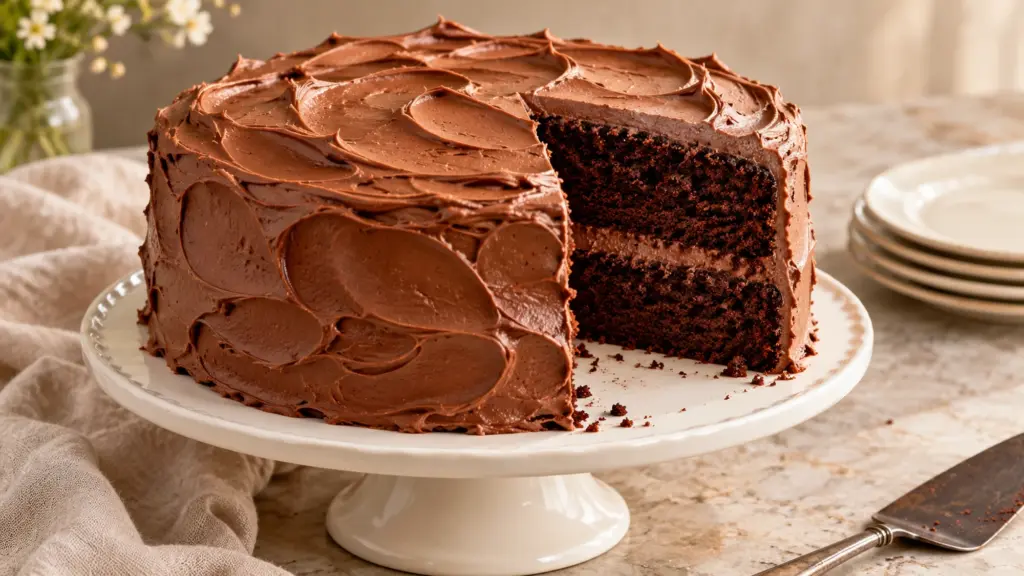
A chocolate cake can look beautifully frosted and still disappoint when the first forkful turns dry. This chocolate cake recipe starts with an oil-based batter and a measured amount of hot water, then finishes with a soft cocoa buttercream. The aim is a tender two-layer cake with chocolate in the crumb as well as the frosting.
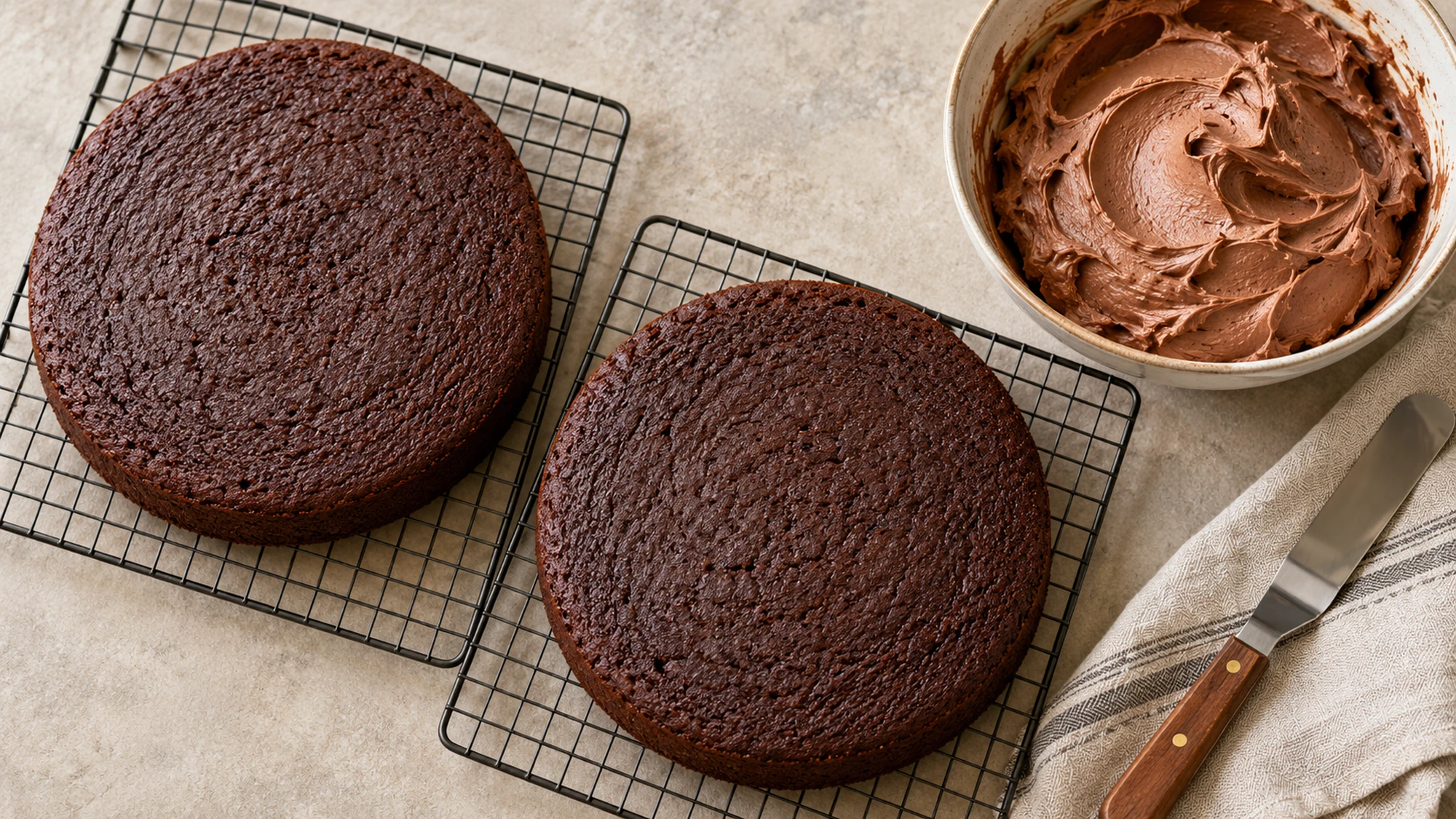
Measure the flour by weight, stop mixing once the batter is smooth, and begin checking the layers before the longest baking time. Cool them completely before frosting so the buttercream stays on the cake instead of sliding onto the plate.
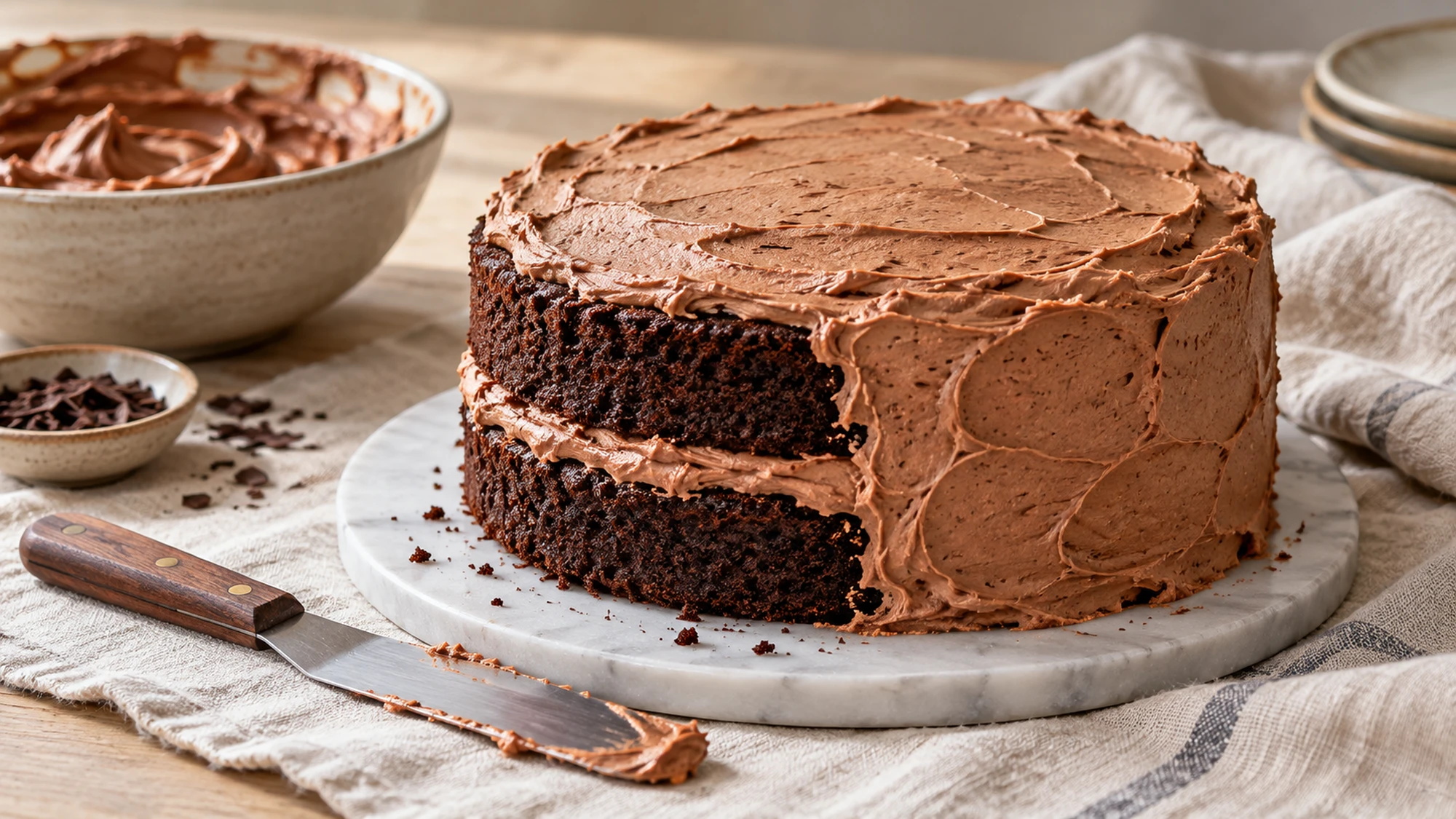
There is no need for a perfectly smooth bakery finish. Broad swirls look inviting and leave room for the dark cake to be the main event. I’d spend the extra attention on even layers and a clean doneness check rather than trying to polish away every spatula mark.
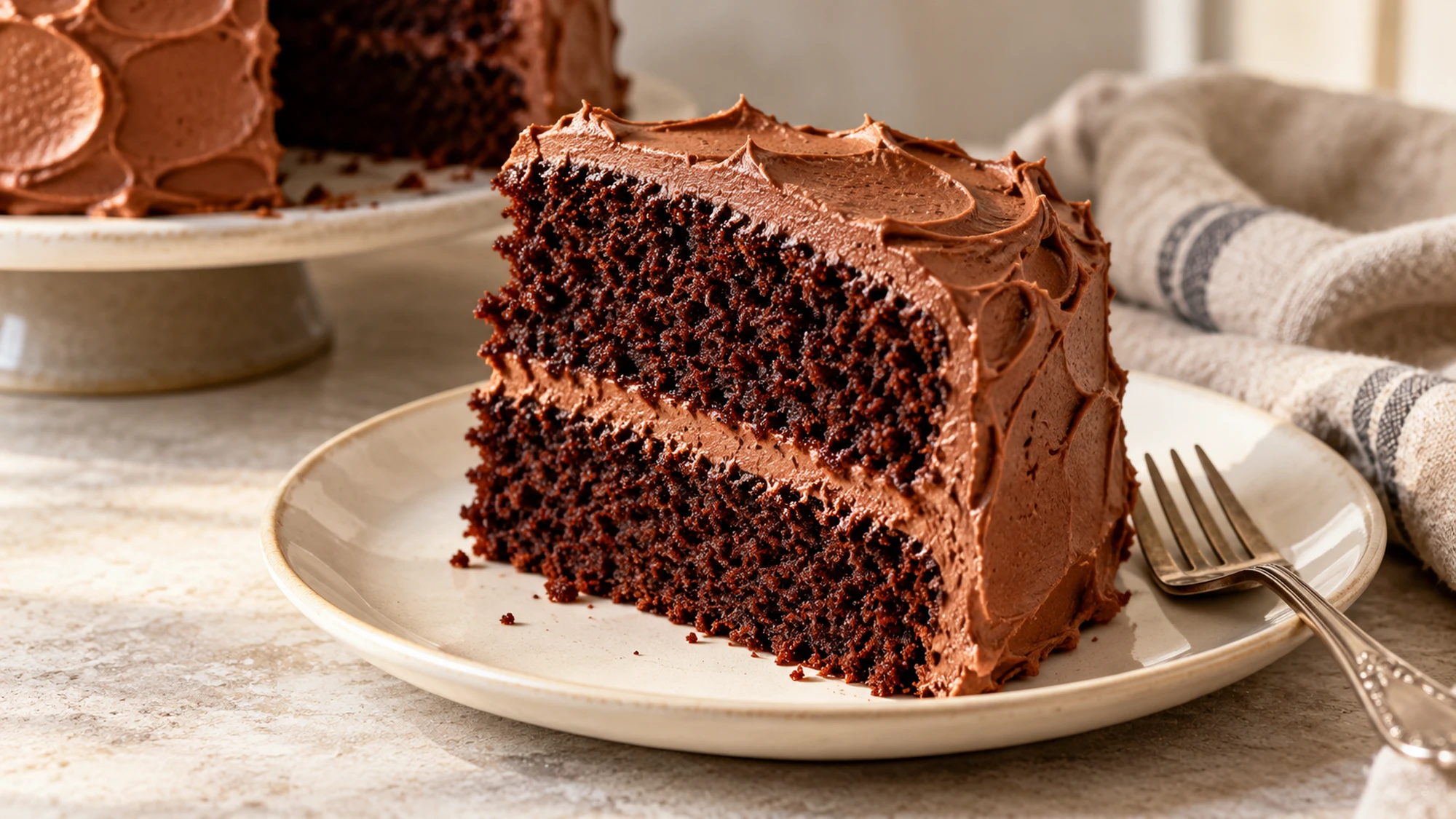
Serving This Chocolate Cake Recipe Without a Heavy Finish
Cut the cake into sixteen modest wedges with a long knife, wiping the blade between slices. The buttercream is richer when cold and softer when it has warmed slightly. Let individual slices lose their refrigerator chill briefly before serving, while keeping the rest covered.
Fresh berries give a pleasant tart contrast, but they belong beside the cake rather than folded into this batter. For a contrasting dessert, try the almond topping in Bakewell tart.
- Use a flat serving plate or stand with enough room for the whole cake; a deep bowl makes clean slicing awkward.
- For neater wedges, chill the assembled cake briefly, cut it, then allow each portion a little time to soften.
- Add fresh fruit shortly before serving so its juices do not stain or soften the frosting.
I prefer a thin, even filling and a relaxed coat of frosting outside. It keeps the ratio of cake to buttercream consistent from the first slice to the last.
Chocolate Cake Recipe Variations That Keep the Batter Balanced
Use natural unsweetened cocoa for the cake as written. Natural and Dutch-process cocoa are not simply two shades of the same ingredient: processing changes acidity. King Arthur Baking explains the difference and why it matters when a recipe includes baking soda.
The batter will look thinner after the hot water goes in. That is expected; do not try to turn it into brownie batter by adding another scoop of flour. Divide it evenly between the prepared pans and bake promptly. A scale makes portioning easier.
| Change | Useful result | Limit to keep in mind |
|---|---|---|
| Hot brewed coffee for water | A deeper roasted note | Use the same volume; coffee adds caffeine. |
| Water instead of coffee | A straightforward cocoa flavor | The base recipe already uses water. |
| Milk in the buttercream | Loosens the frosting gradually | Add a little at a time; excess liquid makes it slump. |
| Different pan size | A different cake shape | Depth changes baking time; do not assume the same schedule. |
Choose the cocoa first and follow the matching leavening quantities. Swapping several ingredients at once is more likely to change the structure than improve it.
Health Benefits: Keep the Dessert Label Honest
Cocoa brings chocolate flavor and some fiber, while eggs and milk contribute protein. The finished cake also contains sugar, butter and oil, so those ingredients do not turn a slice into a health food. The calorie estimate in the card includes the frosting rather than pretending it is only decoration.
Portion size is the practical lever here. Cutting the cake into sixteen servings makes the yield clear, and offering fruit separately lets people decide what they want alongside it.
- This recipe contains wheat, milk and eggs. Check cocoa, vanilla and other packaged ingredients for additional allergens.
- A gluten-free flour blend is not a guaranteed one-for-one substitute in this particular cake.
- Reducing the sugar sharply changes more than sweetness; it can affect moisture and texture too.
Enjoy this as chocolate cake: a rich dessert with a defined serving size, not a source of nutritional promises that the full recipe cannot support.
Bottom Line
Because this buttercream contains milk, store the covered cake in the refrigerator and use within three to four days. Follow Illinois Extension’s handling guidance: refrigerate perishable food promptly and avoid leaving it at room temperature for more than two hours, or one hour above 90°F (32°C).
For a later occasion, wrap unfrosted cooled layers well and freeze them separately. Thaw them while wrapped in the refrigerator before decorating; good wrapping helps protect the crumb from drying. Do not frost warm layers to save a few minutes at the end.
The dependable part of this chocolate cake recipe is the sequence: measure, mix gently, check early and cool thoroughly. Soft layers and a cocoa-rich frosting do the rest without elaborate decoration.
Chocolate Cake Recipe

Ingredients
- 250 g all-purpose flour
- 350 g granulated sugar
- 75 g natural unsweetened cocoa powder
- 1.5 teaspoons baking powder
- 1.5 teaspoons baking soda
- 1 teaspoon fine salt
- 2 large eggs About 100 g without shells.
- 240 ml whole milk
- 120 ml neutral vegetable oil About 110 g.
- 1 teaspoon vanilla extract
- 240 ml hot water Hot, not vigorously boiling.
- 225 g unsalted butter Softened, not melted.
- 350 g powdered sugar Sifted.
- 45 g unsweetened cocoa powder Sifted.
- 60 ml whole milk Add gradually as needed.
- 1 teaspoon vanilla extract
Equipment
- Two 9-inch round cake pans At least 2 inches deep.
- Kitchen scale
- Mixing bowls and whisk
- Hand mixer
- Wire cooling racks
- Offset spatula
Instructions
- Heat the oven to 350°F (175°C). Grease two 9-inch round pans and line their bottoms with parchment. Whisk flour, granulated sugar, cocoa, baking powder, baking soda and salt in a large bowl.
- Add eggs, milk, oil and vanilla. Whisk just until smooth, scraping the bowl. Slowly whisk in the hot water until evenly combined. The batter will be thin; do not add extra flour.
- Divide the batter evenly between the pans. Bake on the middle rack for 30–35 minutes, checking at 30 minutes. A toothpick in the center should emerge without wet batter, with a few moist crumbs acceptable. Continue a few minutes if needed.
- Cool in the pans for 15 minutes. Loosen the edges, turn the cakes onto racks, remove the parchment and cool completely, about 75 minutes more. Do not frost warm cake.
- Beat the softened butter until creamy. Add powdered sugar and cocoa in several additions on low speed. Add vanilla and the milk gradually, then beat until smooth and spreadable. Use only enough milk to reach a soft frosting consistency.
- Place one cooled layer on a plate. Spread an even layer of buttercream on top, add the second layer, and cover the top and sides with the remaining frosting. Slice into 16 portions.
- Cover and refrigerate. Use within 3–4 days. Let individual slices soften briefly before serving; do not leave the cake out for more than 2 hours, or 1 hour above 90°F (32°C).