

The words on a chicory package matter more than the picture of a steaming cup. Some products contain coffee, some dissolve like instant coffee, and some need brewing and straining. This chicory coffee uses pure roasted root granules for a dark, bittersweet drink without coffee beans.

Steep the roasted granules in hot water for five minutes, press slowly and pour the entire batch. Taste it plain first, then adjust with hot water, milk or sweetener if you want a softer cup.
I’d approach chicory as its own drink rather than ask it to impersonate espresso. It has a roasted, earthy character and a different finish from coffee. A small batch lets you discover the strength you enjoy without committing a whole pot to an unfamiliar flavor.

Serving Chicory Coffee Without Covering Up the Roast
Divide the strained brew between two small heatproof cups and let it cool to a comfortable sipping temperature. The measured water is the starting volume; the granules retain some liquid, so the amount in your cups will be slightly less. Leave room if you plan to add milk.
Plain toast, a modest biscuit or your usual breakfast can sit beside it. I prefer the first few sips without sweetener because they tell you whether the brew needs dilution or simply a little sweetness. Those are different adjustments, and a spoonful of sugar cannot make an overly concentrated cup less concentrated.
- Warm the cups with hot water, then empty them before pouring.
- Pour all the brewed liquid out of the press instead of leaving the second serving on the grounds.
- Offer milk and sweetener separately when serving two people with different preferences.
- If sediment bothers you, pass the poured drink through a paper filter in a suitable heatproof holder.
Start with a clear taste of the roasted root, then make one small adjustment at a time.
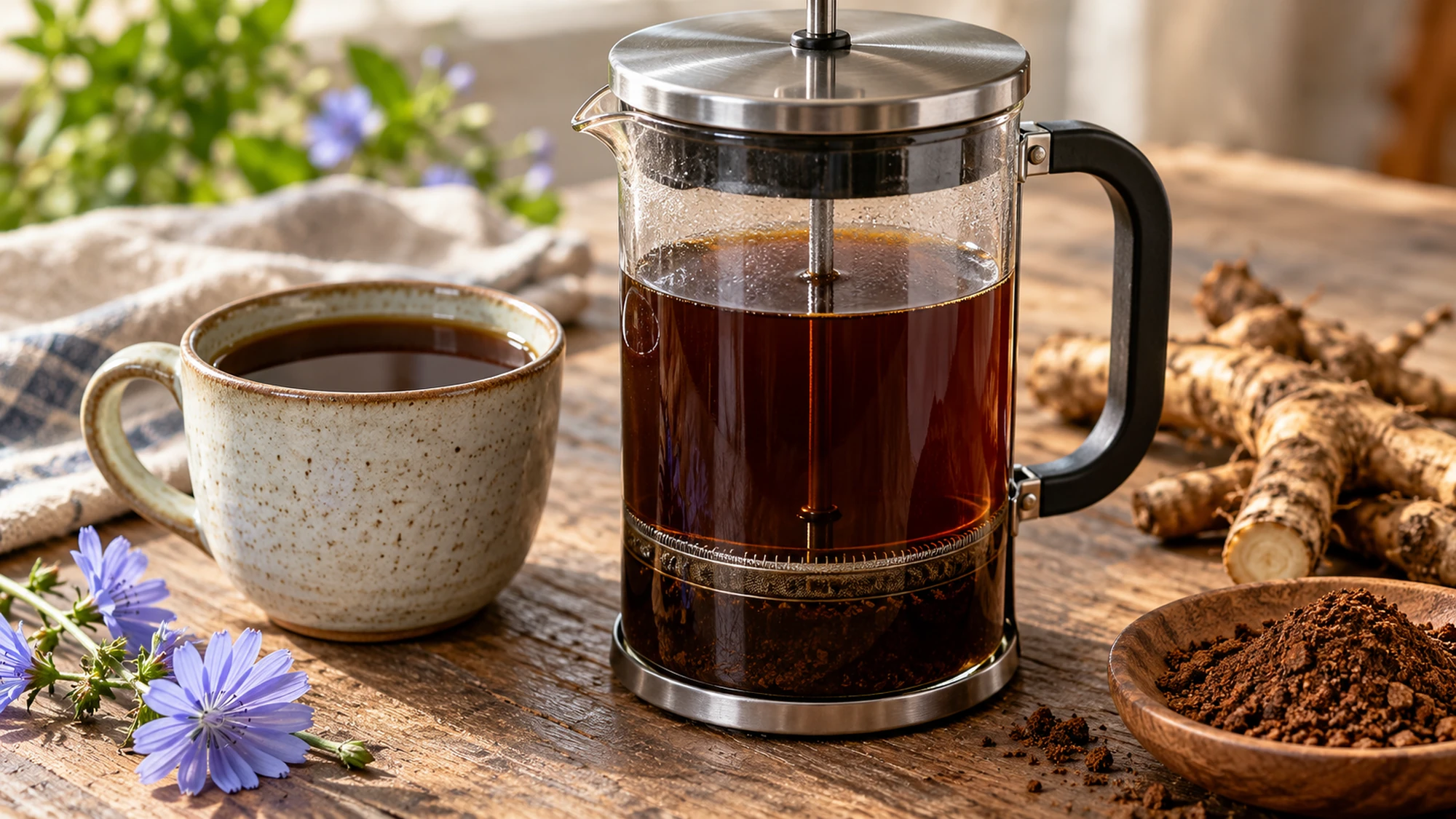
Chicory Coffee Variations Begin With the Right Product
Look for an ingredient list that says roasted chicory root and directions that involve steeping or brewing. Frontier’s roasted-granule instructions provide one example of that product type. Granule size and roast vary, so the package’s own guidance remains useful.
Do not substitute raw root pieces or an instant powder tablespoon for tablespoon. They are different preparations. This recipe deliberately starts with commercially prepared roasted granules rather than asking you to identify, harvest and roast a plant before breakfast. If you want actual coffee with cinnamon instead, café de olla is a different drink worth distinguishing.
| Product or change | What it means | How to respond |
|---|---|---|
| Pure roasted granules | Brewable root pieces | Steep and strain as written. |
| Instant chicory powder | A soluble preparation | Follow its package ratio instead. |
| Coffee-and-chicory blend | Contains actual coffee | Expect caffeine unless the label says otherwise. |
| A milder cup | Less concentrated flavor | Add hot water after straining. |
| Milk or plant beverage | A softer, different finish | Add a small amount and taste. |
The name chicory coffee covers several products; the ingredient list tells you which one is actually in your cupboard.
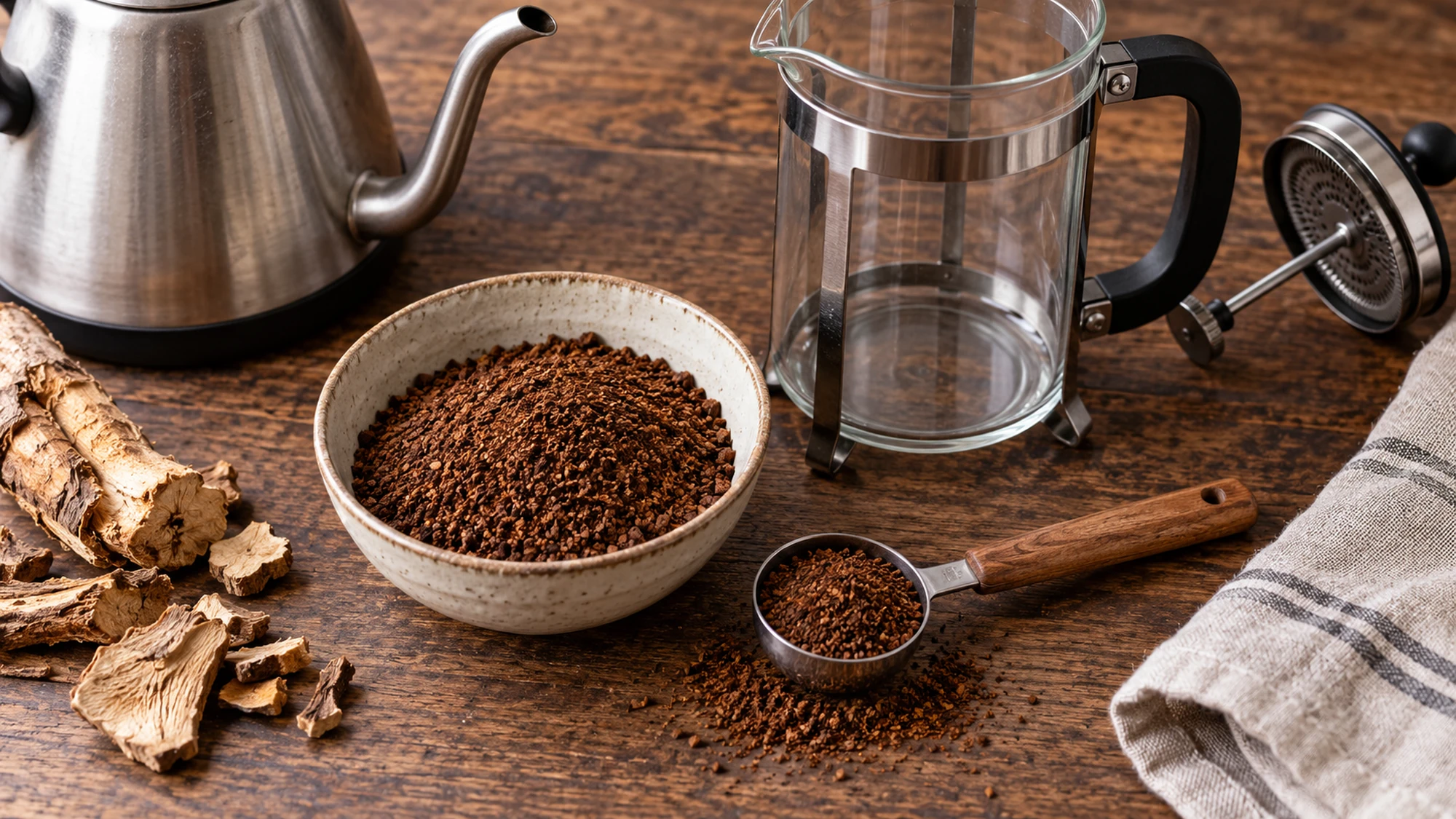
Health Benefits Without Borrowing Claims From the Root
Pure roasted chicory is naturally caffeine-free, which may be useful when you want a warm roasted drink without adding caffeine. That statement does not apply to a blend containing coffee or tea. The FDA’s caffeine guidance also explains that individual sensitivity varies and decaffeinated coffee is not necessarily caffeine-free.
Dry chicory root and a strained infusion are not nutritionally interchangeable. The amount extracted into this brew depends on the product, grind and preparation, so this recipe does not assign a precise calorie or fiber number. Claims about a measured serving of isolated chicory fiber should not be transferred automatically to a homemade cup.
- Milk and sweeteners change the drink’s nutrition; include what you actually add.
- Check the full label on blended substitutes, which may include grains, flavorings or other ingredients.
- Treat the drink as a beverage, not a detox, treatment or substitute for a varied diet.
Its clearest practical distinction is the absence of coffee caffeine when the product is pure chicory, not a promise of special health effects.
Bottom Line
A French press makes the process tidy, but it does not remove every fine particle. Press gently, avoid stirring the settled grounds again and leave the last muddy spoonful behind if necessary. Store the unused dry granules sealed in a cool, dry place, following the package.
- Use a clean press large enough for the water and granules.
- Do not force a stuck plunger; stop and check the equipment.
- Change strength on the next batch rather than extending every steep indefinitely.
Buy the brewable roasted product, make a small batch and judge the flavor on its own terms. Chicory coffee can be a simple cupboard drink without becoming a complicated wellness project.
Chicory Coffee Recipe


Ingredients
- 1 tablespoon pure roasted chicory root granules About 8 g; brewable granules, not instant powder or a coffee blend
- 2 cups water 480 ml, plus extra hot water to dilute if desired
- milk or suitable plant beverage Optional, served separately
- sugar or other sweetener Optional, served separately
Equipment
- French press At least 24 fl oz capacity; suitable for hot liquids.
- Kettle
- Measuring spoon and liquid measure
- Two heatproof cups
Instructions
- Check that the product contains pure roasted chicory root granules intended for brewing. Add the measured granules to a clean French press.
- Bring the water to a boil in a kettle, then carefully pour the measured 480 ml over the granules. Stir gently with a utensil suitable for the press. Set the lid on top without pressing down.
- Steep for 5 minutes. Press the plunger slowly and gently; do not force it if it resists. Pour the entire brewed liquid into two heatproof cups, leaving settled sediment behind.
- Let cool to a comfortable drinking temperature. Taste and dilute with a little hot water if desired. Add optional milk or sweetener individually. The final strained yield will be slightly less than the starting water volume.