

A skewer can look beautifully browned while the biggest piece still needs more time. This chicken shish recipe starts by making the pieces similar in size, then coats them in yogurt, lemon, garlic and warm spices. The grill supplies the browned edges; a thermometer tells you when the middle is ready.

Use boneless chicken thighs, marinate them in the refrigerator, and thread the pieces without packing them tightly. Grill over controlled heat until the thickest pieces reach 165°F, moving the skewers away from flare-ups when necessary.
I’d choose thighs for their richer flavor and forgiving texture, but they still deserve attention at the grill. The yogurt should cling in a thin coating, not hang from the meat in heavy blobs. A little preparation makes the cooking calmer, which is useful when dinner involves both an open flame and several hungry people.
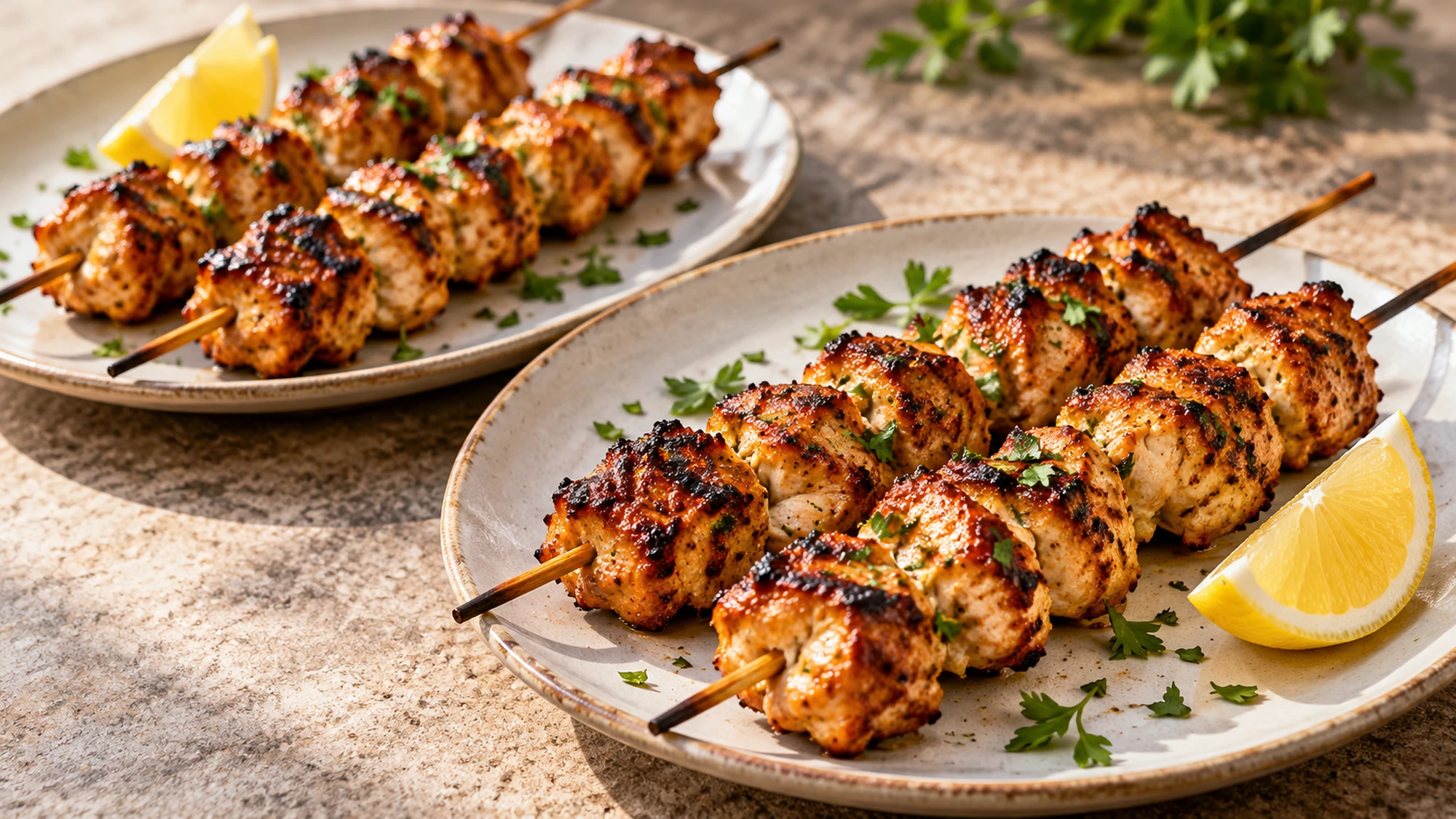
Serving This Chicken Shish Recipe With Fresh Sides
Slide the cooked chicken onto a clean platter and give it a short rest before serving. Warm flatbread, rice or crisp carrot ribbon salad make useful companions. Keep the side dishes simple enough that the garlic, lemon and paprika remain noticeable rather than disappearing beneath several competing sauces.
Offer lemon wedges separately and add chopped parsley if you want a fresh finish. I prefer the chicken beside the bread rather than buried inside it straight away: people can build a wrap or eat the pieces with a fork, and the browned surfaces stay visible.
- Use a clean serving platter, never the tray that held the raw chicken.
- Remove the meat from hot metal skewers before giving portions to children.
- Put sauces and extra lemon on the table so diners can adjust their own plate.
- For a larger meal, add vegetables and a grain rather than assuming every portion needs more meat.
Let the skewers be the savory center of the meal, with something cool and crisp beside them.
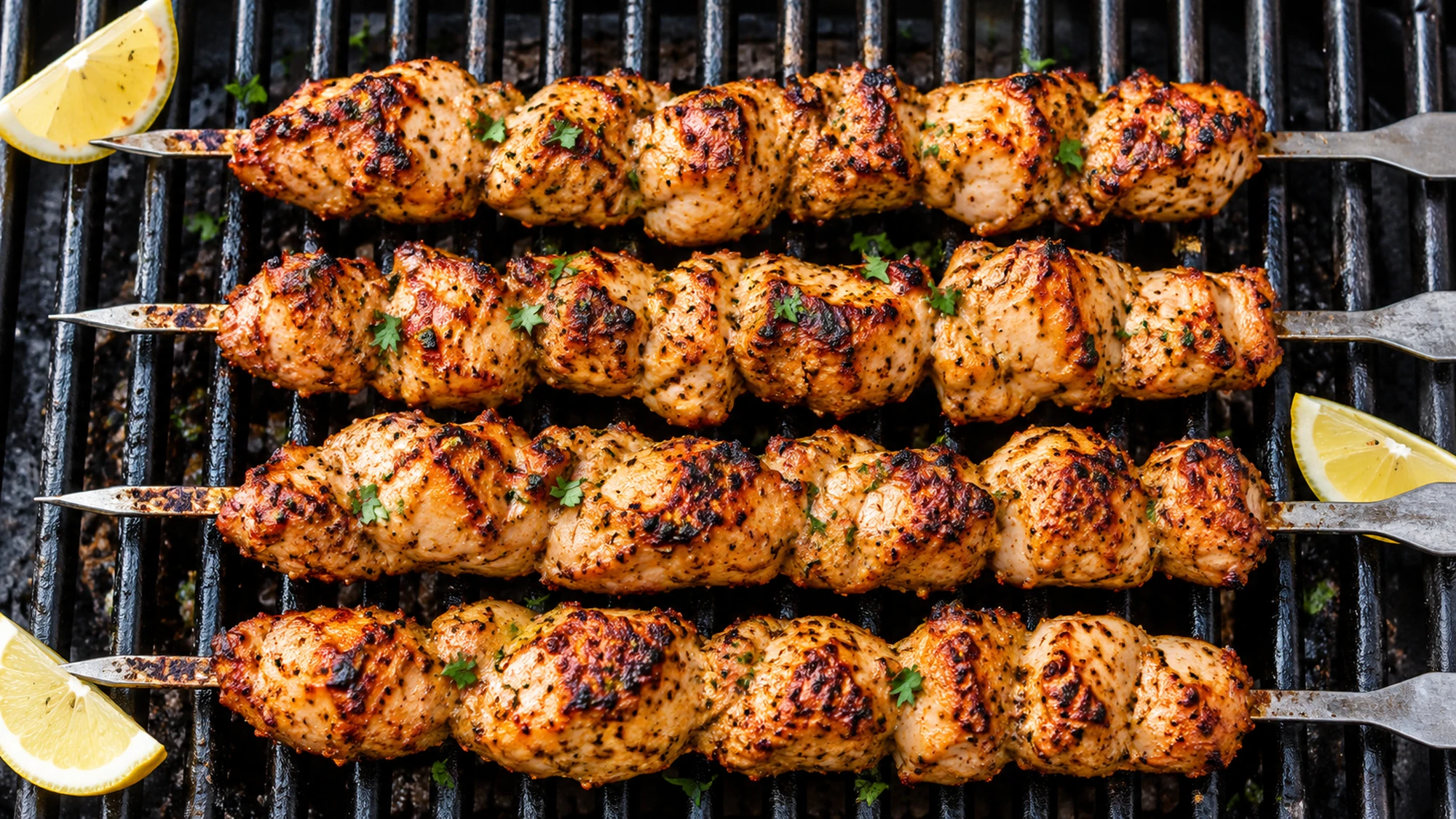
Chicken Shish Recipe Variations and Grill Decisions
Keep the pieces close in thickness when changing the cut. A few tiny scraps mixed with oversized chunks make the grill harder to manage. Thread vegetables on separate skewers if you want them; their cooking time does not have to match the chicken’s.
The marinade is a flavoring step, not a safety step. Follow the FDA’s grilling guidance: keep marinating food refrigerated and discard marinade that has touched raw poultry. If you want a yogurt sauce, make a separate clean batch.
| Choice | Alternative | What changes |
|---|---|---|
| Chicken thighs | Chicken breast | Leaner texture; watch doneness closely. |
| Sweet paprika | Part sweet, part smoked paprika | A stronger smoky note; start modestly. |
| Regular plain yogurt | Plain Greek yogurt | Thicker coating; scrape away heavy excess. |
| Mixed meat-and-vegetable skewers | Separate vegetable skewers | Each ingredient can finish at its own pace. |
Watch the heat as closely as the clock. Move a skewer to a cooler area if its coating browns before the center is cooked.
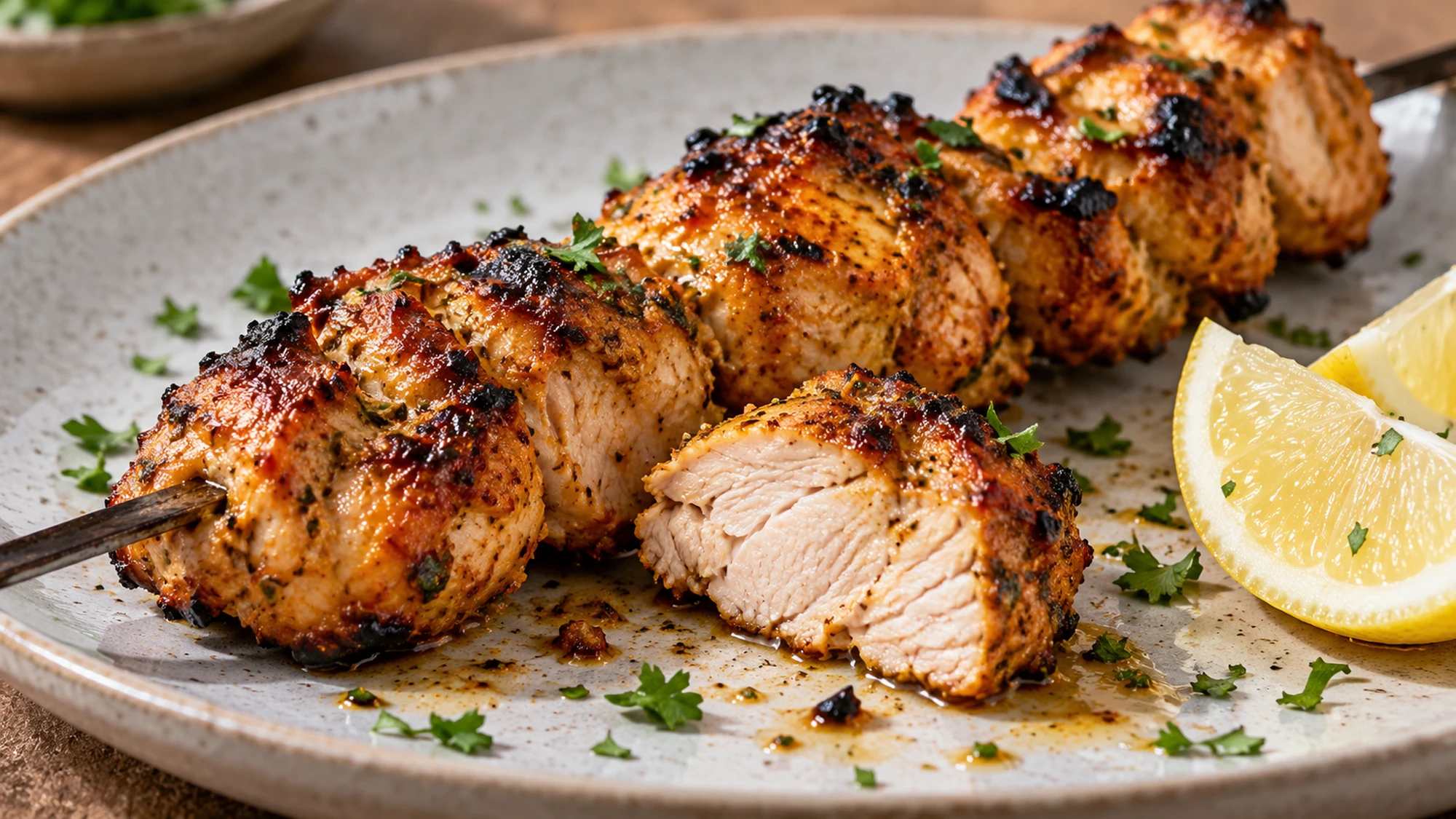
Health Benefits and Practical Trade-Offs
Chicken supplies protein, while yogurt contributes a little more along with the marinade’s tang. One quarter of the recipe is estimated at about 294 calories and 35 grams of protein when all the marinade is counted. Some coating remains in the bowl or on the grill, so the estimate is deliberately conservative.
The rest of the plate matters too. Vegetables and a grain add variety that chicken alone cannot provide. The measured salt contributes substantial sodium, and different yogurt or chicken products can change the figures, particularly if the meat has been enhanced with a seasoning solution.
- Check the chicken label rather than assuming every package contains only plain meat.
- This marinade contains milk; a yogurt substitution changes both flavor and allergen considerations.
- Use the CDC’s chicken-handling advice: keep raw poultry separate from ready-to-eat foods and verify 165°F with a thermometer.
A protein-rich main dish needs neither a health halo nor a complicated topping to earn its place at dinner.
Bottom Line
Even pieces, a refrigerated marinade and steady grill management do more for these skewers than an elaborate ingredient list. Check several thick pieces, not just the smallest one at the end of a skewer.
Refrigerate leftovers promptly in shallow containers. Illinois Extension recommends using refrigerated leftovers within three to four days and reheating them to 165°F.
Keep the coating light, the grill controlled and the serving platter clean. The result is a straightforward chicken shish recipe built around browned edges and a properly cooked center.
Chicken Shish Recipe


Ingredients
- 1.5 pounds boneless skinless chicken thighs 680 g, trimmed and cut into similar 1 1/4-inch pieces
- 1/2 cup plain whole-milk yogurt 120 g
- 2 tablespoons olive oil 27 g
- 2 tablespoons fresh lemon juice 30 g
- 3 cloves garlic 9 g, finely minced
- 2 teaspoons sweet paprika 4.6 g
- 1 teaspoon ground cumin 2.1 g
- 1 teaspoon fine table salt 6 g
- lemon wedges and chopped parsley Optional
Equipment
- Outdoor grill Prepare a medium-high cooking area and a cooler area.
- 8 metal skewers About 10–12 inches long.
- Covered bowl or food-safe container For refrigerated marinating.
- Tongs
- Instant-read thermometer
- Clean serving platter
Instructions
- Mix the yogurt, oil, lemon juice, garlic, paprika, cumin and salt in a food-safe bowl. Add the chicken and turn to coat. Cover and refrigerate at 40°F or below for 1 hour, or up to 8 hours. Do not wash raw chicken.
- Prepare a clean grill for medium-high heat with a cooler area available. Divide the chicken among 8 metal skewers, leaving the pieces touching lightly rather than compressing them. Let heavy excess marinade fall back into the bowl; discard all used marinade.
- Grill for about 10–15 minutes, turning every few minutes, until browned on several sides and the thickest chicken pieces reach at least 165°F. Check several pieces without touching the metal skewer with the thermometer. Move skewers to the cooler area if flare-ups occur or the coating darkens too quickly.
- Use clean utensils to transfer the skewers to a clean platter. Rest for 5 minutes, then remove the chicken from the hot skewers. Serve with optional lemon and parsley.
- Refrigerate leftovers in shallow containers within 2 hours, or within 1 hour above 90°F. Use within 3–4 days and reheat to 165°F.