
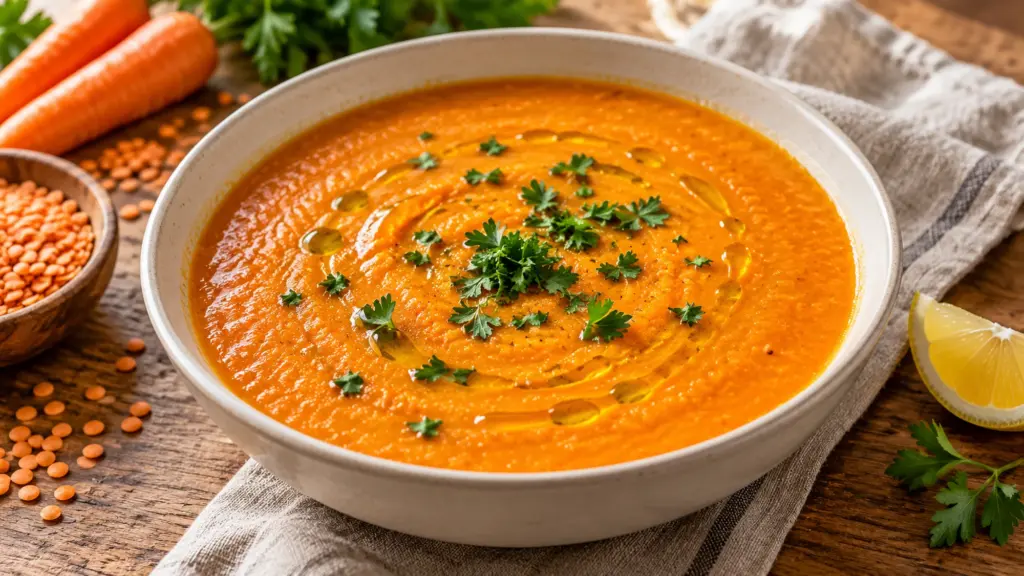
A bag of carrots and a scoop of red lentils can become something much softer and more comforting than their starting point suggests. This carrot red lentil soup turns them into a smooth orange bowl, with earthy cumin underneath and lemon at the finish. There is no cream, flour or separate thickener to organize.

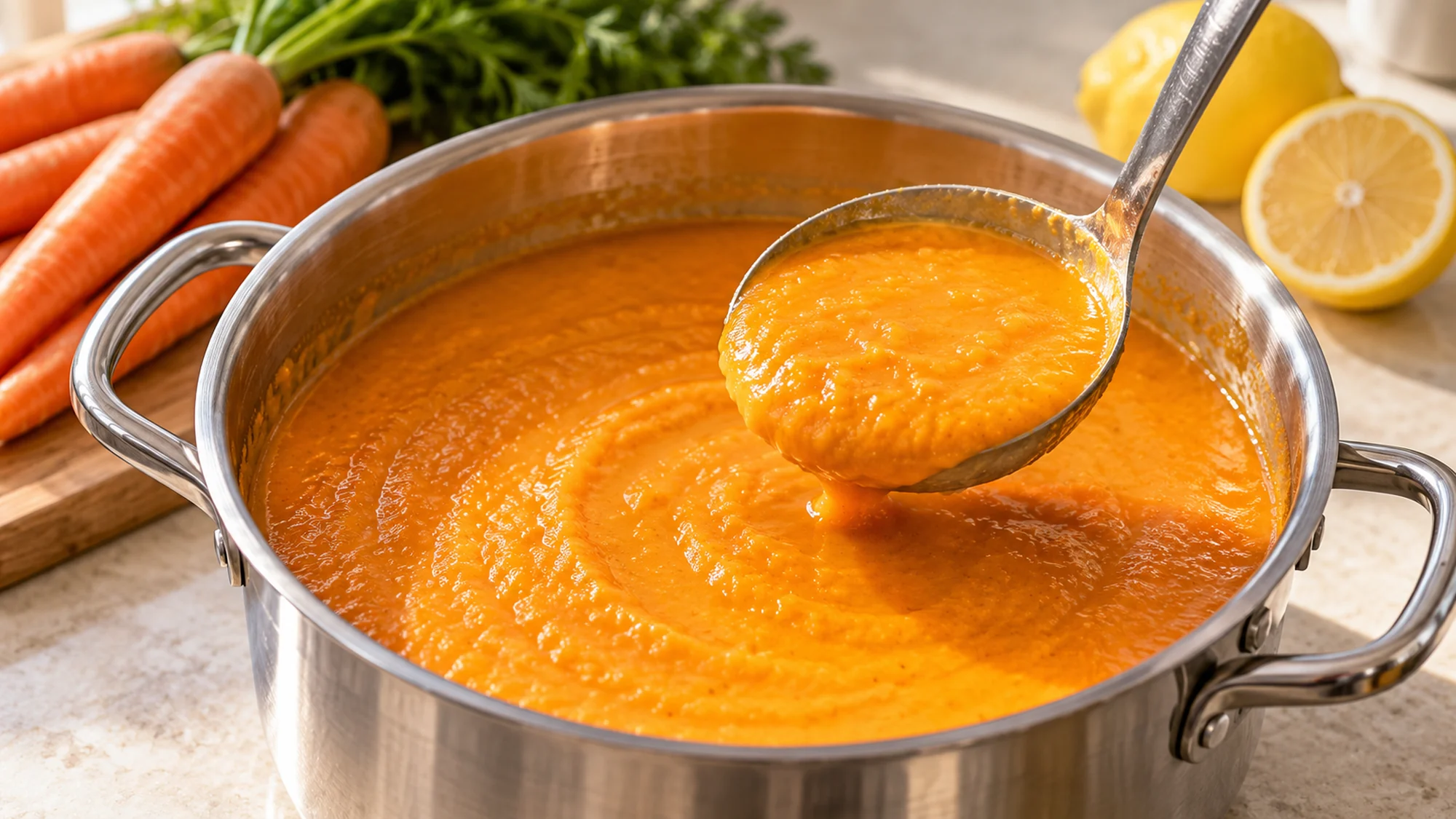
The creamy texture comes from cooking split red lentils until they collapse, then blending them with completely tender carrots. Add the lemon after blending, and loosen the soup with a little water until it flows easily from a spoon.
I’d choose this version when the cupboard looks more promising than the refrigerator. Water lets the carrot and cumin flavors stay clear, while onion, garlic and olive oil supply the savory base. The important shopping detail is the lentil: split red lentils soften readily; intact green or brown ones make a different soup.
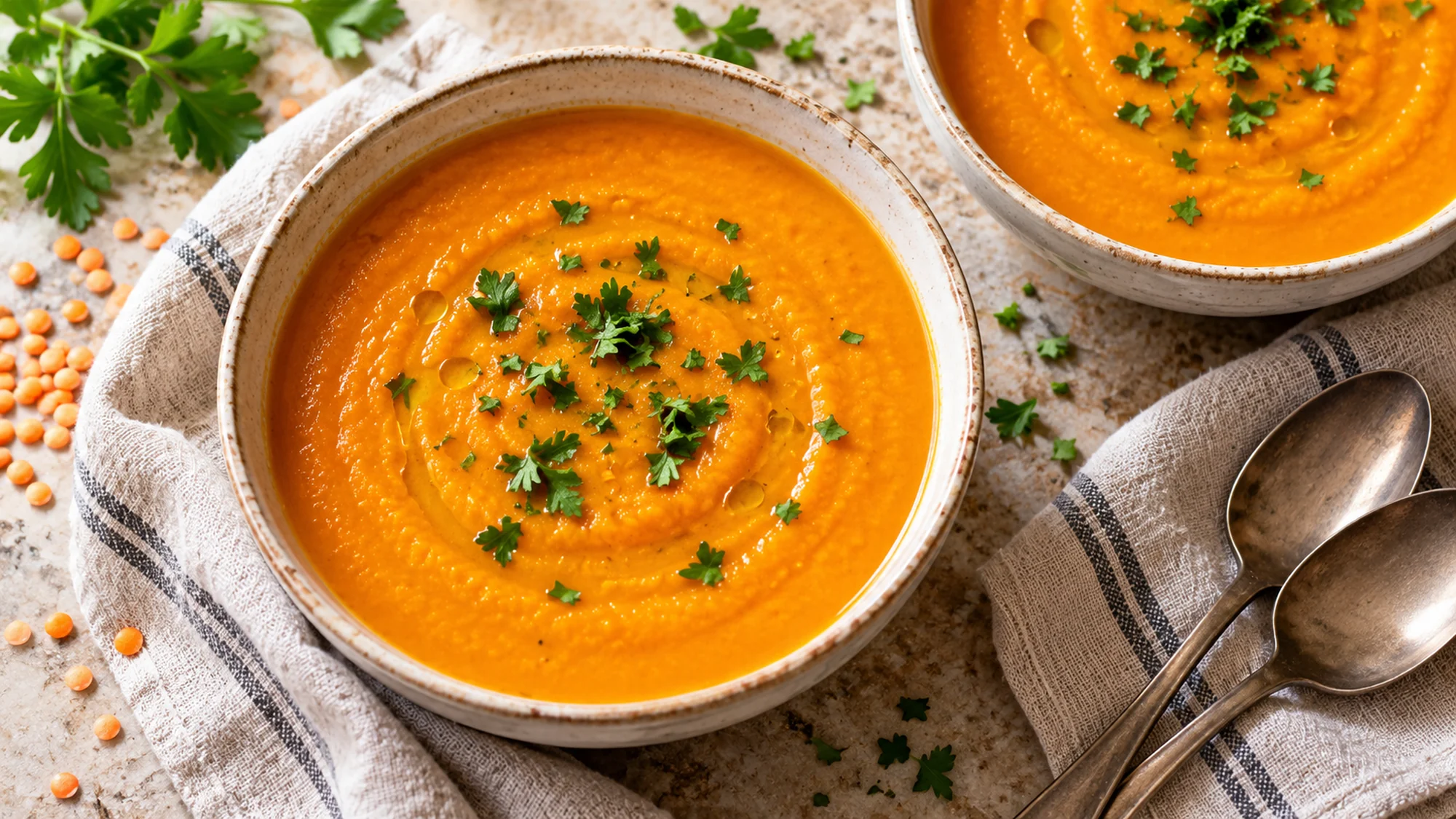
Serving Carrot Red Lentil Soup Without Losing Its Silky Texture
Serve this soup hot in fairly deep bowls, leaving room for crusty baguette alongside rather than crumbling it into the pot. A smooth soup benefits from one crisp companion, but it doesn’t need a mountain of toppings. Chopped parsley is optional; its fresh flavor works particularly well with the lemon.
The soup continues to thicken as it stands. Before ladling a second helping, stir in a small splash of water and warm it through. I prefer adjusting the consistency before adding more salt: a thick spoonful and a properly loosened bowl can taste surprisingly different.
- For lunch, add toasted bread and a simple green salad.
- For a smaller first course, divide the pot among six cups instead of four bowls.
- For packed lunches, portion the soup separately from anything you want to keep crisp.
Aim for soup that coats a spoon but still pours; a splash of water is a useful finishing tool, not a rescue operation.
Variations That Keep the Carrots and Lentils in Balance
Small changes are easier to manage than replacing the soup’s structure. Keep the split red lentils and carrot quantity steady on the first round, then change one seasoning or finishing ingredient. That way, you can tell what the adjustment actually contributes.
Use the table as a guide rather than a list of additions to pile into one saucepan. If using broth instead of water, start with less added salt and check its label. Broth can contribute plenty of sodium before the salt jar comes anywhere near the stove.
| Change | What to expect |
|---|---|
| Replace cumin with ground coriander | A lighter, citrus-like spice note; start with the same amount. |
| Use vegetable broth instead of water | A more savory background; adjust salt to the broth. |
| Leave part of the soup unblended | A thicker, textured bowl rather than a smooth puree. |
| Finish individual bowls with chili flakes | Adjustable heat without changing the whole pot. |
Change the seasoning before changing the lentil: the split red lentils do much of the texture work.
Health Benefits, With the Whole Bowl in View
Carrots contribute carotenoids, including beta-carotene, which the body can convert to vitamin A. The NIH explanation of vitamin A and carotenoids puts that nutrient role in context; it isn’t a reason to promise special health effects from one lunch. Lentils add plant protein and fiber, and blending does not remove their fiber.
The estimated nutrition is about 297 calories, 13.5 grams of protein and 9 grams of fiber per quarter of the pot, before bread or toppings. The calculation uses generic dry lentils as a proxy, so a particular red-lentil brand will differ. The measured salt also matters: this is not presented as a low-sodium recipe.
- Use the stated yield when comparing nutrition; a larger bowl contains a larger share of the recipe.
- Keep optional finishing oil separate if you want the card estimate to remain a useful guide.
The useful nutritional story is straightforward: vegetables, lentils and olive oil in a satisfying portion, without a miracle attached.
Bottom Line
Let tenderness, not just the timer, decide when to blend. A carrot piece should crush easily against the side of the pot, and the lentils should be soft all the way through. With an immersion blender, keep the blade submerged and the heat off to limit splashing.
For leftovers, follow Illinois Extension’s cooling and reheating guidance: refrigerate promptly in shallow containers, use within three to four days, and reheat to 165°F. Do not leave a large pot on the counter to cool completely.
Soft carrots, fully cooked lentils and a final squeeze of lemon make the difference. Adjust the thickness last, then bring the bread.
Carrot Red Lentil Soup Recipe


Ingredients
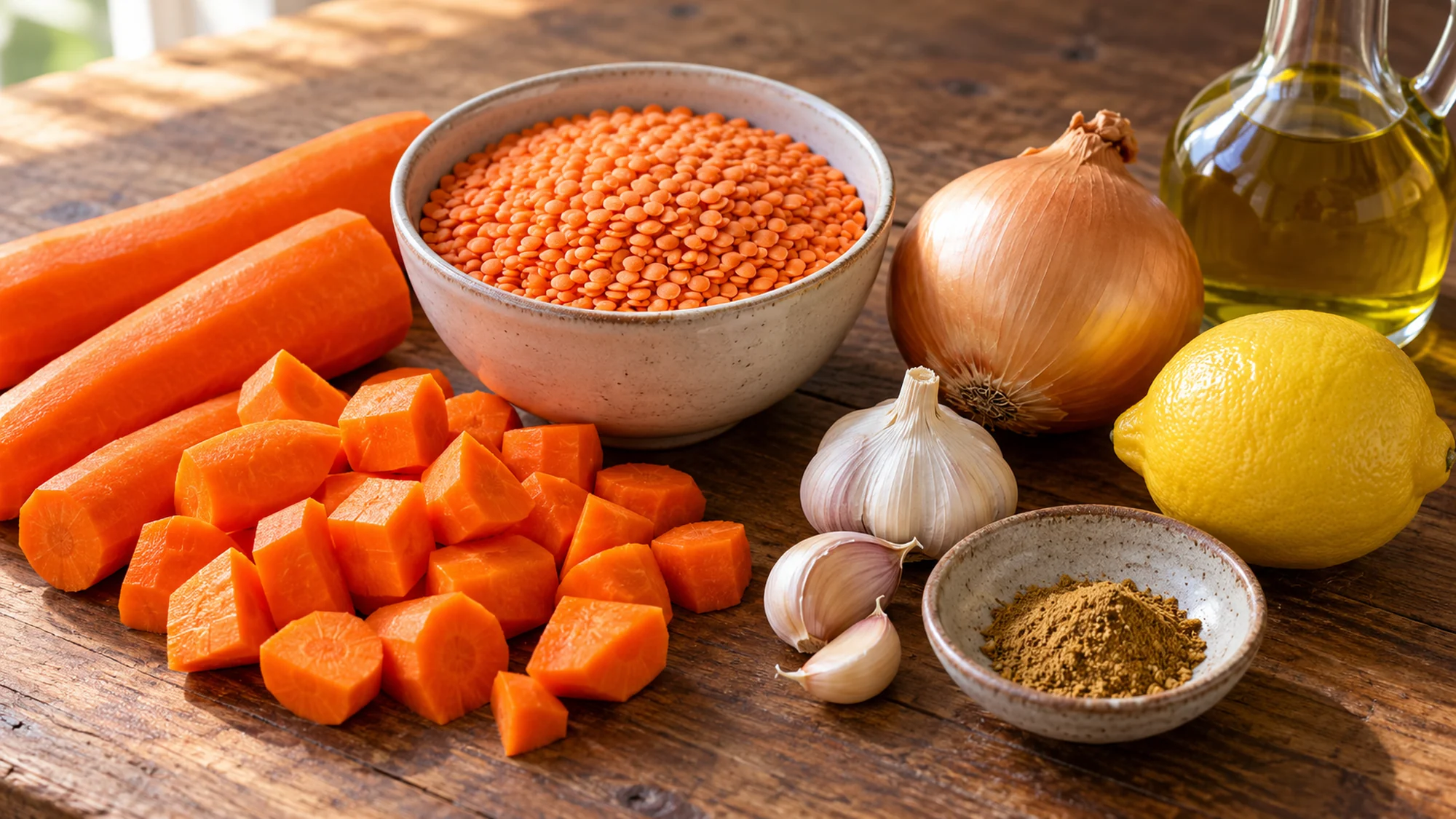
- 2 tablespoons olive oil 27 g
- 1 medium yellow onion 150 g, chopped
- 3 cloves garlic 9 g, minced
- 1 teaspoon ground cumin 2.1 g
- 1 pound carrots 450 g trimmed weight, peeled and cut into 1/4-inch rounds
- 1 cup dry split red lentils 192 g; picked over and rinsed
- 1 liter water About 4 1/4 US cups; plus more as needed to thin
- 1 teaspoon fine table salt 6 g
- 2 tablespoons fresh lemon juice 30 g
- chopped fresh parsley For serving; optional.
- olive oil A light drizzle for serving; optional.
Equipment
- 4-quart heavy saucepan
- Immersion blender Keep the head submerged to avoid hot splashes.
- Fine-mesh strainer For rinsing lentils.
Instructions
- Heat the oil in the saucepan over medium heat. Add the onion and cook for 5–6 minutes, stirring, until softened without deep browning. Add the garlic and cumin; stir for 30 seconds.
- Add the carrots, rinsed lentils, water and salt. Bring to a gentle boil, then reduce to a steady simmer. Partly cover and cook for 20–25 minutes, stirring occasionally, until the lentils have broken down and the carrots crush easily. Add a splash of water if needed to keep the mixture from catching.
- Turn off the heat. Blend with an immersion blender until smooth, keeping its head fully submerged. Stir in the lemon juice. Add water a little at a time until the soup pours easily from a spoon; warm gently if needed.
- Divide among four bowls. Add a little chopped parsley and a light drizzle of olive oil if desired. Refrigerate leftovers promptly in shallow containers within 2 hours, or within 1 hour above 90°F.