

The most useful thing to know about risotto is what it should look like when it leaves the pan: loose, glossy and able to spread gently across a plate. This Parmesan version gets that texture from arborio rice, warm broth and a little attention—not a carton of cream. White wine brings a gentle sharpness that keeps the buttery finish from feeling heavy.

Stop cooking when the rice is tender with a small firm center, then finish off the heat with Parmesan and butter. Keep a little hot broth nearby: a final splash helps the risotto flow instead of standing in a stiff mound.
I’d choose a broad, heavy saucepan and a spoon that reaches its corners. A hard boil evaporates broth faster than the grains can absorb it; a steady, gentle simmer is easier to manage. Start tasting before the timer ends, because the rice, pan and burner all affect the finish. The complete quantities and cooking sequence are in the recipe below.
Serving Suggestions for Parmesan Risotto
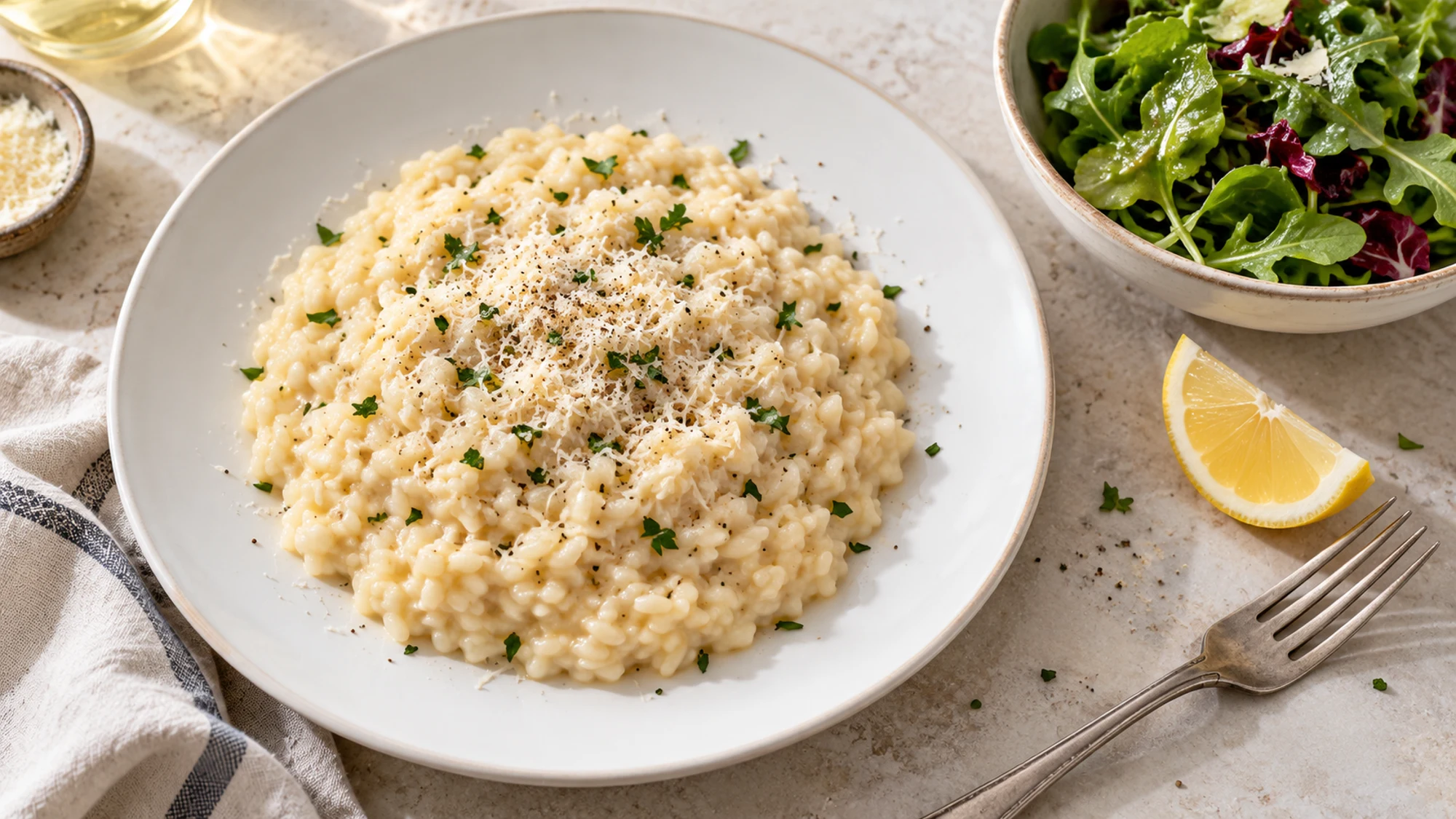
Have the rest of dinner ready before you finish the rice. Risotto continues thickening as it sits, so warm shallow bowls and a clear route to the table matter more than a fancy garnish. I prefer something crisp or bright alongside it rather than another creamy dish.
- For a simple main: serve with a leafy salad dressed with lemon and olive oil. A little chopped parsley on the rice is optional.
- For a more substantial plate: add roasted vegetables and separately cooked chicken, fish or white beans. Keep their cooking juices from flooding the risotto.
- For a small first course: divide the same batch into smaller portions, leaving room for the rest of the meal.
Plan leftovers carefully rather than leaving the saucepan on the stove. Following the Food Standards Agency’s rice guidance, cool spare portions quickly, ideally within one hour, refrigerate and use within 24 hours. Reheat only once until steaming hot throughout, loosening with a little water or broth.
Serve risotto promptly for its best texture; cool any extra portions promptly for safe storage.
Risotto Variations and Ingredient Swaps
Keep the base simple the first time, then change one element to suit the meal. Arborio and carnaroli are useful risotto rices because they can form a creamy sauce while retaining recognizable grains. Long-grain rice, instant rice and brown rice are not direct swaps for this timing and liquid schedule.
| Change | How to use it | What changes |
|---|---|---|
| No wine | Use extra broth; add lemon to taste at the end | Gentler flavor without wine |
| Mushrooms | Brown separately, then fold in | Earthy flavor without watery rice |
| Vegetarian meal | Use vegetable broth and vegetarian hard cheese | Avoids animal-rennet Parmesan |
| Peas | Add near the end and heat through | Sweetness and a green contrast |
- Rice still chalky? Add more hot broth and keep simmering. A timer is a guide, not a doneness test.
- Too thick? Fold in broth a little at a time before serving. Adding more cheese usually thickens it further.
- Too salty? Stop adding salty broth and use hot water as needed. Taste again after the Parmesan, before reaching for salt.
Change the additions freely, but let the rice’s tenderness and the sauce’s movement decide when dinner is ready.
Health Benefits and Practical Balance
Rice supplies carbohydrate, while the cheese contributes protein and calcium. That does not make this buttery dish a high-fiber meal. Arborio is a refined grain; Health Canada explains the fiber advantage of whole grains. Enjoy variety across your meals rather than expecting one bowl to supply everything.
- Use lower-sodium broth and taste before adding salt.
- Add vegetables alongside the rice for variety and texture.
- Choose a portion that fits the rest of your meal; this batch makes four modest main servings or six sides.
The butter and Parmesan contain milk, and broth ingredients vary. Check labels when cooking for allergies or gluten avoidance. For another comforting dinner built around a creamy finish, try baked feta pasta on a different evening.
A balanced dinner comes from the whole plate: flavorful rice, vegetables and a protein option that suits you.
Bottom Line
Good risotto needs a little flexibility, not perfection. Keep the broth warm, taste the grains and finish slightly looser than you think you need. Parmesan and butter bring the final gloss; dinner is best when everyone is ready for it.
Risotto Recipe


Ingredients
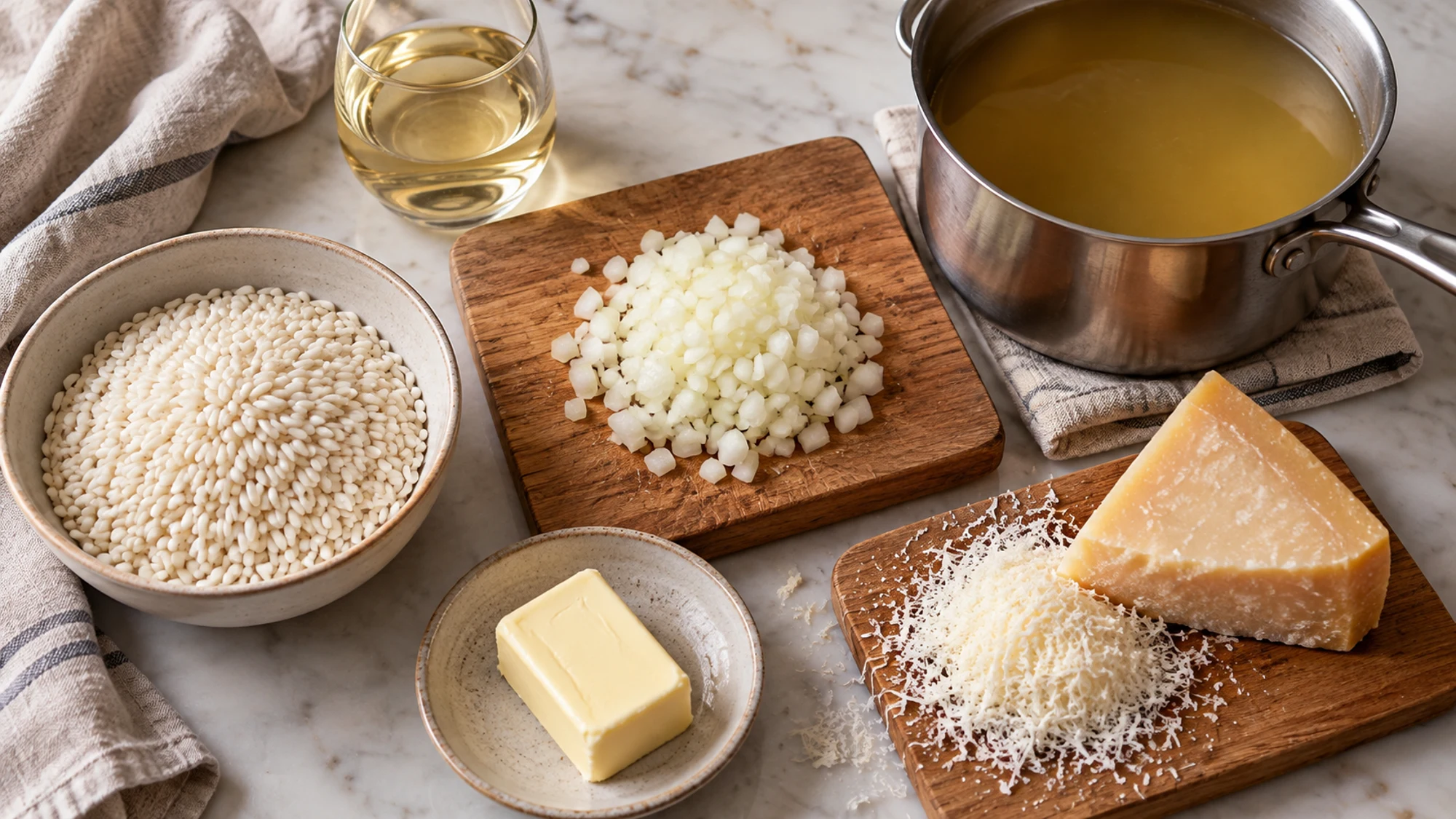
- 5 cups lower-sodium vegetable broth 1.2 liters; you may not need all, or may need a little extra hot water
- 2 tablespoons unsalted butter 28 g, divided
- 1 tablespoon olive oil
- 1 small yellow onion about 100 g, finely diced
- 1.5 cups arborio rice 300 g; do not rinse
- 0.5 cup dry white wine 120 ml; or replace with broth
- 0.75 cup finely grated Parmesan 60 g; use vegetarian hard cheese if needed
- 0.25 teaspoon black pepper plus more to taste
- Salt to taste after adding cheese
- Chopped parsley optional, for serving
Equipment
- Wide heavy saucepan
- Small saucepan
- Ladle
- Wooden spoon
- Fine grater
Instructions
- Heat the broth in a small saucepan and keep at a gentle simmer. Finely dice the onion and grate the cheese before starting the rice.
- In a wide heavy saucepan, warm the olive oil and 1 tablespoon butter over medium heat. Add onion and cook 4–5 minutes until softened but not browned.
- Stir in the unrinsed arborio rice. Cook 2 minutes, stirring to coat the grains. Add the wine and stir until nearly absorbed, about 1–2 minutes.
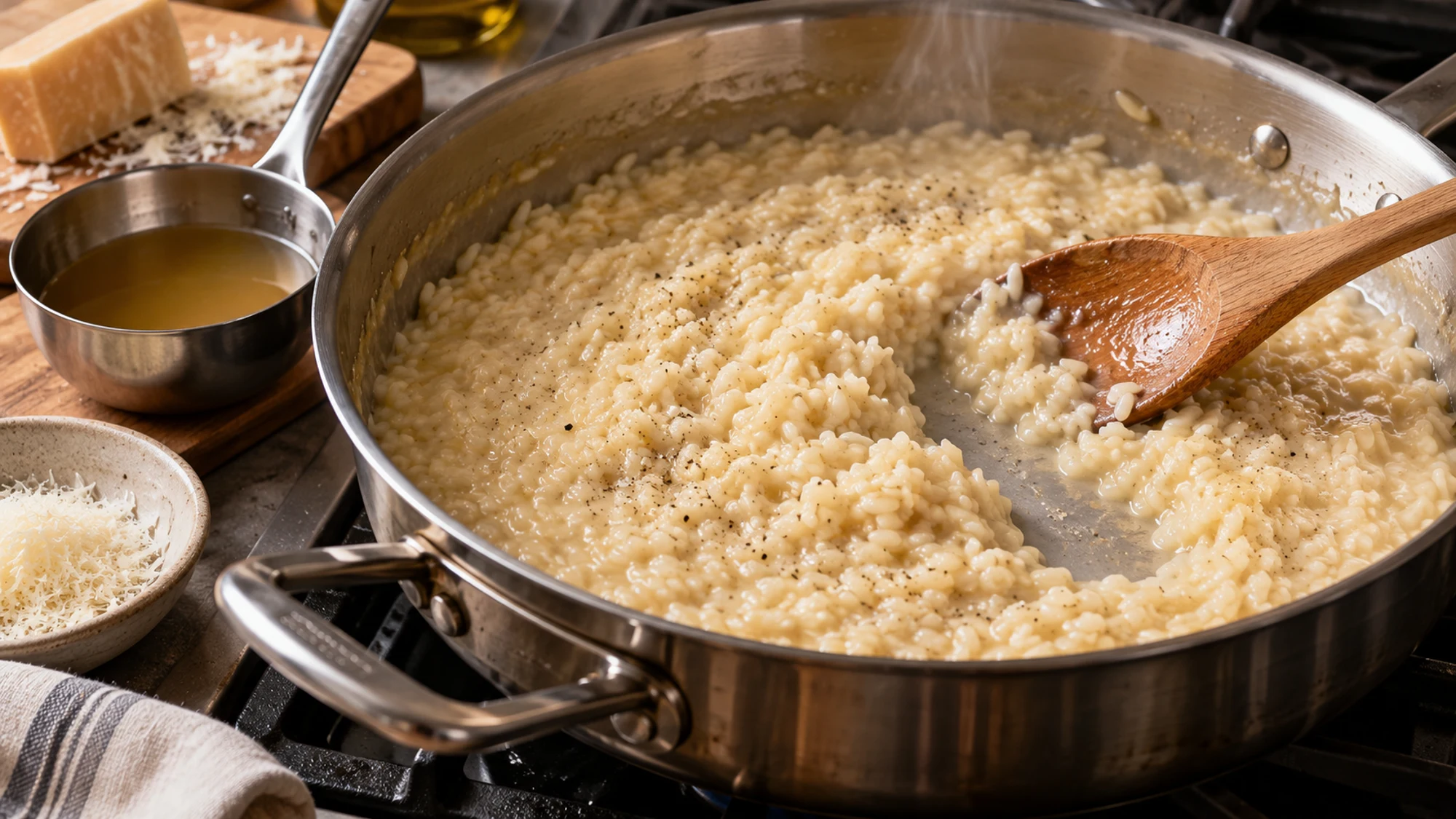
- Add about 1/2 cup hot broth. Simmer gently, stirring frequently and scraping the corners, until most liquid is absorbed but the pan is not dry. Continue adding broth in similar portions for about 18–23 minutes. Begin tasting early; the rice should be tender with a slight firm center, never chalky.
- Remove from the heat. Stir in Parmesan, remaining tablespoon butter and black pepper. Add a splash of hot broth until glossy and loose enough to spread. Taste, then add salt only if needed. Serve immediately, with optional parsley.
- Cool leftovers in shallow portions as quickly as possible, ideally within 1 hour, then refrigerate at 40°F (4°C) or below and use within 24 hours. Reheat only once, with a splash of water or broth, until steaming hot throughout.