
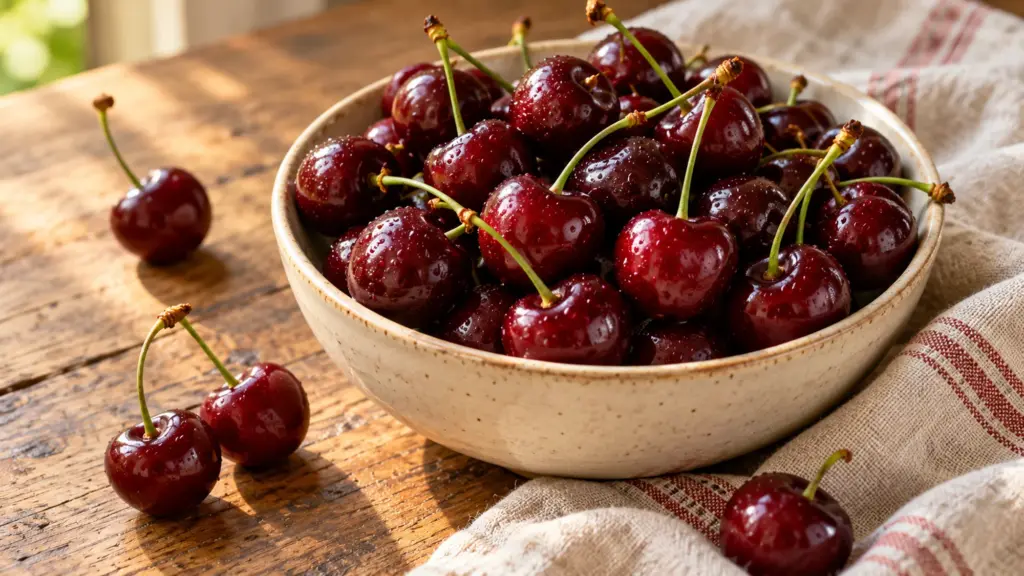
A bowl of glossy cherries makes an inviting snack, but the claims attached to it can get surprisingly complicated. Are you eating fruit, shopping for a sleep remedy, or wondering whether something this sweet can belong in an everyday meal?
Yes, cherries can be a nutritious choice. They provide fiber and small amounts of several nutrients, along with plenty of flavor. Fresh fruit, dried cherries and tart cherry juice are different foods, though, and none should be treated as a guaranteed remedy.
I’d start with the cherries you actually like eating, rather than choosing a product because the label sounds scientific. A sweet cherry with a firm bite has a perfectly good reason to be in your bowl without a list of extraordinary promises.
Why Are Cherries Good for You?
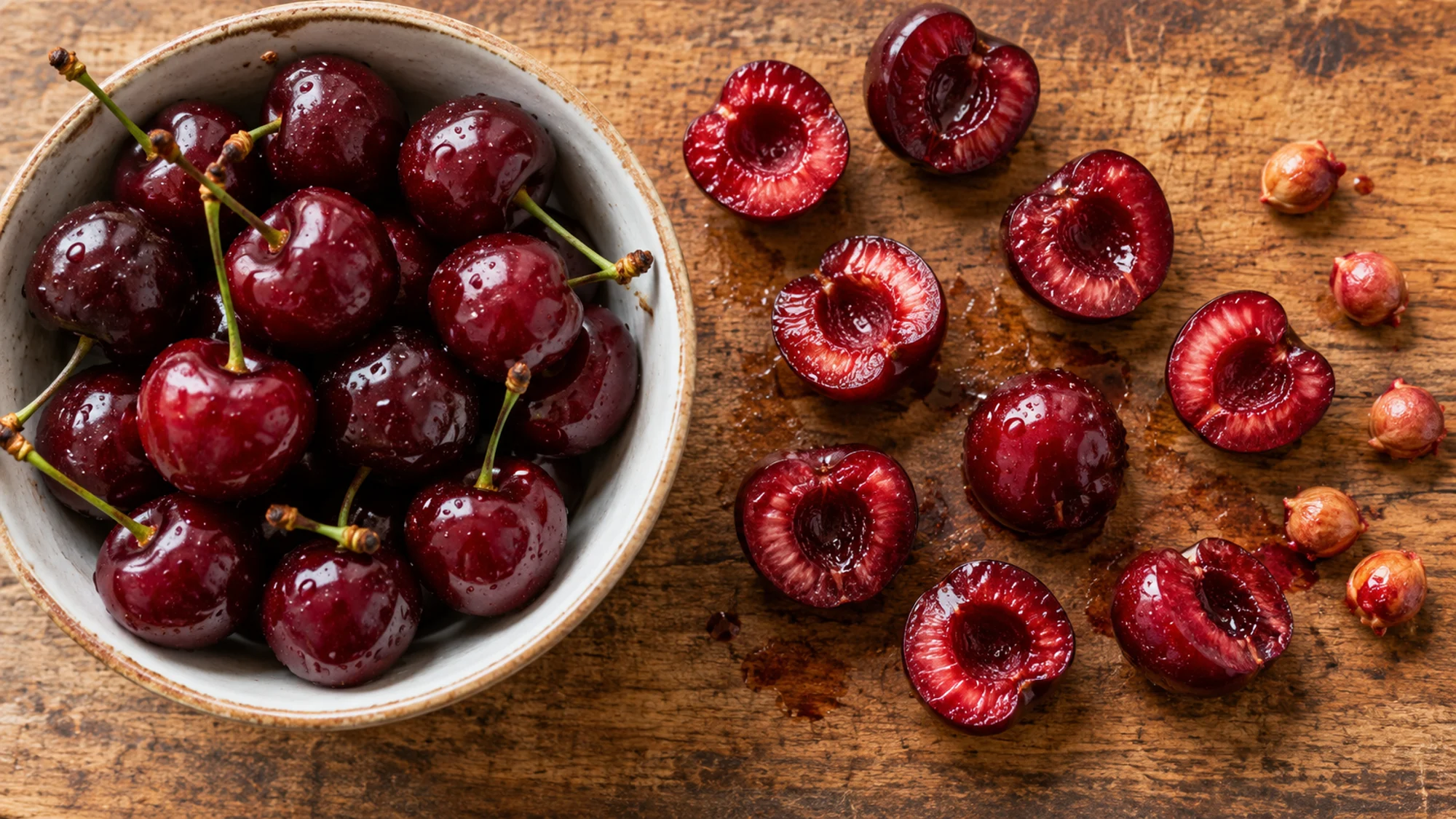
Cherries contribute to the variety in your fruit choices. For a concrete reference, Health Canada’s food composition table lists 10 sweet cherries, weighing 68 grams, with about 43 calories, 1.4 grams of fiber and 151 milligrams of potassium. That is a reference portion, not a prescription or a fixed count for every variety.
The same entry contains about 9 grams of naturally occurring sugar and 5 milligrams of vitamin C. Those numbers describe the fruit; they do not demonstrate that eating cherries will prevent a particular illness. Different fruit sizes and products will give different amounts.
- Think variety: Cherries can join other fruits rather than replacing them all.
- Keep the food intact: Whole or pitted fruit offers a different eating experience from drinking juice.
- Match the portion to the meal: A few cherries on yogurt and a bowl eaten on its own are both reasonable uses, without a universal daily cherry quota.
Choose the Form That Fits Your Kitchen
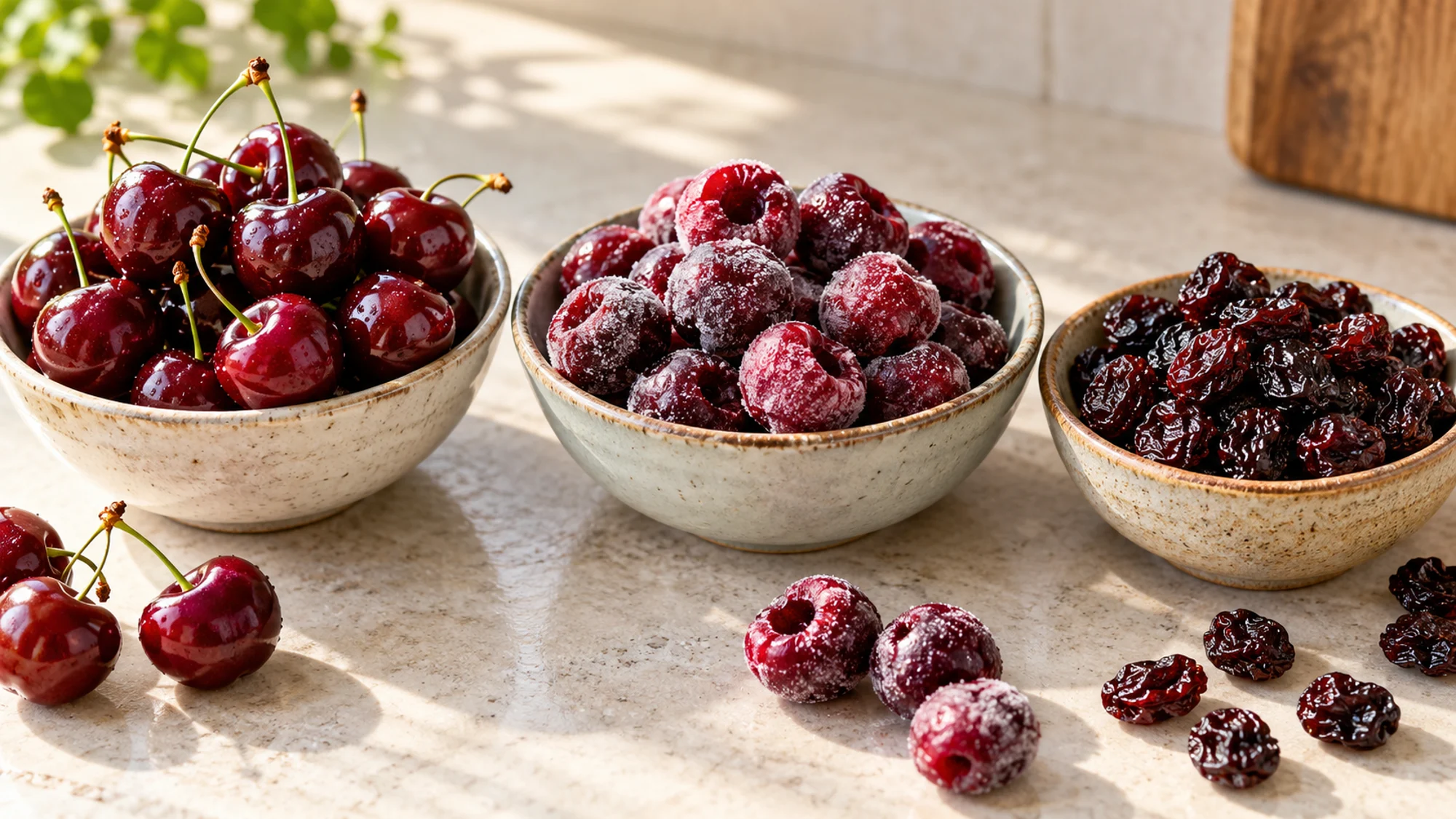
Sweet cherries are commonly eaten fresh; tart cherries are often used in cooking. Neither name tells you whether a packaged product has added sugar. Read the ingredient list and nutrition label, especially for dried fruit, juice drinks and fruit packed in syrup.
| Form | Useful for | What to check |
|---|---|---|
| Fresh cherries | Snacking and adding juicy pieces to meals | Firm fruit; remove pits before mixing into food. |
| Frozen pitted cherries | Oatmeal, sauces and thawed fruit toppings | Added ingredients and the package’s handling directions. |
| Dried cherries | A chewy accent in salads or grain bowls | Added sugar and the stated serving size. |
| Cherry juice or juice drink | A beverage rather than a bowl of fruit | Juice percentage, added sugar and fiber on the label. |
I would choose frozen pitted cherries when convenience is the deciding factor. They save the small but very real job of dealing with every pit. For a crisp, juicy snack, fresh cherries offer a texture that thawed fruit simply does not.
Keep Sleep Claims in Perspective
Some studies have tested tart cherry products, but that is not the same question as whether an ordinary bowl of sweet cherries improves sleep. A small randomized crossover pilot trial published in 2018 studied tart cherry juice in adults over 50 with insomnia; only eight participants completed the study. It reported improvements in measured sleep time, while several questionnaire results did not differ significantly.
That small, specific study is not a basis for promising better sleep from every cherry product. The preparation, study population and outcome all matter. Persistent sleep trouble deserves appropriate care rather than an escalating shopping list of juices and supplements.
- Do not transfer a result from tart cherry juice directly to fresh sweet cherries.
- Treat words such as “antioxidant” as descriptions to investigate, not proof of a treatment effect.
- If a clinician has given you a specific eating plan, fit cherries into that plan rather than treating them as an exception.
Make the Bowl Easy to Enjoy
For everyday handling, Purdue Extension recommends firm, shiny cherries and refrigerated storage in a shallow container. Wash them under running water just before use, and remove the pits before cooking or stirring them into a dish.
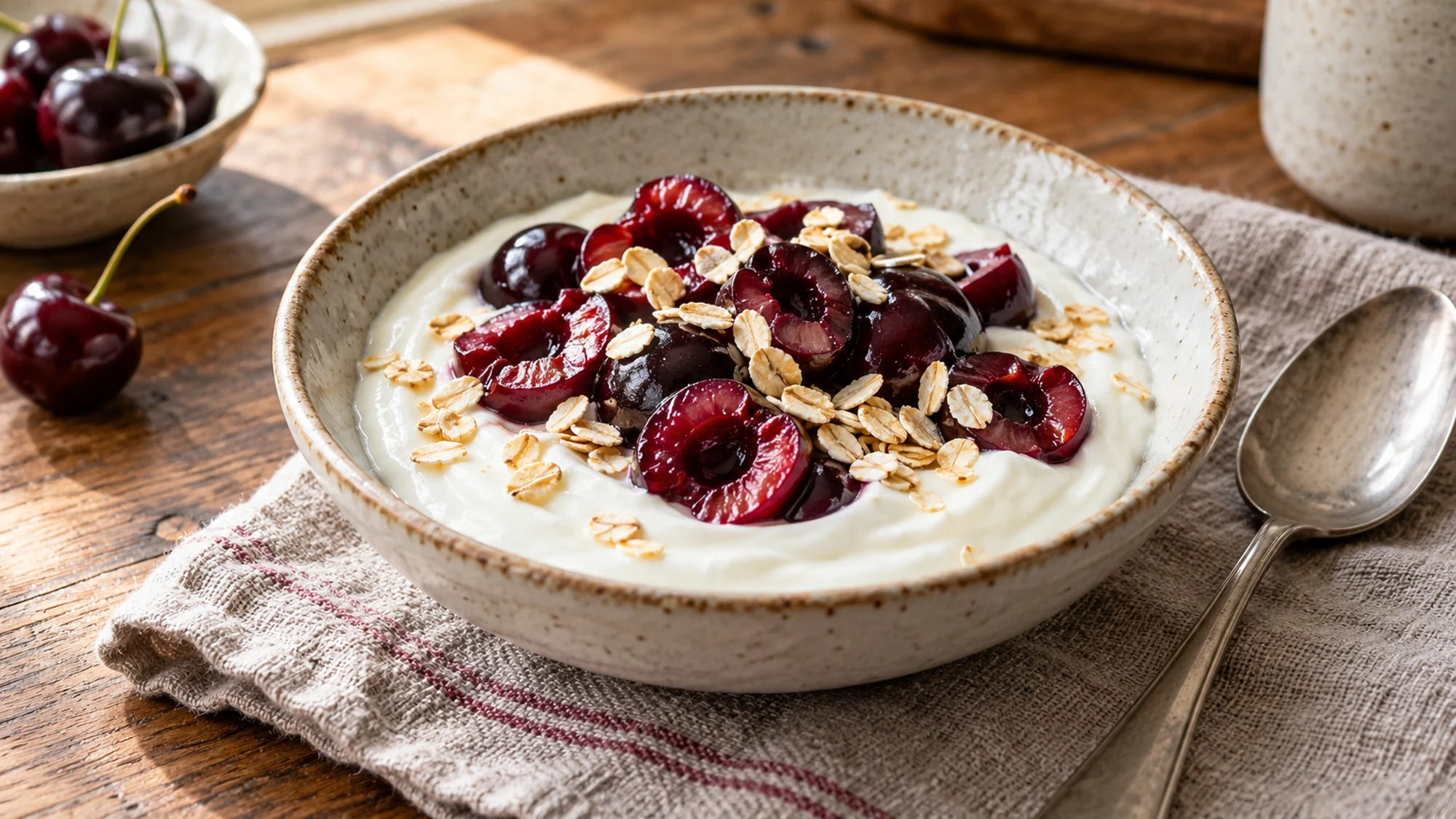
- Spoon pitted halves over plain yogurt, where their juice gives a little color and sweetness.
- Add chopped cherries to oatmeal or a grain salad for a juicy contrast, rather than relying on a thick sweet dressing.
- Keep fruit separate from raw meat and its juices. Use clean hands, utensils and cutting boards.
- Discard rotten fruit. Do not wash cherries with soap; the FDA recommends running water for produce.
The FDA’s produce guidance also makes clear that washing reduces contamination but does not eliminate every germ. For young children, remove pits and prepare fruit in an age-appropriate size and texture; the CDC identifies uncut cherries as a choking hazard.
Bottom Line
Enjoy cherries for their flavor, fiber and place in a varied diet. Choose the form that works for your meal, check packaged products, and leave the treatment promises out of the fruit bowl.
Purdue Extension’s short FoodLink video below demonstrates practical cherry preparation, including dealing with the pits.