
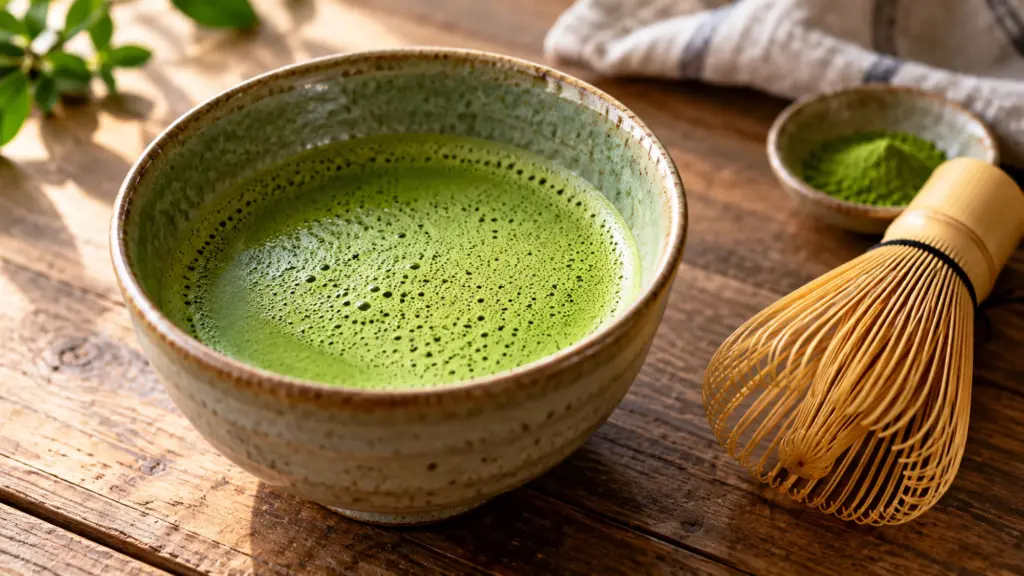
A pale green latte can look gentler than a dark cup of coffee. That is a useful description of color, not a caffeine measurement. If you are swapping drinks to change your caffeine intake, start with what went into the cup.
Yes, matcha has caffeine. Because it is powdered green tea whisked into a drink, the amount of powder and the particular product matter. Milk, water and ice change the drink’s size and taste; they do not remove its caffeine.
I’d ask how much matcha a café uses before assuming the largest latte is a mild option. Some drinks contain more powder than others, and an extra scoop matters even when the finished drink still tastes creamy.
Does Matcha Have Caffeine in Every Serving?
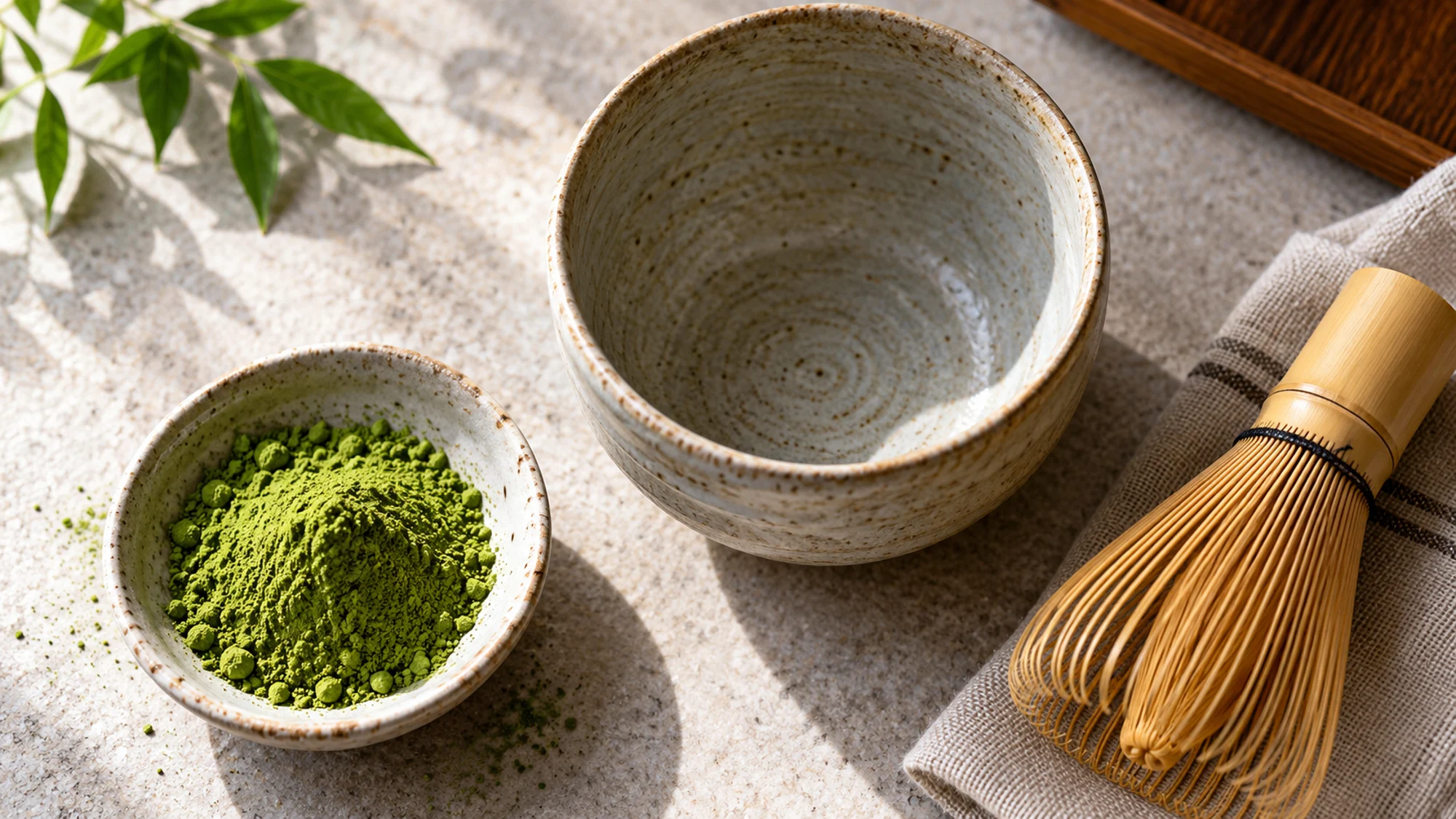
Ordinary matcha contains caffeine naturally. In a 2024 retail survey by Bavaria’s food-safety authority, LGL, tested products varied in caffeine content. The agency reported approximately 13–68 milligrams in drinks prepared with 1–2 grams of the tested matcha powders. This is a result from those products, not a guaranteed range for every café drink or tin.
A serving made with more powder can contain more caffeine than a smaller serving of the same product. Without product-specific information and a measured amount, an exact milligram claim would be guesswork.
- At home: Look for the manufacturer’s caffeine information and its stated serving size.
- At a café: Check published information for the actual drink and size, and ask whether extra matcha is added.
- With a mix: Read the ingredients. A sweetened latte mix and pure matcha powder are not interchangeable gram for gram.
Why the Amount of Powder Matters
A practical example comes from Ippodo’s usucha preparation, which uses 2 grams of matcha with 60 milliliters of water. It demonstrates why a small bowl need not contain little tea powder. That preparation amount is not a universal caffeine value or a recommendation for everyone.
A kitchen scale that can measure small amounts is more consistent than a casual heaped spoon. You do not have to turn tea into a laboratory exercise, but knowing your usual serving makes comparisons much less slippery.
| Change to the drink | What happens to caffeine | What to check |
|---|---|---|
| More of the same matcha powder | The caffeine total increases | Powder amount and product information. |
| More plain milk or water, same powder | The same caffeine is spread through more liquid | Whether the café also increases the powder. |
| Ice added, same powder | Ice does not remove caffeine | The recipe, not just the cup size. |
| An added espresso shot | Another caffeine source joins the drink | Both the matcha and the coffee. |
| Switching brands or blends | The amount may differ | A new label or manufacturer’s information. |
A Matcha Latte Is Still a Caffeinated Drink
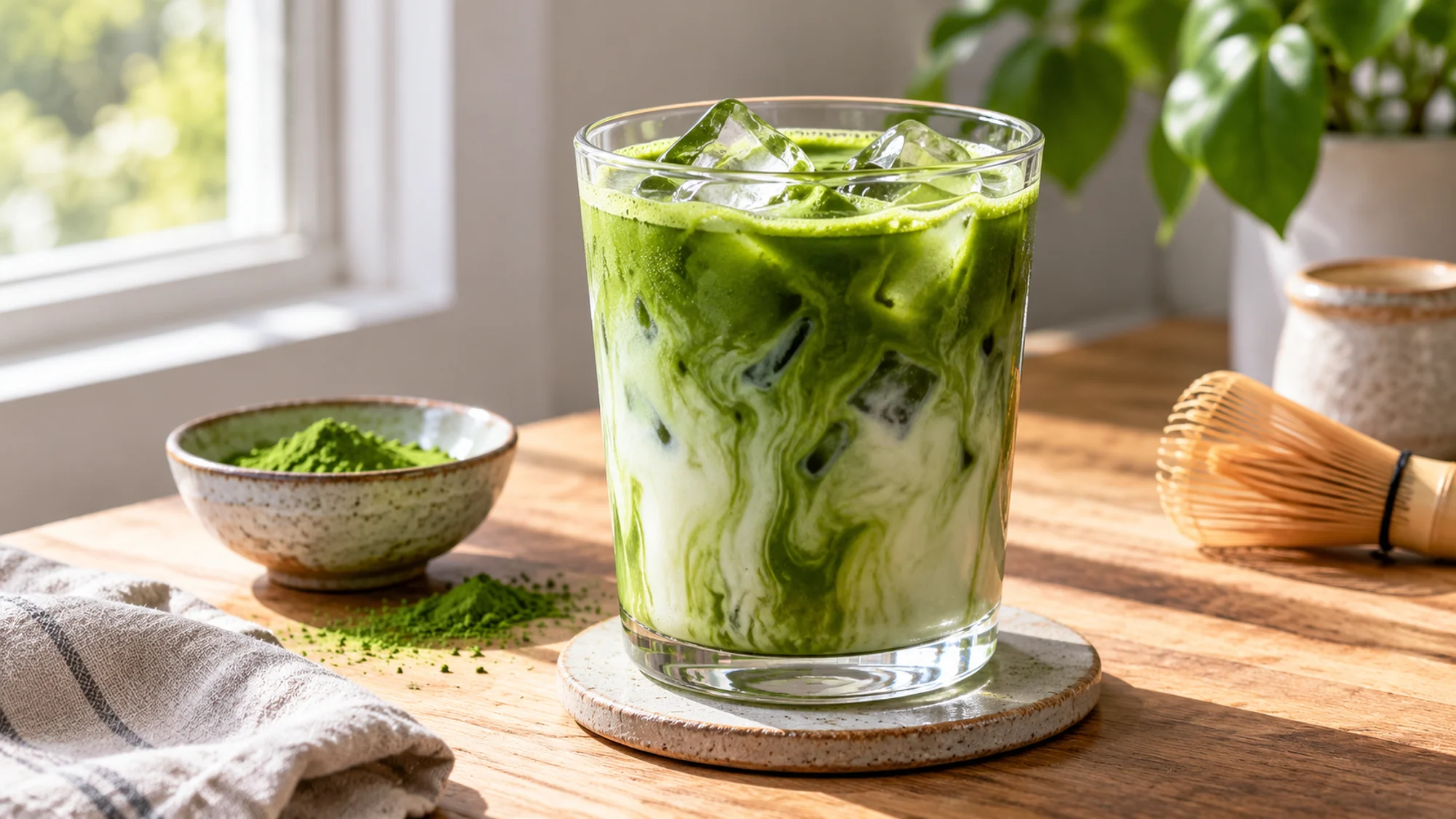
Adding milk changes matcha’s texture and softens its grassy flavor, but it does not turn the tea into a caffeine-free drink. The same applies to a sweetener: a smoother taste is not evidence of a lower caffeine amount.
I would choose the milk and sweetness for the drink I want, then make the caffeine decision separately. That keeps a pleasant tea ritual from becoming a tangle of unsupported promises about steady energy or a guaranteed absence of jitters.
- Order a smaller amount of matcha when your aim is less caffeine, rather than simply adding more milk.
- Check bottled products by serving: one bottle can contain more than the amount used for the nutrition panel.
- If you need a caffeine-free drink, choose an option specifically identified as caffeine-free rather than relying on matcha’s green-tea image.
Compare Matcha With Coffee Without Guessing
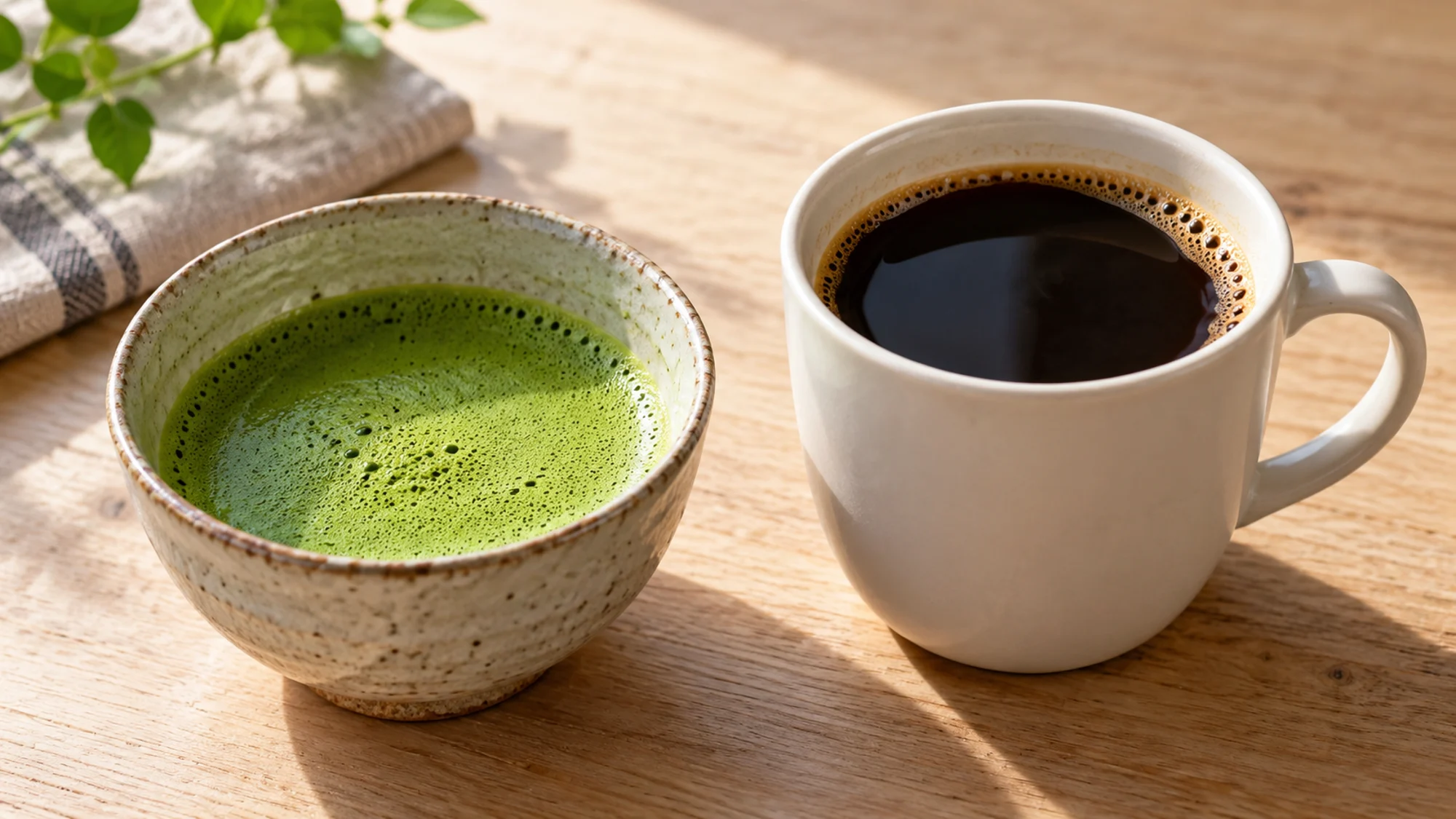
There is no single matcha-to-coffee ratio that covers every preparation. Compare the stated caffeine in the servings you actually drink. The guide to coffee, cup size and caffeine explains why the same “one cup” shorthand can also be misleading for coffee.
The FDA’s caffeine guidance emphasizes individual sensitivity and the total from all sources. Its 400-milligram daily reference for most adults is not a target or a guarantee that a particular amount will feel comfortable. Matcha counts alongside coffee, tea, energy drinks and other caffeine sources.
- Notice whether later servings interfere with sleep; a drink does not need to taste strong to matter.
- If caffeine brings uncomfortable effects, reduce the amount and discuss persistent symptoms or medicine interactions with a clinician or pharmacist.
- Pregnancy, breastfeeding and children’s caffeine questions need advice appropriate to that situation, not the general adult reference.
Bottom Line
Count the powder, check the product and compare actual servings. Matcha can be an enjoyable drink, but its color, foam and milk do not make its caffeine disappear.
Ippodo’s short video below demonstrates the thin-matcha preparation mentioned above. It is a tea-making demonstration, not a measurement of caffeine in your particular powder.