
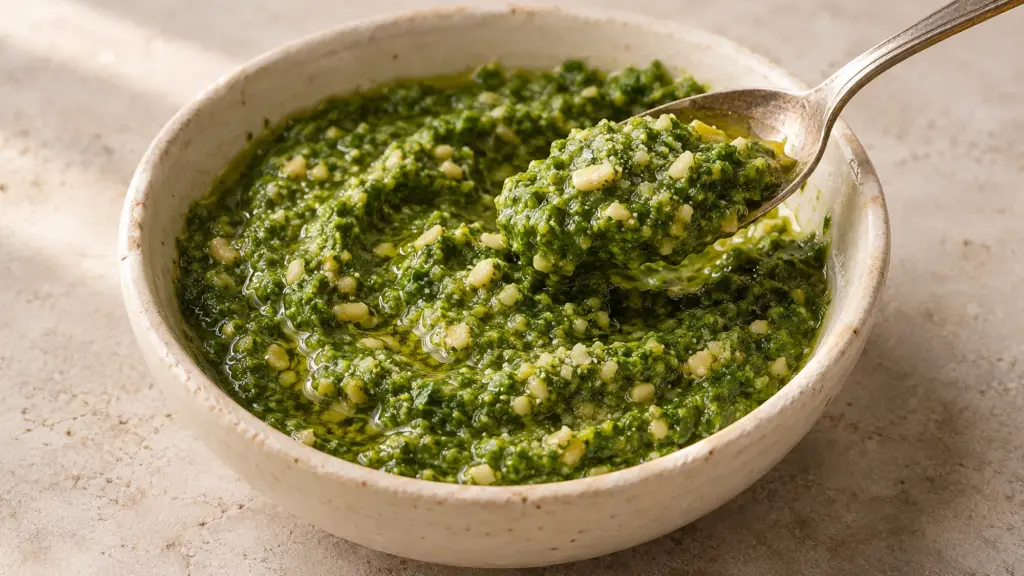
A big bunch of basil can make a plain dinner feel much more promising. If you want to know how to make pesto, think of it as a fragrant paste rather than a green liquid: basil provides the aroma, pine nuts soften the texture, and Parmesan adds a savory finish.
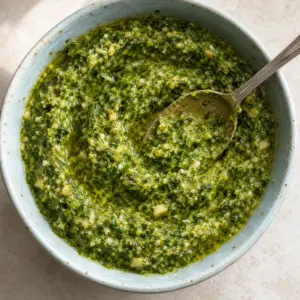
Crush garlic and pine nuts in a mortar, work in dry basil leaves, then stir in finely grated Parmesan and olive oil. Stop when the pesto is cohesive but still textured. Add it to warm food off the heat instead of simmering the sauce.
I’d choose a mortar when there is time to enjoy the process. You can feel the leaves break down and decide exactly how coarse to leave the sauce. A food processor is a practical alternative, but neither method needs to produce a perfectly smooth purée.
Serving Suggestions for Fresh Pesto
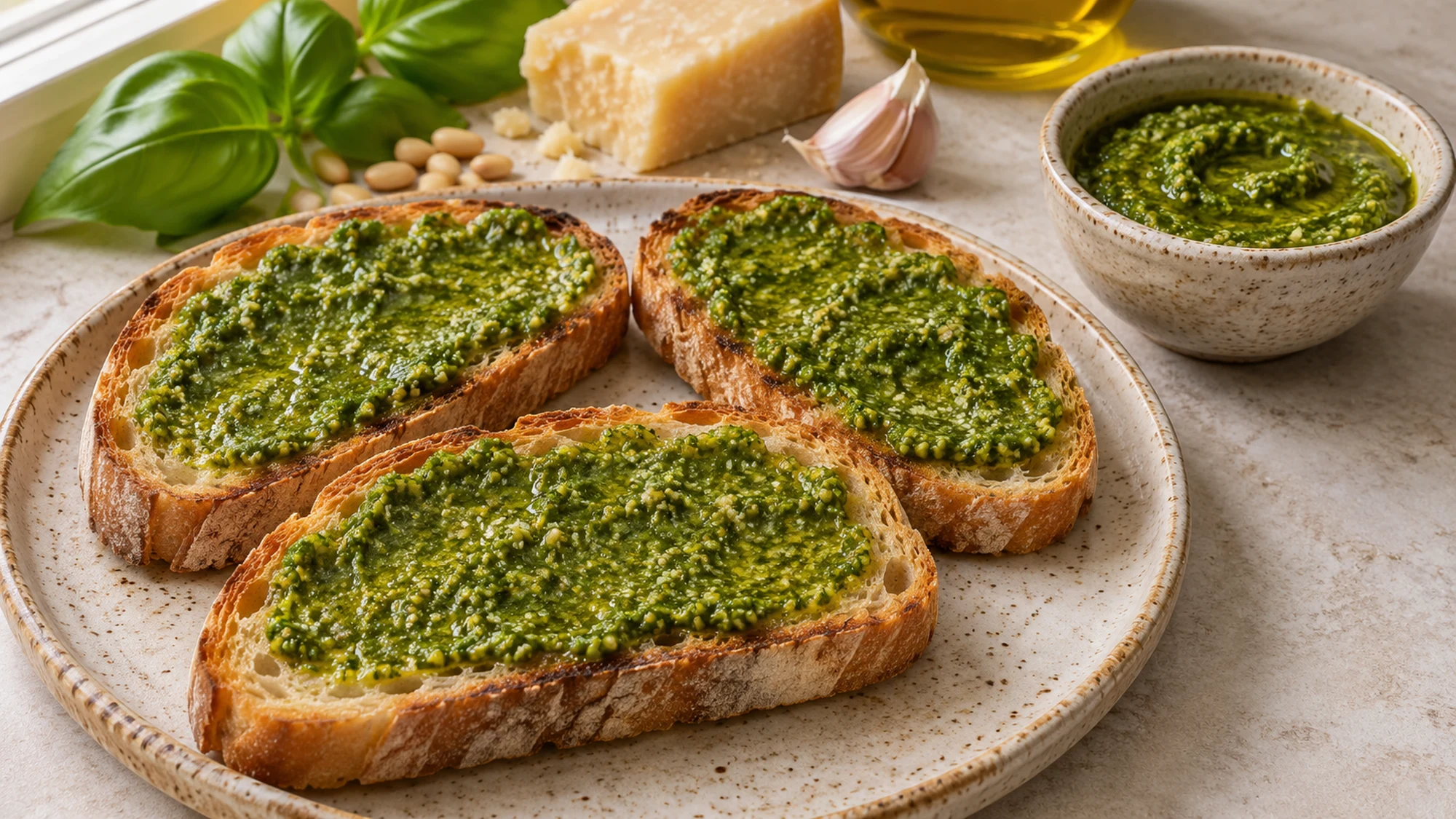
Start with a modest spoonful, taste, and add more if the dish needs it. Pesto is concentrated seasoning, so a thin coating often works better than a deep pool. Keep the finished sauce separate until the other food is ready.
- Pasta: Toss drained pasta with pesto off the heat. Add reserved pasta water a splash at a time to help the sauce coat the noodles instead of gathering in clumps.
- Vegetables: Spoon it over roasted zucchini or fold a little into roasted spaghetti squash. Let the vegetable retain its own texture.
- Toast and sandwiches: Spread it thinly, then add your usual filling. Parmesan already supplies salt, so taste before adding more salty toppings.
For another meal, stir a small amount into cooked white beans or spoon it over cooked chicken. I prefer using the same sauce in different portions rather than thinning the whole batch; thick pesto remains useful as a spread.
Loosen only the portion you are serving. A splash of pasta water suits noodles, while toast benefits from a thicker paste.
How to Make Pesto With Different Ingredients
Fresh basil should smell distinctly herbal and look sound, without slimy leaves. Rinse it, then dry it thoroughly so excess water does not dilute the paste. Remove tough stems, grate the cheese finely, and use a small garlic clove: raw garlic has plenty to say.
| Swap | What changes | Useful check |
|---|---|---|
| Walnuts for pine nuts | More earthy flavor | Start with the same weight |
| Part parsley for basil | Less basil aroma | Keep basil if that flavor matters |
| Vegetarian-rennet hard cheese | Brand-dependent saltiness | Read the cheese label |
| Food processor for mortar | Finer, more uniform paste | Pulse and scrape instead of blending continuously |
If using a processor, pulse the garlic, nuts and basil briefly, scrape the bowl, then incorporate the cheese and oil with short pulses. Avoid running it continuously after the sauce comes together. Taste a little on bread or pasta before adjusting; a concentrated spoonful can seem saltier than the finished meal.
Change one ingredient at a time and judge the sauce on the food it will accompany. A substitution can work without tasting identical.
Health Benefits and Sensible Storage
Pesto brings herbs, nuts and olive oil into a meal, but its green color does not make it a vegetable serving. The oil and nuts contribute fat, while Parmesan contributes some protein and calcium. Treat it as a flavorful addition to a varied plate rather than a stand-alone nutritional solution.
- Portions matter: The estimate in the card is for one-eighth of the batch, about two tablespoons. Bread, pasta and other accompaniments are additional.
- Check ingredients for guests: This version contains milk and pine nuts. A different nut or seed is not automatically a suitable allergy substitution.
- Keep it cold: Follow pesto storage guidance: refrigerate promptly in a covered container and use within three days, or freeze for longer storage.
- Skip home canning: There is no approved home-canning process for pesto. An oil layer does not make it shelf-stable.
Make only what you can refrigerate or freeze promptly. Color, aroma and an oil covering cannot establish that a stored batch is safe.
Bottom Line
Good pesto is about balance and texture: fragrant basil, enough garlic to notice, finely grated cheese and oil stirred into a cohesive paste. Serve it without prolonged heating, keep substitutions deliberate, and freeze extra portions early. A small bowl can give several ordinary meals a useful lift.
How to Make Pesto Recipe

Ingredients
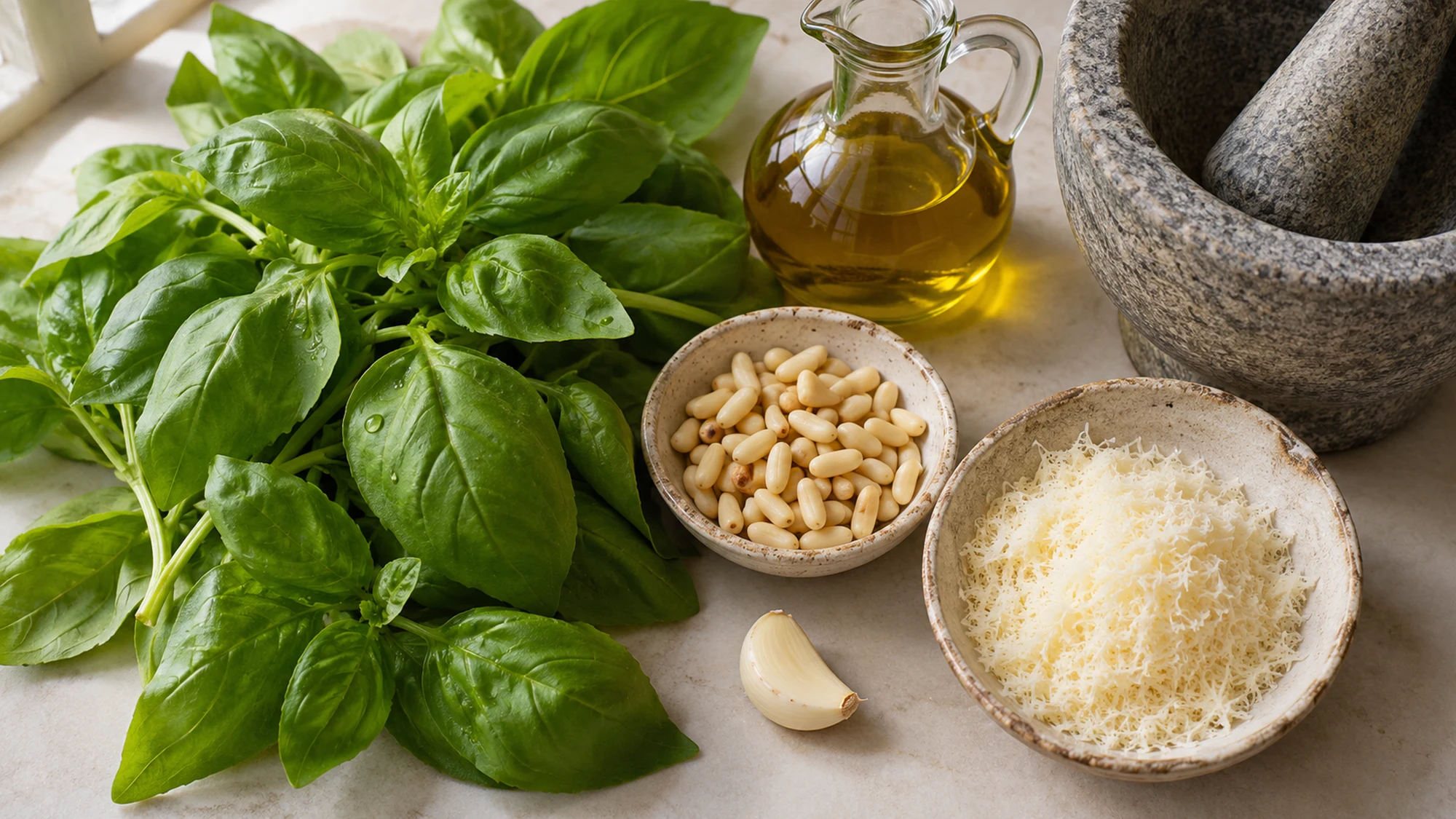
- 2 packed cups fresh basil leaves about 60 g, tough stems removed
- 0.25 cup pine nuts 30 g
- 1 small garlic clove peeled, about 3 g
- 0.5 cup finely grated Parmesan 40 g
- 0.333333 cup extra-virgin olive oil 80 ml
- 0.25 teaspoon fine salt about 1.5 g; adjust only after tasting
Equipment
- Large mortar and pestle or a food processor
- Fine grater
- Measuring cups and spoons
- Clean kitchen towel
Instructions
- Rinse the basil under running water and dry thoroughly with a clean towel or salad spinner. Remove tough stems. Finely grate the Parmesan.
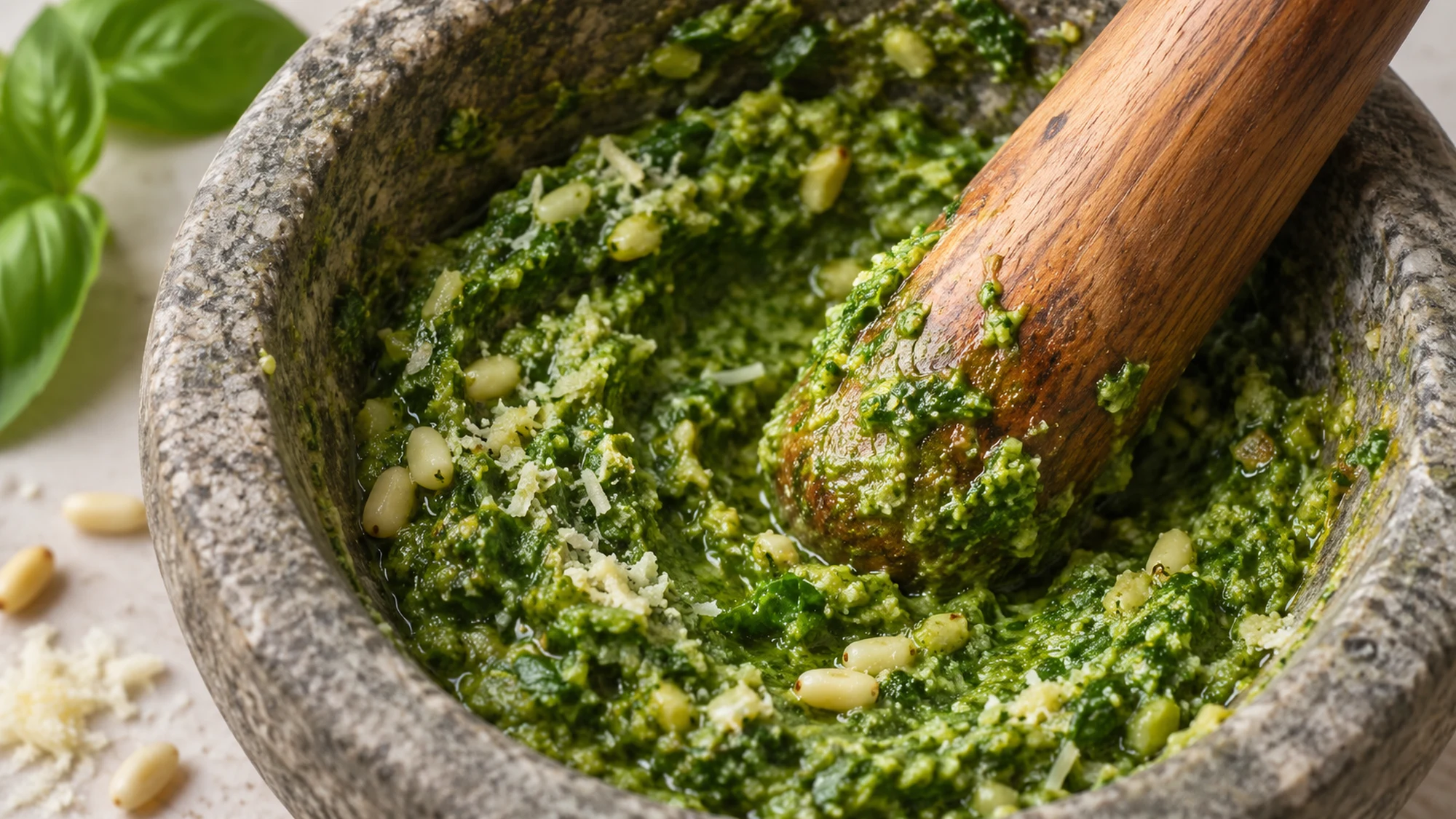
- Pound the garlic with the salt in a large mortar until it forms a paste. Add the pine nuts and crush into a coarse, creamy mixture.
- Add the basil in small handfuls, pressing and grinding with the pestle until the leaves break down. Scrape the sides as needed. Work in batches if the mortar is small; combine the crushed portions in a bowl.
- Stir in the finely grated Parmesan. Gradually work in the olive oil until the mixture forms a cohesive, spoonable paste with some texture. Taste a little on bread or pasta before adjusting salt.
- Serve with warm food off the heat. Refrigerate unused pesto promptly in a covered container and use within 3 days, or freeze portions for longer storage. Thaw frozen portions in the refrigerator. Do not home-can pesto.