
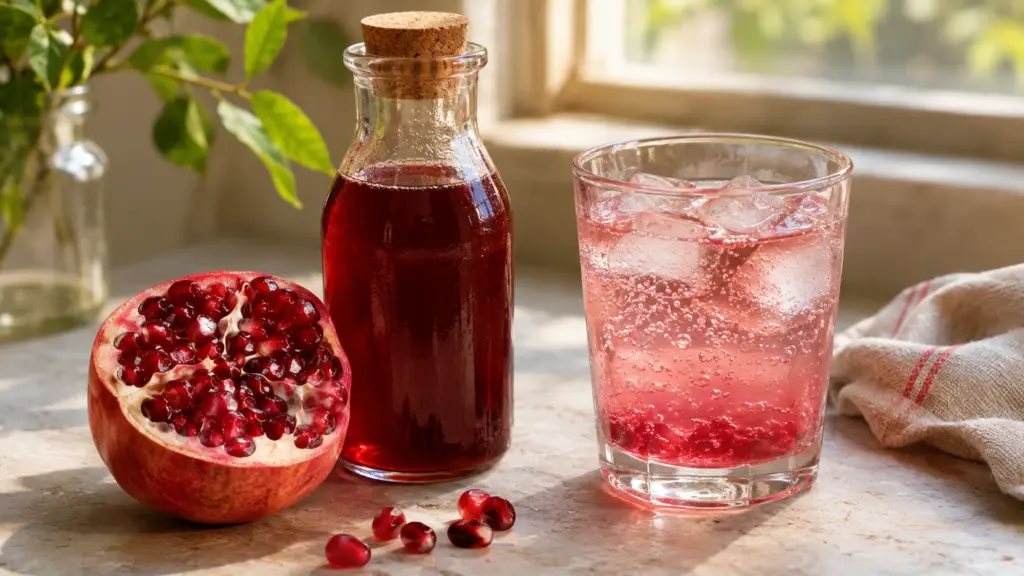
A red bottle does not tell you much about what is inside it. With homemade grenadine, the useful starting point is simpler: choose pomegranate juice you enjoy, dissolve sugar into it gently, and keep the finished syrup in the refrigerator. The color follows the fruit rather than a bottle of dye.
Grenadine is a sweet pomegranate mixing syrup. This small batch uses pomegranate juice, sugar and a little lemon juice; warm it only until dissolved, cool it, then add measured spoonfuls to drinks.
I’d choose 100% pomegranate juice without added sugar for a clear starting point. A juice blend can still make a pleasant syrup, but apple, grape or other juices change the balance. Read the ingredients before deciding that two bottles will behave the same way.
Serving Suggestions for Grenadine
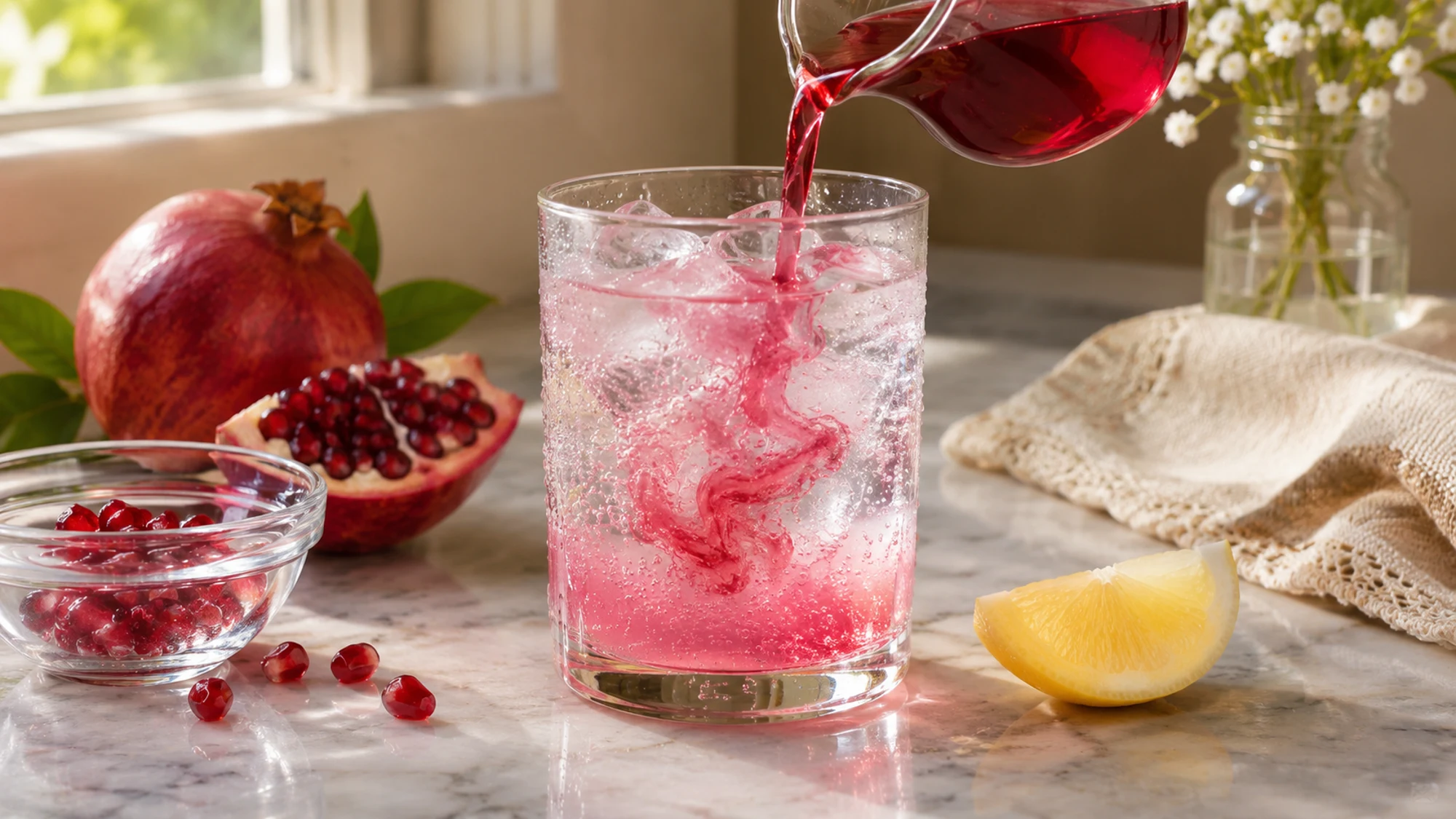
A little syrup goes a long way in a glass. Start with a teaspoon or two in sparkling water, stir well and taste before adding more. Ice and the amount of water change the final impression, so judge the mixed drink rather than the syrup by itself.
- For a simple sparkling drink, add chilled syrup to plain carbonated water over ice. A squeeze of citrus can add brightness if the drink needs it.
- For lemonade, replace part of the usual sweetener with grenadine. Do not add a full sweetened lemonade recipe and a generous syrup pour without tasting.
- For a dessert accent, drizzle a small amount over plain yogurt or vanilla ice cream. It is a sauce-like addition, not a substitute for a portion of fruit.
- For a party, put out a small serving bottle and keep the main batch chilled. Use a clean spoon or pourer rather than dipping into it repeatedly.
For a different chilled dessert idea, our frozen yogurt bark uses actual berries pressed into yogurt. Grenadine would add sweetness and moisture instead of that fruit texture, so I would keep it as a drizzle at serving rather than casually pour it into the bark mixture.
Measure the first addition and adjust the finished drink. You can always add another small spoonful, but you cannot easily remove sweetness once it is mixed in.
Grenadine Variations and the Syrup’s Texture
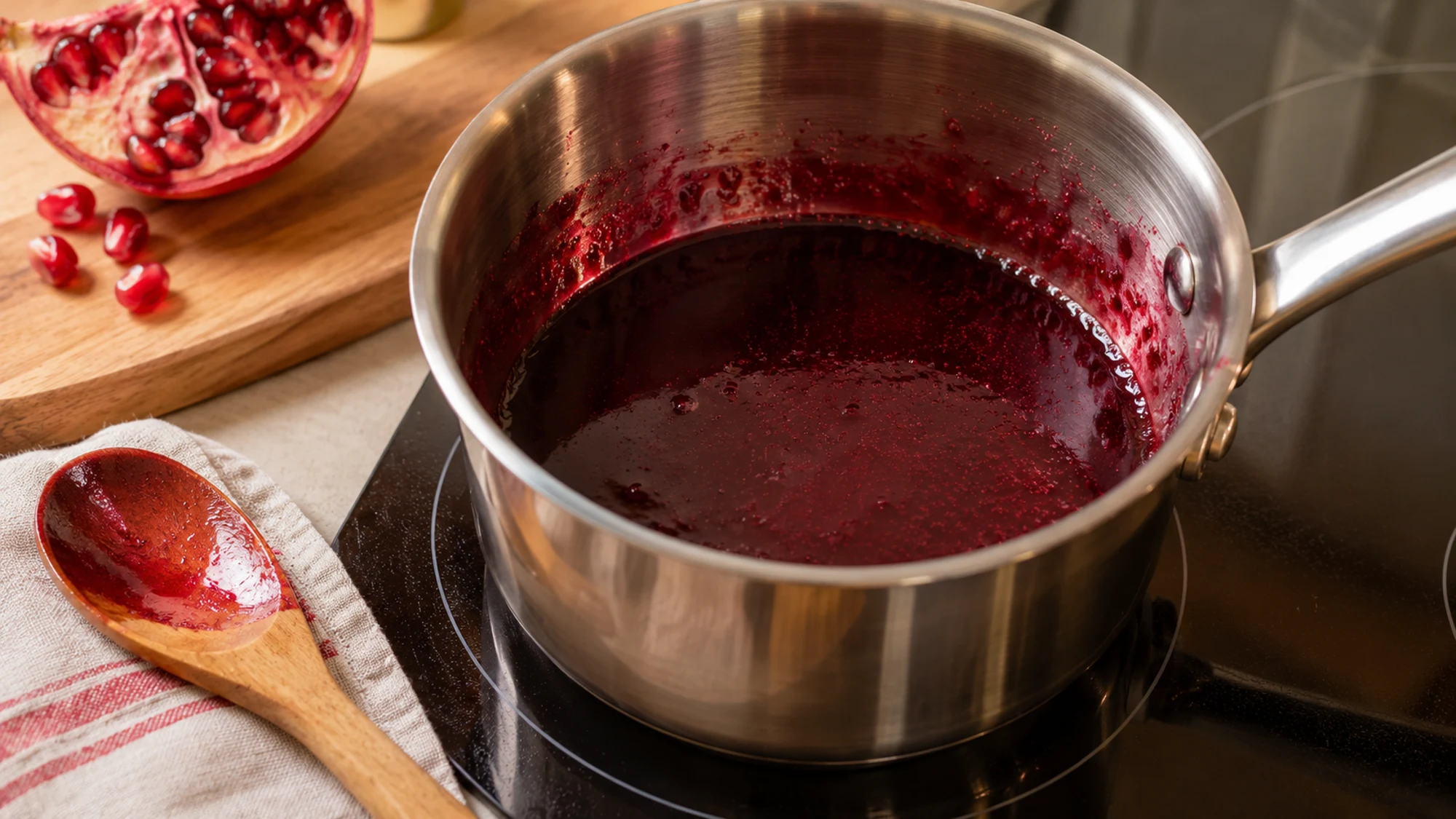
Gentle heat is enough to dissolve sugar; a long, hard boil is not the goal. Reducing the mixture heavily concentrates it and changes how much you need in a drink. The syrup also becomes thicker as it cools, so a warm spoonful is not the final texture test.
| Option | What changes | What to watch |
|---|---|---|
| 100% pomegranate juice | Straightforward fruit character | Check that no sugar is already added |
| Pomegranate juice blend | Other fruit flavors join in | Expect a different sweetness |
| A few drops of orange blossom water | A floral aroma | Add very cautiously |
| Long reduction | Thicker, more concentrated syrup | Not the measured version below |
Bartender Jeffrey Morgenthaler describes a richer approach in his homemade grenadine method, including pomegranate molasses and orange flower water. This version deliberately stays simpler. I prefer learning the taste of the juice-and-sugar base before adding another aromatic ingredient.
- Use granulated sugar for a clean starting flavor. A darker sugar brings its own taste and can change the ruby color.
- Stir along the bottom and sides so no sugar crystals remain. Avoid splashing hot syrup, which can cling to skin.
- Let the syrup cool and chill before judging its body. It should pour easily rather than behave like a jam.
- Make a modest batch you can use promptly. Doubling the recipe is easy mathematically, but it also leaves more syrup needing refrigerator space.
Treat the recipe as a mixing syrup, not a reduction project. Dissolved sugar and a cooled texture are more useful targets than a dramatic boil.
Health Benefits and Refrigerator Storage
Pomegranate gives grenadine its identity, but the added sugar still makes this a sweetener. A small drizzle is not nutritionally equivalent to eating the fruit. There is no need to attach an antioxidant or detox promise to something whose practical job is flavor and color.
- Use commercially pasteurized juice. The FDA’s juice-safety guidance explains why untreated juice needs special care, especially for people at greater risk of foodborne illness.
- Transfer the syrup into a clean container and refrigerate promptly. This is not a tested canning recipe, and a tight bottle cap does not make it shelf-stable.
- Use a clean pourer and keep the bottle chilled between uses. Discard syrup with mold, unexpected bubbling or an off odor rather than trying to boil it back into condition.
For this small home batch, plan to use it within two weeks and follow any shorter handling direction on the juice you opened. That is a conservative household use plan, not laboratory shelf-life testing. Freezing small portions is another way to avoid keeping a partly used bottle indefinitely.
Enjoy grenadine as an added sweetener and store it as a refrigerated homemade syrup. Fruit flavor does not cancel out the sugar or replace safe handling.
Bottom Line
Good grenadine starts with a juice label, a gentle saucepan and a light hand when serving. Keep the pomegranate flavor clear, chill the small batch and adjust each drink after the first measured splash.
Grenadine Recipe

Ingredients
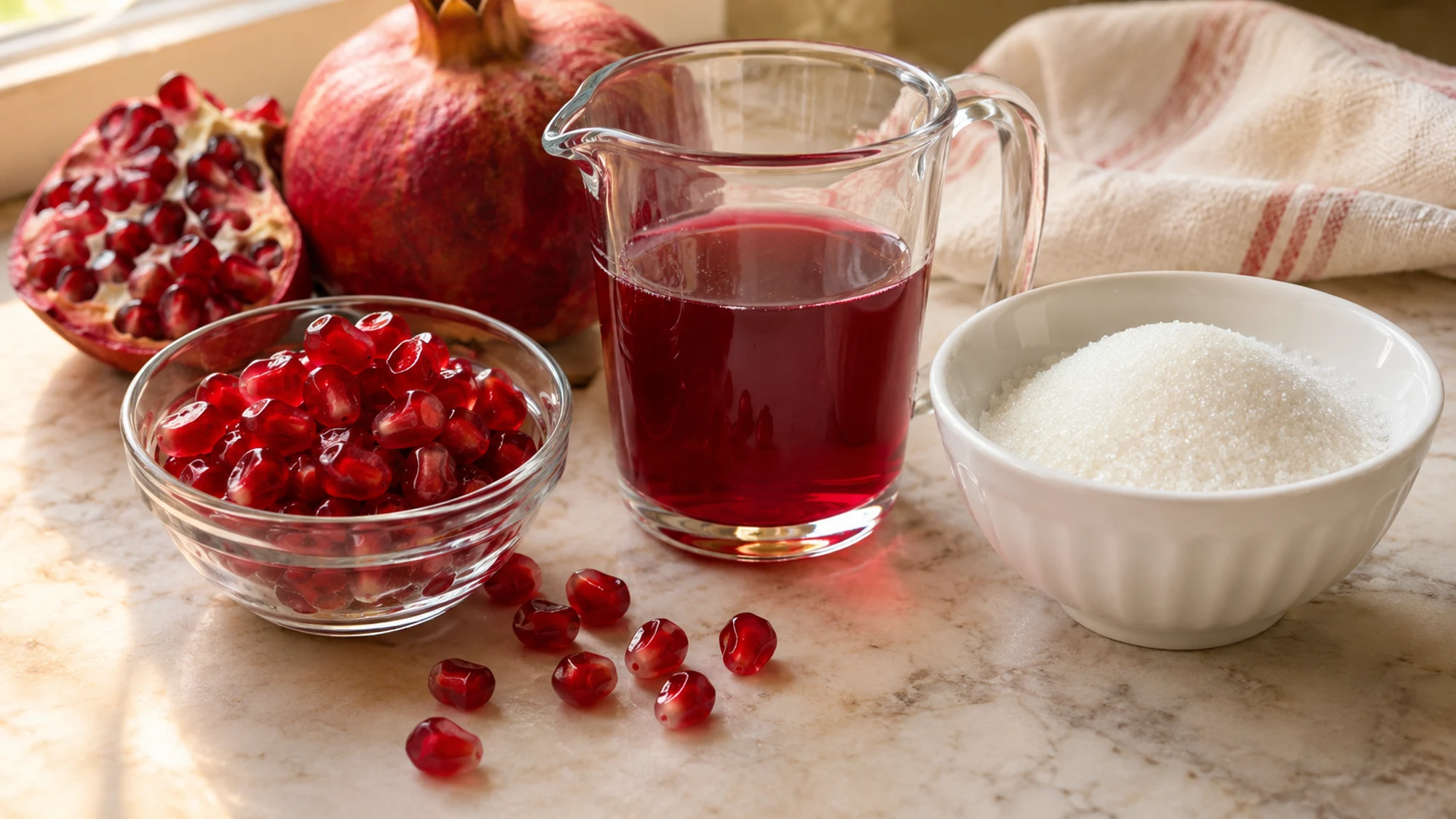
- 1 cup 100% pomegranate juice commercially pasteurized, no added sugar
- 1 cup granulated sugar 200 g
- 1 tablespoon lemon juice strained
Equipment
- Small saucepan
- Spoon
- Measuring cup and tablespoon
- Clean bottle or jar
- Funnel
Instructions
- Put the pomegranate juice and sugar into a small saucepan. Stir over medium-low heat until the sugar has completely dissolved, including any crystals around the edges.
- Bring just to a gentle simmer, then remove from the heat. Do not boil hard or reduce to a thick sauce. Stir in the lemon juice.
- Let cool briefly, then use a clean funnel to pour into a clean heat-safe container. Refrigerate promptly and within 2 hours; chill fully before serving.
- Use a clean spoon or pourer to add small amounts to drinks. Keep refrigerated and plan to use within 2 weeks, or sooner if the opened juice requires it. Discard if mold, unexpected bubbling or an off odor develops.