
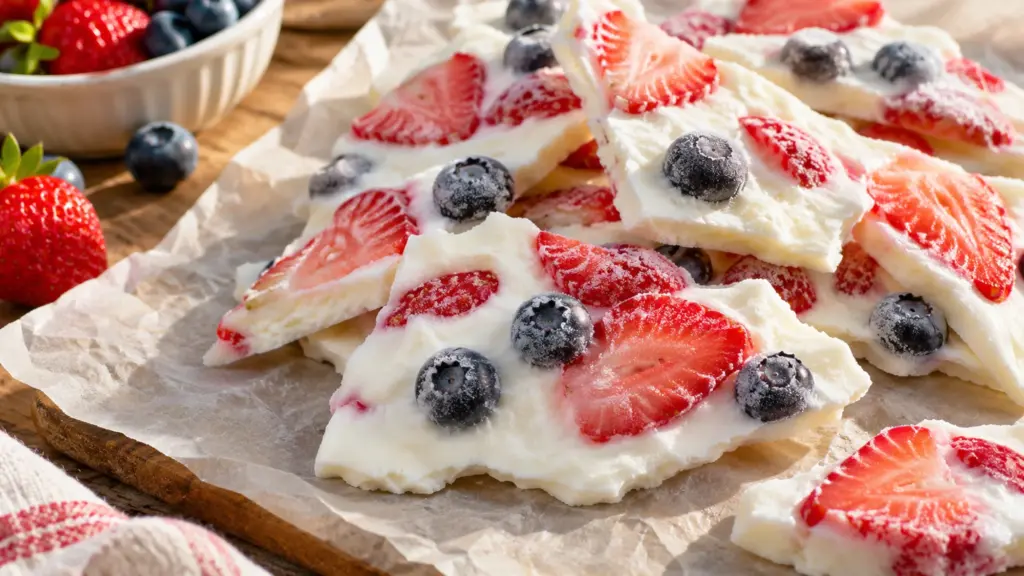
A bowl of yogurt is easy to dress up; a sheet of it needs a little more planning. Frozen yogurt bark works best when the layer is thin enough to bite, the fruit is dry, and there is already a flat space waiting in the freezer. Those small decisions matter more than arranging every blueberry perfectly.
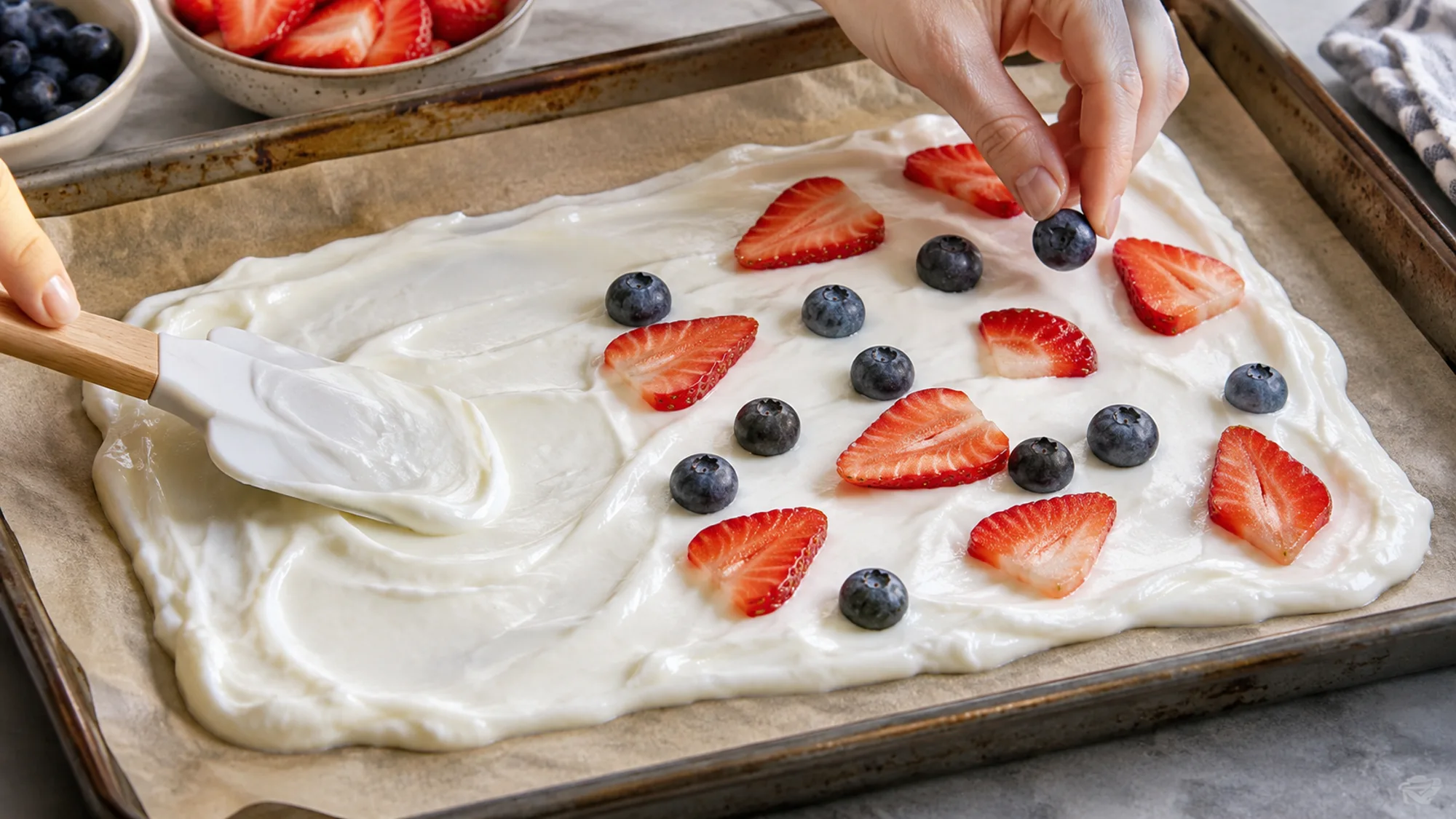
Spread honey-vanilla Greek yogurt about a quarter inch thick, press in sliced strawberries and blueberries, and freeze until firm. Break the sheet into portions and eat them straight from the freezer: this is a crisp, chilly yogurt snack, not soft, churned ice cream.
I prefer whole-milk Greek yogurt because its thicker texture is easier to spread evenly. Plain yogurt lets you control sweetness before freezing. The bark stays tangy, with bright pockets of fruit and no chocolate coating.
Serving Suggestions for Frozen Yogurt Bark
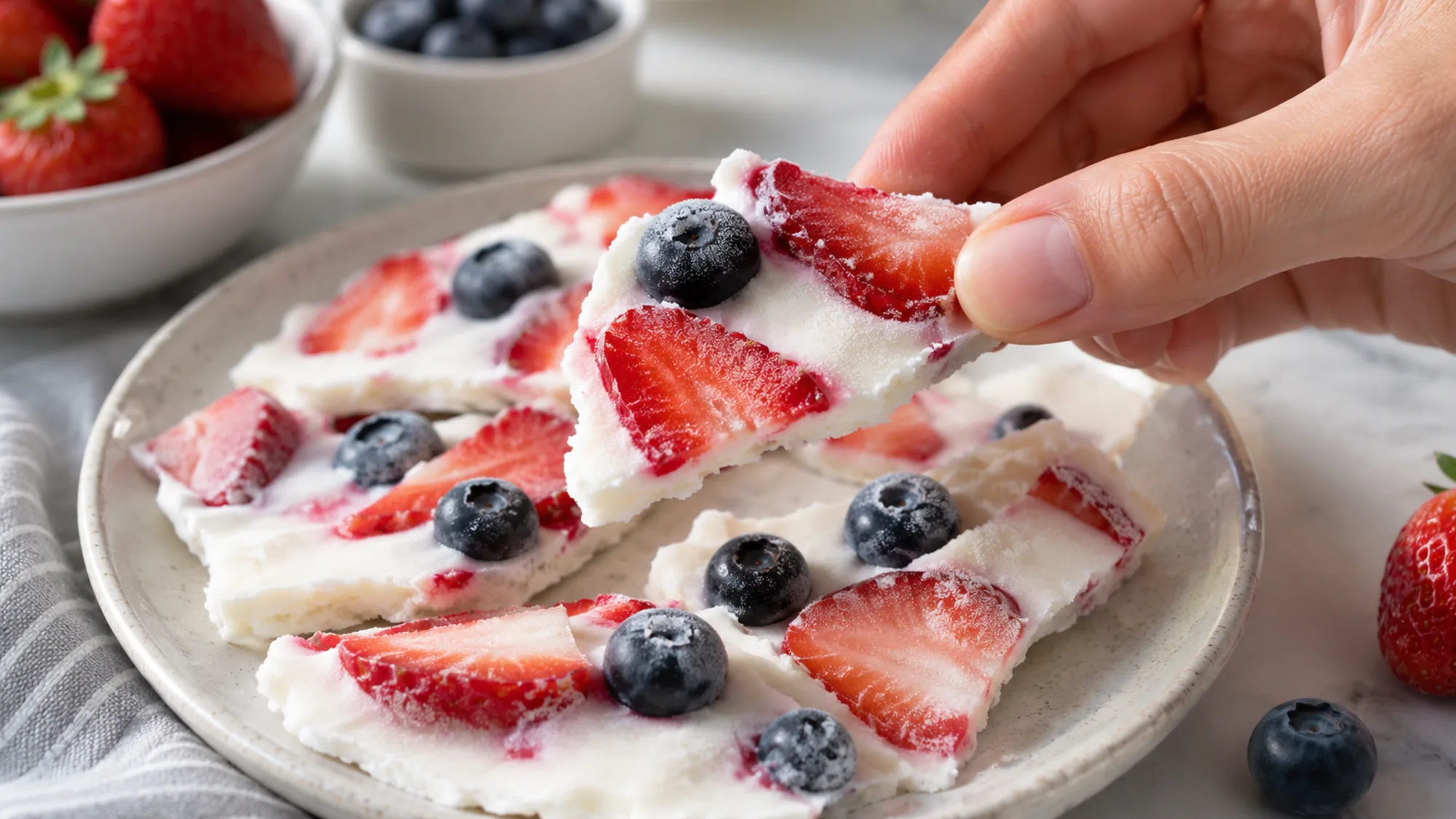
Think of bark as something to serve in small rounds rather than a platter that can sit out through a gathering. It softens quickly in warm hands or a warm room. Put a few pieces on a chilled plate and leave the rest in the freezer until someone wants more.
- For an afternoon snack: serve a portion on its own, or alongside a food you enjoy that makes the snack satisfying for you.
- For dessert: use small shards as a cold finish after dinner. Keep a spoon nearby if you prefer letting the yogurt soften slightly in a bowl.
- For a different texture: our chocolate strawberry yogurt clusters add a chocolate shell; this bark leaves the fruit and yogurt exposed.
- For tidy storage: separate layers with parchment so pieces lift out without chipping every neighboring shard. A close-fitting freezer container is more useful than a loosely folded sheet of paper.
Serve only what you plan to eat now. Returning untouched frozen portions to their container is simpler than trying to rescue a plate of softened yogurt later.
Frozen Yogurt Bark Variations
The toppings should be small enough to share a bite with the yogurt. Thin strawberry slices lie flatter than whole berries, while very large blueberries can be halved. I’d choose two fruits that taste good together rather than making the surface so crowded that the yogurt barely holds them.
| Option | What changes | Useful adjustment |
|---|---|---|
| Maple syrup for honey | A different sweetness and aroma | Start with the same amount and taste |
| Vanilla Greek yogurt | Usually a sweeter base | Taste before adding any honey |
| Raspberries for strawberries | Softer, tangier fruit pockets | Break large berries into smaller pieces |
| Regular yogurt | A thinner, potentially icier sheet | Use a thick product and expect a different bite |
A few chopped nuts or seeds can add crunch, but they also add an allergen consideration and change the simple berry version shown here. Keep additions light enough that the bark still breaks cleanly. A dense mound of toppings makes both spreading and portioning less predictable.
- Pat washed fruit dry before adding it. Extra surface water can leave icy patches rather than a clean yogurt layer.
- Spread the middle and edges to a similar thickness. A thick center can remain soft after the thin edges have frozen.
- Taste the yogurt mixture before it goes into the freezer. Adjusting sweetness after it becomes a solid sheet is not especially convenient.
Keep the yogurt layer even and the toppings modest. The freezer can firm up a careful sheet, but it cannot redistribute a pile of fruit or smooth a thick ridge in the middle.
Health Benefits and Storage
Greek yogurt contributes protein and calcium, with amounts that depend on the product; berries add fruit, flavor and texture. Honey remains added sugar even when it sounds more familiar than other sweeteners. Choose the portion and sweetness that suit the meal rather than treating bark as a food with special health powers.
- Check the label: this version contains milk. A plant-based yogurt changes protein, thickness and freezing behavior, so do not assume it is a nutritionally identical swap.
- Keep fruit clean: rinse under running water and dry, following FDA produce-cleaning guidance. Use sound berries rather than trying to hide damaged fruit under yogurt.
- Freeze for quality: store the broken pieces airtight and use within two weeks for the best texture. That is a quality target for this recipe, not a promise that every freezer or handling situation is the same.
If you want another example of how thickness changes freezing, Stonyfield’s yogurt bark method uses a thicker layer and notes that timing depends on the pan. Here, check the center is fully firm before breaking the thinner sheet.
Keep the bark frozen until serving and follow the yogurt’s storage instructions before preparation. Freezing does not make a dairy snack suitable for leaving out indefinitely.
Bottom Line
Frozen yogurt bark is a simple way to turn thick yogurt and berries into a portionable freezer snack. Dry the fruit, spread an even thin layer, and give it enough time to freeze solid. The best result is pleasantly tangy and easy to break—not a heavy slab to wrestle with.
Frozen Yogurt Bark Recipe

Ingredients
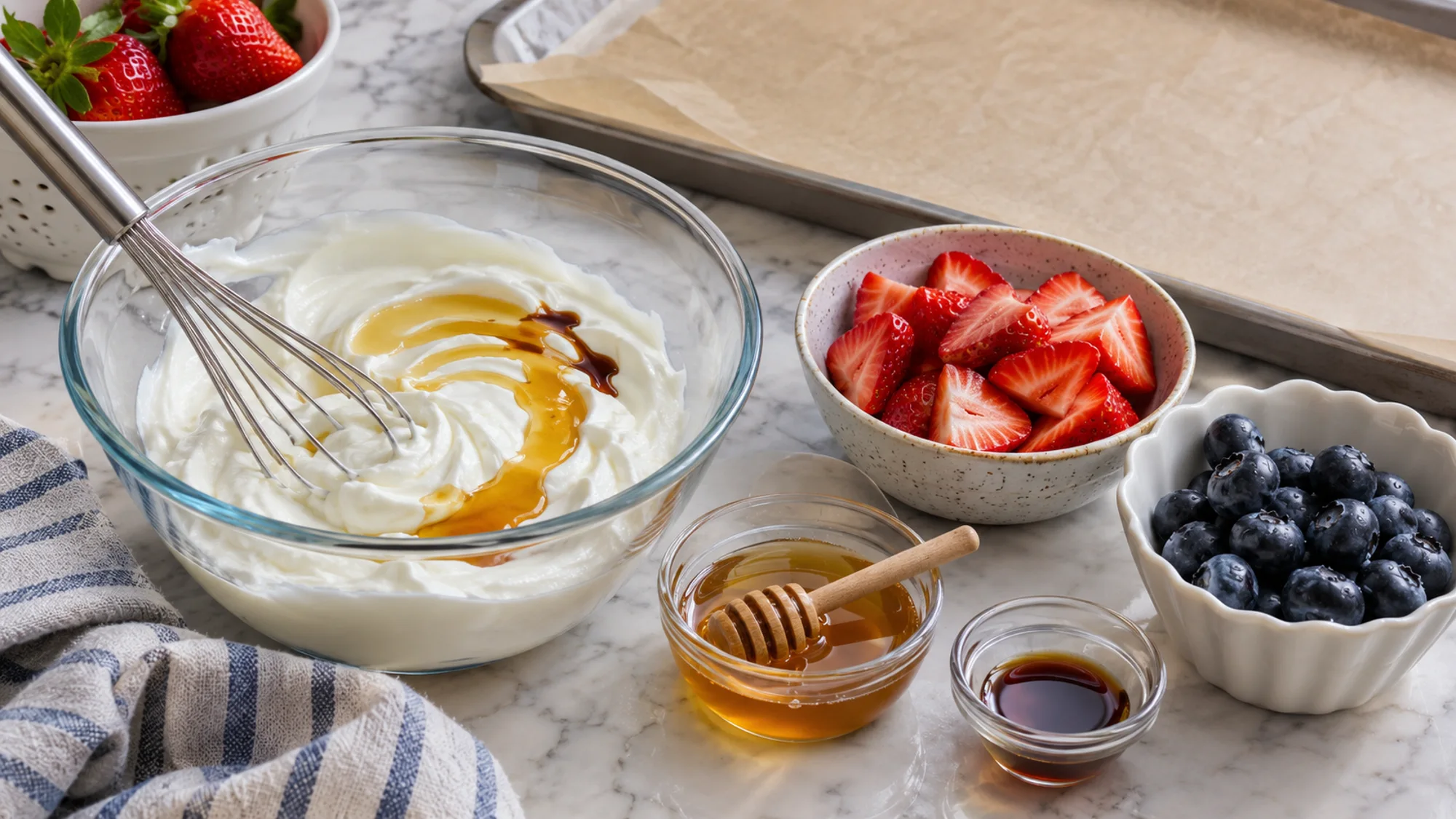
- 2 cups plain whole-milk Greek yogurt
- 2 tablespoons honey
- 1 teaspoon vanilla extract
- 0.5 cup thinly sliced strawberries washed and dried
- 0.5 cup blueberries washed and dried
Equipment
- Rimmed baking sheet
- Parchment paper
- Mixing bowl
- Spatula
- Measuring cups and spoons
Instructions
- Line a rimmed baking sheet with parchment paper. Clear a level space in the freezer so the tray can sit flat.
- Stir Greek yogurt, honey and vanilla in a bowl until evenly blended. Taste before freezing and adjust sweetness if desired.
- Spread into a roughly 9-by-12-inch rectangle about 1/4 inch thick on the parchment. Scatter strawberries and blueberries evenly and gently press them into the yogurt.
- Freeze flat until completely firm, about 4 hours; timing varies by freezer and thickness.
- Lift the parchment, break into 8 portions and serve straight from the freezer. Store remaining pieces immediately in an airtight freezer container with parchment between layers. For best texture, use within 2 weeks.