
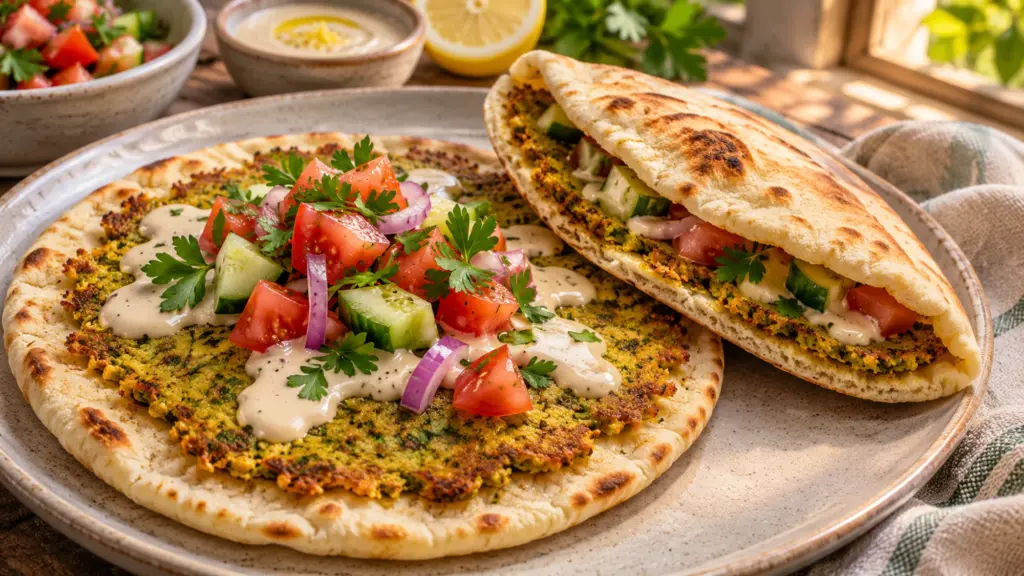
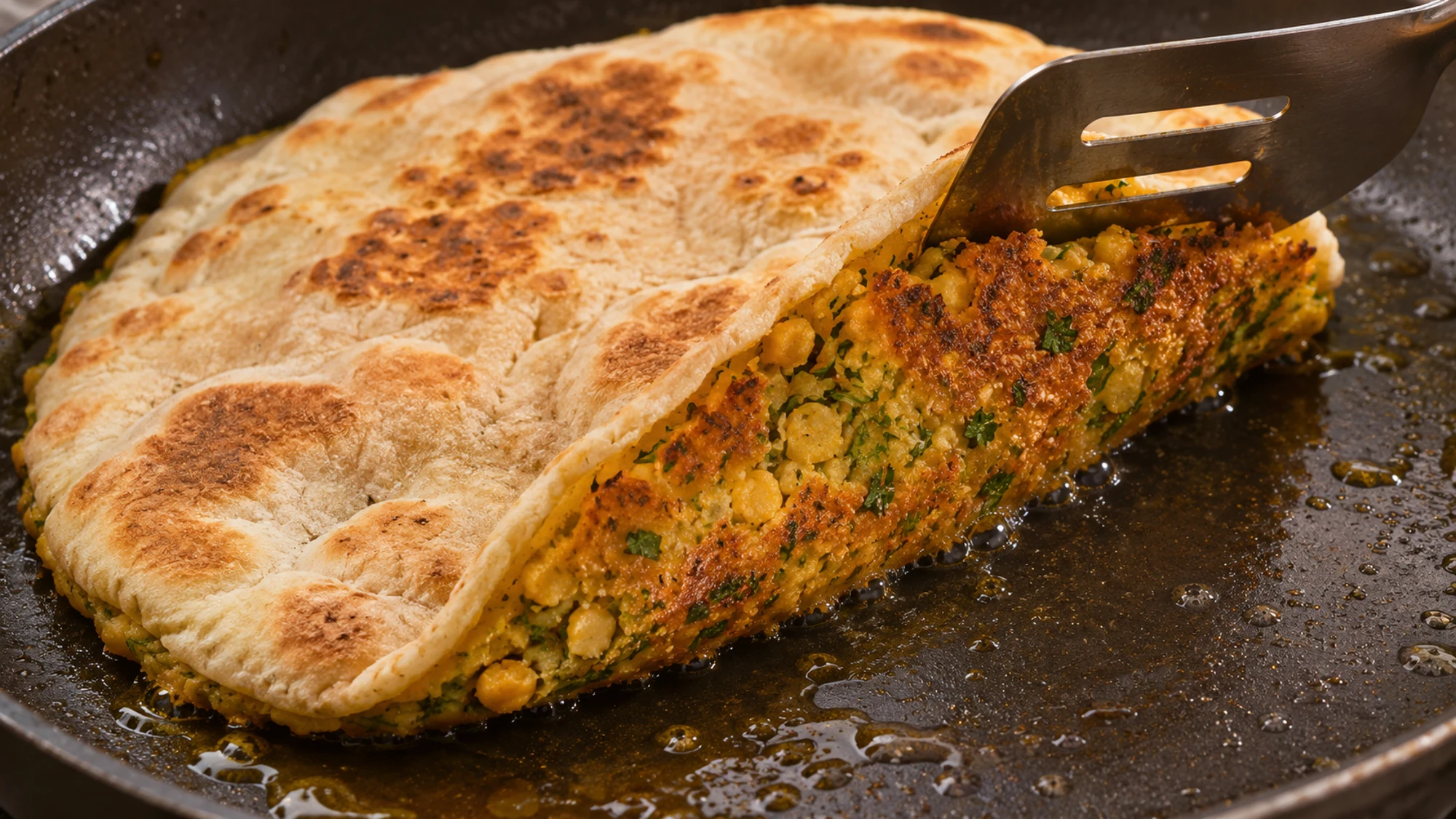
The nicest part of falafel smash pita is the thin golden crust that reaches almost to the bread’s edge. Instead of shaping individual balls, you press chickpea-and-herb mixture onto pita and cook it chickpea-side down. Keep the layer even and thin so the middle cooks before the outside gets too dark.
Start with dried chickpeas soaked overnight, not canned chickpeas. Spread the drained, finely processed mixture about ¼ inch thick over four pitas, pan-cook until golden and cooked through, then add cool vegetables and lemon tahini. The overnight soak is part of the total time.
I’d choose soft, fairly thin pitas that fit the skillet without folding. A thick bread can make this feel like mostly sandwich, while a brittle one can crack as soon as you lift it. The topping should cling to the bread, but it should not resemble smooth hummus; a fine, slightly grainy texture is the goal.
Serving Suggestions for Falafel Smash Pita
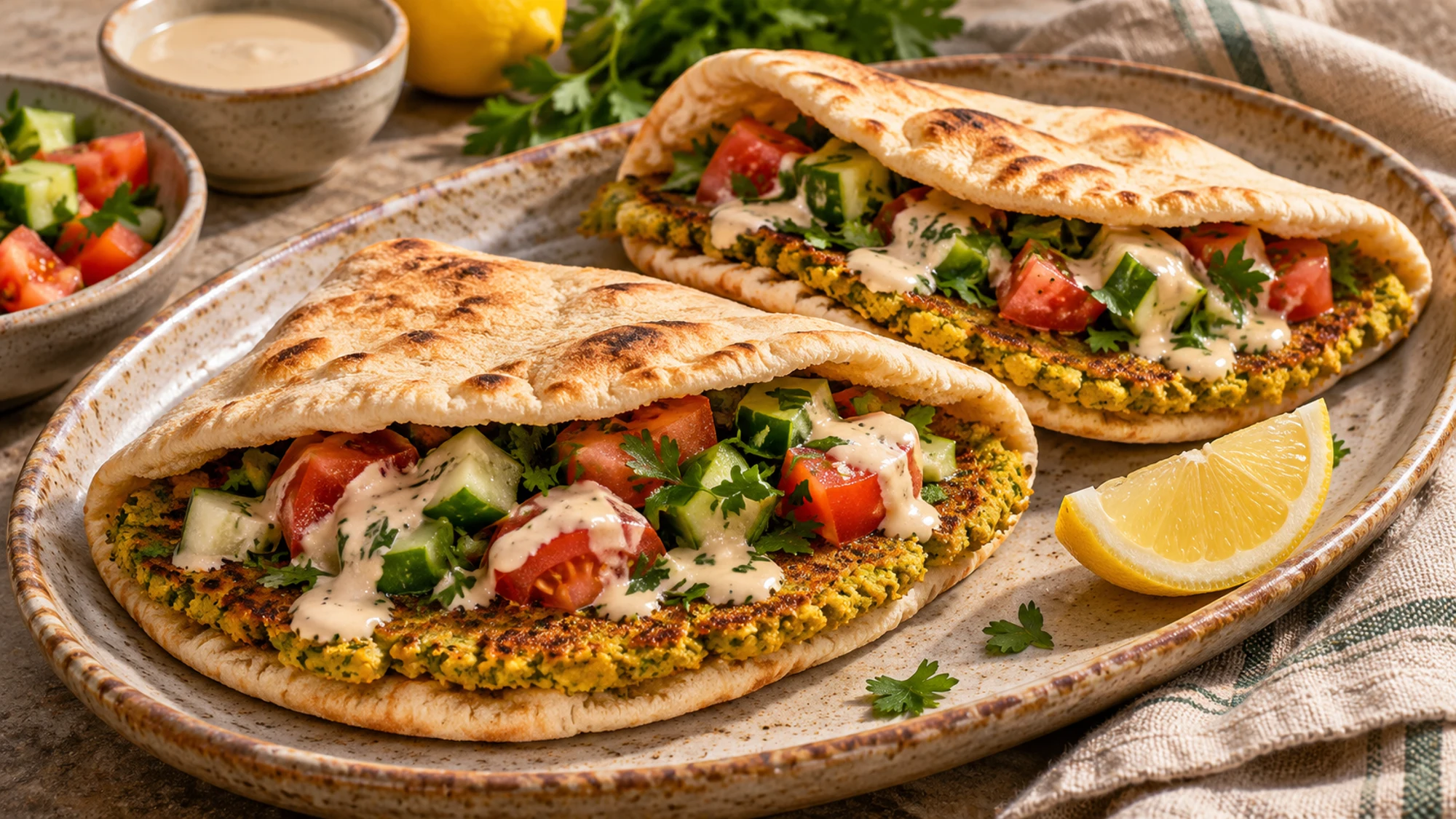
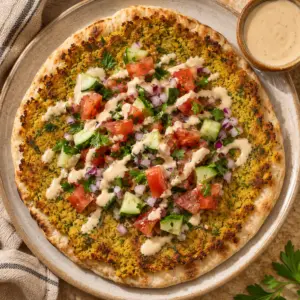
Have the vegetables and sauce ready before the first pita leaves the pan. The crust is at its best while hot, and tomato, cucumber, and parsley offer a cool contrast. You can fold each pita gently or leave it open and cut it into wedges if the bread resists bending.
- Keep the filling modest: scatter the chopped vegetables across the middle instead of piling them high. Too much wet filling softens the crust and makes the pita difficult to hold.
- Use sauce as a finish: drizzle lemon tahini over the cooked layer, then offer more at the table. A small bowl makes it easy to adjust without soaking the bread.
- Serve in batches: cook one pita at a time in a roomy skillet. Let the pan recover its heat between pieces, and wipe away any scorched crumbs before adding fresh oil.
- For background: our guide to falafel explains the traditional fritter. This bread-coated version borrows those flavors but changes the shape and cooking method.
The best serving plan is simple: cold toppings ready, sauce whisked, and plates nearby. A crisp chickpea crust does not improve while waiting under a heavy lid.
Falafel Smash Pita Variations
The herbs and toppings leave room for preference; the chickpeas are less flexible. Soaked, uncooked chickpeas give this mixture its structure. Canned chickpeas are already cooked and softer, so they are not a direct replacement in the written recipe. I would save them for a different dish rather than compensate with handfuls of flour.
| Swap | What changes | Keep in mind |
|---|---|---|
| More parsley, less cilantro | A milder herbal profile | Keep the total herb volume the same |
| Whole-wheat pita | A nuttier bread flavor | Choose soft bread that bends easily |
| Shredded cabbage for some tomato | More crunch, less moisture | Slice thinly and add after cooking |
| Plain yogurt instead of tahini sauce | A tangier, dairy-based topping | This changes allergens and is not vegan |
- For a little heat, add a pinch of cayenne to the mixture. The cumin and coriander should remain noticeable rather than disappear beneath chile.
- If the mixture is loose, check whether the chickpeas and washed herbs were dried well. Chill the mixture briefly before spreading; do not add liquid to help the food processor.
- If the surface browns before the center loses its raw, gritty texture, reduce the heat and cook longer. Do not thicken the layer to use up extra mixture.
- For a softer fold, skip the optional bread-side crisping. For an open-faced plate, a short second-side cook adds another toasted surface.
A thin layer is the useful constant. Change the herbs or finishing vegetables if you like, but keep the coating even so the pan can cook it consistently from edge to center.
Health Benefits and Food Safety
Chickpeas supply plant protein and fiber, while the vegetables add variety. The NHS guide to vegetarian eating includes pulses among useful protein foods. Bread, oil, and tahini also contribute to the meal; pan-cooking is a method, not a guarantee of a particular calorie content.
- Soak safely: keep the chickpeas covered in the refrigerator during their overnight soak, then drain, rinse, and dry. Do not taste the uncooked mixture.
- Know the allergens: standard pita contains wheat, and tahini contains sesame. Check packaged ingredients; swapping a topping does not remove wheat from the bread.
- Store separately: refrigerate cooked pitas and toppings promptly in covered containers. Use within three to four days under USDA leftover guidance; reheat the cooked component to 165°F (74°C) before adding fresh toppings.
Keep uncooked chickpea mixture away from ready-to-eat vegetables and clean utensils after handling it. Cook the layer through, then assemble only the portions you plan to eat.
Bottom Line
Falafel smash pita trades the usual round fritter for a broad, crisp herb crust. Plan the soak, dry the chickpeas, and spread a thin layer. With cool chopped vegetables and lemon tahini ready to go, each pita can move straight from the skillet to the table.
Falafel Smash Pita Recipe

Ingredients
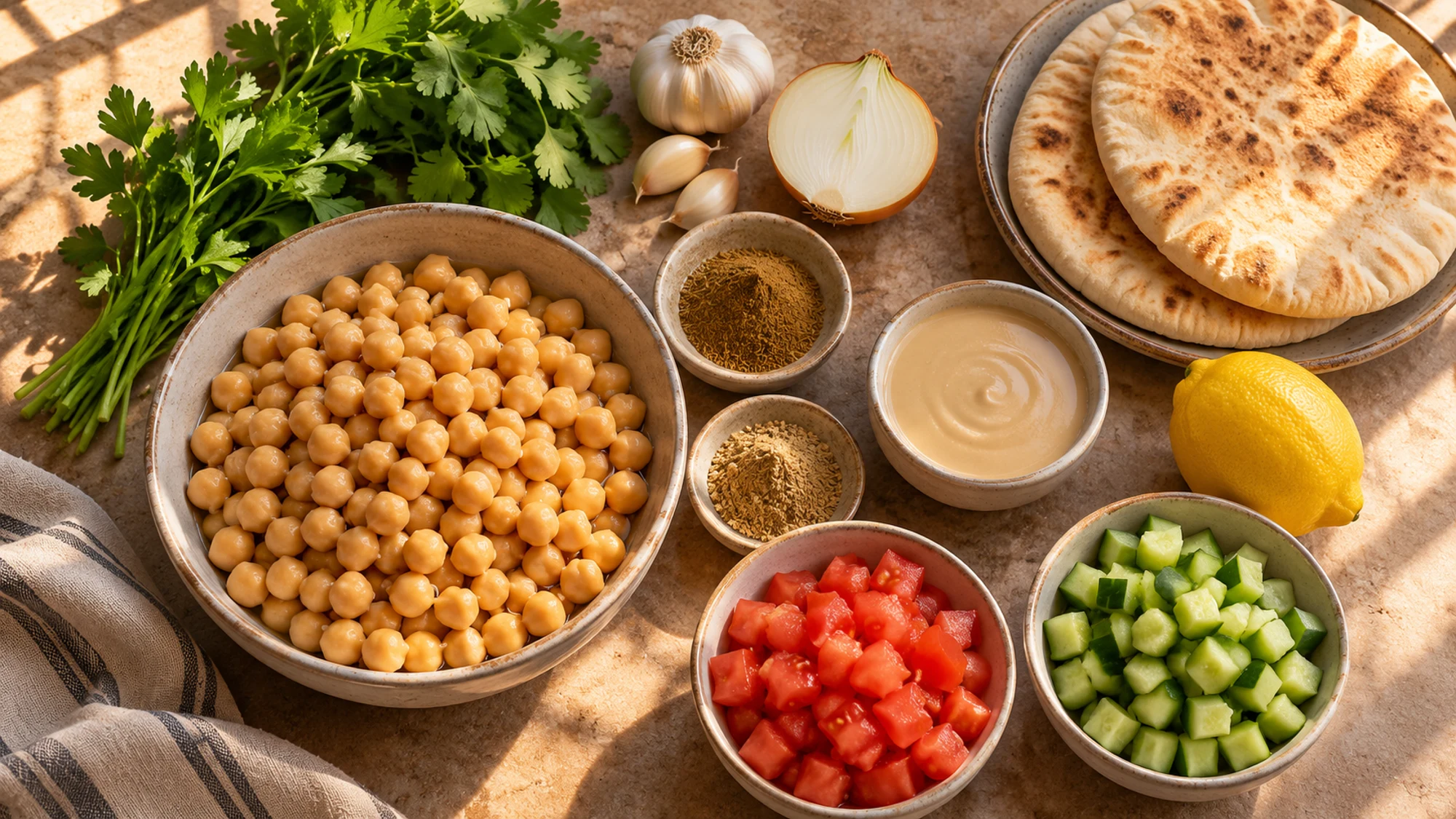
- 1 cup dried chickpeas about 190 g; not canned
- 0.5 cup packed fresh parsley leaves
- 0.25 cup packed fresh cilantro leaves
- 0.5 small onion roughly chopped
- 2 cloves garlic
- 1 teaspoon ground cumin
- 1 teaspoon ground coriander
- 0.5 teaspoon fine salt
- 0.25 teaspoon black pepper
- 4 soft 8-inch pita breads
- 2 tablespoons olive oil divided, plus a little more if needed
- 0.25 cup tahini
- 2 tablespoons lemon juice
- 3 tablespoons water plus more to thin
- 0.125 teaspoon fine salt
- 1 cup diced cucumber
- 1 cup diced tomato
- 0.25 cup finely chopped red onion
- 2 tablespoons chopped parsley
Equipment
- Large bowl
- Colander
- Food processor
- Large skillet
- Wide spatula
- Small sauce bowl
Instructions
- Cover dried chickpeas with plenty of water and refrigerate for 12–24 hours. Drain, rinse and dry thoroughly. This recipe requires soaked, uncooked chickpeas; do not substitute canned ones.
- Process drained chickpeas into fine crumbs. Add parsley, cilantro, onion, garlic, cumin, coriander, salt and pepper. Pulse, scraping the bowl, until a finely textured mixture holds together when pressed. Do not blend into smooth hummus or add water.
- Whisk tahini, lemon juice, water and sauce salt until smooth. Add water a teaspoon at a time if needed for drizzling. Prepare the cucumber, tomato, red onion and parsley toppings.
- Divide chickpea mixture among four pitas. Press it firmly and evenly across one side of each, about ¼ inch thick, reaching close to the edges.
- Heat a large skillet over medium heat with about 1½ teaspoons of oil. Place one pita chickpea-side down. Cook about 6–8 minutes until deeply golden and the thin chickpea layer is cooked through, not raw or gritty. Lower the heat if it browns too quickly; add time as needed.
- Use a wide spatula to turn the pita. Cook the bread side for about 30–60 seconds if you want it crisper, or skip this for a softer fold. Repeat with remaining oil and pitas, adjusting the heat between batches.
- Top immediately with cucumber, tomato, red onion, parsley and tahini sauce. Fold gently or cut into wedges. Refrigerate leftovers within 2 hours, or 1 hour above 90°F (32°C), keeping toppings separate. Use within 3–4 days and reheat the cooked pita to 165°F (74°C).