

A little chili oil can change the whole character of a fried egg, but scorched chili is a different sort of excitement. These chili oil eggs keep the two jobs separate: cook the eggs in a small amount of neutral oil, then add the spicy finish off the heat. You get golden edges and fresh scallions without asking the chili oil to survive the entire frying time.

Use moderate heat, cook until both whites and yolks are firm, and spoon the measured chili oil over the finished eggs. Adding it at the end makes the heat easier to control and keeps any chili flecks from burning in the skillet.
I’d rather begin with a modest drizzle than discover halfway through breakfast that the jar is much hotter than expected. Chili oils vary enormously, so taste the product with a little food first. The scallions bring a fresh, oniony contrast rather than another layer of spice.
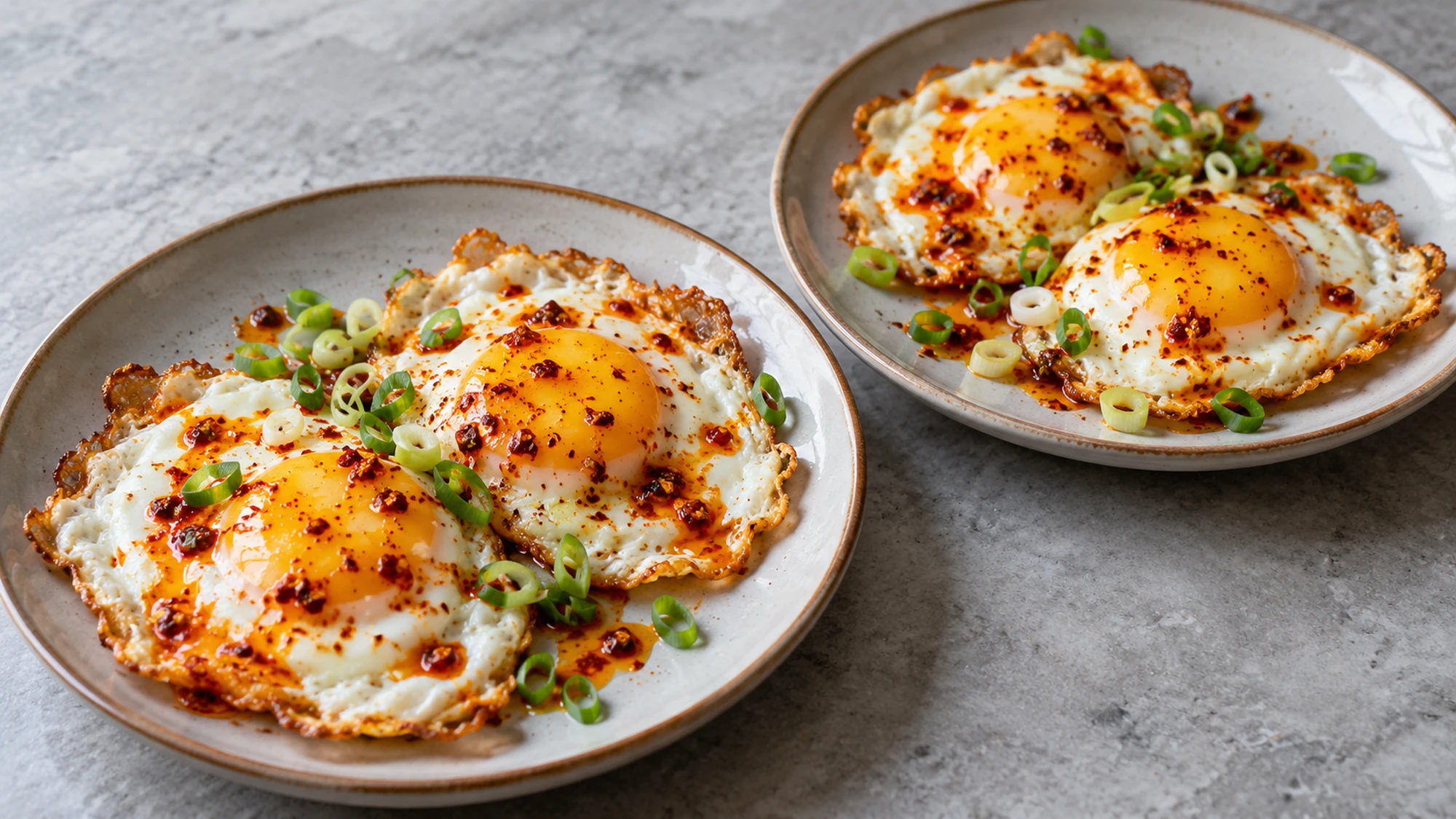
Serving Chili Oil Eggs While the Edges Are Golden
Have the plates ready before the eggs go into the pan. Fried eggs are at their best straight from the skillet, and the thin edges lose some of their crispness while they wait. Slide them out carefully, keeping the yolks intact if you like the look of a whole fried egg.
Two eggs make each serving here. Toast, warm rice or a crunchy vegetable side can turn them into a fuller meal; those additions are not included in the nutrition calculation. For an egg breakfast made in a baking dish instead, try the breakfast casserole.
- Use a wide, thin spatula to lift the eggs without dragging their edges.
- Keep optional bread or rice ready so the eggs do not wait while it cooks.
- Spoon the chili oil over each serving separately when people prefer different heat levels.
I prefer the scallions scattered on just before serving, when their clean flavor still contrasts with the warm, spicy oil.
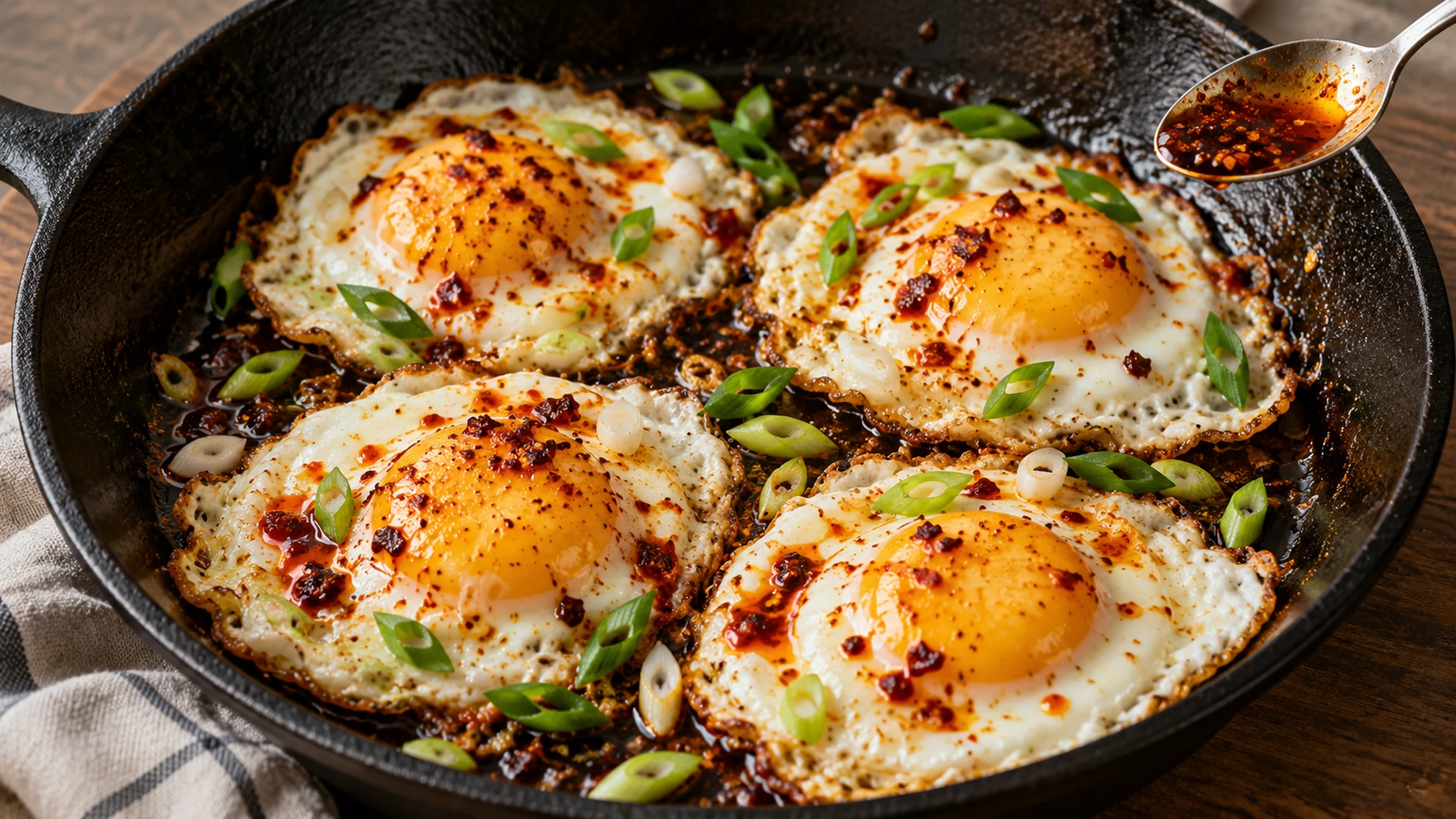
Chili Oil Eggs Variations Without Scorched Chili
A smooth, oil-rich chili condiment and a chunky chili crisp are not identical. The latter can contain fried garlic, onions, peanuts or other solids, and its salt level may be quite different. Either can be a finishing condiment, but a substitution changes the texture, allergens and nutrition.
The skillet should be hot enough for a gentle sizzle, not smoking. If the edges brown rapidly while the tops remain loose, lower the heat and use the lid briefly, or gently turn the eggs. The aim is cooked eggs with browned edges, not a race between a raw center and a blackened bottom.
| Choice | What changes | Practical response |
|---|---|---|
| Milder chili oil | Less intense heat | Keep the measured amount and taste. |
| Chunky chili crisp | More solids and possible salt | Add after cooking; check the label. |
| Chives instead of scallions | A finer, gentler onion note | Snip them over the finished eggs. |
| An extra-spicy jar | More heat in a small amount | Use less rather than diluting with extra oil. |
Keep the frying oil and finishing condiment separate. You can adjust the spice at the table without changing how the eggs cook.
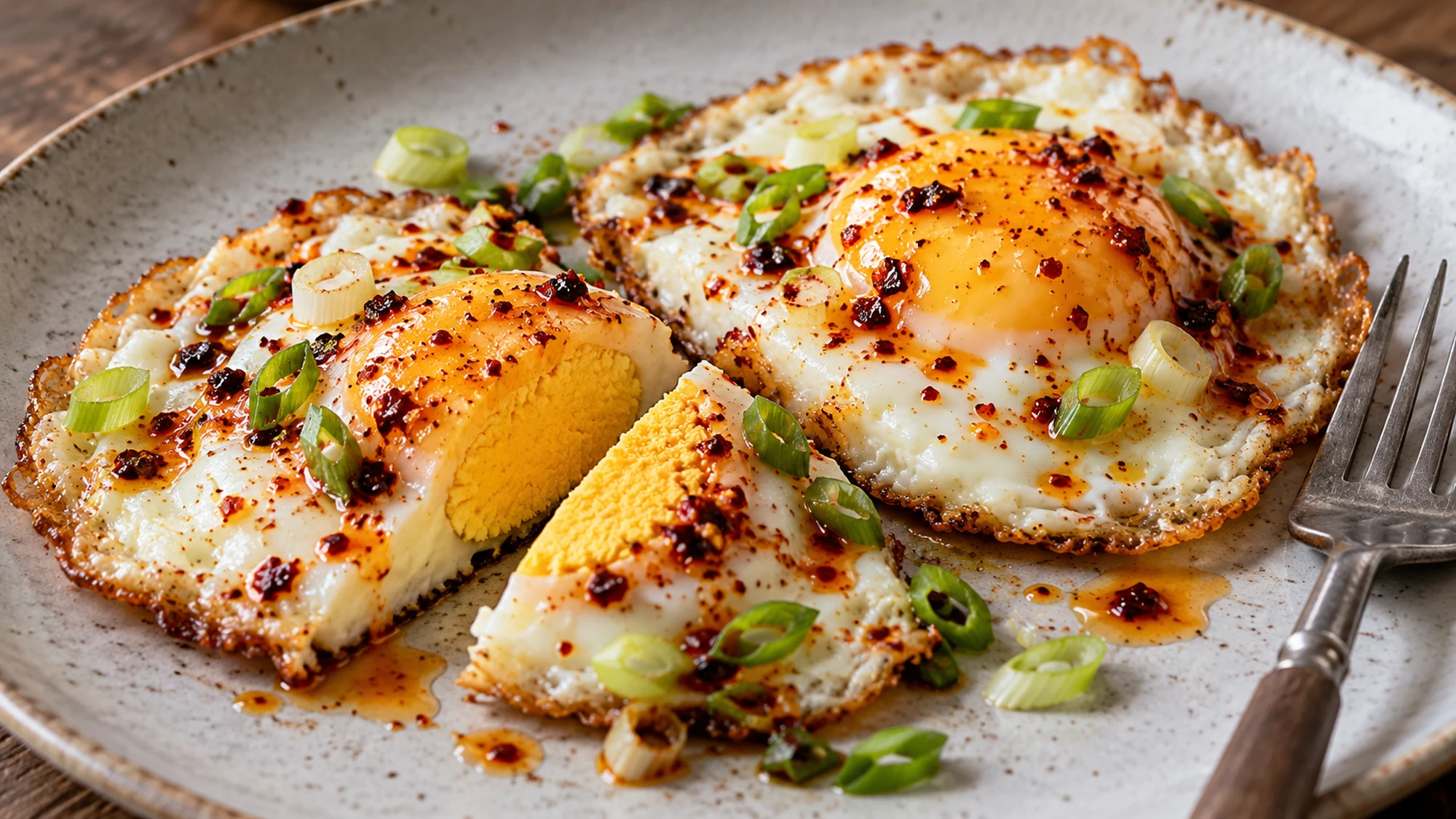
Health Benefits and the Ingredients That Count
The eggs supply most of this dish’s protein. One serving, including two eggs and all the measured oils, is estimated at about 225 calories and 13 grams of protein. The scallions add freshness, but this small amount does not turn the plate into a vegetable-rich meal.
Chili oil contributes fat as well as heat. Its ingredients and sodium content depend on the brand, especially when comparing plain oil with seasoned chili crisp. The FDA’s sodium-label guide explains why comparing the same serving size matters.
- Read the condiment label for allergens such as sesame, soy or peanuts.
- The estimate counts all frying oil, even if a little remains in the pan.
- Extra chili oil, soy sauce, rice or toast changes the nutrition of the finished meal.
Treat the spicy finish as a measured ingredient, not an invisible garnish. The eggs can be satisfying without a large pool of oil.
Bottom Line
The FDA’s food-handling guidance recommends cooking eggs until both whites and yolks are firm. Wash hands and utensils after handling raw eggs, and do not return cooked eggs to a dish that held raw ones.
Serve immediately for the best texture. If there are leftovers, refrigerate promptly and follow Illinois Extension’s guidance: use within three to four days and reheat to 165°F. Reheated fried eggs will be firmer and less crisp.
Cook gently, finish with the chili oil and add the scallions last. This small change in timing keeps chili oil eggs simple, controllable and ready for the plate.
Chili Oil Eggs Recipe


Ingredients
- 4 large eggs About 200 g without shells
- 2 teaspoons canola oil About 9 g, for frying
- 2 teaspoons commercial chili oil Oil-rich style; add after cooking and choose a heat level you enjoy
- 2 scallions 20 g trimmed, thinly sliced
- 1/8 teaspoon fine table salt About 0.75 g
Equipment
- 10–12-inch nonstick skillet with lid Use moderate heat and a utensil suitable for its surface.
- Wide thin spatula
- Small bowl For cracking eggs individually.
- Measuring spoons
Instructions
- Wash and dry the scallions, then thinly slice them. Set out two serving plates and measure the chili oil separately. Crack each egg into a small bowl before adding it to the skillet, checking for shell fragments.
- Warm the canola oil in a 10–12-inch nonstick skillet over medium heat. Add the eggs carefully, leaving space around them where possible. Sprinkle with the measured salt. Reduce the heat if the oil smokes or the edges darken quickly.
- Cook for about 5–8 minutes, using the lid briefly to help set the tops or gently turning the eggs as needed, until both whites and yolks are firm. Timing depends on the pan and heat; use doneness rather than the clock alone. If the pan cannot hold four eggs comfortably, cook in two batches and divide the frying oil between them.
- Remove the skillet from the heat and divide the eggs between two plates. Spoon 1 teaspoon chili oil over each serving and scatter with the scallions. Serve immediately; optional rice, toast or other sides are not included in the quantities.
- Refrigerate any leftovers within 2 hours, or within 1 hour above 90°F. Use within 3–4 days and reheat to 165°F; texture is best when freshly cooked.