
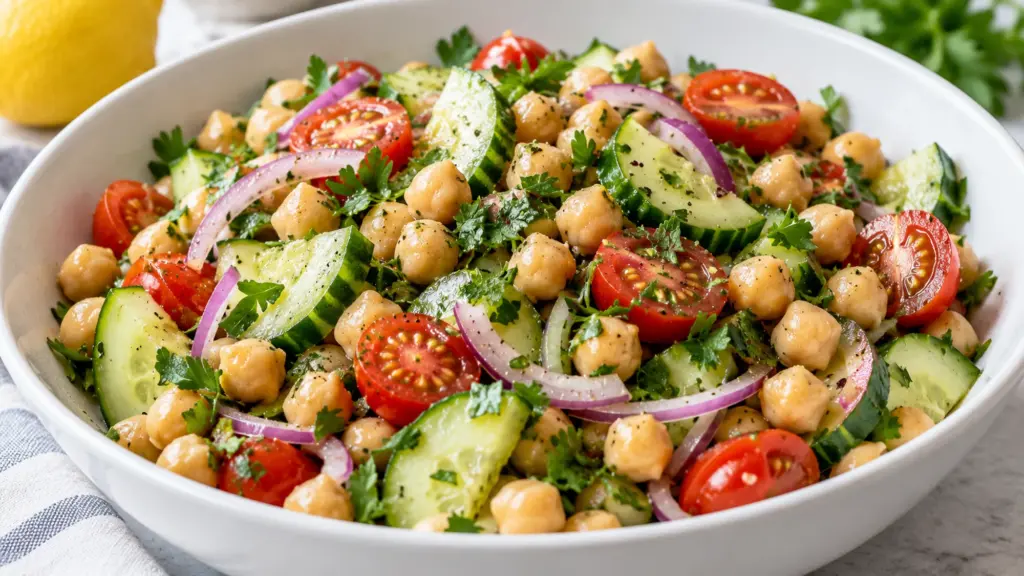
A salad can have plenty of fresh ingredients and still end up sitting in a puddle. This chickpea cucumber salad keeps the preparation simple but pays attention to moisture: drained chickpeas, dry cucumber and a measured lemon dressing. The result is a substantial vegetable side with crisp bites and tender beans.
Drain and rinse the chickpeas, dry the washed vegetables, and toss everything with the dressing close to serving. If you are preparing ahead, keep the chopped vegetables and dressed chickpeas separate until the meal is nearly ready.
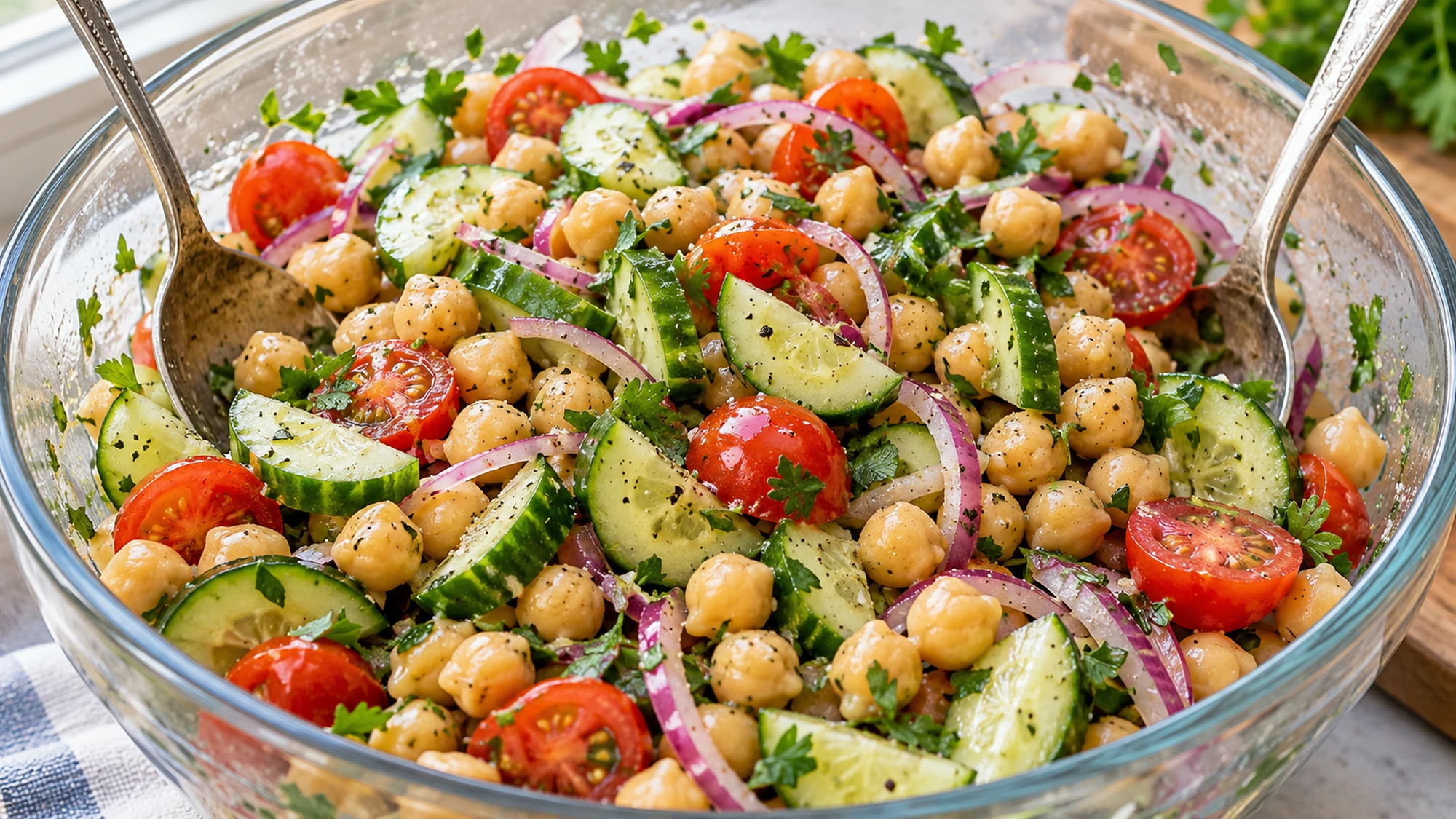
I’d choose a thin-skinned English cucumber because it is easy to slice and usually needs little trimming. The tomatoes bring sweetness, red onion supplies a sharper note, and parsley keeps the whole bowl fresh-tasting without a long list of seasonings.
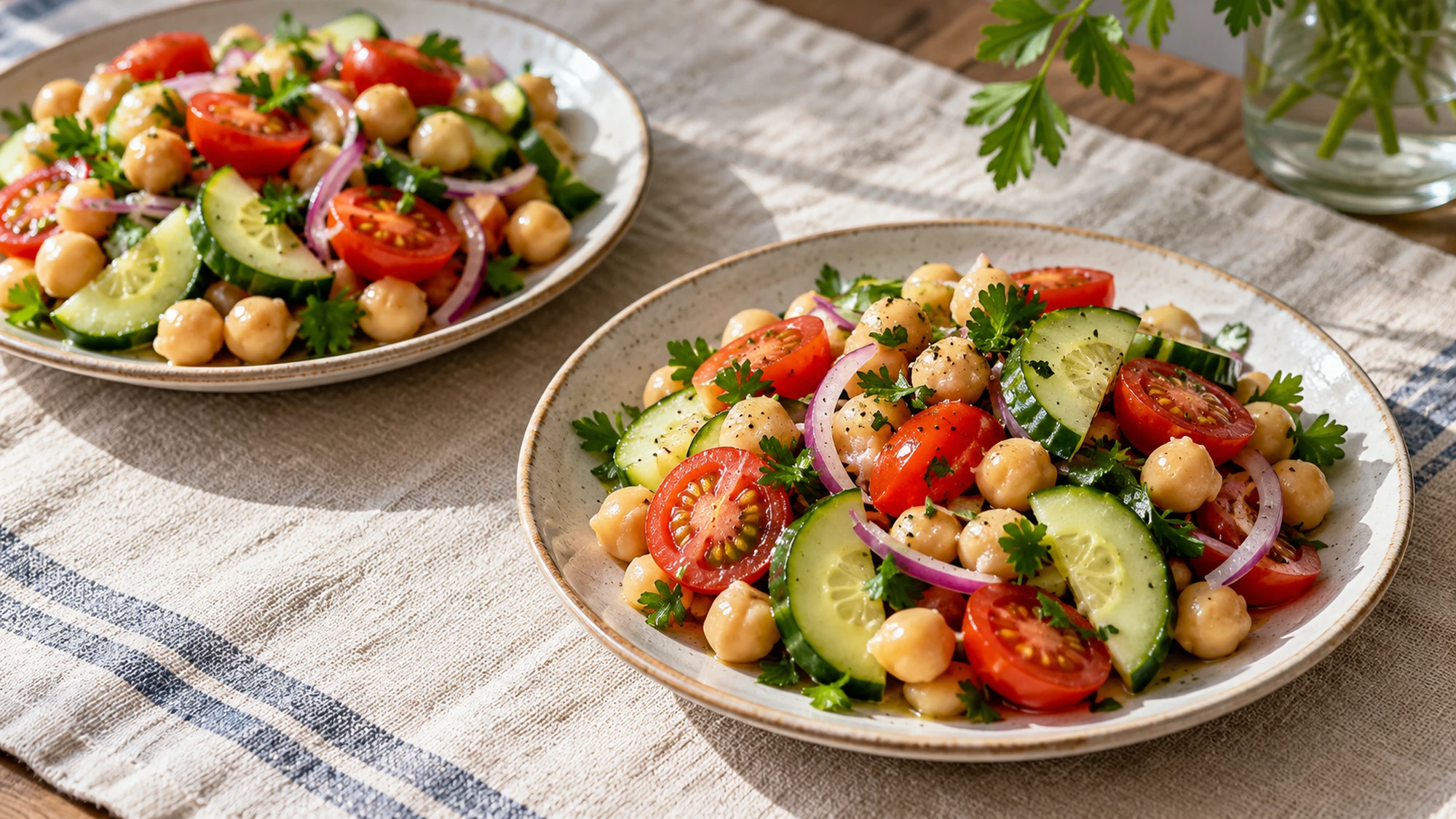
Serving Chickpea Cucumber Salad as Part of the Meal
Give the finished salad a gentle toss from the bottom before serving so the chickpeas receive some dressing rather than leaving all the lemon and oil underneath the vegetables. A broad serving spoon is easier than tongs for catching both beans and cucumber in the same portion.
This recipe makes four side servings. For lunch, add bread, rice or another grain and an additional protein food if that suits your appetite. Chickpeas contribute some protein, but a small side portion is not the same as a full plate built around legumes.
- Serve beside lemon-and-dill roasted salmon, grilled chicken or eggs for a cool contrast to warm food.
- For a packed meal, keep the dressing or vegetables separate until you are ready to eat.
- If serving with a salty main dish, taste before adding any extra salt beyond the measured recipe amount.
Keep the salad beside hot food instead of underneath it. That preserves the cucumber’s crunch and prevents warm pan juices from changing the dressing.
Chickpea Cucumber Salad Variations That Keep Their Shape
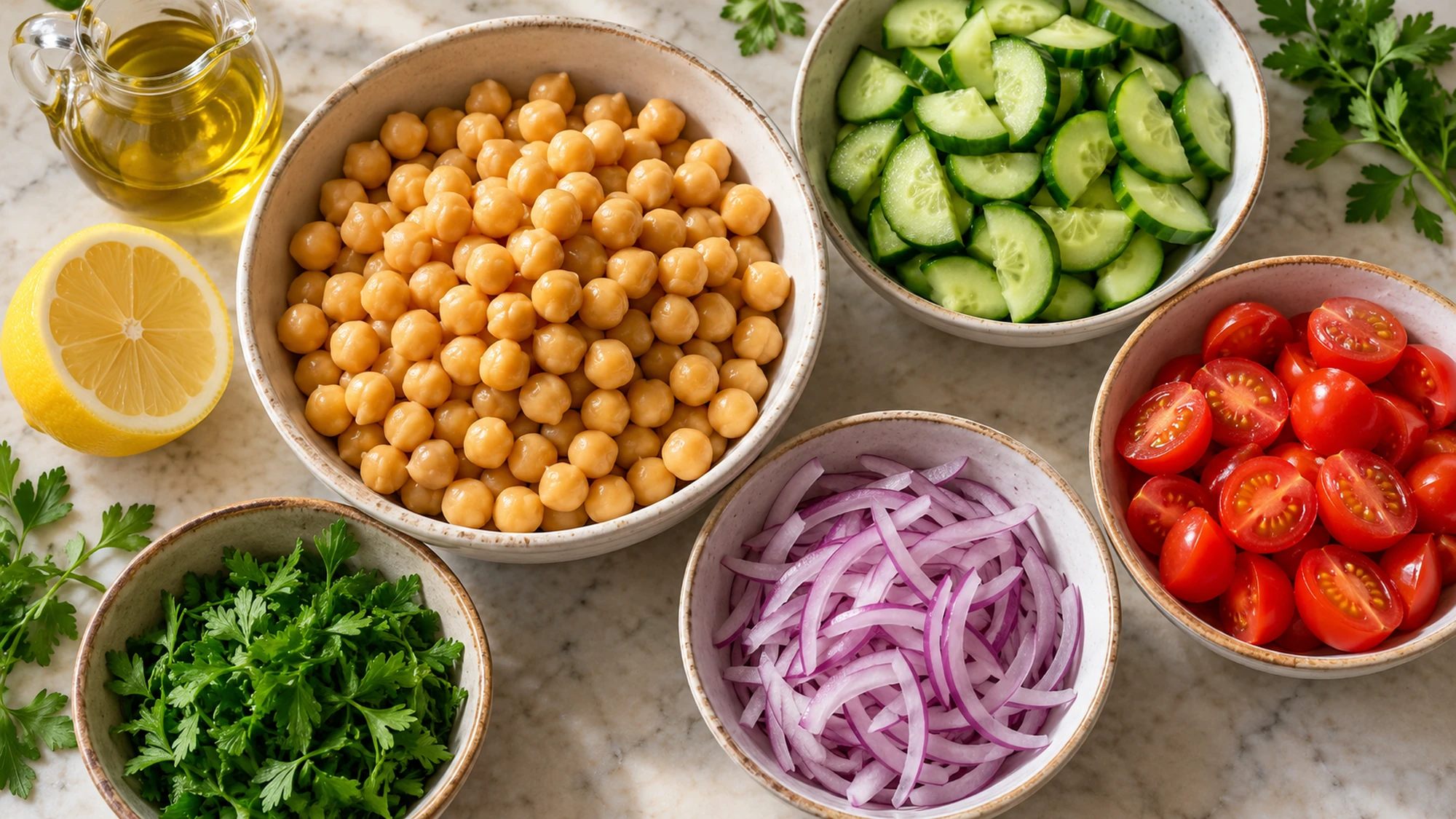
Chop the vegetables into pieces that are comfortable to eat alongside the chickpeas. Thin cucumber half-moons and halved small tomatoes work well; very large chunks make a forkful awkward. Slice the onion thinly so its flavor is spread through the salad instead of arriving in one sharp mouthful.
If using a thick-skinned cucumber with a watery seed cavity, peel it if needed and scoop out the loose center before weighing the amount for the recipe. Avoid adding extra vegetables simply because there is room in the bowl; the dressing was measured for a specific quantity.
| Change | Practical adjustment | What differs |
|---|---|---|
| Parsley to dill | Use a modest chopped handful | A more pronounced herbal flavor. |
| Cherry to grape tomatoes | Halve them the same way | Both keep their shape better than very soft diced tomatoes. |
| Lemon to lime | Start with the same juice amount | A different citrus note; taste after tossing. |
| Add crumbled feta | Use as an optional topping | Adds milk, salt and different nutrition. |
I prefer one clear herb and one citrus flavor here. You can make the bowl lively without turning the dressing into an inventory of the pantry.
Health Benefits in a Realistic Serving
Chickpeas contribute plant protein and fiber, while cucumber, tomato and parsley add vegetables and variety. A quarter of this recipe provides an estimated 170 calories, 5.4 grams of protein and 5.1 grams of fiber, with all the measured dressing included.
University of Maine Extension’s overview of legumes explains their nutrient contribution. Canned chickpeas are convenient, but their sodium content varies. Rinsing is useful; it does not make every brand sodium-free or remove the need to look at the label.
- Compare chickpea labels using the same serving size, especially if choosing a lower-sodium product.
- Olive oil adds flavor and fat; use the measured amount rather than treating an extra pour as nutritionally invisible.
- Optional cheese, bread or other accompaniments are not included in the recipe’s nutrition estimate.
A useful salad does not need a detox label. Think about the portion, the rest of the meal and the ingredients you actually put in the bowl.
Bottom Line
Wash the cucumber, tomatoes and parsley under running water, then dry them before cutting. The FDA’s produce-handling guide recommends clean hands, tools and surfaces; soap is not for washing produce. Keep the vegetables away from utensils used for raw meat.
Refrigerate leftovers promptly in a covered container at 40°F or below. The salad is best on the day it is mixed; use it within three days, understanding that the cucumber and tomatoes soften and release more liquid with time.
Drain well, chop evenly and dress close to serving. That is enough to make chickpea cucumber salad a practical, colorful side without burying its crunch.
Chickpea Cucumber Salad Recipe

Ingredients
- 1 15.5-ounce can chickpeas Drained and rinsed; use 240 g drained chickpeas.
- 1 medium English cucumber 300 g trimmed, cut into thin half-moons.
- 7 ounces cherry tomatoes 200 g, halved.
- 1/4 cup thinly sliced red onion 40 g
- 1/4 cup chopped flat-leaf parsley 15 g
- 2 tablespoons olive oil 27 g
- 2 tablespoons fresh lemon juice 30 g
- 1/2 teaspoon fine table salt 3 g
- 1/8 teaspoon ground black pepper
Equipment
- Fine-mesh strainer For rinsing chickpeas.
- Knife and cutting board
- Large mixing bowl
- Small bowl and whisk For dressing.
Instructions
- Drain and rinse the chickpeas, then let them drain thoroughly. Wash the cucumber, tomatoes and parsley under running water and dry them with a clean towel. Do not wash produce with soap.
- Slice the cucumber into thin half-moons, halve the tomatoes, thinly slice the red onion and chop the parsley. If using a cucumber with a watery seed cavity, remove that loose center before weighing 300 g.
- Whisk the olive oil, lemon juice, salt and pepper in a small bowl. Put the chickpeas and prepared vegetables in a large bowl. Add the dressing shortly before serving and toss gently from the bottom until evenly coated.
- Divide into four side servings. For advance preparation, refrigerate the dressed chickpeas and dry chopped vegetables in separate covered containers, then combine close to serving.
- Refrigerate leftovers promptly at 40°F or below and use within 3 days; the vegetables soften with storage. Discard after more than 2 hours at room temperature, or 1 hour above 90°F.