
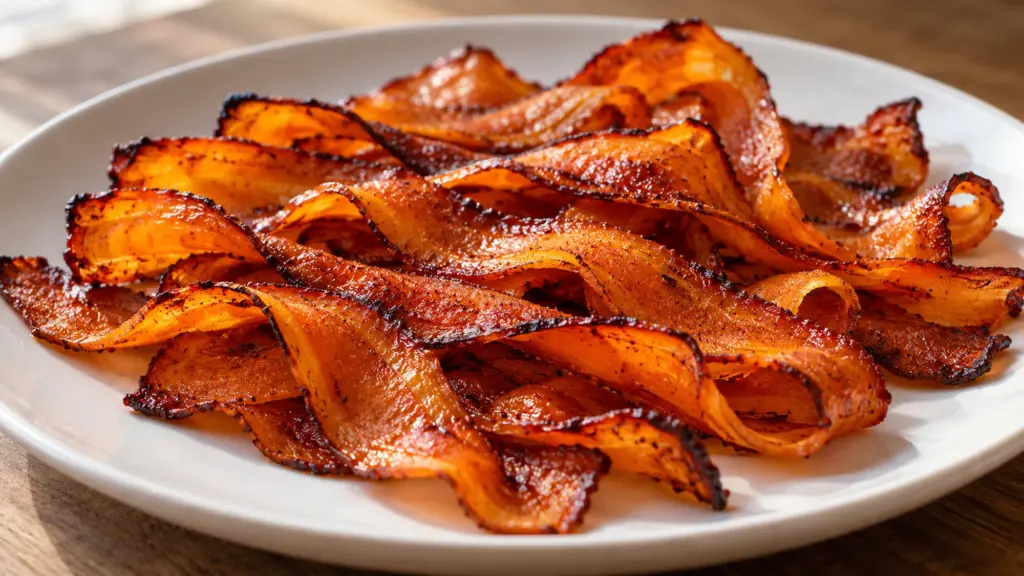
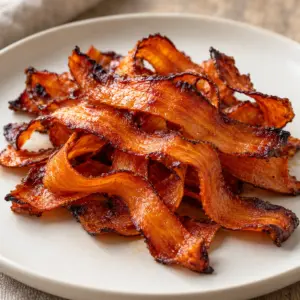
A few smoky ribbons can change a sandwich without becoming its main ingredient. This carrot bacon coats thin carrot strips with smoked paprika, maple syrup and soy sauce, then roasts them until the edges brown. Some pieces may become crisp while thicker centers stay flexible; that variation belongs to the vegetable, not a failed attempt at meat.
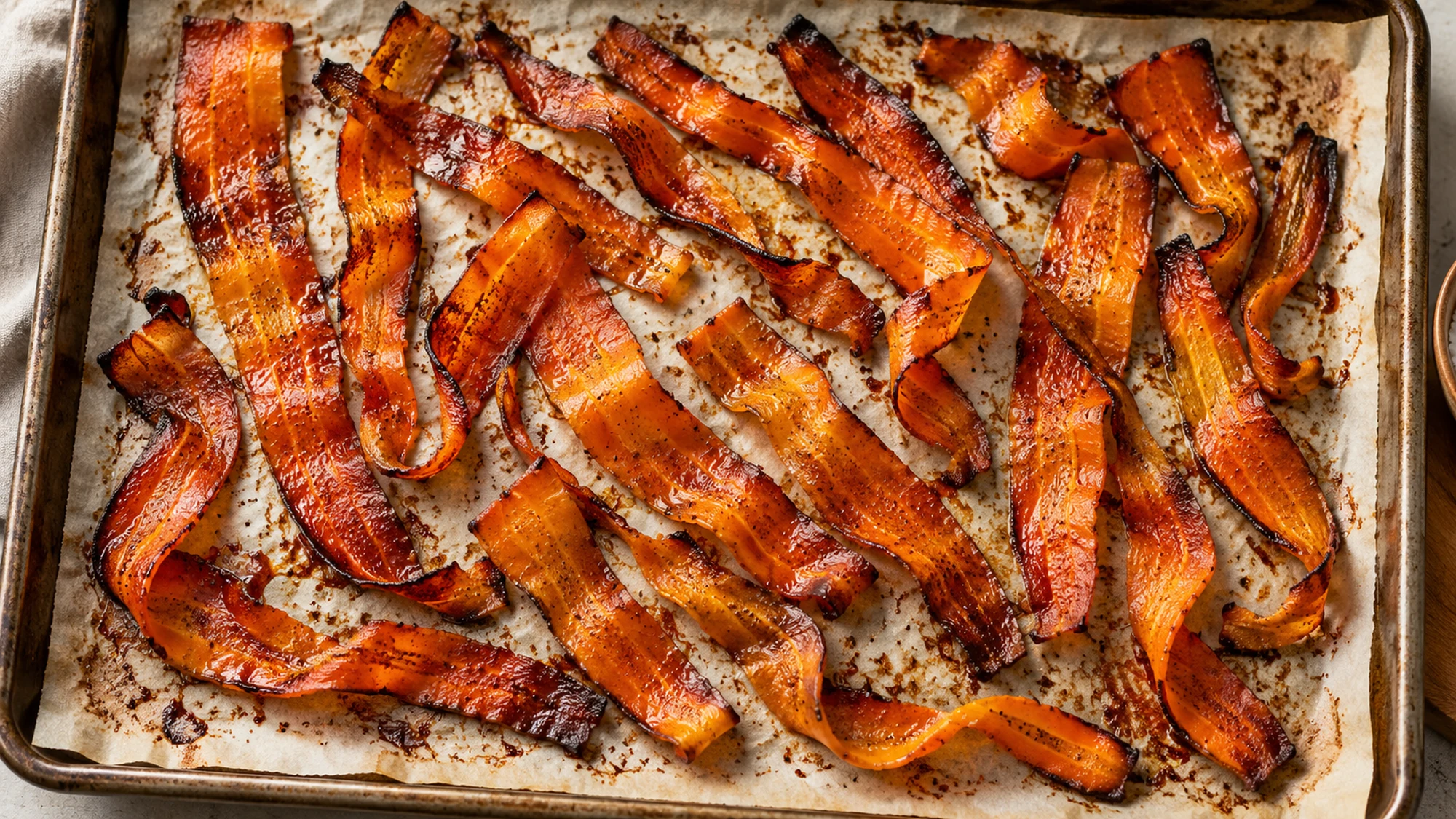
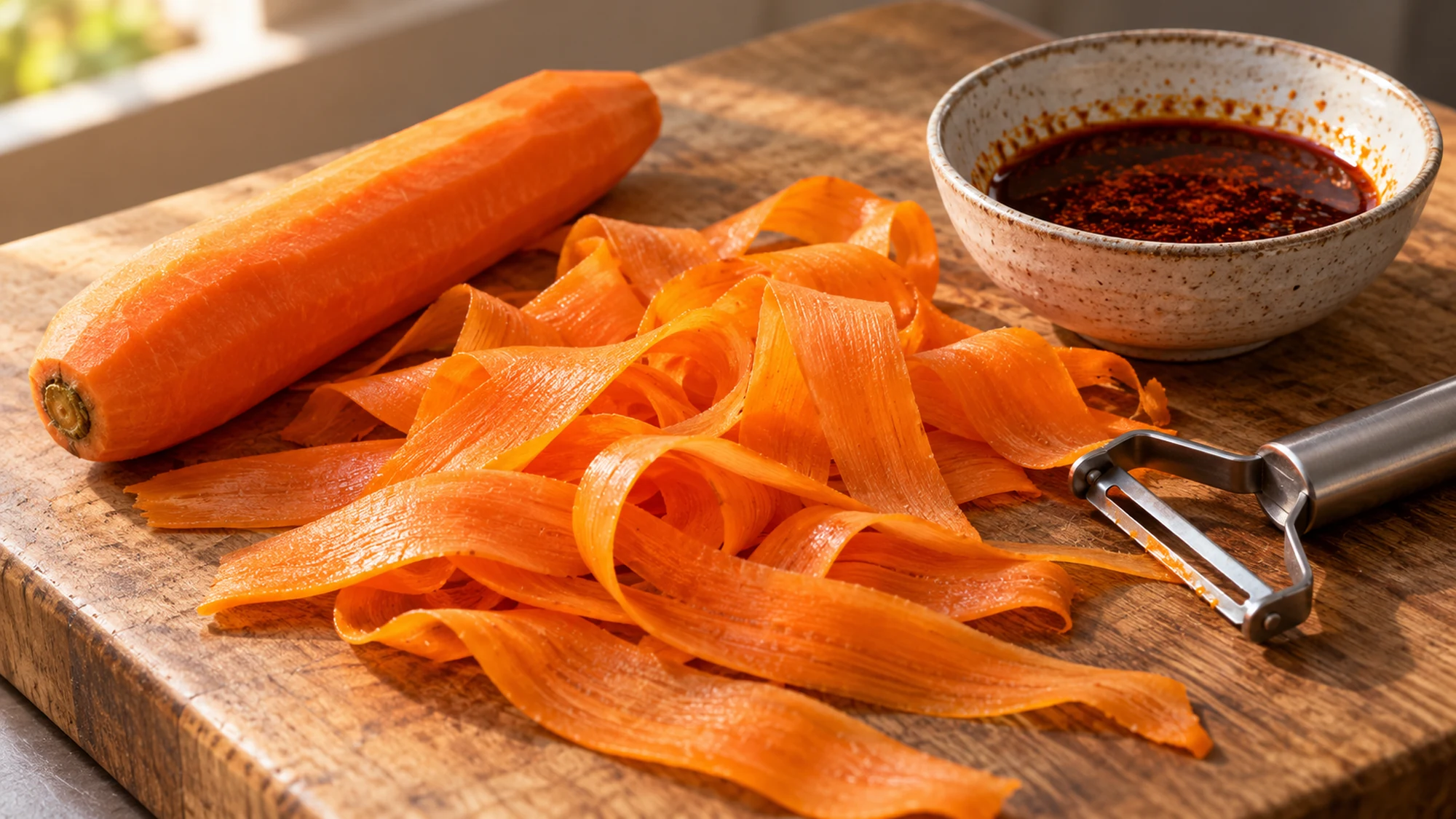
Shave the carrots evenly, arrange the ribbons without overlapping and watch them closely as they brown. Remove thinner pieces before they burn, then let the tray cool briefly so you can judge the finished texture.
I’d use this as a sweet-savory finishing touch, not a substitute for bacon’s protein or rendered fat. It will still taste like carrot beneath the seasoning. That is a useful expectation to bring to a recipe whose name does a little more pretending than its ingredients.
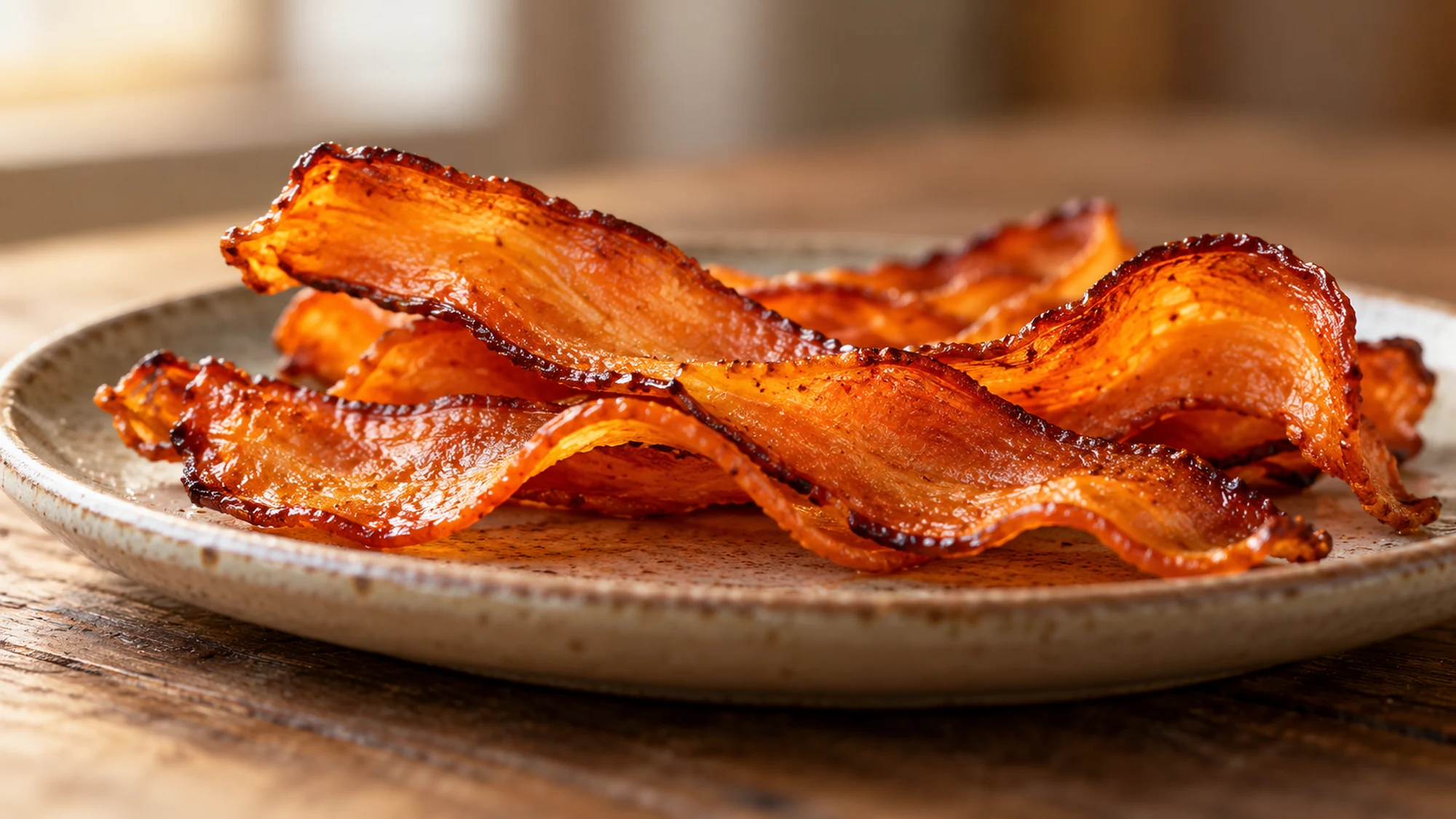
Serving Carrot Bacon as a Finishing Touch
Add the ribbons shortly before serving, particularly when the food underneath is moist. A warm bowl of soup or a juicy tomato sandwich will soften them quickly. You can still enjoy the flavor, but do not expect the same edge texture after several minutes in contact with sauce.
- Sandwiches: Layer a few strips with lettuce, tomato and a spread you enjoy. Pat very juicy tomato slices dry so the bread does not collect all their moisture.
- Breakfast plates: Place the ribbons beside eggs or a tofu scramble rather than treating them as the plate’s main protein. Their seasoning is concentrated enough to work in a small portion.
- A potato topping: Scatter strips over a baked potato from the air fryer with a spoonful of plain yogurt or another suitable topping. Keep extra soy sauce off the plate until you have tasted the carrots.
Think of the ribbons as seasoning with texture. A little can brighten a meal, and adding them last gives their delicate edges the best chance.
Variations and More Even Browning
A vegetable peeler produces thin ribbons more consistently than a knife. Broad carrots give you wider strips, but the narrow ends will still cook faster. The oven-baked carrot ribbons from alive offer another example of this technique; follow this recipe’s own quantities rather than mixing the two coatings.
Use the tray’s appearance to guide the finish.
| What you see | Useful response | What to avoid |
|---|---|---|
| Thin tips darken first | Remove those pieces as they finish | Waiting until every strip looks identical. |
| Ribbons overlap | Spread them onto a second tray | Piling them higher to fit one pan. |
| Centers remain flexible | Judge after brief cooling | Burning the edges to force brittle centers. |
| Coating pools on the tray | Lift coated ribbons out of excess liquid | Pouring every last drop over the pan. |
- Keep the smoky note clear: Smoked paprika supplies the smoke flavor here. Sweet paprika will season the carrots but will not create the same effect.
- Change heat cautiously: A pinch of cayenne can add warmth. I prefer leaving the first batch mild enough to taste the maple and carrot rather than only the chile.
- Do not add extra syrup automatically: More sweetness also changes how quickly the coating darkens. Adjust a future batch after seeing how the measured amount behaves in your oven.
Even thickness and space on the tray matter more than chasing a particular shade of brown. Remove finished pieces individually when the batch needs it.
Health Benefits and Sensible Comparisons
Carrots contribute vegetables and some fiber, but this recipe also includes oil, maple syrup and soy sauce. Its purpose is flavor and texture in a small serving. Comparing it with an equal-looking strip of meat does not make their protein, sodium or other nutrients equivalent.
- Read condiment labels: Soy sauce contributes sodium and commonly contains wheat. Choose ingredients that suit your needs, and check every label rather than assuming a vegetable recipe is allergen-free.
- Wash before shaving: Follow the FDA’s produce-cleaning advice: rinse the carrots under running water before peeling or cutting, without soap.
- Keep the portion in perspective: The batch provides four small topping portions, not four substantial vegetable side dishes. Nutrition estimates include the measured coating; actual amounts eaten may differ.
Enjoy the smoky flavor without asking it to stand in for a whole food group. What accompanies these ribbons matters more than the borrowed bacon name.
Bottom Line
Carrot bacon is best treated as a freshly cooked topping. Make only what you need when edge texture is the priority; stored ribbons soften. Refrigerate leftovers promptly in a covered container and use within three to four days, accepting that they will not retain the same crispness.
Keep the strips thin, the tray uncrowded and your eye on the darker edges. Serve them for their own sweet, smoky character rather than a promise to become pork.
Carrot Bacon Recipe

Ingredients
- 250 g carrots about 9 oz, washed and peeled
- 1 tablespoon canola oil 15 ml
- 1 tablespoon pure maple syrup 20 g
- 1 tablespoon soy sauce 15 ml
- 1 teaspoon smoked paprika 2 g
- 1/2 teaspoon garlic powder 1 g
- 1/8 teaspoon black pepper
Equipment
- Vegetable peeler
- Two baking sheets
- Parchment paper
- Mixing bowl
- Tongs
Instructions
- Heat the oven to 350°F (175°C). Line two baking sheets with parchment. Use a vegetable peeler to shave long, thin carrot ribbons, rotating the carrot as needed. Reserve any thick cores for another dish.
- Whisk the oil, maple syrup, soy sauce, smoked paprika, garlic powder and pepper. Toss the ribbons gently to coat, then lift them out of excess liquid and arrange in a single layer without overlapping.
- Bake for 8 minutes, then turn the ribbons carefully and rotate the trays. Continue for about 5–12 minutes, checking frequently and removing thinner pieces as their edges brown. Timing varies substantially with thickness; do not burn the edges to force every center crisp.
- Cool on the trays for 5 minutes to judge the texture, then serve in four small topping portions. The ribbons may have crisp edges and flexible centers and are best used shortly after cooking.