
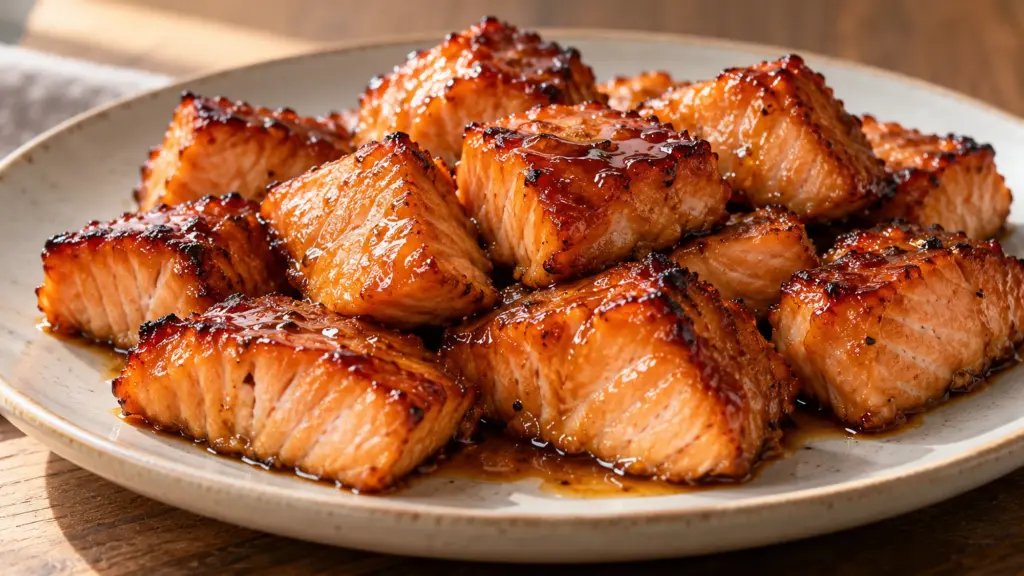
A sweet glaze can turn dark before a small piece of salmon is cooked through, then burn while you wait for the center. These candied salmon bites use a moderate-hot oven and a separately reserved finishing glaze. They are a quick oven-glazed interpretation, not smoked salmon candy, jerky or a preserved snack.

Cut similar-sized pieces, keep them in one layer and check the center of a thick piece for 145°F (63°C). Add the clean finishing glaze after cooking instead of extending the bake just to make the coating darker.
Maple syrup supplies sweetness, soy sauce adds savory saltiness and vinegar keeps the coating from feeling one-note. I’d serve these as part of dinner rather than promise that an oven can reproduce the chewy texture of slowly smoked salmon.
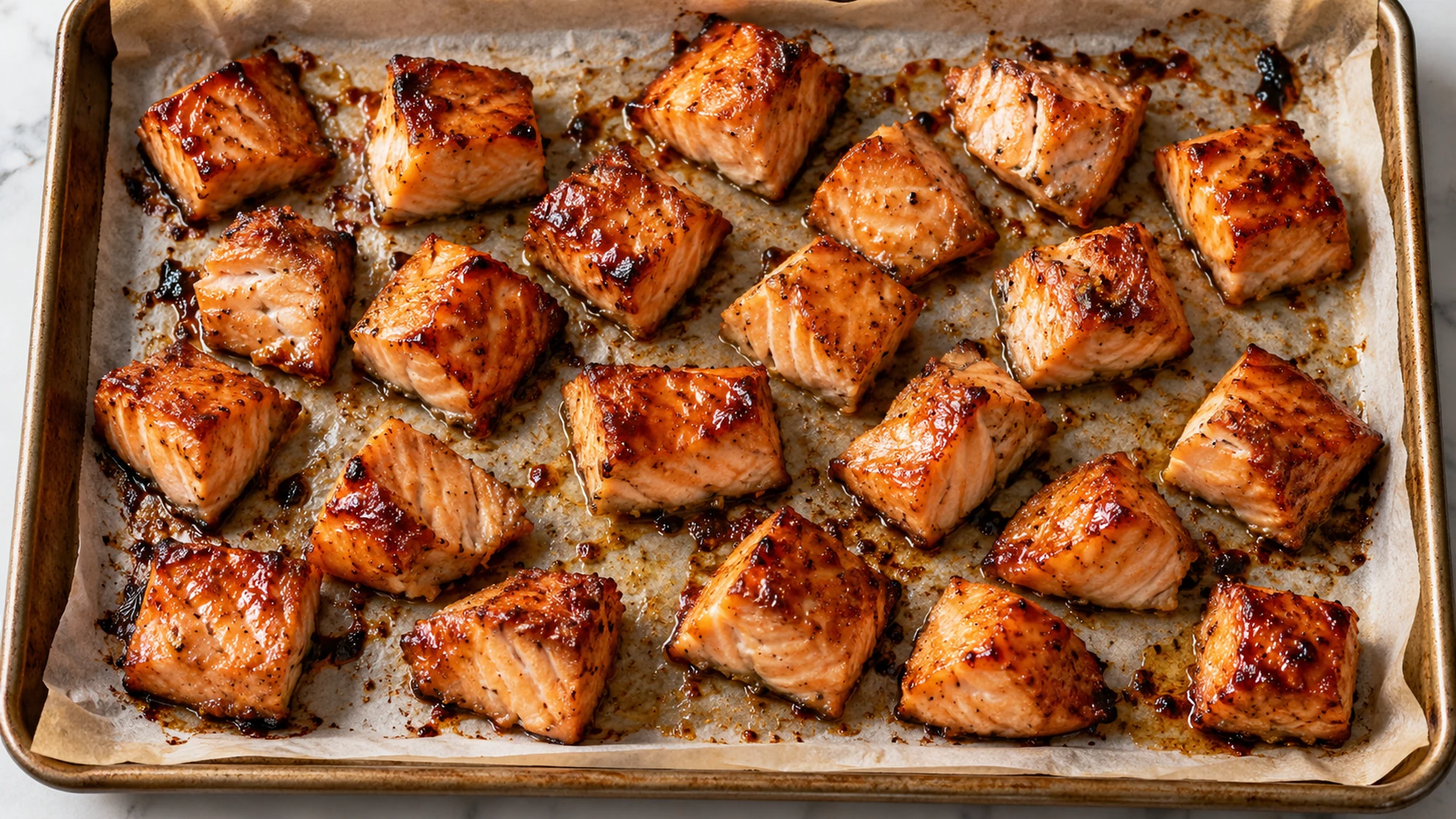
Serving Candied Salmon as a Sweet-Savory Main
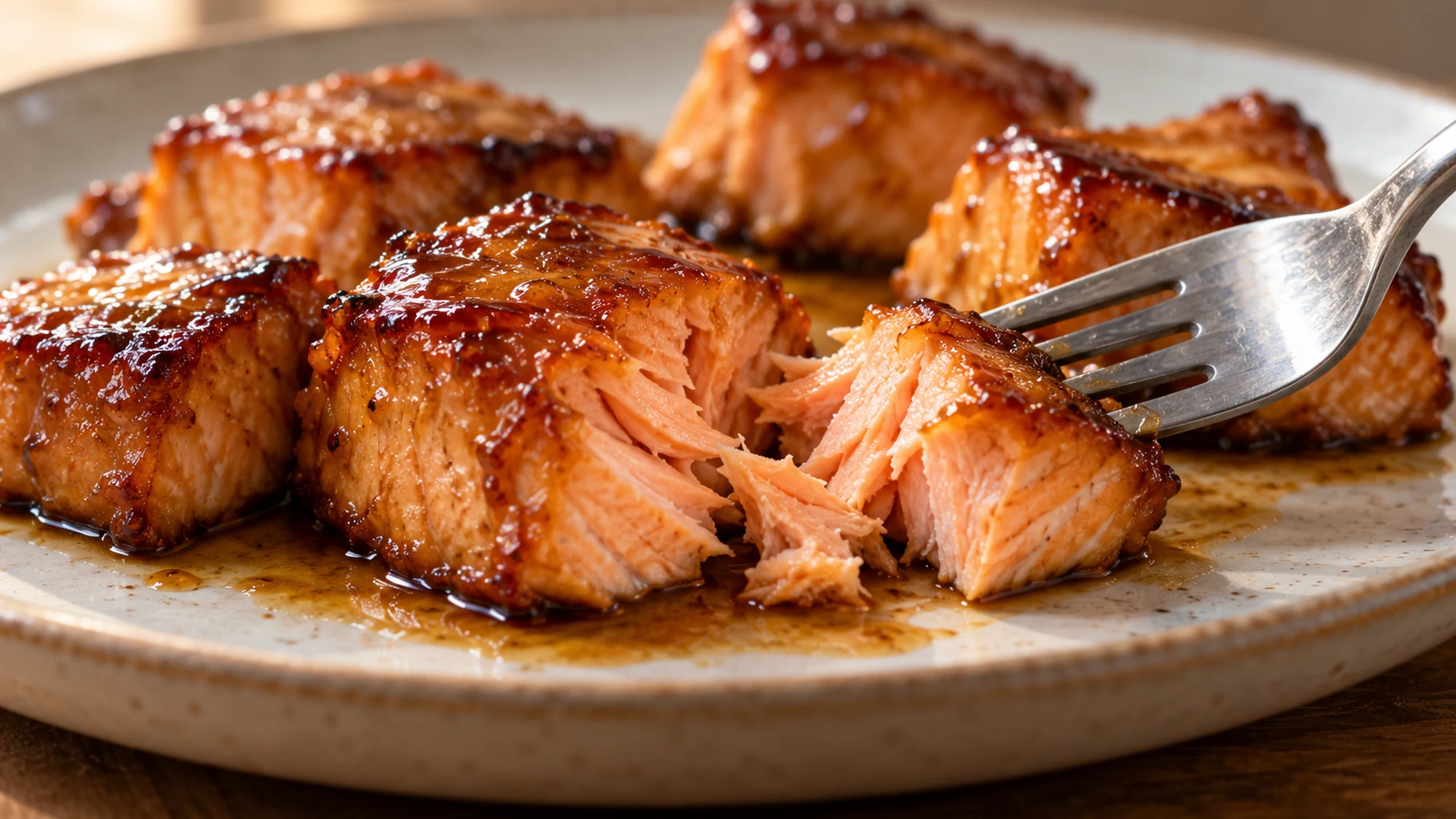
The glaze is concentrated, so simple sides are useful. Divide the bites into four portions and let plain rice or another grain catch a little of the sauce. Lift the pieces gently with a spatula; once cooked, their layers will separate more easily than raw cubes do.
- Add something green: Steamed broccoli, green beans or a lightly dressed leafy salad gives the sweet coating a fresh contrast. Keep another sugary sauce off the same plate.
- Build a rice bowl: Put rice below the salmon and vegetables beside it, not underneath a deep pool of glaze. A small amount of sauce spreads farther than it first appears.
- Offer small bites for sharing: Use a clean serving utensil and replenish a small platter instead of leaving all the cooked fish out at once. These are still perishable fish pieces.
Use the sweetness as one part of the meal. A plain side and a crisp vegetable give the salmon more room than another heavily seasoned sauce.
Variations and Keeping the Glaze From Burning
Sugar-rich sauces need attention wherever they touch a hot pan. The Mayo Clinic’s maple-glazed salmon offers another example of maple with an acidic ingredient; this bite-sized version has its own quantities and finish. Do not transfer a whole fillet’s cooking time directly to small cubes.
Separate flavor changes from cooking-method changes.
| Choice | Effect | Useful caution |
|---|---|---|
| Larger salmon pieces | Take longer to cook | Check the thickest center. |
| More maple syrup | Adds sweetness and faster browning | It does not make fish shelf-stable. |
| Reduced-sodium soy sauce | Changes sodium and saltiness | Taste the clean glaze before adding salt. |
| A smoker instead of an oven | Creates a different recipe | Use a validated smoking method, not these timings. |
- Keep pieces similar: A mix of tiny scraps and thick chunks will not finish together. Reserve very thin trimmings for another preparation rather than letting them dry out here.
- Reserve sauce before contact: Set aside the finishing portion before adding raw fish. A brush or spoon that touched raw salmon must not go into that clean portion.
- Watch exposed puddles: Spread the pieces on the lined tray without pouring excess marinade into the gaps. Thin pools of sugary liquid can scorch faster than the coated fish.
- Stop at the finish point: I prefer a lighter, glossy coating on tender fish to a very dark glaze on dry bites. The separate sauce supplies shine without extra oven time.
A glossy finish does not require burning the edges. Cook the salmon safely, then finish the coating with sauce that never touched raw fish.
Health Benefits and the Meaning of Candied
Salmon contributes protein and omega-3 fats, while this glaze contributes added sugar and sodium. Calling it candied describes the sweet coating; it does not change how the fish must be handled. The FDA seafood guide covers safe thawing, preparation and the 145°F cooking endpoint.
- Keep it refrigerated: Do not treat these bites like dried snack food. Chill leftovers promptly in shallow containers and use within three to four days.
- Read condiment labels: Soy sauce commonly contains soy and wheat, and sodium varies by brand. Check the actual product if avoiding an ingredient.
- Thaw safely first: Use thawed fish for this method and follow its package directions, including instructions for vacuum packaging. Countertop thawing is not a shortcut.
This can be an enjoyable fish dinner without being described as a health food or a preserved product. Keep the sweet coating and food-safety expectations in their proper places.
Bottom Line
Candied salmon bites work when the coating stays in balance with the fish. If you want a less sweet dinner, choose lemon-dill roasted salmon rather than removing most of this glaze and expecting the same result. Reheat leftovers to 165°F (74°C), knowing the fish will become firmer.
Cut evenly, reserve clean sauce and check the center. Let the glaze provide the sweetness while the salmon keeps its tender, flaky character.
Candied Salmon Recipe


Ingredients
- 1 1/2 lb skinless salmon 680 g, thawed if frozen and cut into 1 1/4-inch chunks
- 1/4 cup pure maple syrup 80 g
- 2 tablespoons soy sauce 30 ml
- 1 tablespoon apple cider vinegar 15 ml
- 1 tablespoon canola oil 15 ml
- 2 garlic cloves 6 g, finely minced
- 1 teaspoon smoked paprika 2 g
Equipment
- Rimmed baking sheet
- Parchment paper
- Small saucepan
- Instant-read thermometer
- Mixing bowls
Instructions
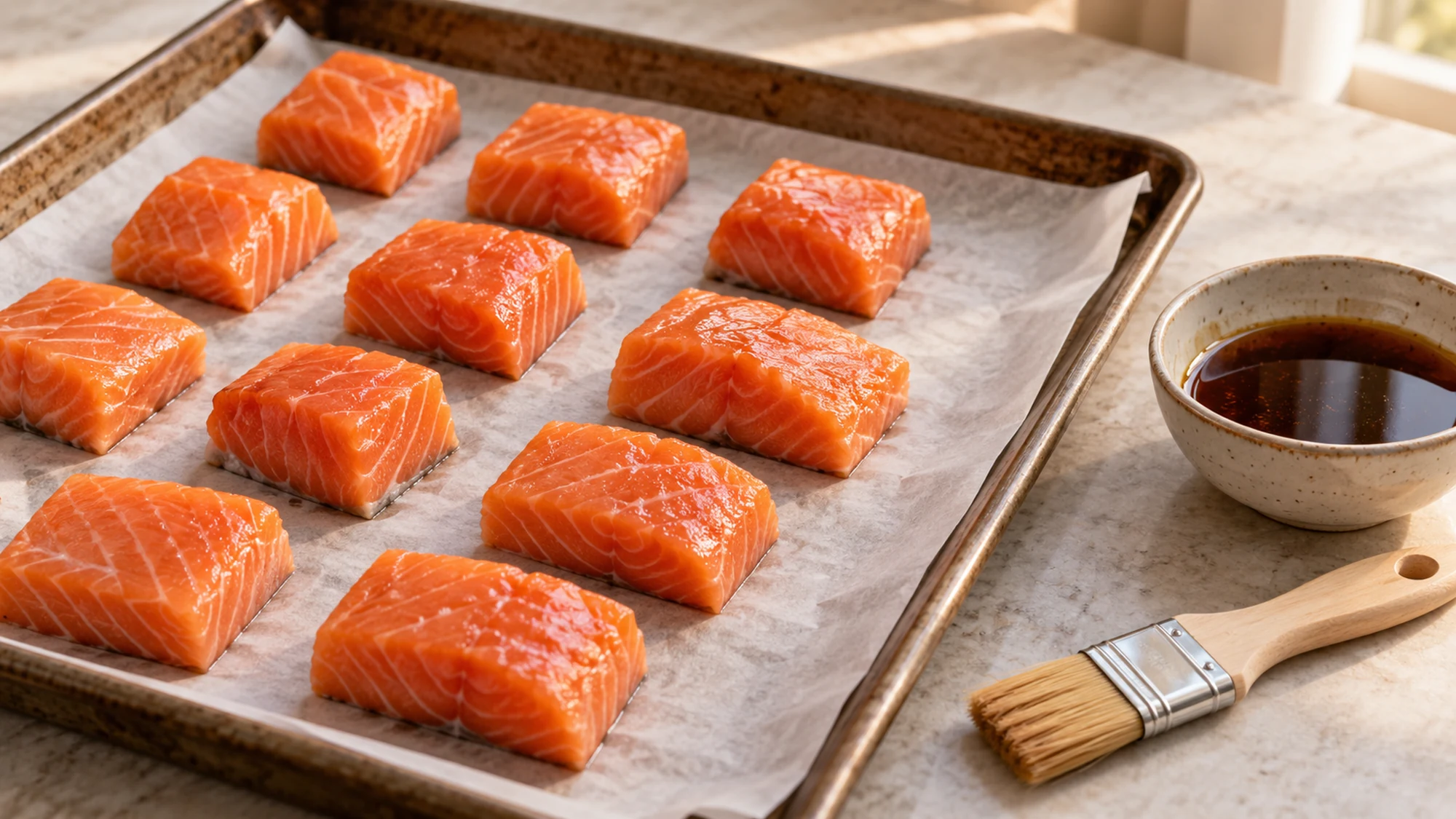
- Heat the oven to 400°F (205°C). Line a rimmed baking sheet with parchment. Pat the salmon dry and check for pin bones before cutting into similar-sized chunks.
- Whisk the maple syrup, soy sauce, vinegar, oil, garlic and smoked paprika. Before any sauce touches raw fish, set half aside in a small saucepan for finishing. Toss the salmon with the remaining half.
- Arrange the coated salmon in one layer with space between pieces. Leave excess marinade in the mixing bowl rather than pouring it into the gaps. Discard that raw-fish marinade.
- Bake for about 10–14 minutes, checking smaller pieces early, until the thickest center reaches 145°F (63°C). Do not keep baking solely to darken the glaze.
- Meanwhile, warm the clean reserved sauce in the saucepan and simmer gently for 1–2 minutes, stirring, just until lightly thickened. Brush or spoon it over the cooked salmon with a clean utensil. Divide into four portions and serve promptly.