
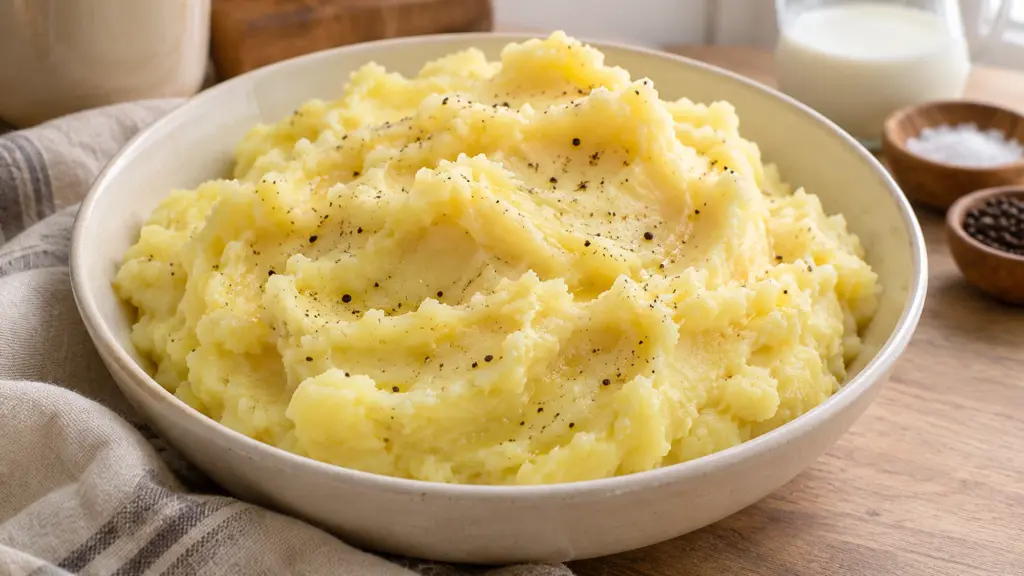
A bowl of mashed potatoes should make room for the gravy, not give your spoon a workout. If you’re figuring out how to make mashed potatoes, the biggest difference comes before the milk goes in: cook the pieces until completely tender, then get rid of the excess water.
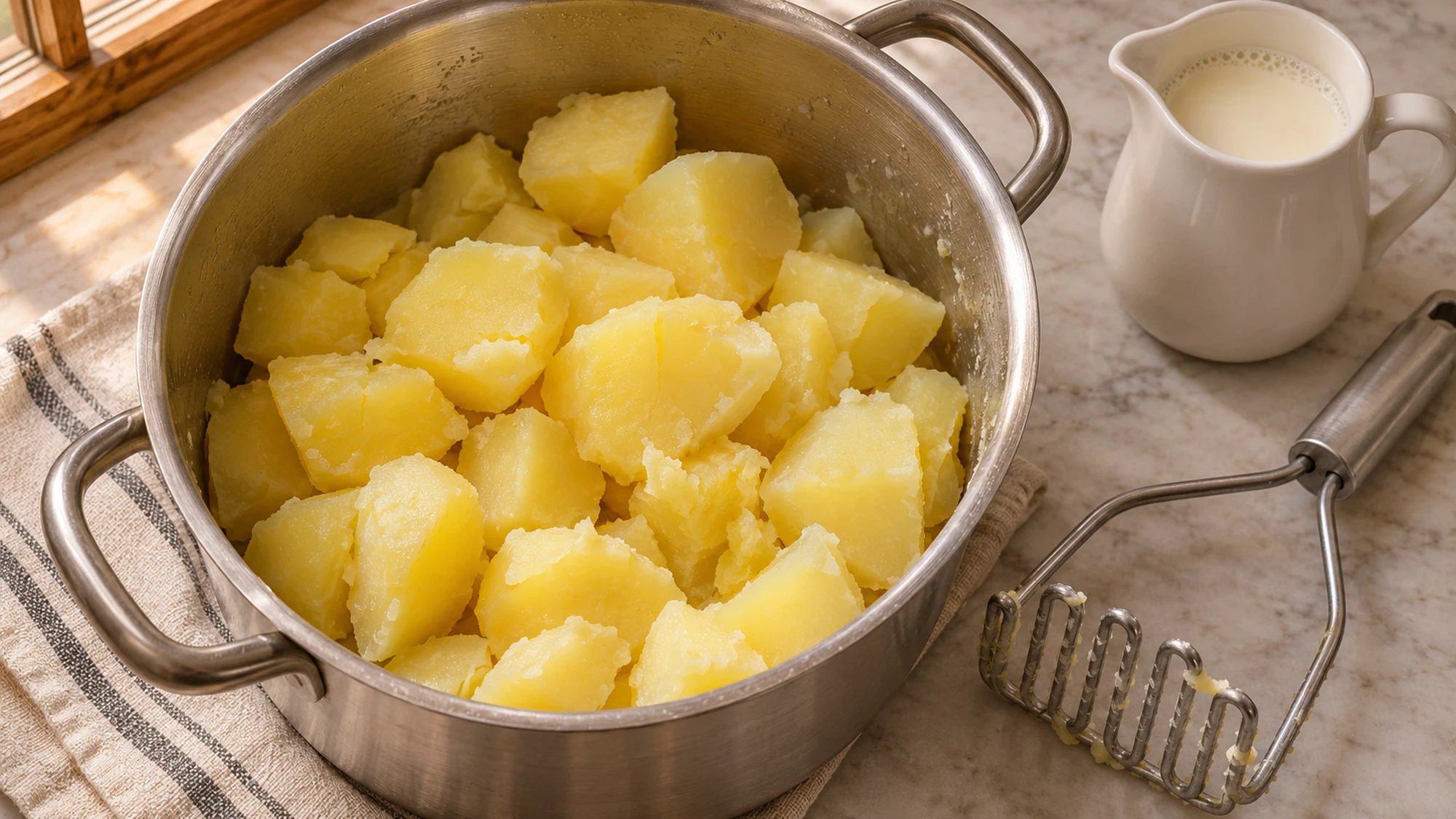
For creamy mashed potatoes, start evenly cut potatoes in cold water, simmer until a fork slips through, and drain well. Mash while hot, then gently fold in warm butter and milk. Stop when the texture suits you; more mixing is not the answer.
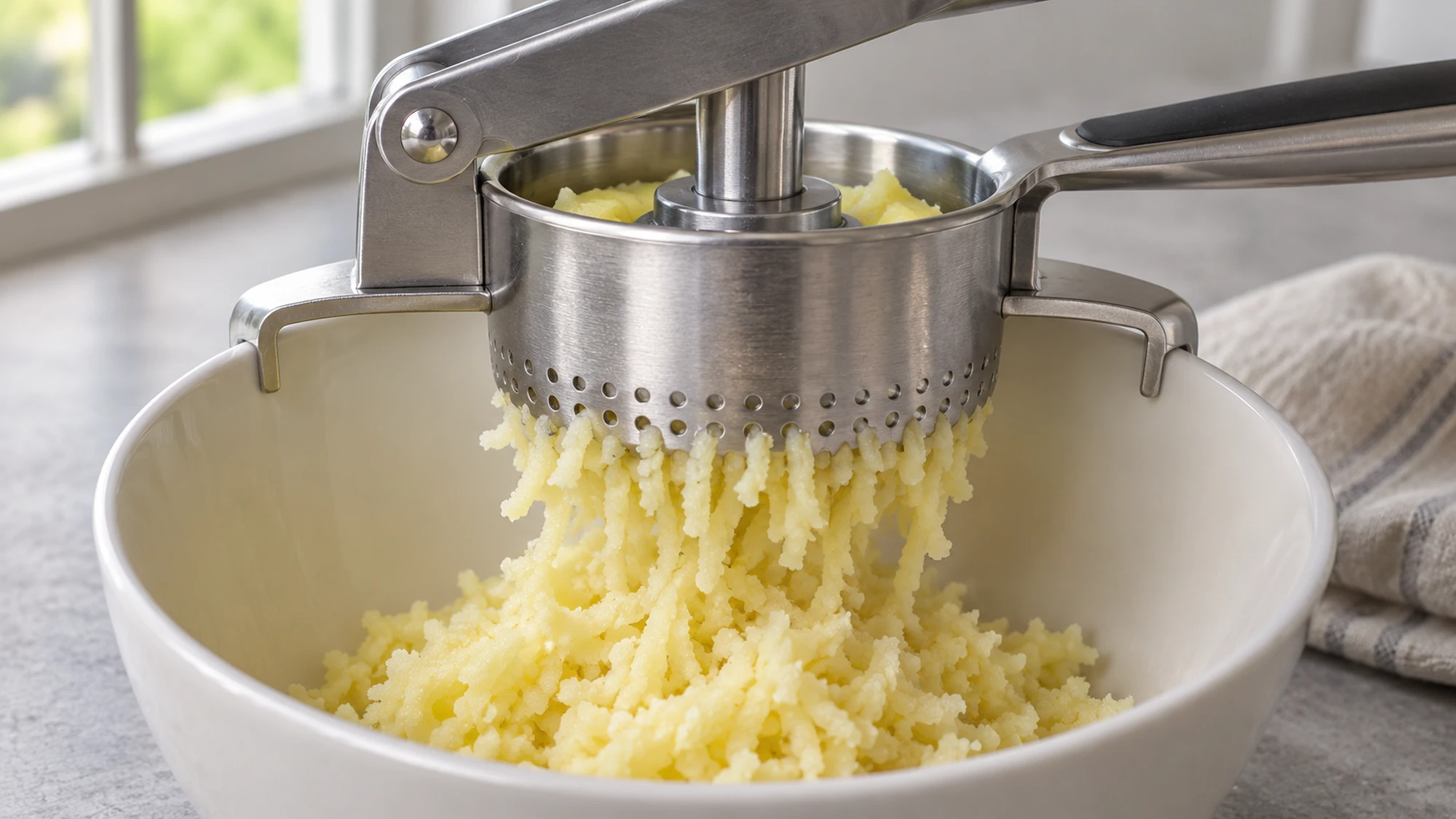
I’d choose Yukon Golds for a naturally buttery-looking mash or russets for a lighter, fluffier result. A hand masher leaves a little texture, which I like beside a saucy main. A potato ricer, the press with small holes, gives a smoother finish without needing an electric mixer.
Serving Suggestions: Give the Potatoes Some Contrast
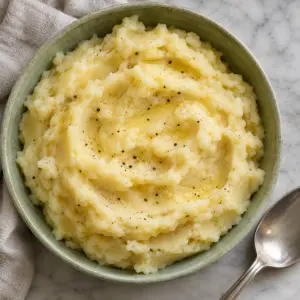
These potatoes are deliberately simple, so the rest of dinner can bring the louder flavors. Spoon them into a warm bowl shortly before serving. A wide dish lets everyone reach the soft ridges without compressing the whole batch into one deep mound.
- Pair with roast chicken, pan-seared steak or mushrooms in gravy. The potatoes catch the sauce without competing with it.
- Add a vegetable with a different texture. Hot honey roasted carrots bring browned edges and a sweet-spicy finish beside the mellow mash.
- For a meatless plate, add cooked lentils or white beans and greens. Potatoes can be the comforting part of dinner without having to be the entire dinner.
For leftovers, use shallow containers and refrigerate within two hours, or one hour above 90°F (32°C). Keep the refrigerator at 40°F (4°C) or below and use the potatoes within three to four days. These leftover-storage basics matter more than waiting for the bowl to feel completely cool.
Plan the mash alongside a saucy main and a contrasting vegetable, then put leftovers away promptly rather than leaving the serving bowl on the table.
Variations on How to Make Mashed Potatoes
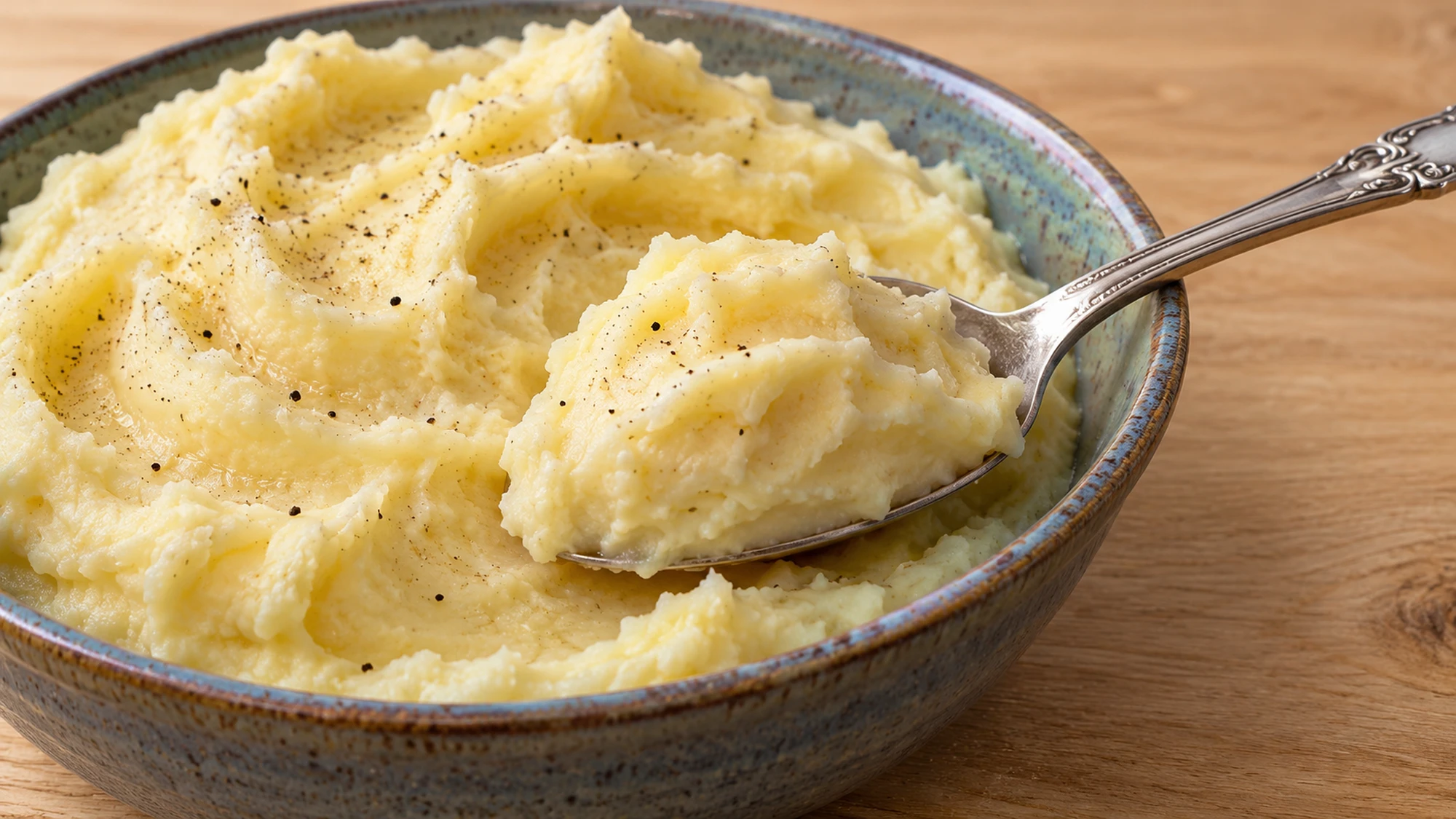
Choose your texture before reaching for more milk. Some potatoes absorb more liquid than others, so add the warm dairy gradually. A soft mash should hold a loose mound, not spread into a puddle. Here is a quick guide to the choices that make the biggest difference.
| Choice | What changes | Useful adjustment |
|---|---|---|
| Yukon Gold potatoes | Creamier, denser texture | Fold gently; stop once combined. |
| Russet potatoes | Lighter, fluffier texture | Add warm milk gradually. |
| Hand masher | Some small, soft lumps | Mash only to your preferred finish. |
| Potato ricer | Fine, even texture | Press hot potatoes before adding dairy. |
- For garlic flavor, simmer two peeled garlic cloves with the potatoes and mash them together. This is an optional variation, not part of the plain version below.
- For a rustic finish, leave some well-scrubbed skin on and use a hand masher. A ricer is better suited to peeled potatoes.
- For dairy-free potatoes, use a suitable unsweetened plant drink and dairy-free butter alternative. Expect the flavor and richness to change; check labels for your needs.
Avoid a blender or food processor: vigorous mixing can make the starch gluey. This explanation of gentle mashing is useful if you’re choosing tools. If the mash seems stiff, fold in a little more warm milk. If it is already gummy, more beating will not restore a fluffy texture.
Adjust the potato variety, tool or seasoning to suit dinner, but keep the handling gentle. Small lumps are a texture choice, not a reason to overwork the bowl.
Health Benefits and the Whole Plate
Potatoes contribute carbohydrate, while the milk adds a little protein and calcium. Butter brings flavor and fat. That makes this a useful side to consider with the rest of the meal, rather than a food that needs a sweeping healthy or unhealthy label.
- Keep the yield in mind: the card makes six side servings, not six main meals.
- The estimated nutrition assumes the listed butter and whole milk. Extra butter, gravy or substitutions change those numbers.
- Use unsalted butter so you can control the seasoning. Taste the finished mash before adding more salt, particularly when the main dish comes with salty gravy.
Enjoy the potatoes for what they bring to dinner, and add vegetables and a protein food for a more varied plate.
Bottom Line
Tender potatoes, a well-drained pot and warm dairy do the useful work here. Choose your texture, mash gently and serve while the potatoes are soft and warm. The simplest version leaves plenty of room for the rest of dinner.
How to Make Mashed Potatoes Recipe

Ingredients
- 2 lb Yukon Gold or russet potatoes 907 g weighed after peeling; cut into even 1-inch chunks
- 4 tbsp unsalted butter 57 g
- 0.75 cup whole milk 180 ml; warmed, added gradually
- 0.5 tsp fine salt plus more to taste if needed
- 0.25 tsp ground black pepper
Equipment
- Large pot
- Colander
- Potato peeler and knife
- Potato masher or ricer
- Small saucepan
- Wooden spoon
Instructions
- Place the peeled, evenly cut potatoes in a large pot. Add cold water to cover by about 1 inch. Bring to a boil, then reduce to a steady simmer.
- Simmer for about 15–20 minutes, until a fork slides easily into several pieces and the centers offer no resistance. Timing depends on the size of the pieces; cook until tender rather than relying only on the clock.
- Meanwhile, warm the butter and milk in a small saucepan over low heat until the butter melts. Do not boil. Keep warm.
- Drain the potatoes thoroughly. Return them to the pot over low heat for about 1 minute, gently moving the pieces to let excess moisture evaporate. Remove from the heat.
- Mash the potatoes while hot with a hand masher, or pass them through a ricer into the warm pot. Gently fold in the warm dairy a little at a time, stopping when the mash is soft and creamy. You may not need every drop. Do not use a blender or food processor.
- Fold in the salt and pepper, taste, and adjust seasoning if needed. Divide into six side servings and serve warm.