
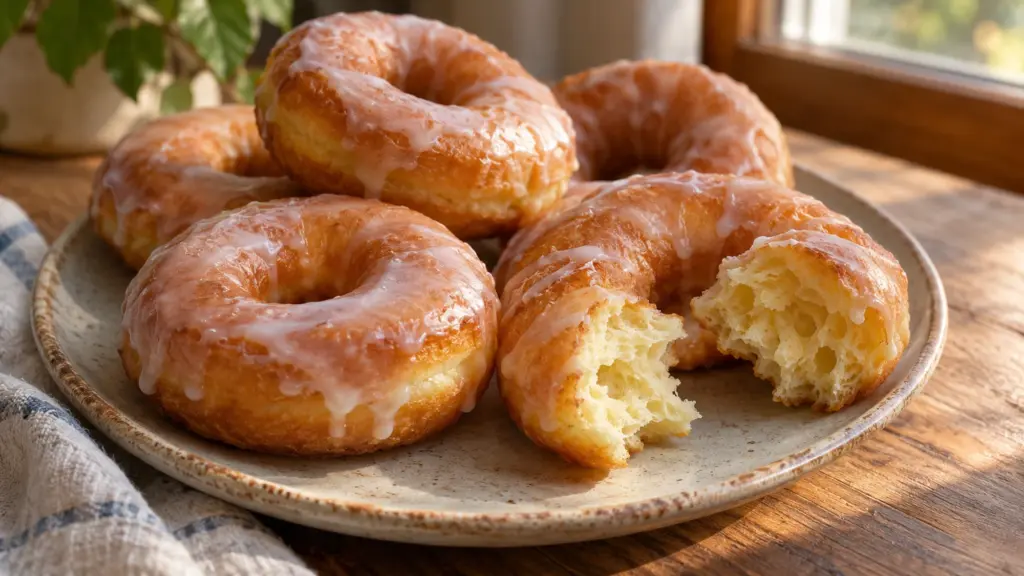
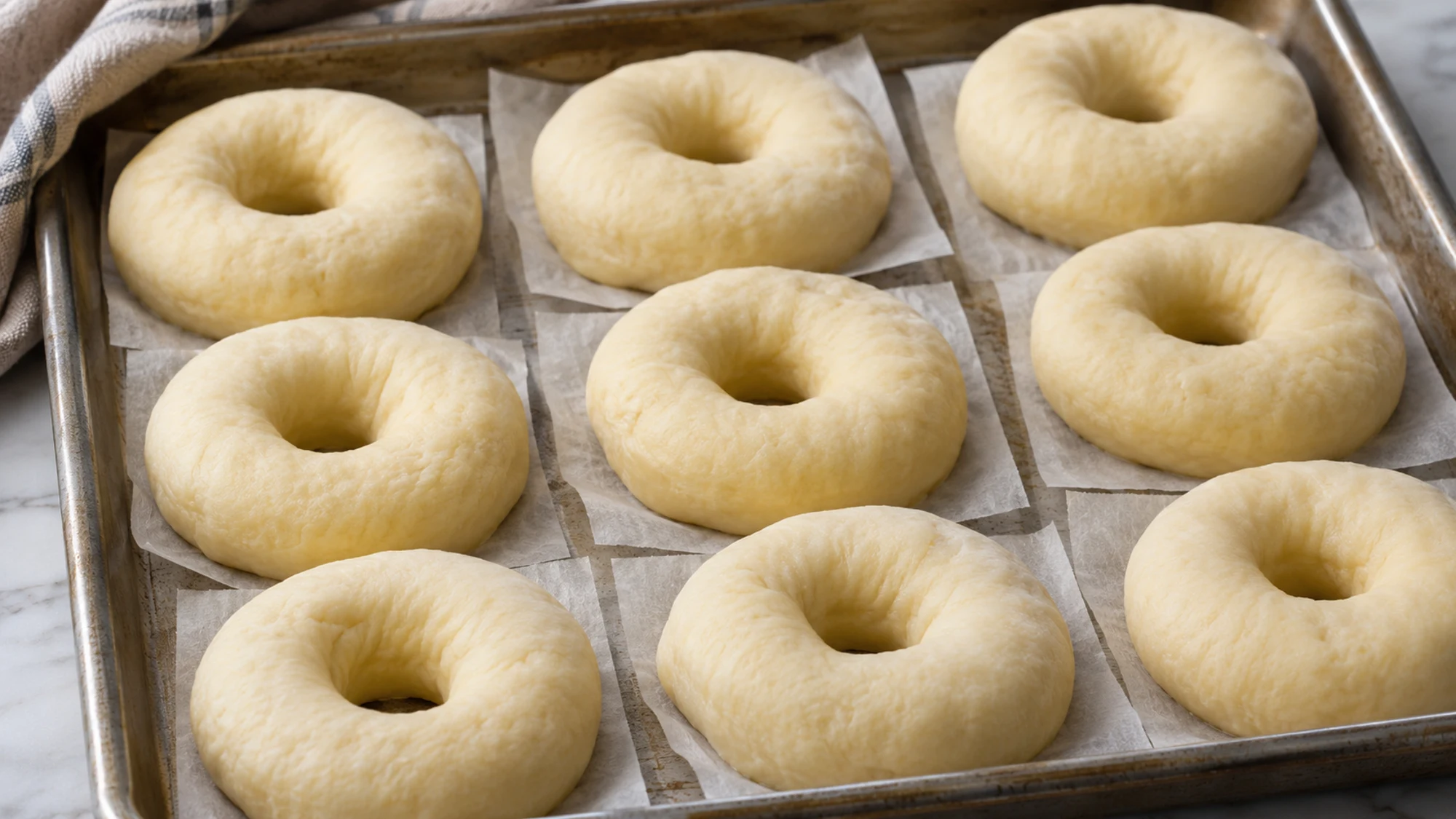
A homemade batch of donuts asks for a little patience before it gives you that first warm, glazed bite. The part worth watching is the dough, not the clock: rings that look properly puffy before frying have a much better starting point than dense circles rushed straight into hot oil.

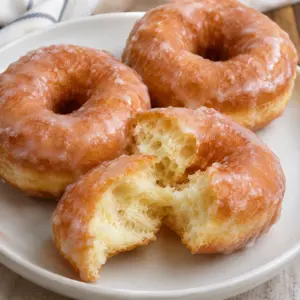
These are yeast-raised, fried ring donuts with a thin vanilla glaze. Let both rises do their work, keep the oil near 350°F (175°C), and glaze the donuts while they are warm rather than piping hot.
I’d put the frying thermometer within reach before mixing anything. It is a more useful helper than an extra handful of flour, which can make a manageable soft dough unnecessarily stiff. The aim is a tender center with a light golden surface, not a dark crust hiding an undercooked middle.
Serving Suggestions for Fresh Donuts
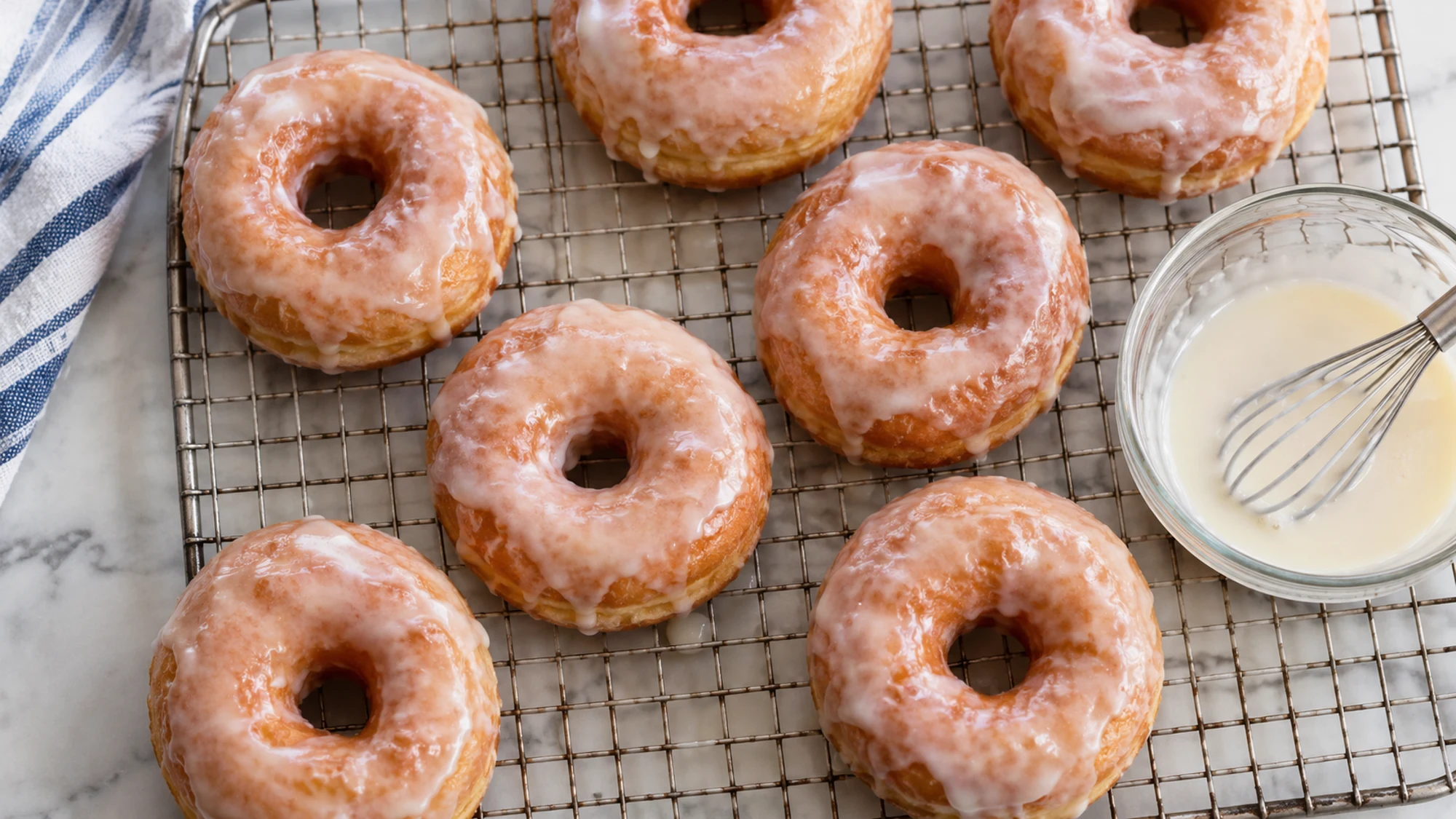
Give the glaze a few minutes to settle before arranging the donuts on a platter. Warm glaze can run into a puddle underneath; a rack lets the excess fall away and keeps the bottom from sitting in sugar. Set the tray beneath it before dipping, unless a sticky counter is part of the afternoon’s entertainment.
- Serve with unsweetened coffee or tea when you want the vanilla glaze to stand out. A plain drink is a useful contrast to the sweet coating.
- For a brunch table, add fresh fruit and a separate savory dish rather than piling more toppings onto every donut.
- Keep the center cutouts and fry them separately. They brown faster than the rings and make small bites without another dough batch.
- Arrange just-finished donuts in a single layer. Stacking before the glaze sets can pull the coating off the donut underneath.
If you would rather plan a cold dessert ahead, our frozen yogurt bark goes in the opposite direction: thin, tangy and kept frozen until serving. Fried donuts are at their most appealing shortly after they are made, so choose the project that fits your schedule.
Prepare the rack, serving plate and glaze before the last batch finishes frying. A little space on the counter makes the warm-donut stage calmer and keeps the coating tidy.
Donuts Variations Without Losing the Soft Center
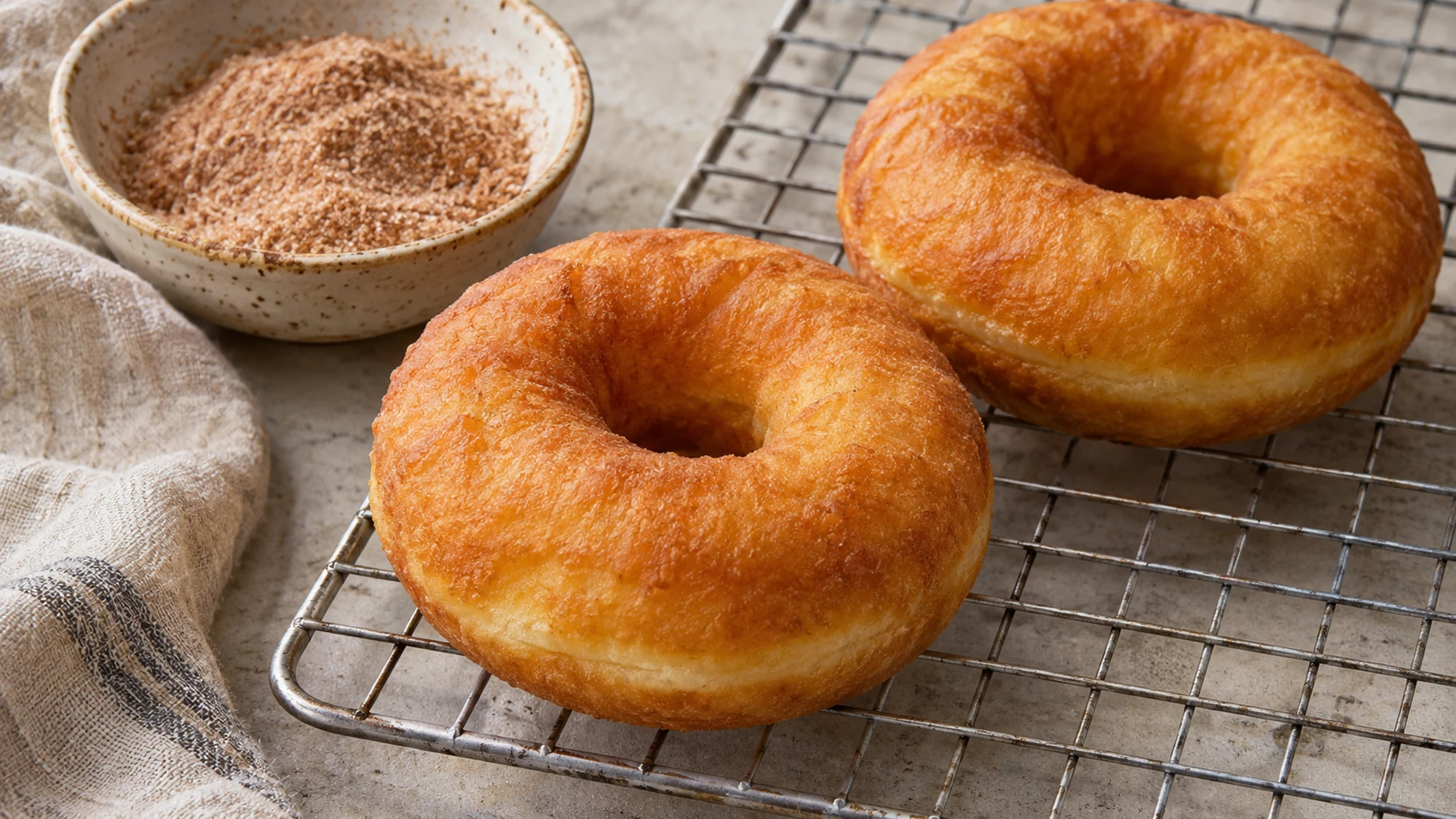
The basic dough does not need a complicated finish. I prefer the thin vanilla glaze when the point is to enjoy the tender crumb, but a dry sugar coating is a useful alternative. Make one change at a time so you know whether you are adjusting sweetness, aroma or texture.
| Finish | What changes | When to apply |
|---|---|---|
| Vanilla glaze | Thin, sweet coating that sets lightly | While donuts are warm, not very hot |
| Cinnamon sugar | Dry, fragrant surface instead of glaze | While the surface is still warm |
| Plain | The dough and fried exterior are more prominent | Serve after brief cooling |
Baking is not an identical swap for frying. King Arthur’s yeast-raised doughnut guidance explains that the oven gives a different crust and flavor. If you want baked donuts, use a method written for that choice instead of expecting the oil-fried result from this card.
- Keep the rolled dough an even thickness so the rings cook at a similar pace. Very thin edges can brown before a thick middle is ready.
- Dust only as needed to prevent sticking. A thick flour layer can dry the surface and shed into the frying oil.
- Let the oil return to temperature between small batches. Crowding makes the temperature harder to control.
- Reroll scraps only once for the best texture, and give the dough a short rest if it springs back while rolling.
Change the coating freely, but preserve the dough’s softness, the second rise and the controlled frying temperature. Those decisions matter more to the center than an elaborate topping does.
Health Benefits, Portions and Safe Handling
Donuts are a sweet fried treat, not a food that needs a wellness promise. The portion, glaze and oil absorbed during frying affect what ends up on the plate. I would serve a donut because it is enjoyable, with the rest of the meal chosen to suit the people eating it.
- This batch contains wheat, milk and egg. Check every packaged ingredient when an allergy matters; changing one ingredient does not make the recipe suitable for every dietary need.
- Raw flour and eggs need cooking. The FDA warns against tasting raw dough, including a small pinch during mixing.
- Keep the pot stable and no more than half full of oil. Use dry utensils, lower dough gently and leave hot oil to cool safely before moving it.
Enjoy the donuts as a treat and keep the practical safety checks close: no raw dough tasting, careful hot-oil handling and a fully cooked center.
Bottom Line
Soft donuts begin with a patient rise and finish with steady frying. Keep the glaze thin, serve the batch fresh and let the golden exterior and tender middle do the work.
Donuts Recipe

Ingredients
- 400 g all-purpose flour plus a little for dusting
- 50 g granulated sugar
- 7 g instant yeast
- 5 g fine salt
- 240 ml whole milk lukewarm, not hot
- 1 large egg
- 50 g unsalted butter softened
- 1 tsp vanilla extract
- neutral frying oil enough for a 2-inch depth; keep pot no more than half full
- 240 g powdered sugar sifted
- 3 tbsp milk plus up to 1 tablespoon if needed
- 1 tsp vanilla extract
Equipment
- Large mixing bowl
- Kitchen scale
- Rolling Pin
- 3-inch round cutter and small center cutter
- Heavy deep pot
- Deep-fry thermometer
- Spider or slotted spoon
- Wire rack
Instructions
- Mix the flour, sugar, yeast and salt in a large bowl. Add the lukewarm milk, egg, softened butter and vanilla. Stir into a soft dough, then knead for 8–10 minutes until smooth and elastic. The dough should feel slightly tacky; add dusting flour sparingly.
- Cover the bowl and let the dough rise until approximately doubled, about 60–90 minutes depending on room temperature. Lightly flour the worktop, gently press out the gas and roll to about 1/2 inch thick.
- Cut rings with a 3-inch cutter and a small center cutter. Put them on parchment squares, cover loosely and let rise for 30–45 minutes until visibly puffy. Reroll scraps once, let them rest briefly and cut additional rings. Expect about 12 rings plus holes; yield varies with cutter size.
- Heat 2 inches of oil in a deep, heavy pot to 350°F (175°C), checking with a frying thermometer. Keep the pot no more than half full. Lower in 2–3 rings carefully without crowding; remove any parchment with tongs as it releases. Fry about 60–90 seconds per side, until evenly golden and cooked through. Fry holes separately because they finish faster.
- Lift donuts onto a rack over a tray. Let the oil recover to 350°F (175°C) between batches; adjust the heat as needed. Break open the first cooled donut to check that the center is cooked, not gummy.
- Stir the powdered sugar, 3 tablespoons milk and vanilla into a smooth glaze. Add the extra milk a teaspoon at a time only if needed for a thin coating. Dip the warm, not piping-hot, donuts and return to the rack. Let the glaze set for 10–15 minutes before serving.