
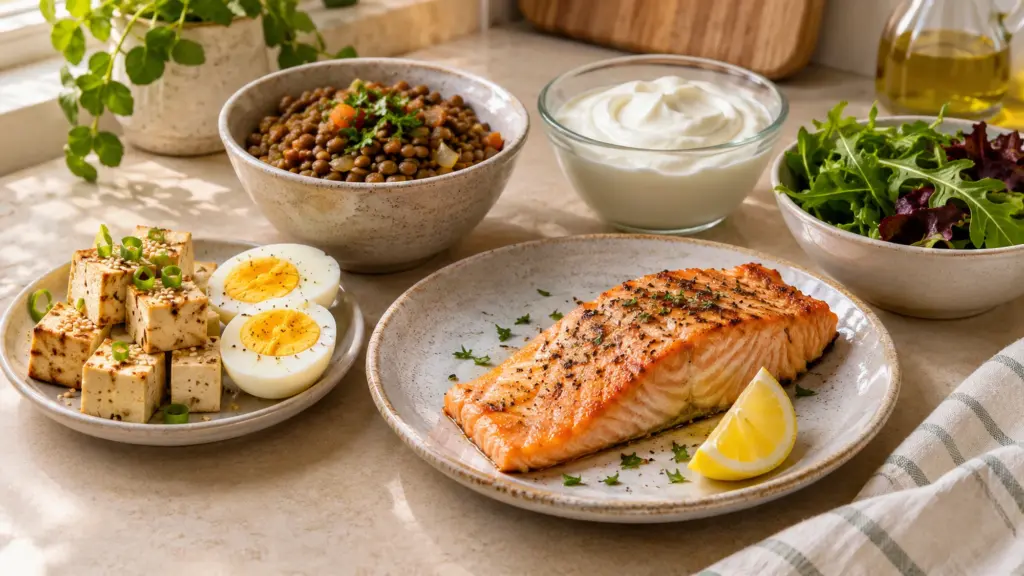
A yogurt label says one thing, a fitness video says another, and suddenly breakfast looks like a math problem. If you’re asking “how much protein do I need a day,” start by separating a general guideline from a target designed for your body.
The 2025–2030 U.S. Dietary Guidelines give a protein target of 1.2–1.6 grams per kilogram of body weight daily. The established adult Recommended Dietary Allowance is 0.8 g/kg; these figures answer different questions, and neither replaces individualized advice.
I’d rather begin with that distinction than prescribe another shake. Your age, activity, health and overall food intake matter, and the number still has to work as actual meals.
How Much Protein Do I Need a Day? Why the Numbers Differ
The current federal dietary guidance lists 1.2–1.6 g/kg daily as its protein target, adjusted for individual calorie needs. Meanwhile, the American Heart Association explains the adult RDA of 0.8 g/kg. An RDA is intended to cover the needs of nearly all healthy people in its specified group; it is not a personalized athletic goal.
The higher range should not be presented as proof that everyone eating less is deficient. A 2026 perspective highlighted by the American Society for Nutrition notes evidence supporting higher protein for weight management in some populations, while questioning whether that evidence justifies a universal target across the lifespan.
- RDA: a reference for nutritional adequacy in healthy adults, not a ceiling on intake.
- Current dietary target: a broader eating-pattern recommendation, not a diagnosis of your needs.
- Personal target: an amount chosen with your circumstances in mind, especially when health conditions or intensive training are involved.
Do the Calculation Without Mixing Pounds and Kilograms
If you know your weight in pounds, divide by about 2.2 to estimate kilograms. Multiply kilograms by the relevant grams-per-kilogram figure; do not multiply pounds by that same number. The following examples show the arithmetic, not prescriptions for individual readers.
| Body weight | At 0.8 g/kg | At 1.2–1.6 g/kg |
|---|---|---|
| 50 kg (110 lb) | 40 g/day | 60–80 g/day |
| 60 kg (132 lb) | 48 g/day | 72–96 g/day |
| 70 kg (154 lb) | 56 g/day | 84–112 g/day |
| 80 kg (176 lb) | 64 g/day | 96–128 g/day |
That last detail is easy to miss: a 100-gram portion of chicken is not 100 grams of protein. Likewise, the weight of yogurt includes water and other nutrients. Use the protein line on the Nutrition Facts panel and match it to the portion you actually eat.

Turn a Daily Number Into Ordinary Meals
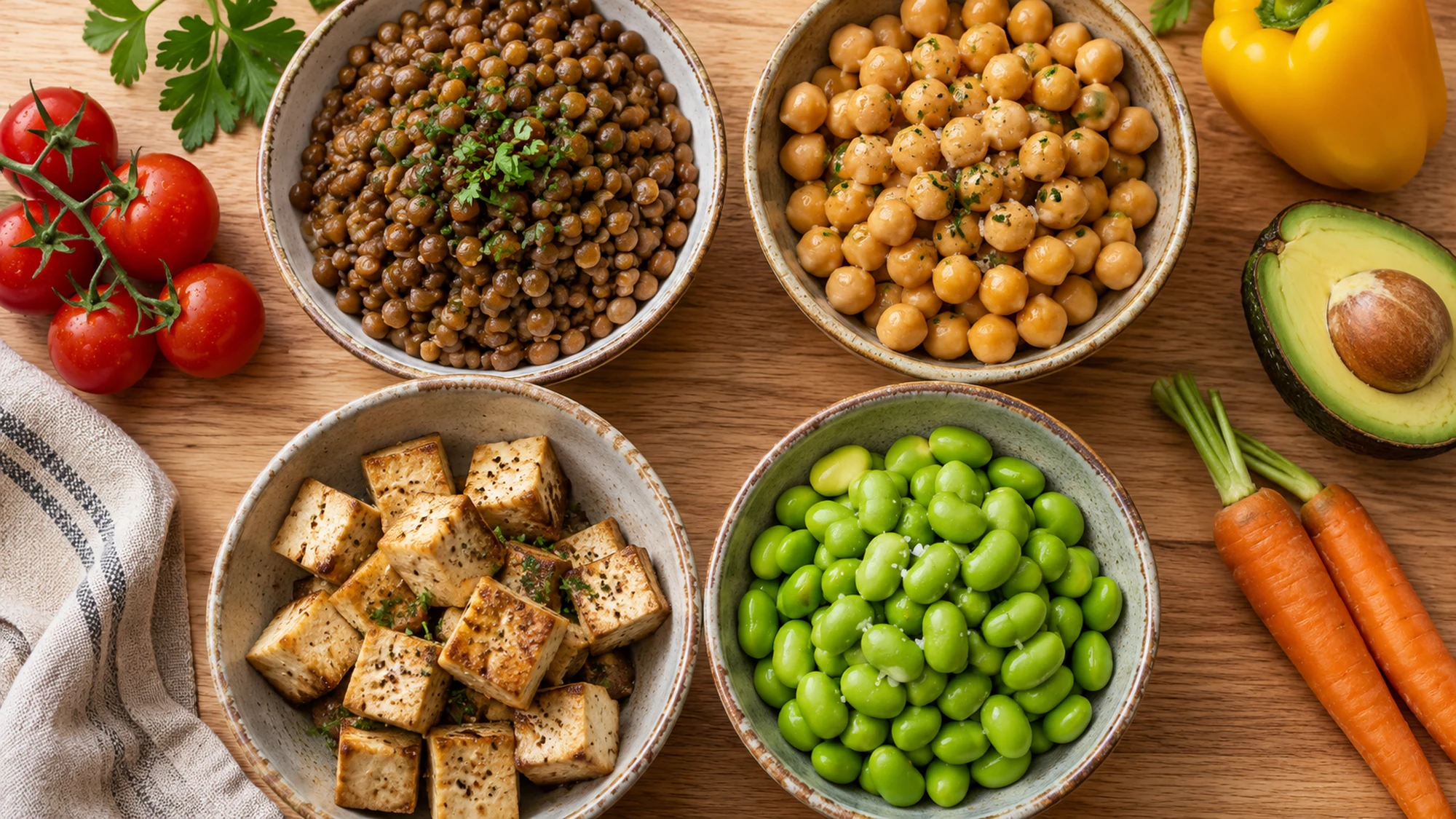
Before buying anything new, look at a typical day. Eggs, dairy, fish and poultry can contribute protein, as can tofu, lentils, beans, nuts and seeds. I like choosing a familiar protein food for each meal rather than leaving a large shortfall for dinner.
For portions you can picture, our guide to protein in an egg explains why egg size and the white-versus-whole-egg distinction matter. A whole meal also includes contributions from bread, grains, beans or dairy; count those rather than treating the main ingredient as the entire total.
- Breakfast: try yogurt with oats and fruit, or eggs with toast; check your particular yogurt’s label.
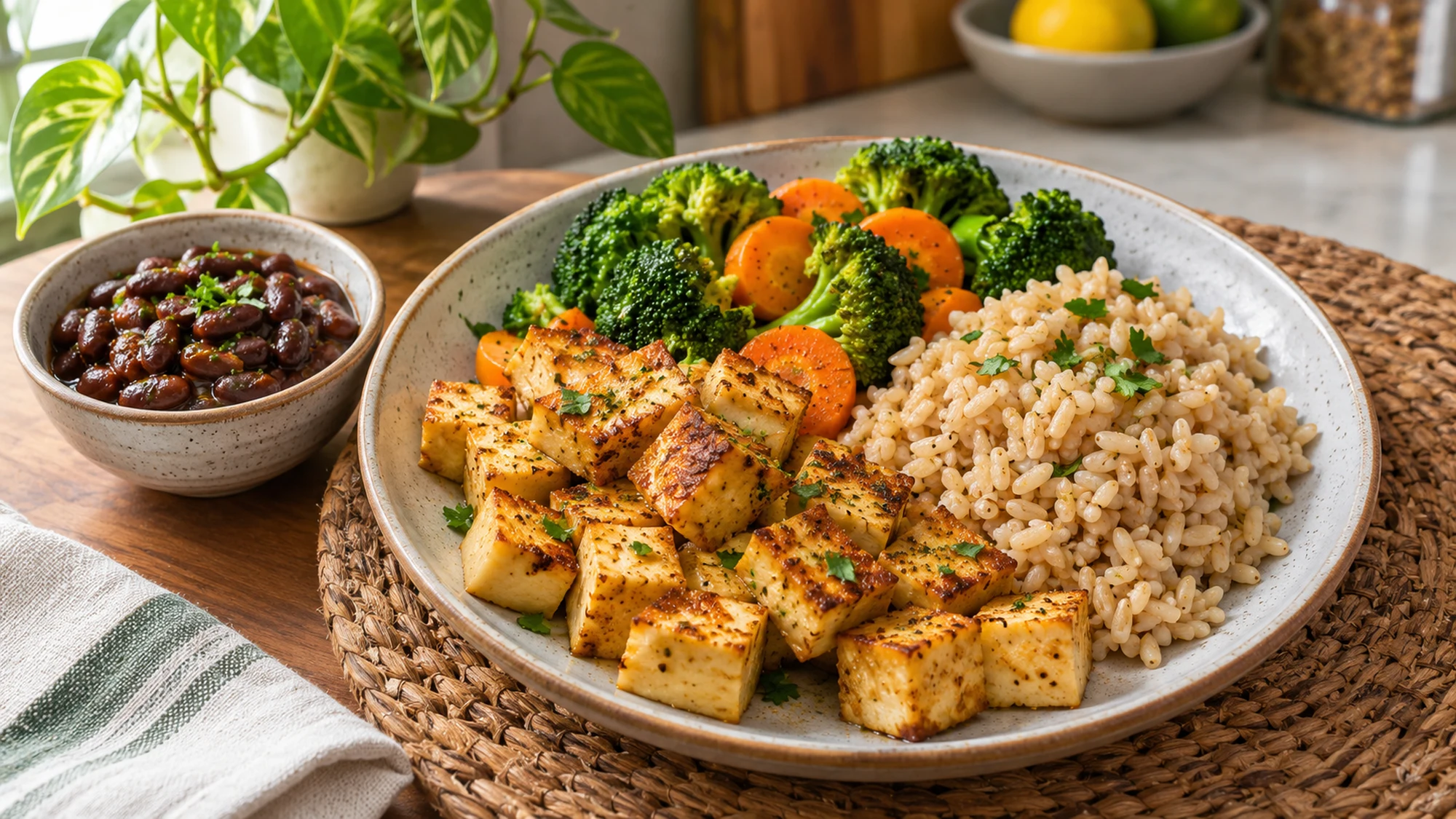
- Lunch: give a salad or grain bowl a substantial protein ingredient, such as chickpeas, tofu, fish or chicken.
- Dinner: pair your chosen protein with vegetables and a grain or other starchy food you enjoy.
- When counting: compare the same serving size and preparation. Raw and cooked weights are not automatically interchangeable.
When a General Protein Target Is Not Enough
Kidney disease is an important exception to do-it-yourself calculations. NIDDK advises working with a health professional on protein amount and sources; recommendations can differ with disease status and treatment. Do not adopt a high-protein plan from this table if you already have a prescribed diet.
Pregnancy, breastfeeding, recovery from illness, older age and substantial training also deserve advice suited to the situation. Children should not be assigned an adult target from this guide. If appetite is poor, or eating feels difficult, a larger number on paper is not a practical solution by itself.
- Ask which target and body-weight basis are appropriate for you, rather than comparing yourself with someone else’s food log.
- Review what you already eat before assuming you need a supplement.
- Keep room for vegetables, fruit, whole grains and fats; a protein tally is only one part of eating well.
Bottom Line
Know which recommendation you are using, calculate in kilograms, and translate the result into foods you enjoy. I’d choose a workable, varied meal pattern over chasing the highest number; seek individualized help when your health or life stage changes the calculation.
In the video below, Dr. Hazel Wallace discusses protein-rich foods after exercise. It is from British Lion Eggs, an egg-industry source, and offers food context rather than the basis for the daily targets above.