
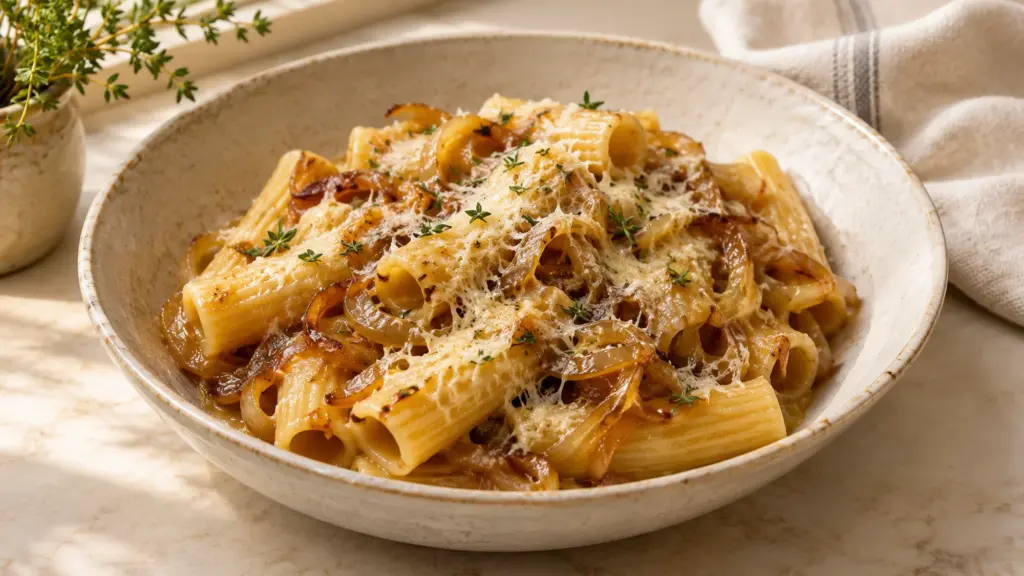
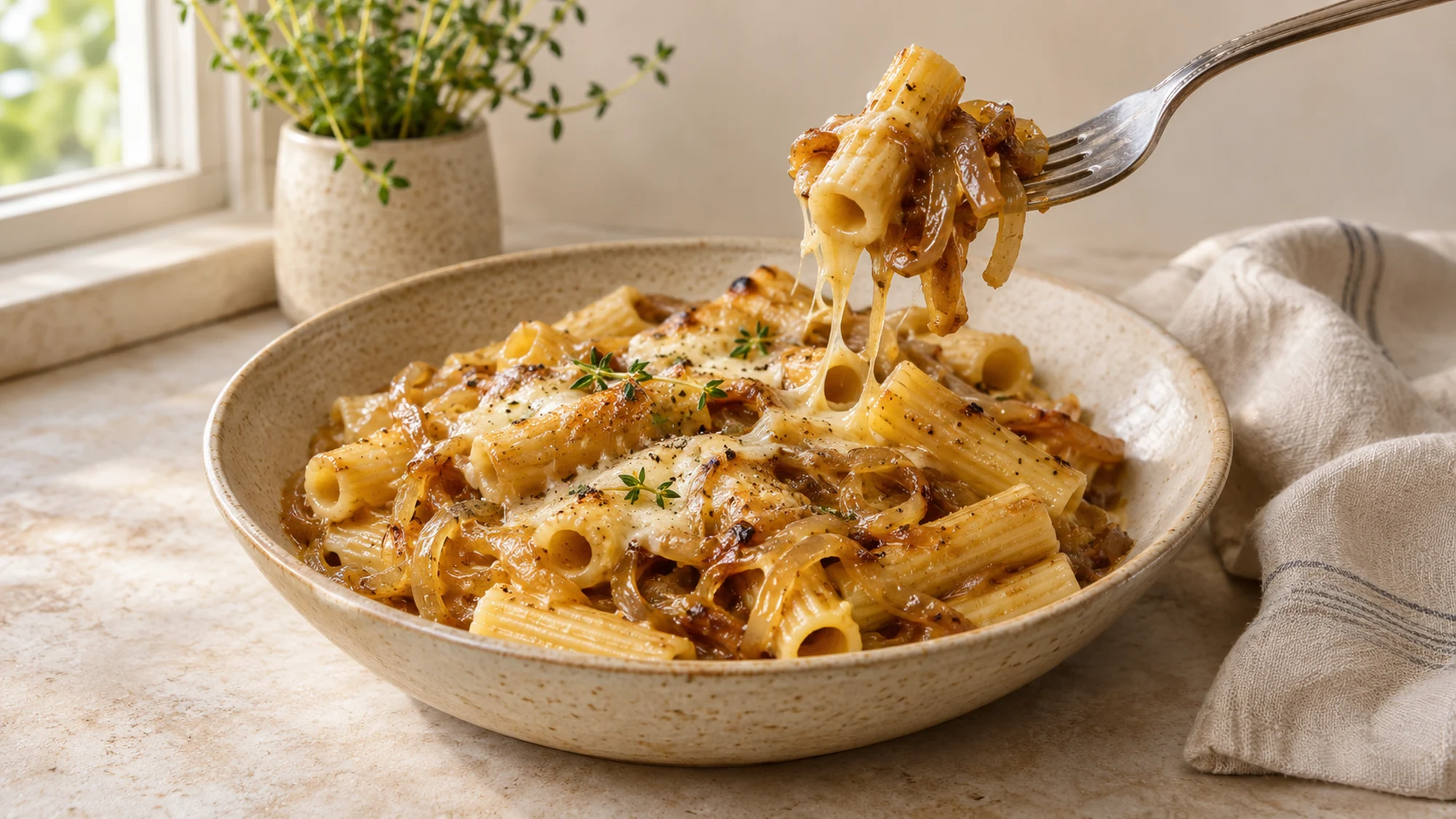
The onions are finally golden, the pasta is drained, and then the sauce tightens before it reaches the table. French onion pasta needs two kinds of patience: time for the onions at the beginning, and a gentle hand with the cheese at the end. A mug of reserved pasta water is the small insurance policy that connects those stages.
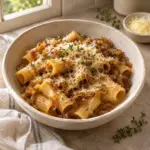
Caramelize the onions first, cook the rigatoni separately, and stir in the Gruyère off the heat. Add reserved pasta water gradually until the sauce moves easily around the noodles instead of clumping.
This version borrows the sweet-savory onion-and-cheese combination from French onion soup without trying to become soup in a bowl. I prefer cooking the pasta separately because you can control its bite while the onions take whatever time they need. No cream is necessary; the finish should be glossy, not heavy.
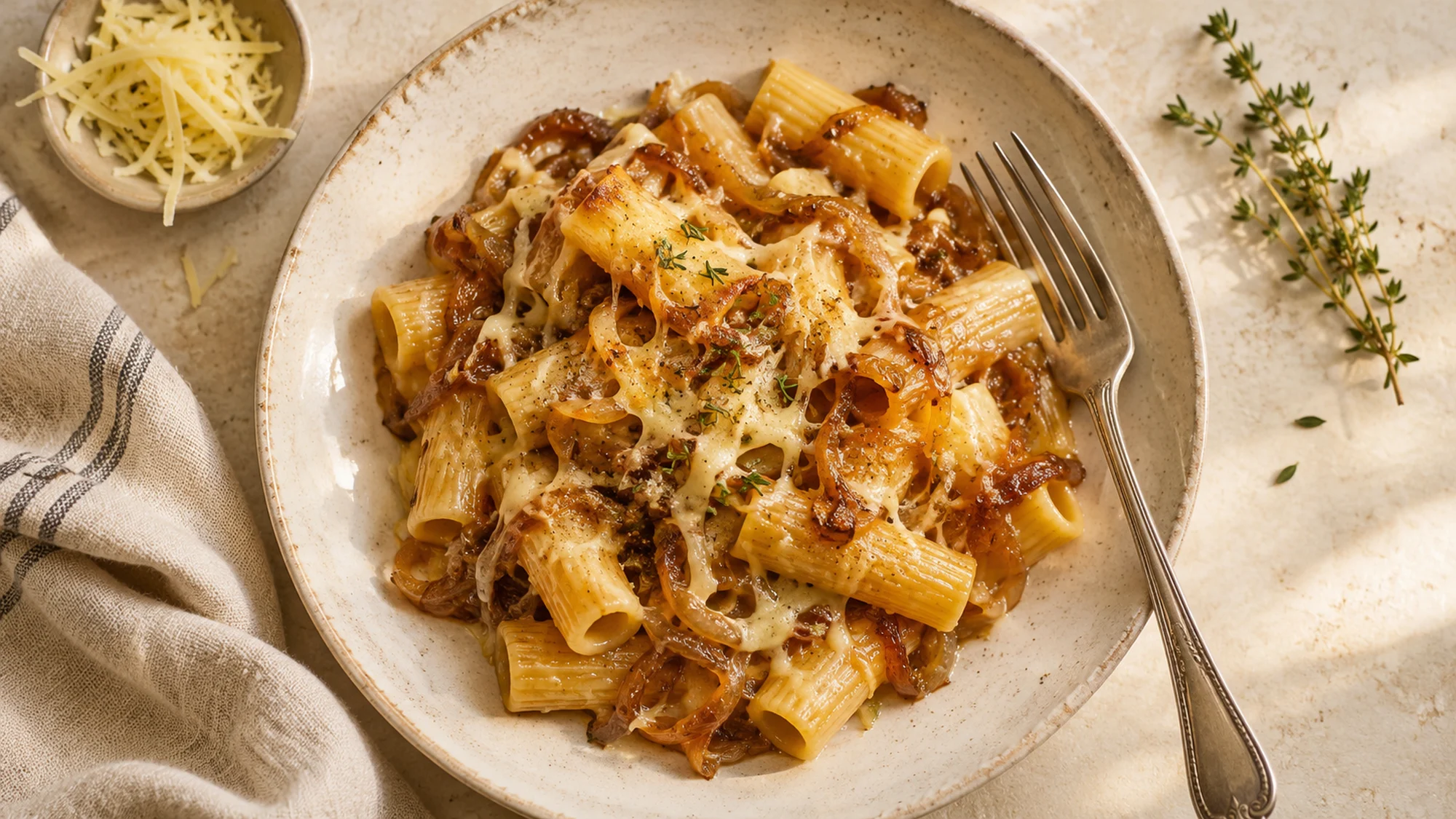
Serving French Onion Pasta Before It Tightens
Have the bowls and side dishes ready before the pasta meets the cheese. As the dish stands, the noodles absorb moisture and the sauce becomes thicker. Toss once more just before serving, adding a small splash of warm cooking water if it looks stiff. A little movement in the sauce is welcome; a puddle underneath it is not.
- Add a fresh contrast: a crisp green salad with a sharp vinaigrette works well beside the sweet onions. Thin radish or cucumber slices add crunch without another pan.
- Let the onions lead: offer extra pepper at the table rather than covering every serving with more cheese. The measured Gruyère is part of the sauce, not merely decoration.
- Choose another pasta night: if you enjoy a tangier sauce, the baked feta pasta uses roasted tomatoes and cheese, with the same useful habit of reserving cooking water.
For leftovers, cool and refrigerate promptly in shallow containers. USDA guidance allows three to four refrigerated days. Reheat with a little water and stir so the center heats as evenly as the edges; leftovers should reach 165°F (74°C) throughout. The pasta will be softer the next day, which is a texture change rather than a reason to add more oil.
Finish the side dishes first. This pasta is happiest when the table is ready for it.
French Onion Pasta Variations and Useful Swaps
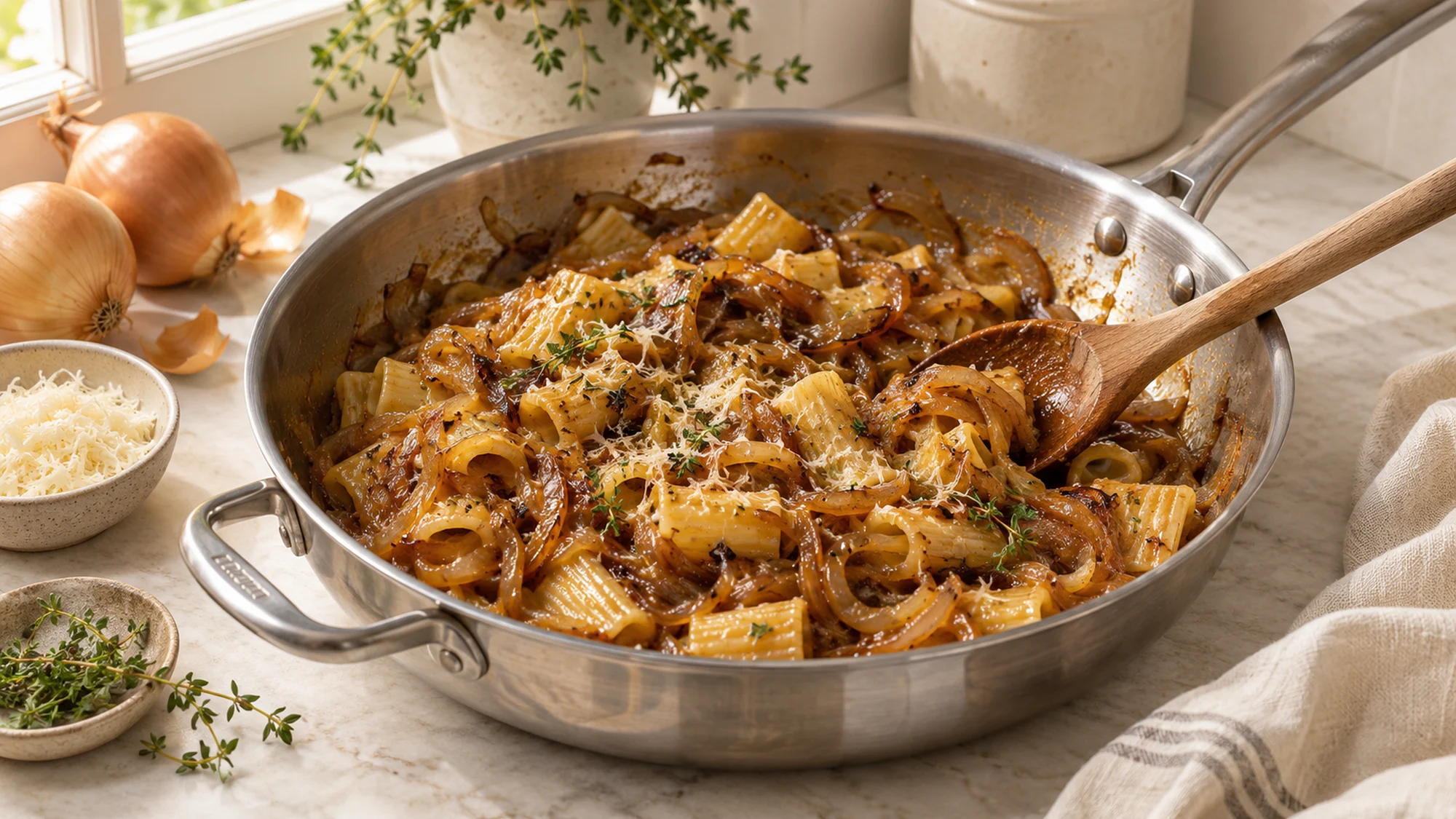
A wide skillet makes the onions easier to watch, but its heat still needs adjusting. If the edges darken while the centers remain pale, reduce the burner and loosen the brown bits with water. I would rather spend another ten minutes at this stage than try to hide a bitter onion base under cheese.
| Choice | Useful adjustment |
|---|---|
| Penne instead of rigatoni | Follow its package timing; keep a little bite before tossing. |
| Swiss instead of Gruyère | Expect a milder flavor and add it in small handfuls. |
| Whole-wheat pasta | Allow for a firmer texture and follow that package’s cooking time. |
- For a vegetarian version: keep the vegetable broth and choose cheese made with vegetarian rennet.
- For a looser finish: add water a little at a time while tossing. Pouring in the whole reserved cup at once can make the sauce unnecessarily thin.
- For smooth cheese: finely grate it and take the skillet off the heat first. Adding a cold mound to a fiercely bubbling pan makes even distribution harder.
Swap the pasta shape if needed, but keep the slow onion cooking and gentle cheese finish.
Health Benefits and a Balanced Plate
Pasta contributes carbohydrates, and the cheese adds protein and calcium alongside saturated fat and sodium. Those nutrients do not make this dish a treatment or a food to apologize for. Serving size, ingredients and the rest of the meal matter more than attaching a broad healthy label to the bowl.
- Read labels: reduced-sodium broth helps leave room for the cheese’s saltiness. Taste before adding extra salt.
- Build variety: vegetables on the side bring a different texture and make the meal less repetitive.
- Check allergens: standard rigatoni contains wheat, and butter and Gruyère contain milk. Changing the pasta does not remove dairy.
Enjoy the onion-and-cheese flavor, then use the sides and portions to suit the meal you want.
Bottom Line
French onion pasta comes together best when you do not rush the first or last stage. Let the onions become golden, save the cooking water, and melt the cheese gently for a sauce that clings without turning stiff.
French Onion Pasta Recipe

Ingredients
- 2 tablespoons unsalted butter
- 1 tablespoon olive oil
- 2 pounds yellow onions, thinly sliced
- 2 garlic cloves, minced
- 1 teaspoon fresh thyme leaves
- 12 ounces dry rigatoni
- 1 cup reduced-sodium vegetable broth
- 3 ounces Gruyere, finely grated
- 0.25 teaspoon fine salt, plus more for pasta water
- 0.25 teaspoon black pepper
Equipment
- Large skillet
- Large pasta pot
- Colander
- Knife and cutting board
- Wooden spoon
- Measuring jug
- Cheese grater
Instructions
- Melt the butter with olive oil in a large skillet over medium heat. Add onions and ¼ teaspoon salt. Cook for 10 minutes, stirring often, until softened.
- Lower heat to medium-low. Continue cooking for 25–40 minutes until the onions are deeply golden and soft. Stir frequently; add a tablespoon of water if browned bits start to scorch.
- Meanwhile, bring a large pot of water to a boil. Salt lightly and cook the rigatoni according to the package timing, stopping when just al dente. Reserve 1 cup of cooking water, then drain.
- Stir garlic, thyme and pepper into the onions for 1 minute. Add the broth and scrape the pan gently. Simmer for 3–5 minutes, until slightly reduced.
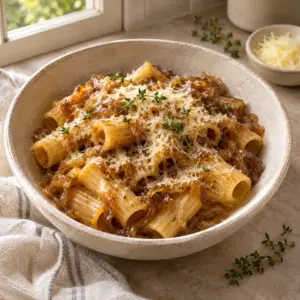
- Add the drained pasta and ¼ cup reserved cooking water to the skillet; toss over low heat for 1 minute. Remove from the heat and stir in Gruyere in small handfuls. Add more reserved water a splash at a time until the sauce coats the pasta loosely. Taste and serve immediately.
- Refrigerate leftovers promptly in shallow containers. Use within 3–4 days and reheat throughout to 165°F (74°C), adding a splash of water as needed.