
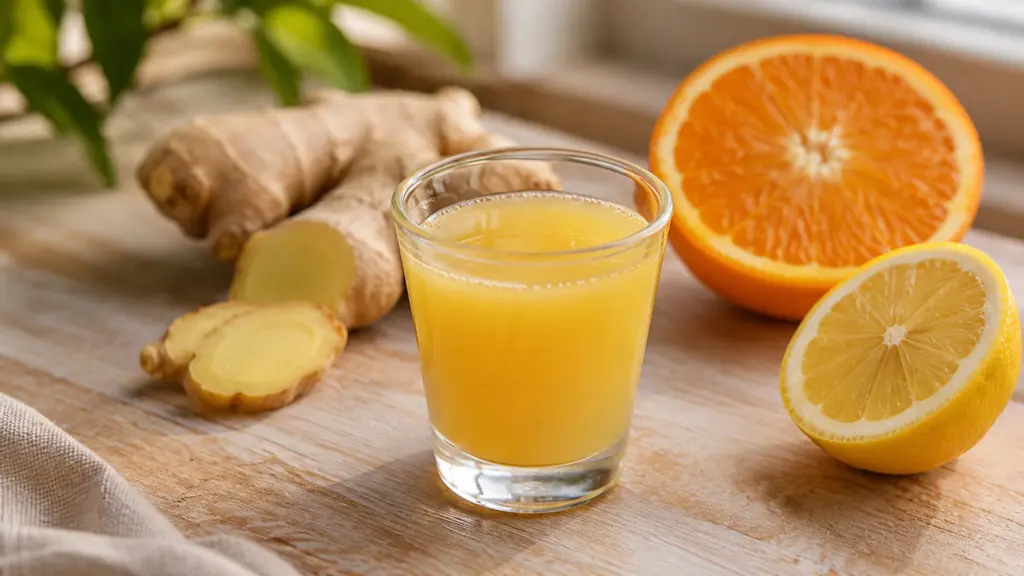
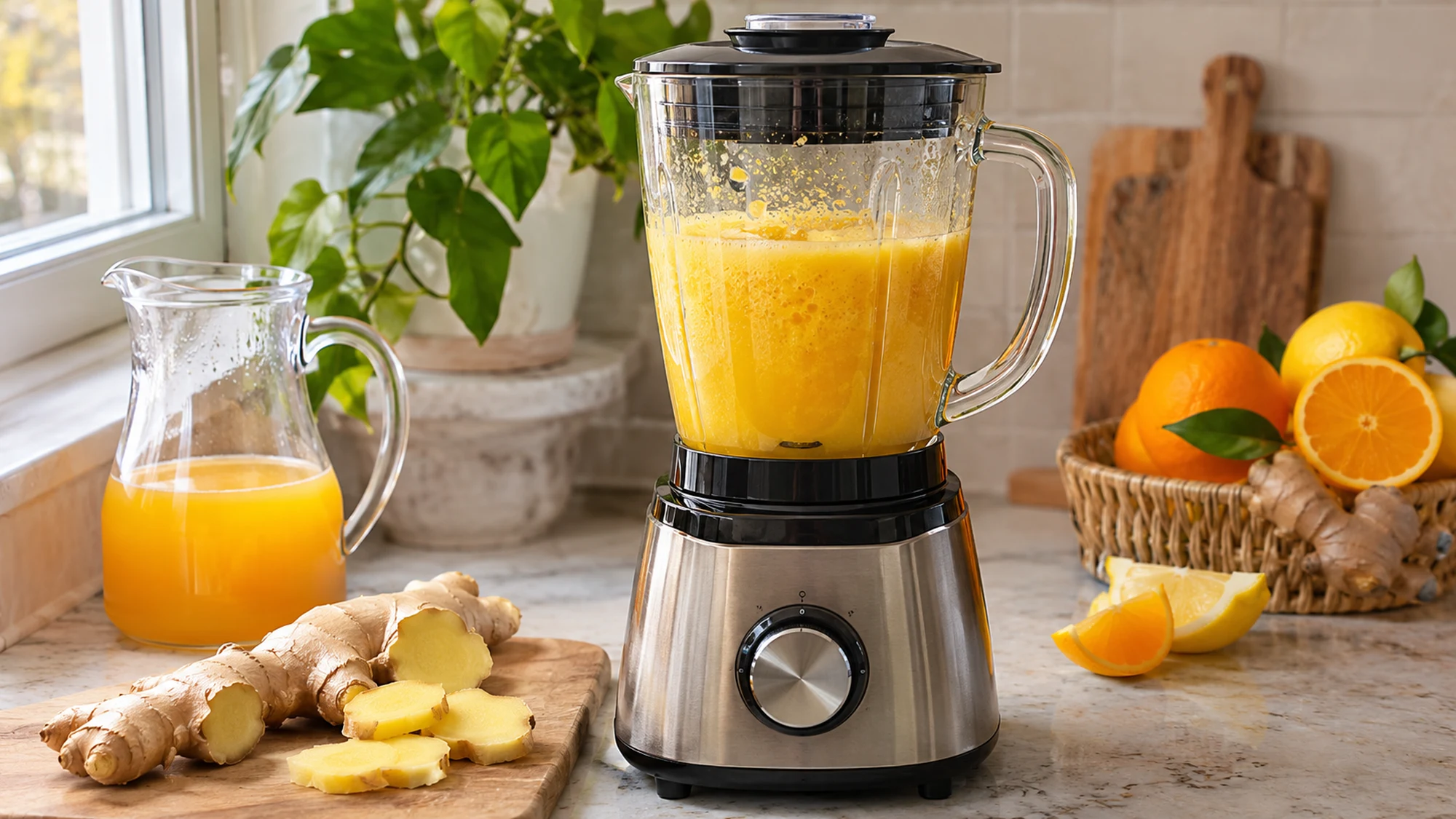
The first sip of a ginger shot should not feel like a challenge you have to win. Fresh ginger is sharp, lemon brings acidity, and orange adds sweetness without needing a syrup. Blending a small amount with water lets you choose the strength instead of committing to a bottle that is too fiery.
Blend ginger with orange juice, lemon juice and water, then strain and taste before pouring. Add more water if needed. This is a small, bright citrus drink—not a detox treatment, an immunity guarantee or a reason to ignore an uncomfortable burning sensation.
I’d start with the measured ginger rather than adding a whole knobby piece by eye. Roots vary in size, and a scale removes that particular guessing game. The recipe uses a regular blender, makes four small portions and needs no specialized juicer. Keep in mind that fresh homemade juice is untreated; the safety notes below matter.
Serving Suggestions for a Ginger Shot
Serve a small amount chilled and sip it rather than swallowing it quickly. There is no cooking reason to drink it on an empty stomach, and there is no prize for keeping it concentrated. If the flavor is pleasant only after dilution, that is the right version for your glass.
- With breakfast: pair a small portion with food, such as creamy overnight oats. The drink is not a replacement for breakfast or the fiber in whole fruit.
- As a longer drink: add a portion to cold water and ice. Stir before tasting, then adjust gradually; a little lemon and ginger can flavor a much larger glass.
- For sharing: let each person dilute their own portion. Label the drink clearly so nobody expects plain orange juice and gets an unexpected ginger surprise.
- For a small blender: check the minimum liquid level in its manual. Do not run a large blender with too little liquid or improvise around its safety instructions.
Make the serving size a flavor choice, not a health prescription. A small glass can be enjoyable, but more ginger is not automatically better.
Ginger Shot Variations and Texture Choices
Orange and lemon do different jobs. Orange softens the sharpness with sweetness, while lemon makes the drink tangier. I prefer adjusting water first when the drink feels too strong; adding more lemon can make an already intense mixture even harder to enjoy.
| Adjustment | Likely result | Useful check |
|---|---|---|
| Add cold water | Milder ginger and acidity | Taste after each small addition |
| Use more orange, less lemon | Sweeter, less tart balance | Keep the total liquid similar |
| Strain through a fine sieve | Smoother texture | Press gently rather than forcing all fibers through |
| Keep some fine pulp | Thicker, more textured drink | Stir before serving; settling is normal |
- Do not blend the citrus peel into this version. It changes bitterness and texture; the recipe is built around measured juice.
- Peel rough or dry ginger skin with a spoon or small knife, removing only a thin layer. Slice across the fibers before blending to help a less powerful machine.
- A fine mesh strainer and a spoon are enough for this small batch. Rinse the strainer promptly so dried ginger fibers do not turn cleanup into a second project.
Adjust one thing at a time. First choose a comfortable strength, then decide how much pulp you like; those are separate decisions.
Health Benefits: Keep the Claims and Safety Clear
Citrus contributes nutrients, but the finished portions here are small. Research on ginger supplements does not establish that this particular homemade drink prevents illness or treats a medical condition. The NCCIH ginger overview describes both uncertain evidence and possible side effects, including heartburn and mouth irritation.
- Untreated juice: washing produce reduces contamination but does not pasteurize juice. The FDA juice-safety guidance advises higher-risk groups, including children, pregnant people, older adults and people with weakened immune systems, to avoid untreated juice.
- Clean preparation: wash hands, equipment and produce before cutting. Do not use soap on fruit or ginger, and discard rotten produce rather than trying to blend around it.
- Keep it cold: refrigerate promptly at 40°F (4°C) or below in a clean covered container. Make only what you will use that day; refrigeration does not turn raw juice into a treated product.
Enjoy ginger for its flavor without asking a tiny drink to do a medicine’s job. If you use medicines or want concentrated ginger regularly, check suitability with your healthcare professional.
Bottom Line
A ginger shot is easiest to enjoy when the heat is adjustable. Measure the ginger, balance it with orange and lemon, and dilute until it tastes right. Keep the preparation clean, respect the untreated-juice cautions and let the drink remain a small part of the meal.
Ginger Shot Recipe

Ingredients
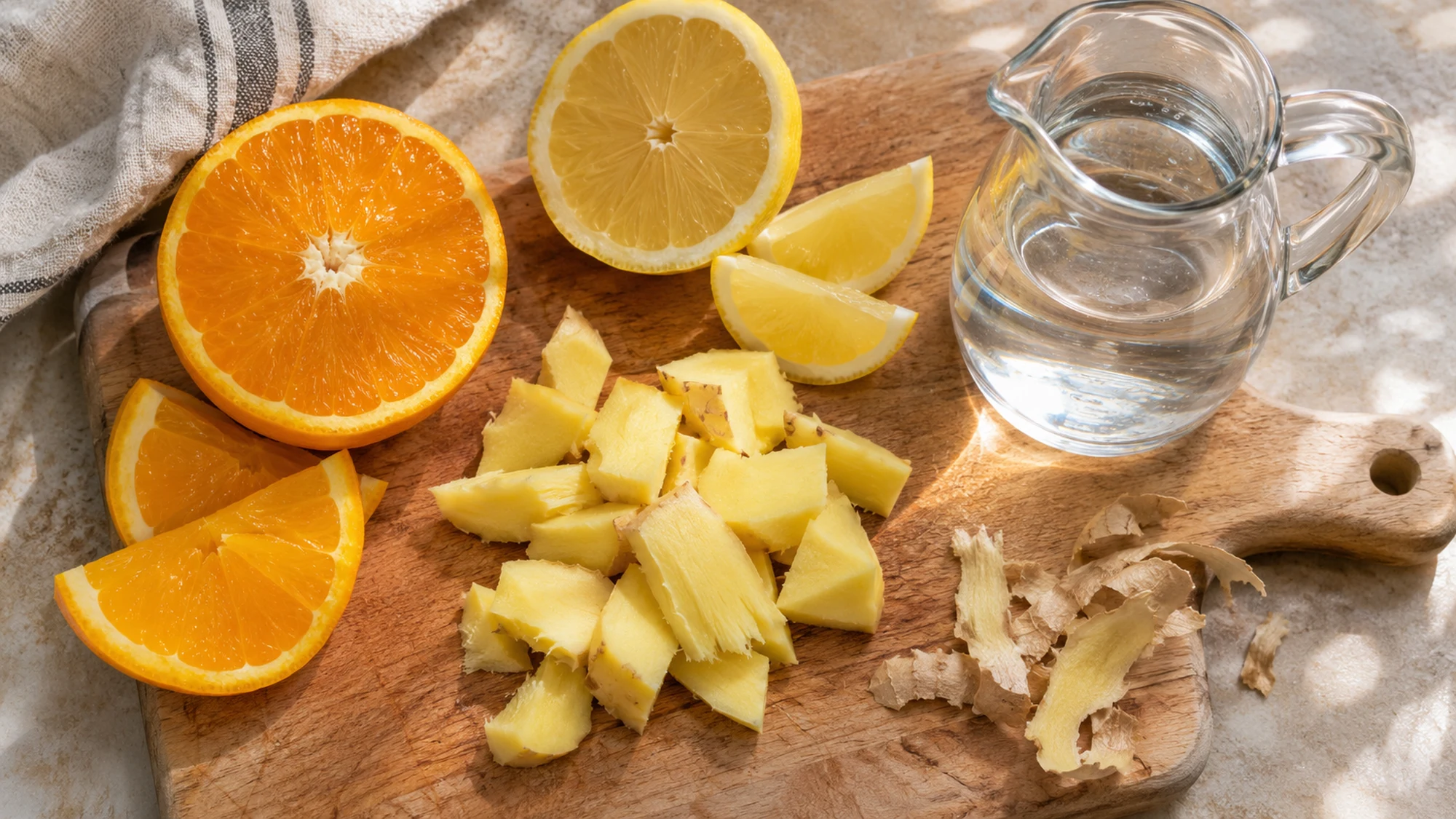
- 20 grams fresh ginger peeled and roughly chopped
- 0.5 cup fresh orange juice
- 2 tablespoons fresh lemon juice
- 0.25 cup cold water plus more to dilute to taste
Equipment
- Blender
- Citrus juicer
- Fine-mesh strainer
- Measuring jug
- Knife and cutting board
Instructions
- Wash your hands and rinse the ginger, orange and lemon thoroughly under running water before cutting. Peel and roughly chop the ginger, then juice the citrus.
- Add the measured ginger, orange juice, lemon juice and water to a blender. Secure the lid and blend until the ginger is finely broken down, about 45–60 seconds, pausing as needed for your blender.
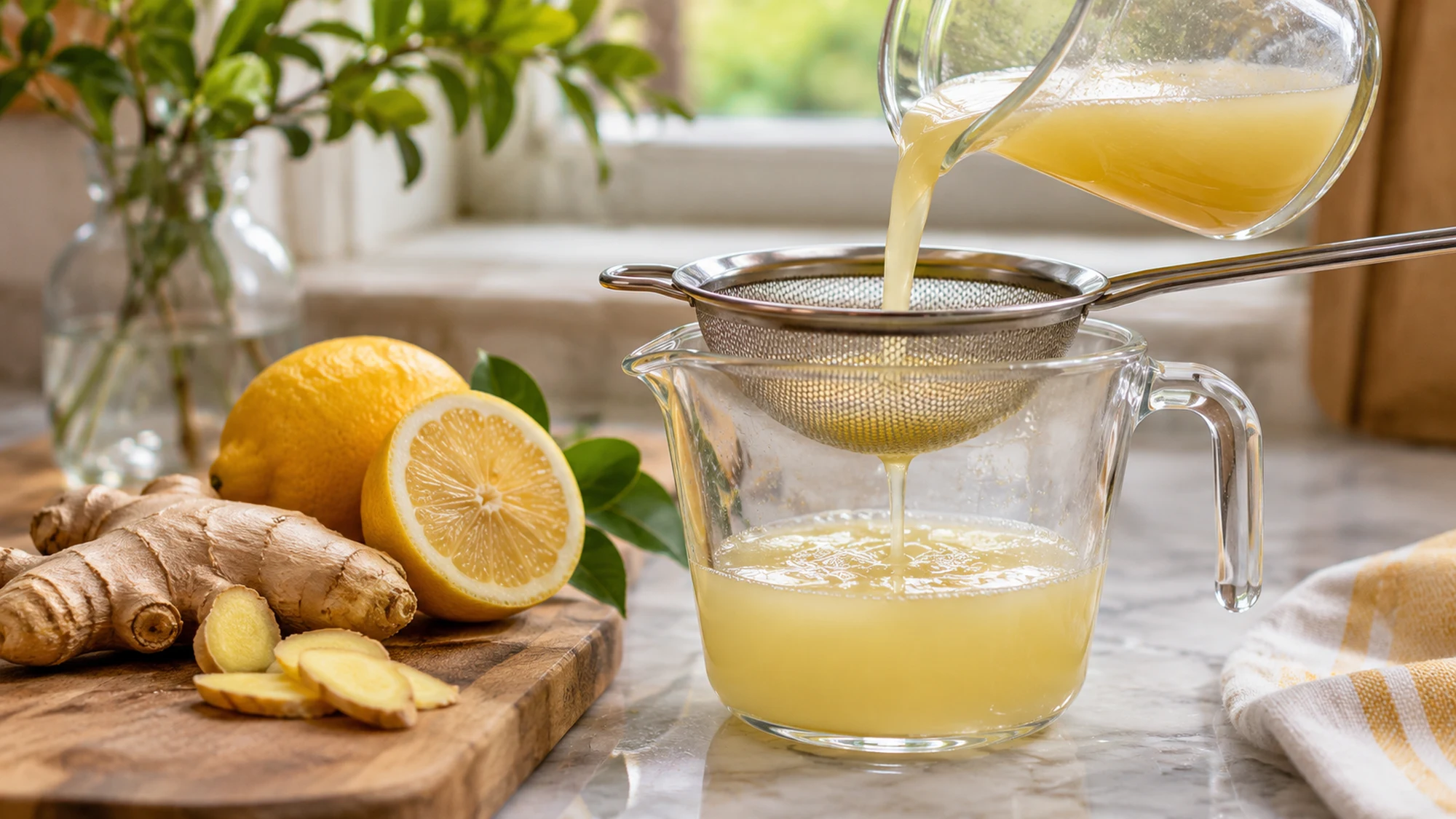
- Pour through a fine mesh strainer set over a jug, pressing gently with a spoon. For a pulpier drink, strain less thoroughly. Taste a small amount and dilute with more cold water if the ginger is too sharp.
- Divide into four small portions, about 45–55 ml each before extra dilution; strained yield varies. Serve immediately or refrigerate promptly in a clean covered container at 40°F (4°C) or below and use the same day.