

A dark crust and a cold, wet middle are not the breakfast anyone meant to make. French toast needs gentle heat as much as a good custard: thick, slightly dry bread gives you structure, while a patient skillet lets the egg mixture cook through before the outside gets too dark.

Use sturdy day-old bread, dip it just until moistened, and cook over medium-low heat. The goal is a golden surface and a soft, fully set center—not bread that has soaked until it falls apart.
This version keeps the flavor familiar with milk, vanilla and cinnamon. I prefer a lightly sweetened custard because it leaves room for fruit or a little maple syrup without making every bite taste only of sugar. The recipe makes eight slices, enough for four two-slice servings.
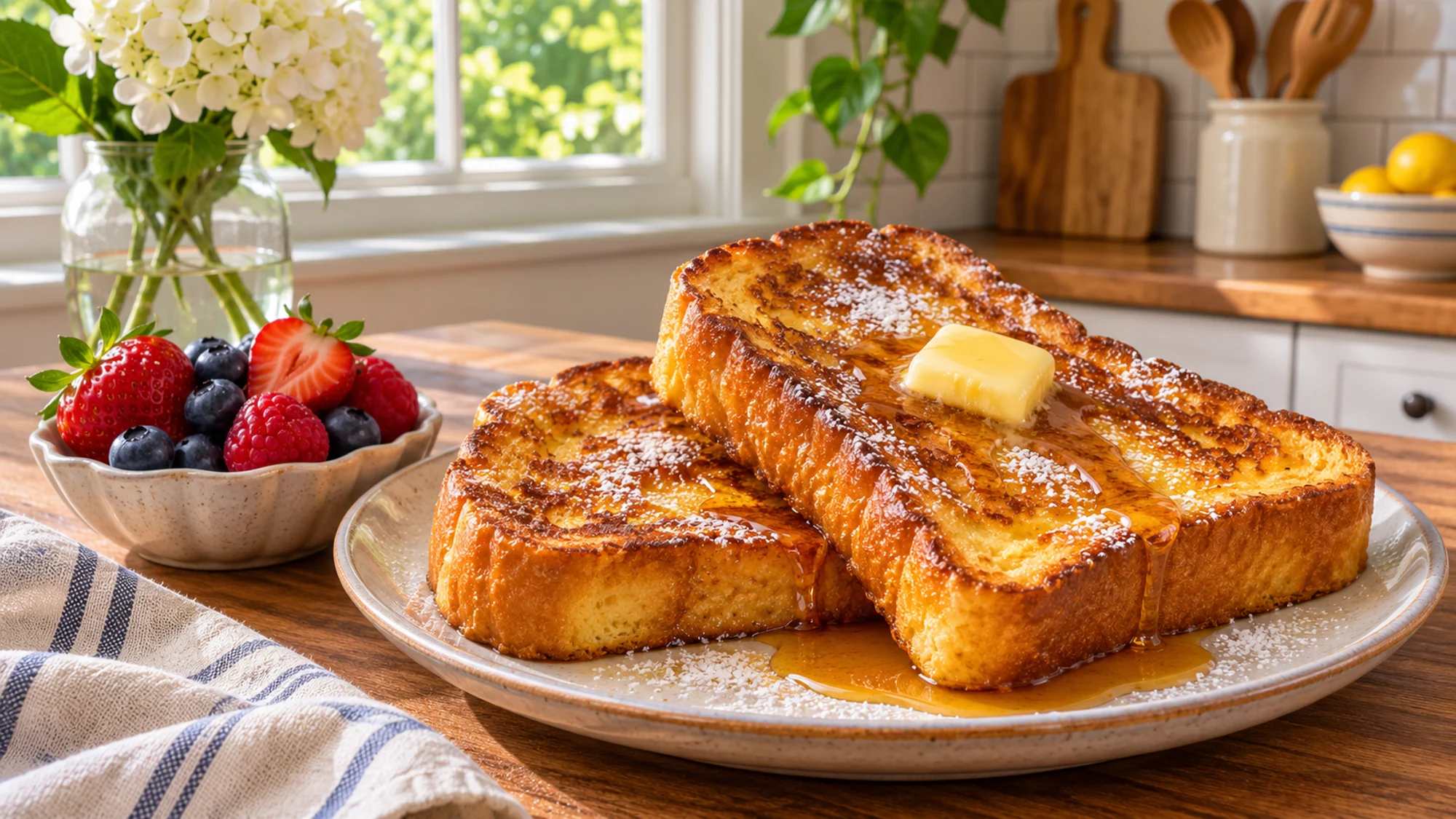
Serving Suggestions for French Toast
Bring the toppings to the table rather than dressing every slice in advance. A puddle of syrup softens the crust quickly, and berries taste brighter when they sit beside the warm toast instead of disappearing beneath it. Serve each batch promptly if your breakfast companions do not mind taking turns.
- Fresh and simple: Add washed, well-dried berries or sliced ripe fruit. Their juiciness contrasts with the browned bread without requiring another cooked component.
- With a creamy side: Spoon plain yogurt alongside the toast rather than directly onto the crispest edges. Choose a texture and sweetness level you enjoy.
- For a brunch plate: Pair one slice with another breakfast dish and let appetite guide the portion. Eight slices do not have to mean four identical plates.
- For crisp edges: Avoid stacking hot slices under a cover. Trapped steam softens the surface you just took the time to brown.
If a waffle iron is already on the counter, these cottage-cheese protein waffles offer a different golden breakfast. They use oats rather than bread and need their own batter; the two mixtures are not interchangeable.
I would put fruit and syrup in separate bowls and let everyone finish their own plate. That keeps the toast from getting soggy before the first bite.
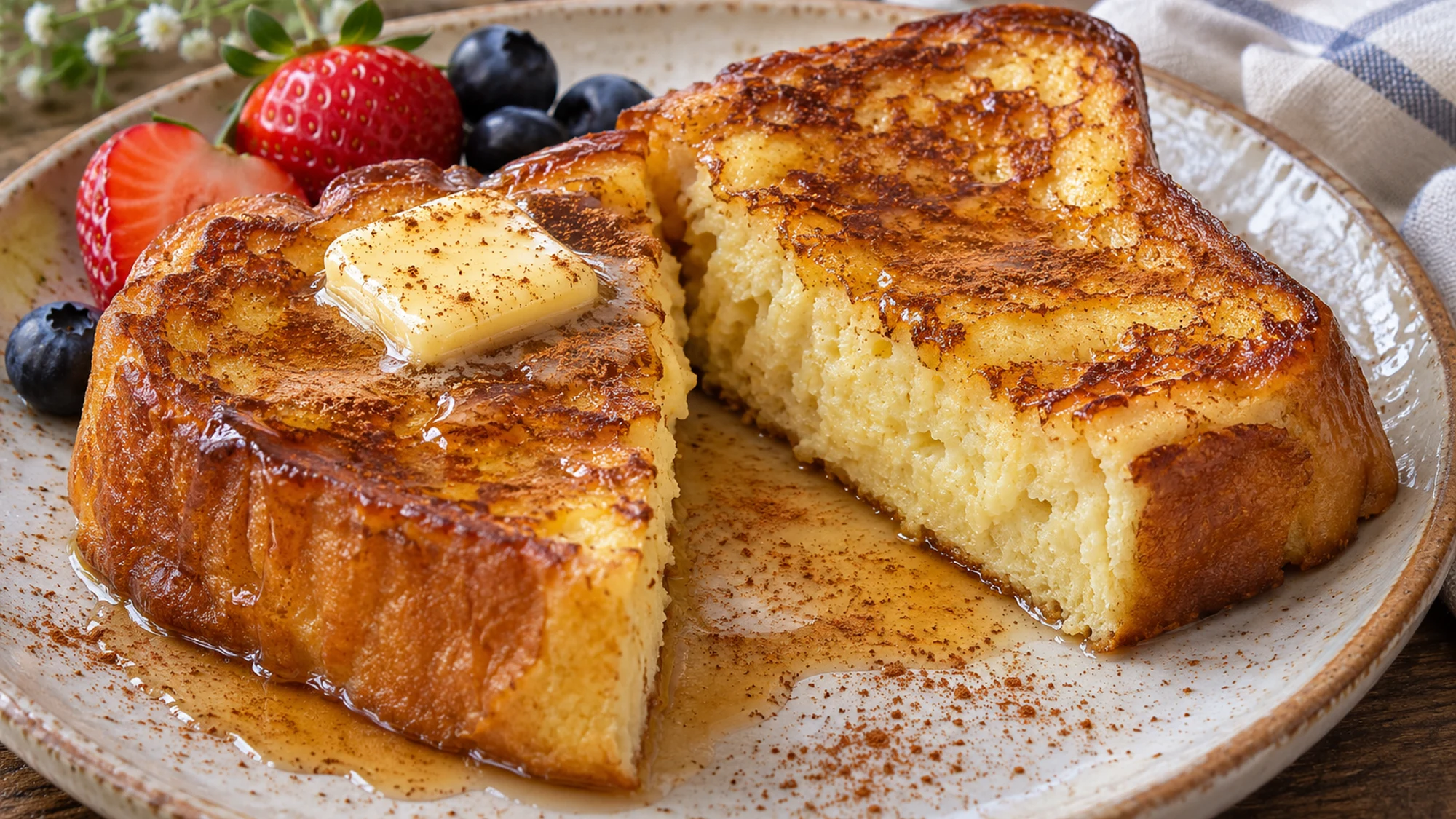
French Toast Variations and Bread Choices
Bread changes the result more than an extra pinch of spice. King Arthur Baking’s French toast guidance favors sturdy, thicker slices; for this milk-based version, adjust the dip to the loaf rather than forcing every slice to absorb the same amount. Soft bread needs a quicker dip than a dry, firm slice.
| Bread | What changes | Watch for |
|---|---|---|
| Challah or brioche | Rich, tender center | Sweet loaves brown readily |
| Sturdy sandwich bread | Milder flavor and even slices | Soft slices need a shorter dip |
| Country-style loaf | More chew and a firmer crust | Large holes let custard escape |
| Whole-grain bread | Heartier texture and grain flavor | Check slice thickness and softness |
- Keep the cinnamon modest: Whisk again between batches if it gathers at the surface. A few flecks are normal; a thick patch on one slice is less appealing.
- Try citrus: A little finely grated orange zest changes the aroma without pouring extra juice into the custard.
- Using a plant beverage: An unsweetened option can replace the milk, but flavor, browning and nutrition vary. The eggs and butter still remain.
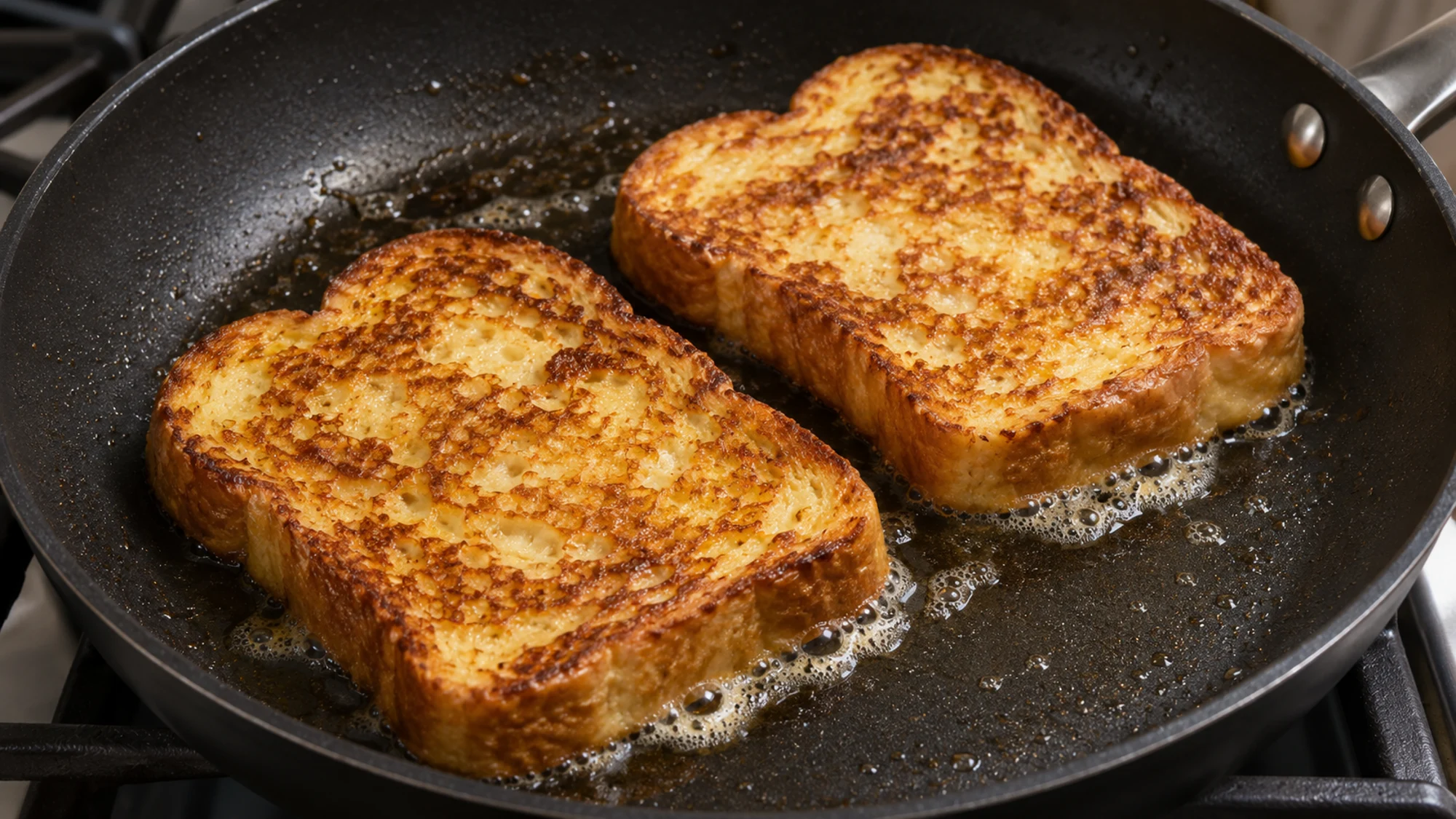
- Fix the heat first: If the crust is dark before the middle sets, lower the burner. Adding more butter will not solve an overheated pan.
Keep the bread thick enough to handle, but not so thick that the center stays wet. A golden outside is a useful cue, not proof that the egg inside has finished cooking.
Health Benefits and Breakfast Balance
Eggs and milk contribute protein, while bread supplies carbohydrate. The overall meal also depends on the loaf, slice size, cooking butter and toppings. I would look at those choices before calling any French toast automatically light or heavy; neither label tells you much about an actual plate.
- Choose a whole-grain loaf when you want a heartier bread, and compare its nutrition label rather than judging by brown color alone.
- Fruit is an easy way to include produce. Syrup can be a finishing touch instead of the main source of flavor.
- This recipe contains eggs, milk and wheat. Check bread and topping labels for additional allergens; lactose-free milk is still dairy.
Build the breakfast around what you enjoy and what works for you. A fruit side, a measured drizzle and a suitable portion can change the meal without changing the familiar vanilla-cinnamon flavor.
Bottom Line
Cook the egg-soaked center to 160°F (71°C), following FDA egg-safety guidance. Refrigerate leftovers promptly, use within 3–4 days and reheat to 165°F (74°C). Keep raw custard separate from finished toast, and wash utensils that touched it before serving.
The useful trick is restraint: a brief dip, moderate heat and toppings added at the table. Give the center time to set, and those golden edges can stay the part you notice first.
French Toast Recipe


Ingredients
- 8 slices sturdy day-old bread about 3/4 inch thick
- 3 large eggs
- 0.75 cup whole milk
- 1 tablespoon granulated sugar
- 1 teaspoon vanilla extract
- 0.5 teaspoon ground cinnamon
- 0.125 teaspoon fine salt
- 2 tablespoons unsalted butter for cooking
Equipment
- Large nonstick skillet
- Wide shallow bowl
- Whisk
- Spatula
- Measuring cup and spoons
- Instant-read thermometer
Instructions
- Whisk the eggs, milk, sugar, vanilla, cinnamon and salt in a wide shallow bowl until the whites are fully blended.
- Heat a large nonstick skillet over medium-low heat. Melt a small portion of the butter to coat the cooking surface.
- Dip two bread slices into the custard for about 20–30 seconds per side, adjusting for the bread’s dryness. Lift and let excess custard drip back into the bowl. Do not leave soft bread soaking while other batches cook.
- Cook the soaked slices for 3–4 minutes per side, until golden and the center reaches 160°F (71°C). Lower the heat if the surface darkens before the center sets. Add a little butter for each batch and repeat with the remaining bread.
- Serve promptly, with optional fresh berries or maple syrup at the table. Refrigerate leftovers within 2 hours, or 1 hour above 90°F (32°C), at 40°F (4°C) or colder; use within 3–4 days and reheat to 165°F (74°C).