
Ingredients
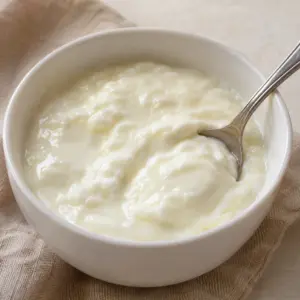
Plain yogurt
- 4 cups pasteurized whole milk 1 quart (946 ml)
- 0.25 cup plain yogurt with live active cultures fresh, unsweetened starter
Equipment
- 2-quart saucepan
- Calibrated food thermometer
- Measuring cups, whisk and small bowl
- Clean heat-safe jars and lids, at least 5 cups total capacity
- Yogurt maker that maintains 110°F (43°C)
- Calibrated food pH meter suitable for yogurt
Instructions
Heat, culture and chill
- Wash hands and clean the work area. Wash and sanitize suitable jars, lids and utensils according to their manufacturer's guidance. Prepare the yogurt maker according to its instructions and verify it can hold 110°F (43°C).
- Warm the milk in the saucepan, stirring frequently. Bring it to 185–200°F (85–93°C), then hold within that range for 10–20 minutes, stirring constantly and avoiding boiling or scorching. Allow about 30 minutes including the initial heating.
- Remove from heat and place the pan in a cold-water bath, keeping water out of the milk. Stir gently until the milk cools to 112–115°F (44–46°C), about 15–30 minutes. Check with the thermometer before adding the starter.
- Whisk a little of the cooled milk into the starter in a clean small bowl. Stir that mixture back into the remaining milk. Divide among prepared jars, leaving headspace, and cover.
- Incubate in the yogurt maker at about 110°F (43°C), monitoring temperature as needed, until set and pH is 4.6 or below, usually 4–8 hours. Follow the pH meter's food-testing instructions. Do not disturb the jars unnecessarily. Discard a batch that fails to set or acidify properly; do not extend incubation indefinitely.
- Refrigerate immediately once set and properly acidified. Chill at least 4 hours before serving. Keep covered at 40°F (4°C) or below and use within 10 days. Discard if mold or an abnormal odor develops; do not taste to test safety.
Nutrition
Calories: 85kcalCarbohydrates: 6.8gProtein: 4.3gFat: 4.3gSaturated Fat: 2.7gCholesterol: 19mgSodium: 71mgSugar: 6.3gCalcium: 154mg
Video
Notes
Contains milk. Timing includes up to 30 minutes of cooling, 4–8 hours of incubation and at least 4 hours of chilling, about 9 hours 10 minutes to 13 hours 10 minutes overall. Yield varies slightly with evaporation; nutrition is estimated for one eighth of the unstrained batch, without toppings.
For thicker yogurt, drain a successful chilled batch through clean cloth in a strainer over a bowl in the refrigerator. Yield and nutrition per spoonful will change. A small amount of whey is normal.
Video credit: Wyse Guide, “How to Make Homemade Yogurt,” published March 20, 2019. The demonstration uses 2% milk, added milk powder and a strained finish. This card uses whole milk without powder and a controlled yogurt maker; follow its temperature, acidity and refrigeration instructions.