

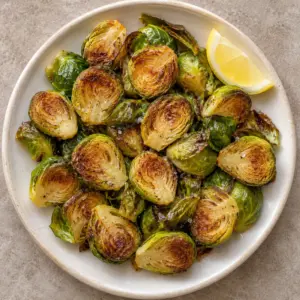
A browned Brussels sprout has two very different sides: the flat face that meets the hot pan and the little leaves that curl around it. If you’re learning how to roast brussels sprouts, pay attention to both. A tender middle is just as important as those crisp edges.
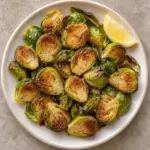
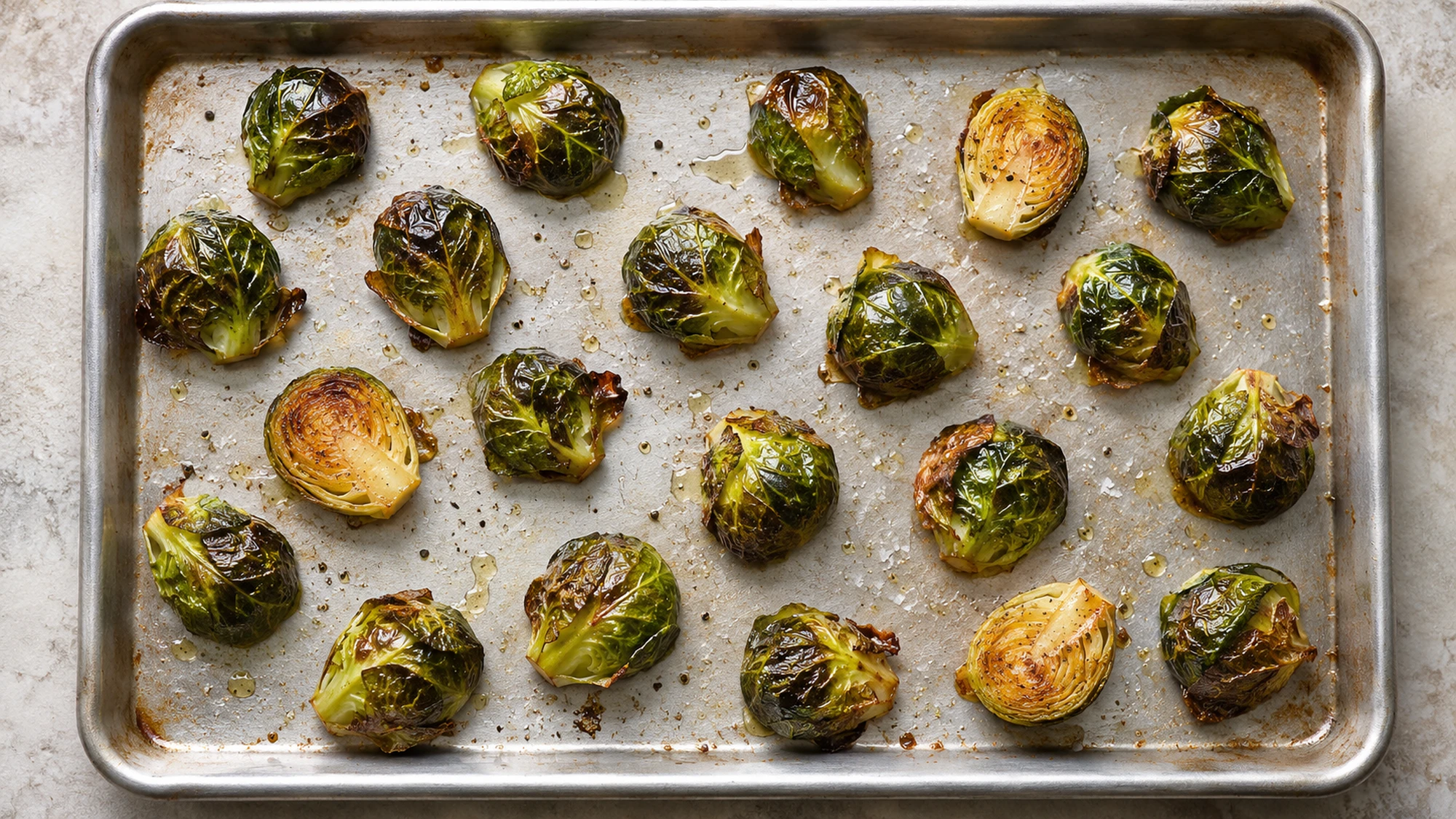
Roast dry, halved Brussels sprouts at 425°F (220°C), cut-side down with space between them. Allow about 25–30 minutes, checking earlier for small pieces. Add lemon after roasting so the browned surfaces stay the focus.
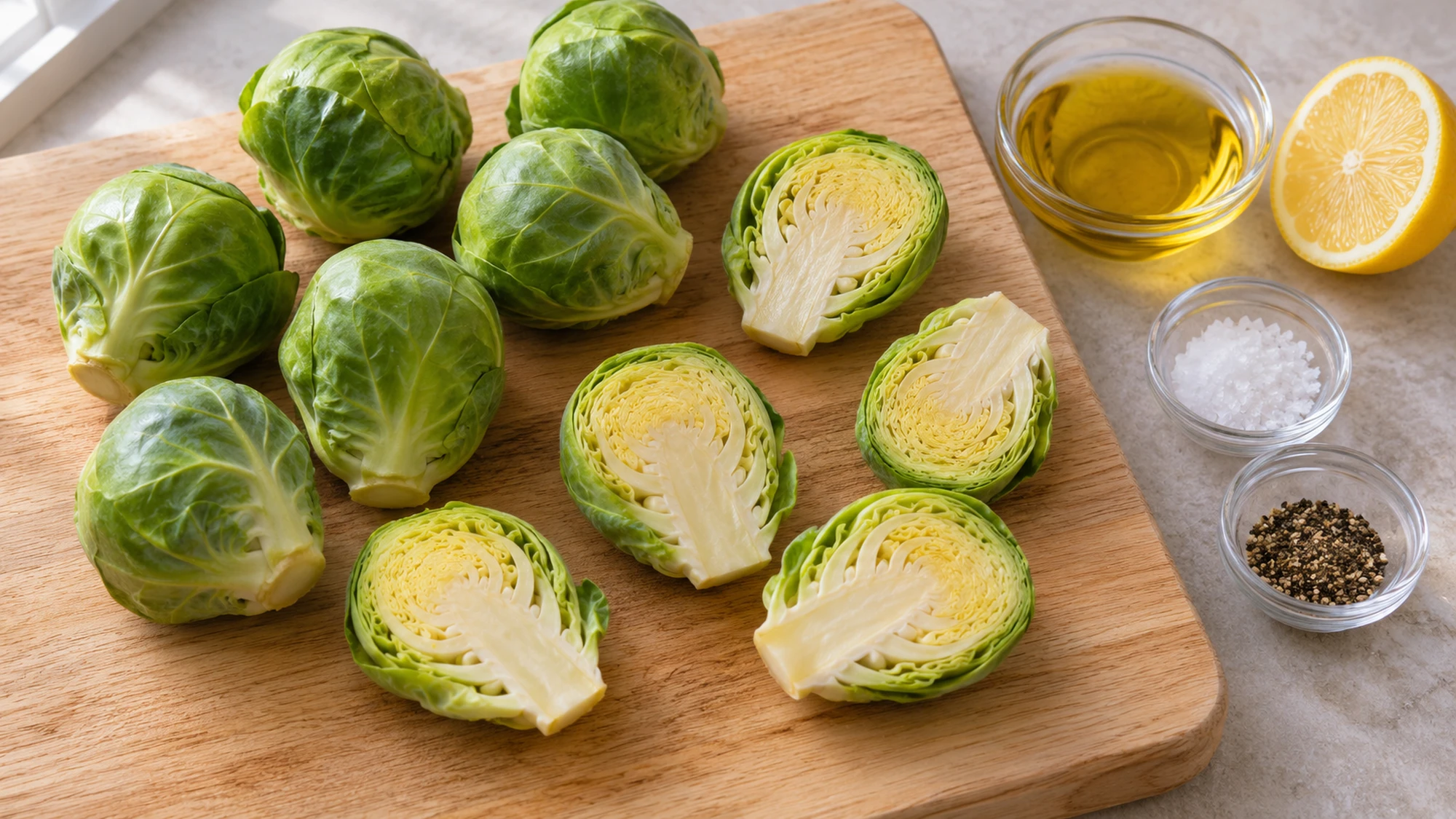
I’d choose firm sprouts of similar size rather than a bag mixing tiny buds with enormous ones. Trim just the dry base, leaving enough stem to hold the layers together. The FDA’s produce-handling advice recommends washing under running water rather than using soap; dry them thoroughly afterward with a clean towel.
Serving Suggestions for Golden Roasted Sprouts
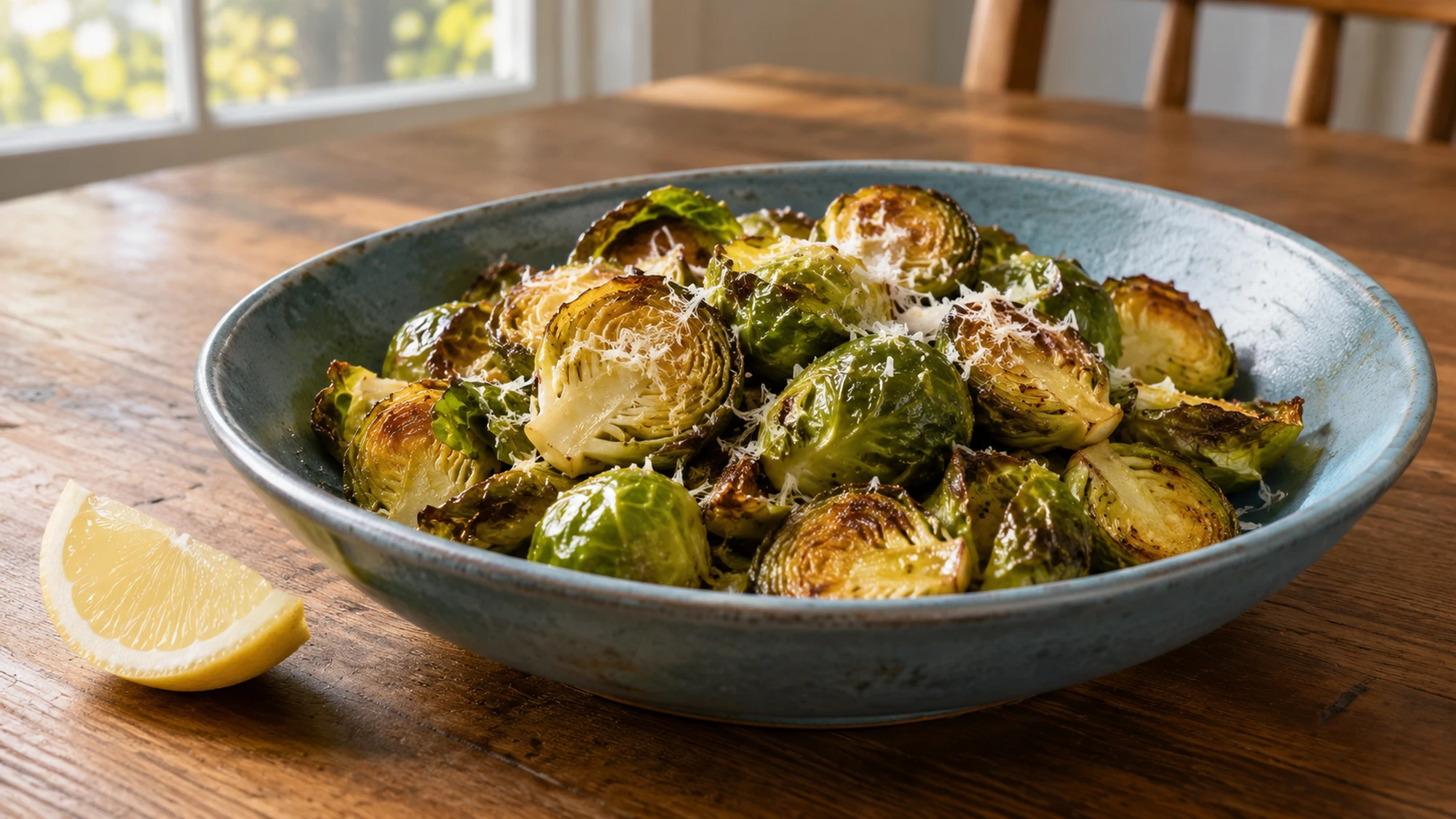
Think of these as the textured part of dinner. Lemon gives the browned vegetables a bright finish, while the optional Parmesan adds a savory edge. I’d serve them in a shallow dish, where the crisp leaves have room instead of disappearing beneath a steaming pile.
- Beside something creamy: pair them with hand-mashed potatoes and your main course. The contrast works better than making every part of the plate soft.
- In a grain bowl: combine with cooked rice or barley, beans and a spoonful of dressing. Keep the dressing separate until serving if crispness matters.
- With pasta: add the sprouts at the end rather than simmering them in sauce. Their toasted surfaces deserve a little protection.
Plan to roast them toward the end of dinner preparation. If the main dish needs a different oven temperature, finish it first when practical and let it rest while the sprouts cook. A crowded oven can make a simple vegetable side surprisingly awkward.
Use the sprouts to add contrast: a crisp, lemony vegetable beside a soft grain, creamy potato or saucy main.
Variations on How to Roast Brussels Sprouts
Change the finish before changing the roasting method. This keeps the shopping list short and makes it easier to notice what each addition contributes. The following choices are alternatives, not a request to pile everything onto the same pan.
| Finish | When to add it | What changes |
|---|---|---|
| Lemon juice | After roasting | Bright, tart contrast |
| Grated Parmesan | While warm, off the heat | Salty, savory finish; contains milk |
| Balsamic vinegar | After roasting, instead of lemon | Mellower acidity and a darker flavor |
| Plain olive oil seasoning | Keep the basic roast | Lets the browned vegetable flavor lead |
For the basic technique, Love & Lemons explains cut-side-down roasting and adding delicate finishes afterward. If your sprouts are pale and soft, check pan crowding before adding more cooking time. A second sheet pan is more helpful than stacking another layer on the first.
- Uneven sizes: halve medium sprouts and quarter unusually large ones. Start checking small pieces before the rest.
- Loose leaves: remove badly damaged outer leaves before roasting. Watch the remaining loose leaves, which brown faster than the centers.
- Frozen sprouts: treat them as a separate variation. Their extra moisture changes the result, so this fresh-sprout timing is not a reliable promise for a frozen bag.
Keep the roast simple, then choose one finish. Changing the seasoning is easy; recovering a crowded, wet pan is harder.
Health Benefits: A Vegetable Side With Substance
Brussels sprouts contribute fiber and several vitamins, including vitamin C. The USDA’s fresh Brussels sprouts guide describes their place in the vegetable group. That is a useful reason to include them in meals, without expecting one side dish to do the work of an entire eating pattern.
- Oil is part of the recipe: measure it rather than assuming a free pour adds very little. The card’s estimate includes all the listed olive oil.
- Cheese is optional: leaving it off keeps this version dairy-free. If you add Parmesan, account for its milk content and extra sodium.
- Serving size matters: the recipe makes four side portions. Nutrition estimates divide the full batch by four, not by an unspecified handful.
Enjoy the vegetables for their flavor and contribution to the meal; toppings and portion size still count.
Bottom Line
The best cue is a fork sliding into the center while the flat side looks richly golden. If the outside is ready before the middle, your pieces may be too large or uneven. Next time, adjust the cut rather than chasing darker leaves.
A dry surface, a roomy pan and a fresh finish give these sprouts their character. Serve them warm, while the edges still have something to say.
How to Roast Brussels Sprouts Recipe

Ingredients
- 1.5 lb fresh Brussels sprouts 680 g trimmed weight; halved lengthwise
- 2 tbsp olive oil 30 ml
- 0.5 tsp fine salt
- 0.25 tsp ground black pepper
- 1 tbsp lemon juice 15 ml; added after roasting
- 2 tbsp finely grated Parmesan optional; contains milk
Equipment
- Large rimmed baking sheet, about 18 by 13 inches Use two pans if needed to avoid crowding.
- Large mixing bowl
- Knife and cutting board
- Measuring spoons
- Spatula
Instructions
- Heat the oven to 425°F (220°C). Wash the Brussels sprouts under running water and dry thoroughly with a clean towel. Trim the dry bases and remove damaged outer leaves, then halve lengthwise; quarter unusually large sprouts.
- Toss the sprouts in a bowl with the olive oil, salt and pepper until lightly coated. Spread on a large rimmed baking sheet in one layer, flat cut sides down. Leave space between pieces; use two pans rather than piling them up.
- Roast for 25–30 minutes, checking from 20 minutes for small sprouts. Rotate the pan if browning is uneven. They are ready when the cut faces are golden brown and a fork enters the centers easily. Remove small loose leaves sooner if they are getting too dark.
- Transfer to a serving dish and toss gently with the lemon juice. Add the optional Parmesan while warm, if using. Divide into four side servings and serve promptly.