
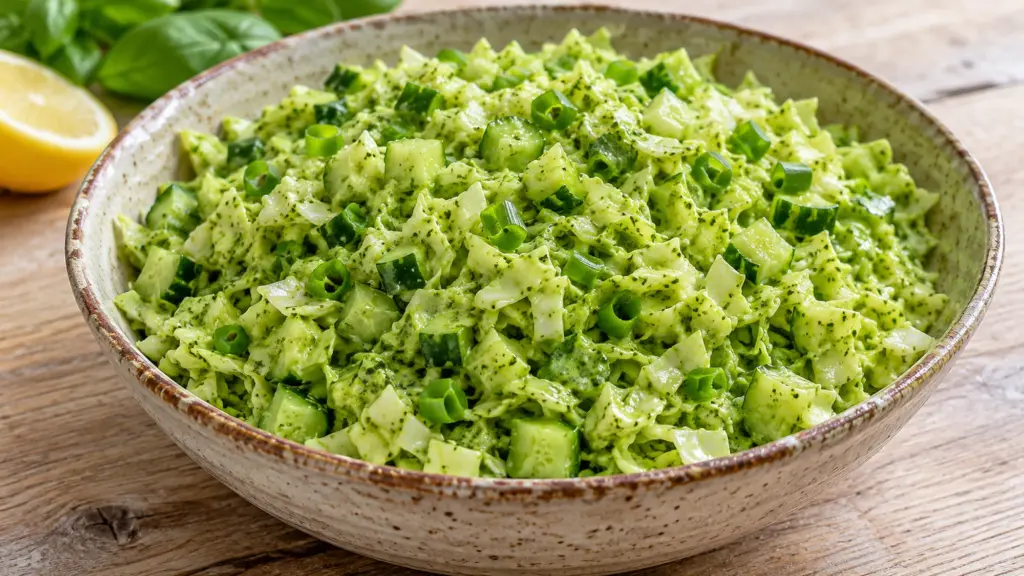
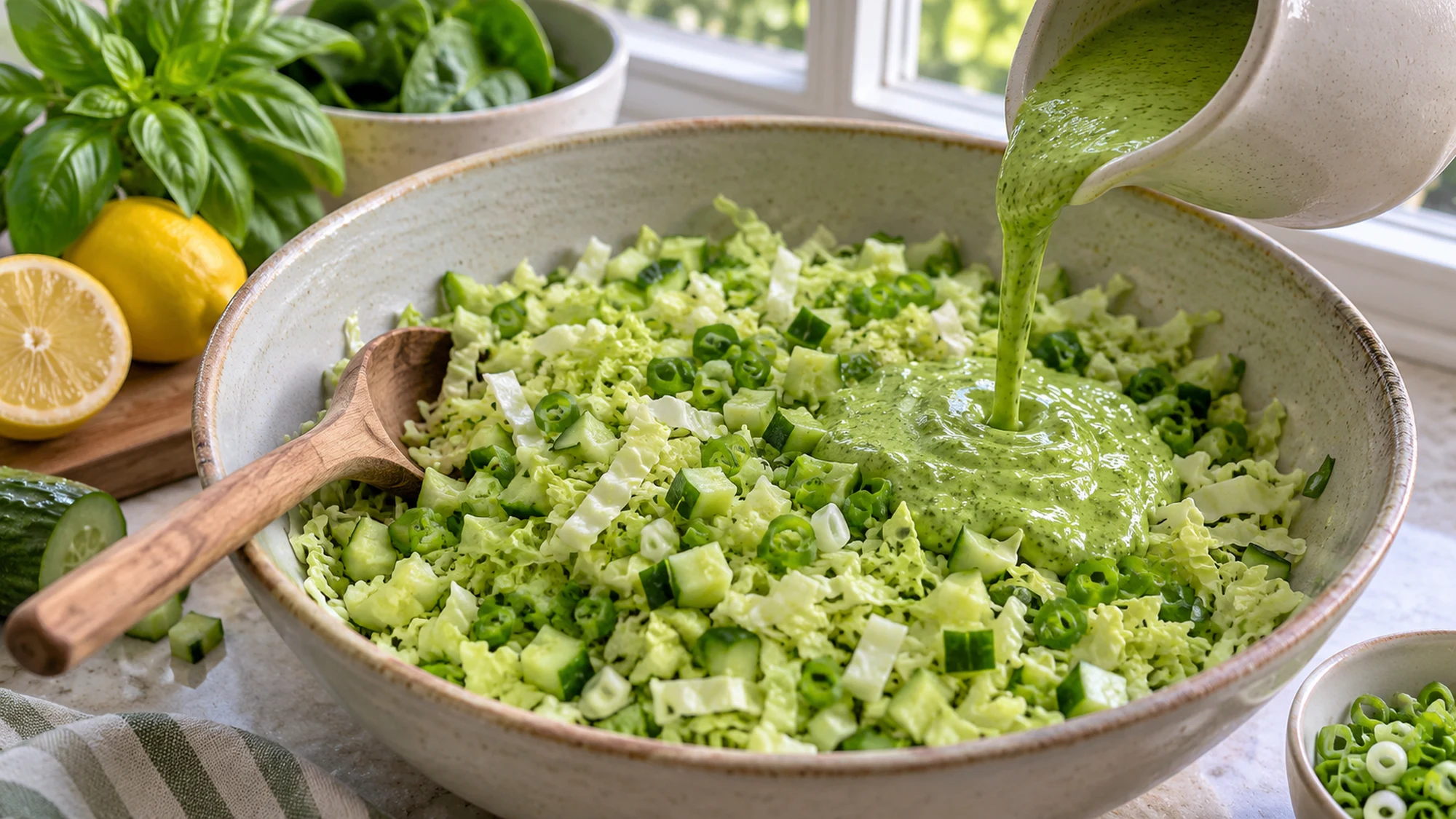
A cabbage wedge can become a bowl of awkward ribbons, or a salad you can scoop neatly onto a chip. Green goddess cabbage salad takes the second route: small, even pieces of cabbage and cucumber meet a creamy, lemony herb dressing. The knife work is the useful detail here, not an elaborate garnish.
Chop the vegetables finely, dry them well, and blend the dressing until smooth. Toss close to serving for a bright green salad with a crisp bite; this version makes six side portions and uses cashews rather than mayonnaise for its creamy texture.
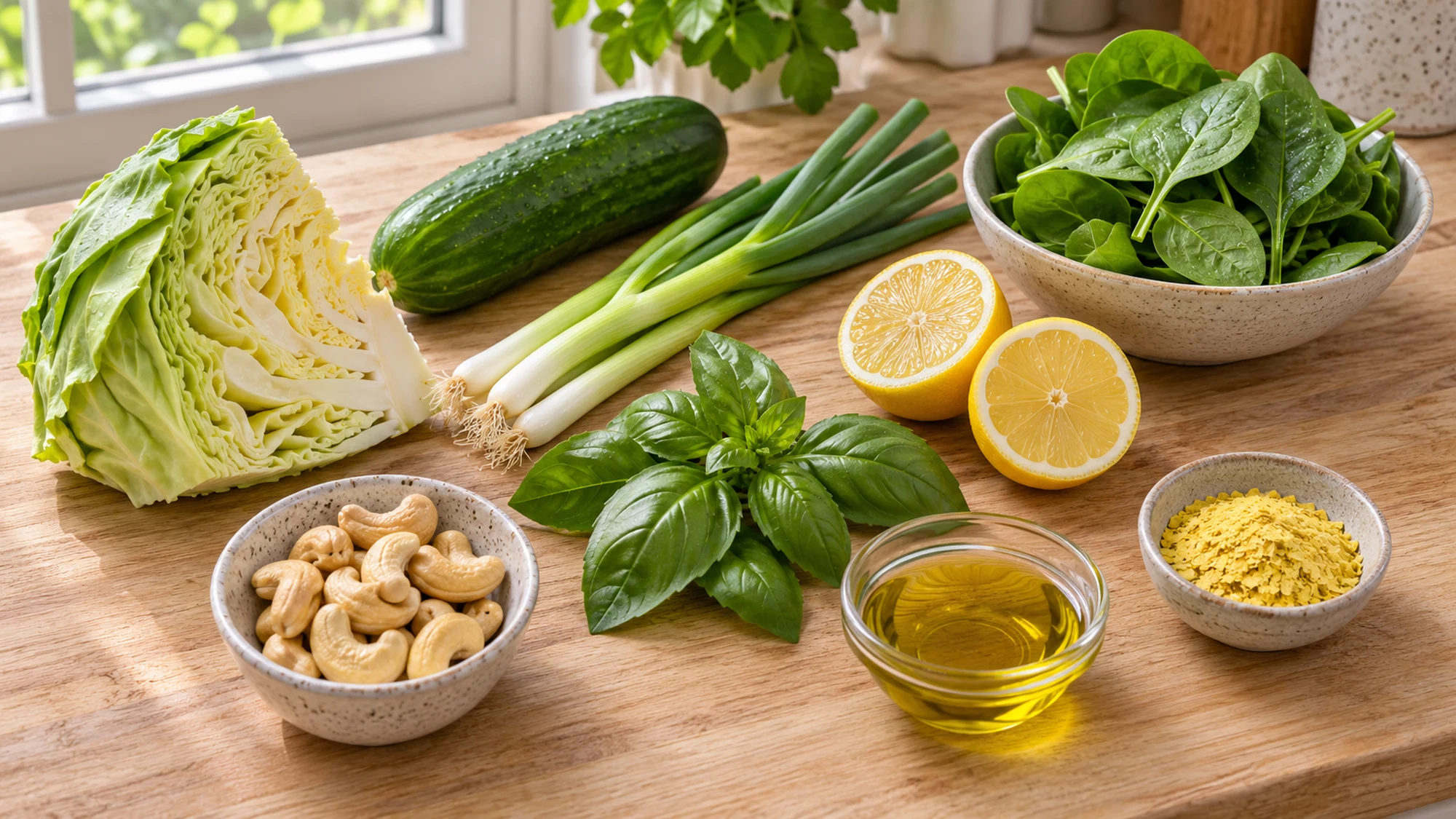
I prefer the cabbage to stay recognizable rather than disappear into a food-processor mince. A few minutes with a sharp knife gives you more control over the size, while basil and spinach bring different kinds of green: one fragrant, the other mild. Nutritional yeast adds a savory note without turning this into a cheese-heavy dressing.
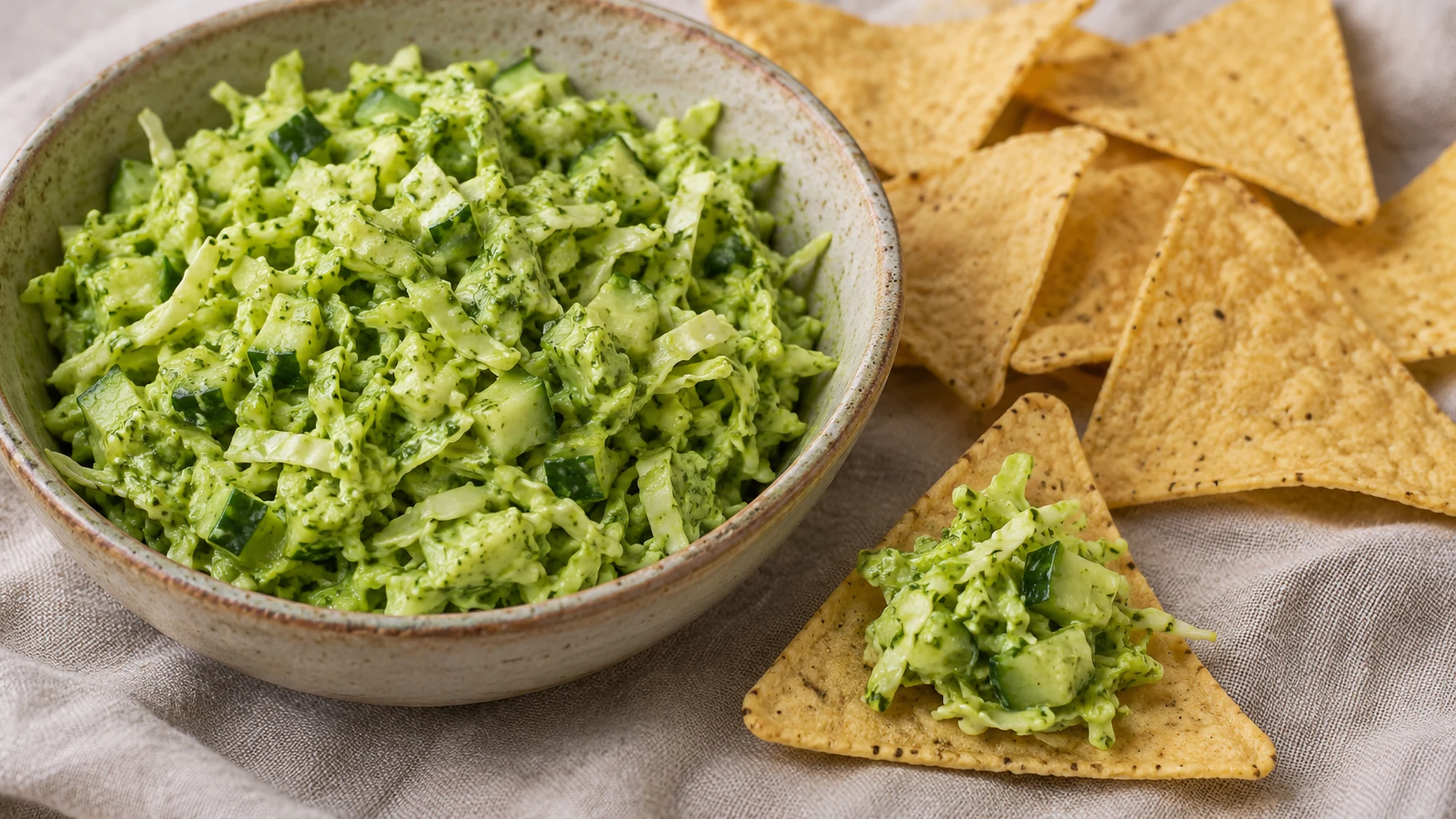
Serving Green Goddess Cabbage Salad
Think of this as a flexible side rather than a complete meal in disguise. Its cool crunch is especially welcome beside something warm, and the finely chopped texture makes it easy to tuck into a wrap. Add the dressing gradually: you want the vegetables coated, not floating in a green puddle.
- For scooping: serve a small bowl with sturdy tortilla chips. Put out manageable portions and replenish from the refrigerator rather than leaving the entire batch on the table.
- For lunch: pair it with beans, tofu or another protein food you enjoy, plus bread or a grain. Keep the components separate until you are ready to eat.
- For a different salad: try the edamame crunch salad when you want soybeans and a sesame-lime dressing instead of the creamy herb mixture.
- For a clean scoop: cut cucumber into pieces roughly similar to the cabbage. A large cucumber chunk can make a surprisingly effective chip catapult.
Make the size of the vegetables suit the way you plan to eat them. Small pieces work for chips and wraps; a fork does not require quite so much precision.
Green Goddess Cabbage Salad Variations
Change the herbs with intention rather than using every green thing in the refrigerator. I’d keep some basil for its sweet, distinct aroma and make smaller adjustments around it. The comparison below focuses on what changes in the bowl, so a substitution does not promise an identical result.
| Change | What to expect | Practical cue |
|---|---|---|
| Parsley for part of the basil | A grassier, less sweet herbal flavor | Keep some basil if you want its aroma |
| Red cabbage for part of the green | A firmer bite and mixed colors | Chop finely; dressing will not look uniformly green |
| More lemon instead of more salt | A brighter, sharper finish | Add a little after tasting the dressed vegetables |
| Less garlic | A gentler raw-garlic bite | Start with half a small clove |
- Blend the cashews thoroughly. Stop and scrape down the blender rather than pouring in enough water to make the dressing thin.
- Use nutritional yeast flakes, not active dry yeast intended for bread. They have different jobs and are not interchangeable.
- If the cucumber has a soft, watery seed center, scoop it out before dicing. Dry washed herbs so they do not dilute the dressing.
Taste a dressed spoonful before adjusting anything. A sauce can seem intense by itself and become much milder once it coats a bowl of vegetables.
Health Benefits and Handling
Vegetables contribute fiber and a variety of nutrients, while this dressing adds fat from cashews and olive oil. That is a useful combination of ingredients, not a detox promise. The USDA vegetable guide explains the contribution vegetables make to a varied eating pattern; portions and the rest of the meal still matter.
- Allergens: this recipe contains cashews. Do not serve it as nut-free, and check packaged ingredients when cooking for someone with an allergy.
- Wash before cutting: follow FDA produce-cleaning advice and rinse produce under running water, without soap. Use clean utensils and dry the vegetables well.
- Keep it cold: refrigerate promptly at 40°F (4°C) or below. The two-day suggestion in the card is for eating the salad while its texture is still appealing; lemon juice does not make it shelf-stable.
For preparation ahead, keep the dressing and vegetables in separate covered containers in the refrigerator. Combine only what you plan to serve.
Bottom Line
Green goddess cabbage salad is at its best when the little details stay simple: fine chopping, dry vegetables, a smooth dressing and a final taste after tossing. Keep the basil fragrant and the cabbage crisp, then choose chips, a fork or a wrap to suit the meal.
Green Goddess Cabbage Salad Recipe

Ingredients
- 6 cups green cabbage finely chopped, about 450 g
- 1.5 cups cucumber finely diced
- 4 scallions thinly sliced
- 1 cup fresh basil leaves loosely packed
- 1 cup baby spinach loosely packed
- 0.25 cup raw unsalted cashews
- 0.25 cup nutritional yeast
- 3 tablespoons extra-virgin olive oil
- 3 tablespoons fresh lemon juice
- 1 tablespoon rice vinegar
- 1 small garlic clove
- 0.5 teaspoon fine salt
- 2 tablespoons water plus 1–2 tablespoons if needed
Equipment
- Blender
- Large mixing bowl
- Chef’s knife and cutting board
- Measuring cups and spoons
Instructions
- Wash the vegetables and herbs under running water, then dry well. Remove the cabbage core. Finely chop the cabbage into small pieces and put it in a large bowl with the diced cucumber and scallions.
- Add all dressing ingredients to a blender. Blend until creamy, stopping to scrape down the sides. If the blades stall, add extra water 1 tablespoon at a time; keep the dressing thick enough to coat the vegetables.
- Pour about three-quarters of the dressing over the vegetables and toss thoroughly. Add the remaining dressing to taste. Check a spoonful containing cabbage, cucumber and dressing before adjusting the seasoning.
- Serve promptly as a side salad or with tortilla chips. Refrigerate leftovers promptly in a covered container at 40°F (4°C) or below; for best texture, use within 2 days. If preparing ahead, refrigerate the chopped vegetables and dressing separately.