

A fork should slide into a baked sweet potato before the cheese ever goes near it. That is the small but important starting point for this cheese stuffed sweet potato: roast the vegetable until its center is soft, then mix in tangy yogurt and cheddar. The final oven visit is for melting, not rescuing an undercooked middle.

Keep the skin as a little serving dish, loosen the flesh gently, and add the cheese in two stages. Some seasons the center; the rest melts across the top.
I prefer sharp cheddar here because its savory flavor stands out against the orange flesh without needing a mountain of it. Plain Greek yogurt adds a little tang and moisture, while sliced scallions finish the potato with a fresh bite. This is a fork-and-plate lunch, not a tidy handheld snack.
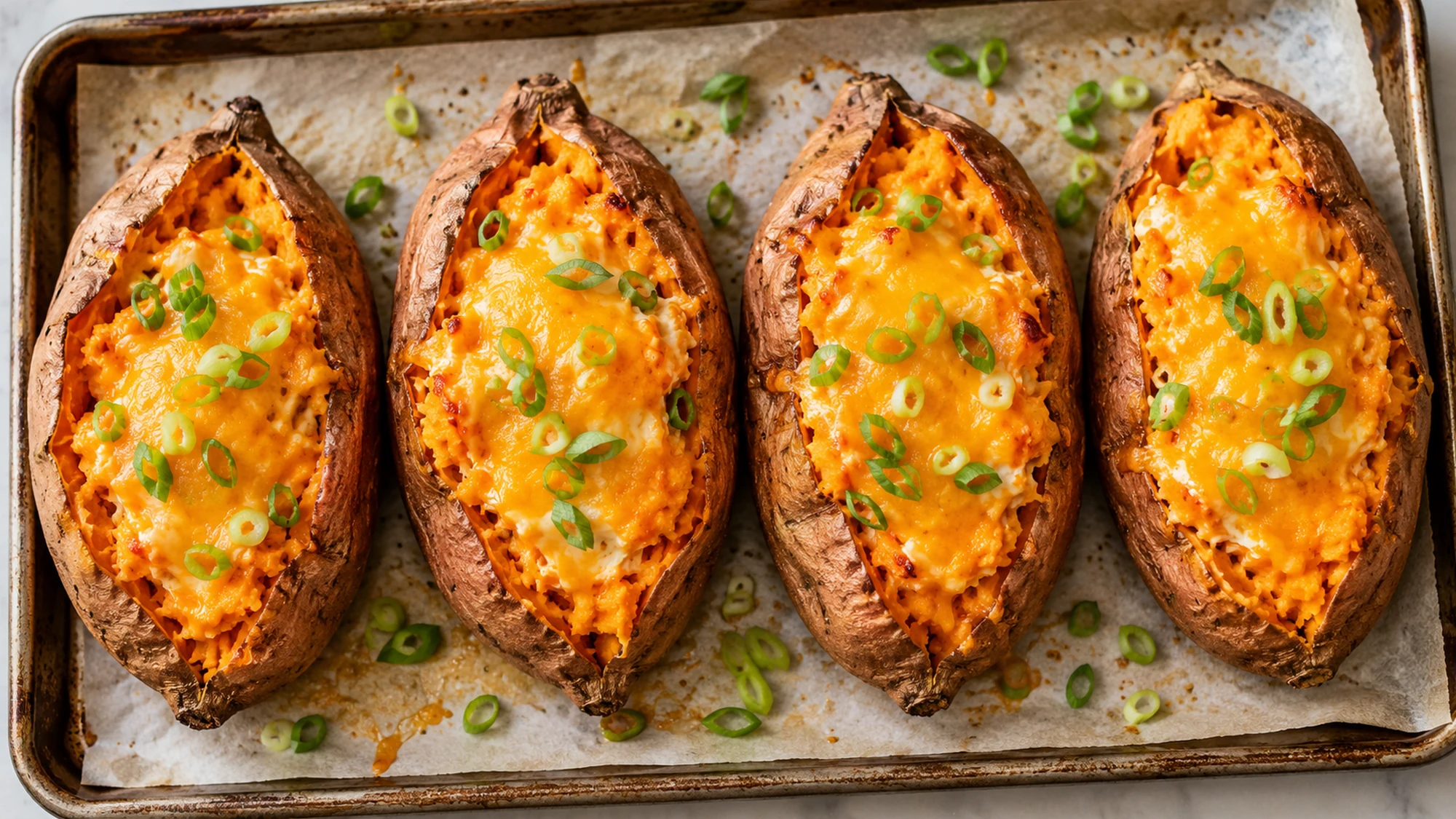
Serving a Cheese Stuffed Sweet Potato as Lunch
Set one stuffed potato on each plate and let it stand briefly before eating; the filling stays hot underneath the melted cheese. For contrast, add something cool and crunchy rather than another soft, rich side. A simple cucumber salad or this lemony carrot ribbon salad gives the plate a different texture.
The recipe makes four lunch-sized potatoes, using vegetables of roughly equal weight. one potato can be a light main, or you can divide it between two people as a side. If serving alongside meat or beans, keep those additions separate so everyone can choose a portion.
- Finish after baking: Scatter the scallions over the hot cheese rather than baking them until dry.
- Use a steady plate: A shallow bowl helps support a potato that opens wider than planned.
- Keep sauces modest: The filling already contains yogurt; extra dressing is optional, not something it needs to work.
Build the meal around the soft potato and add contrast beside it. A crisp salad does more for the plate than another layer of melted cheese.
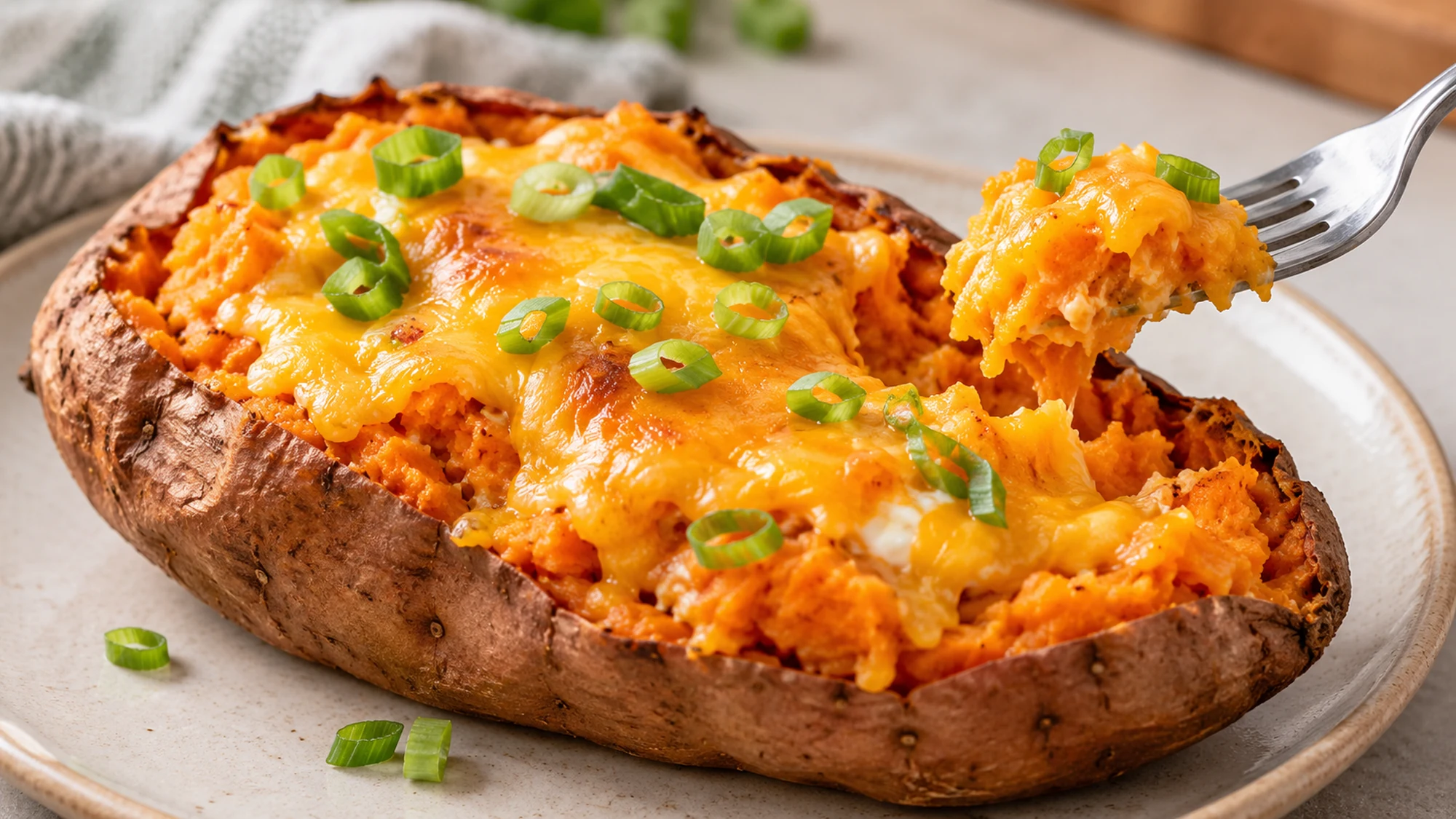
Variations That Keep the Center Soft
Choose orange-fleshed sweet potatoes with similar thicknesses, not just similar lengths. A very thick one may take longer to soften than a slender neighbor. Wash and dry the skins before roasting, and judge doneness with a small knife rather than color alone; the outside can look ready while the center still resists.
I would change the cheese before adding several new toppings. The base has a clear sweet-and-savory balance, and small swaps are easy to judge. Plain yogurt matters here: a sweetened vanilla cup is not a convenient substitute, even if it happens to be the last yogurt in the refrigerator.
| Option | What changes | Practical note |
|---|---|---|
| Monterey Jack | Milder cheese flavor | Use the same weight; taste before adding salt. |
| Plain sour cream | Richer, less protein-rich filling | Use the same measured amount; nutrition changes. |
| Chives instead of scallions | A finer onion finish | Add after baking, a little at a time. |
| Larger sweet potatoes | More flesh and longer baking | Do not rely on the listed time alone. |
Let tenderness guide the first bake and melting guide the second. Changing a topping cannot make up for a firm potato center.
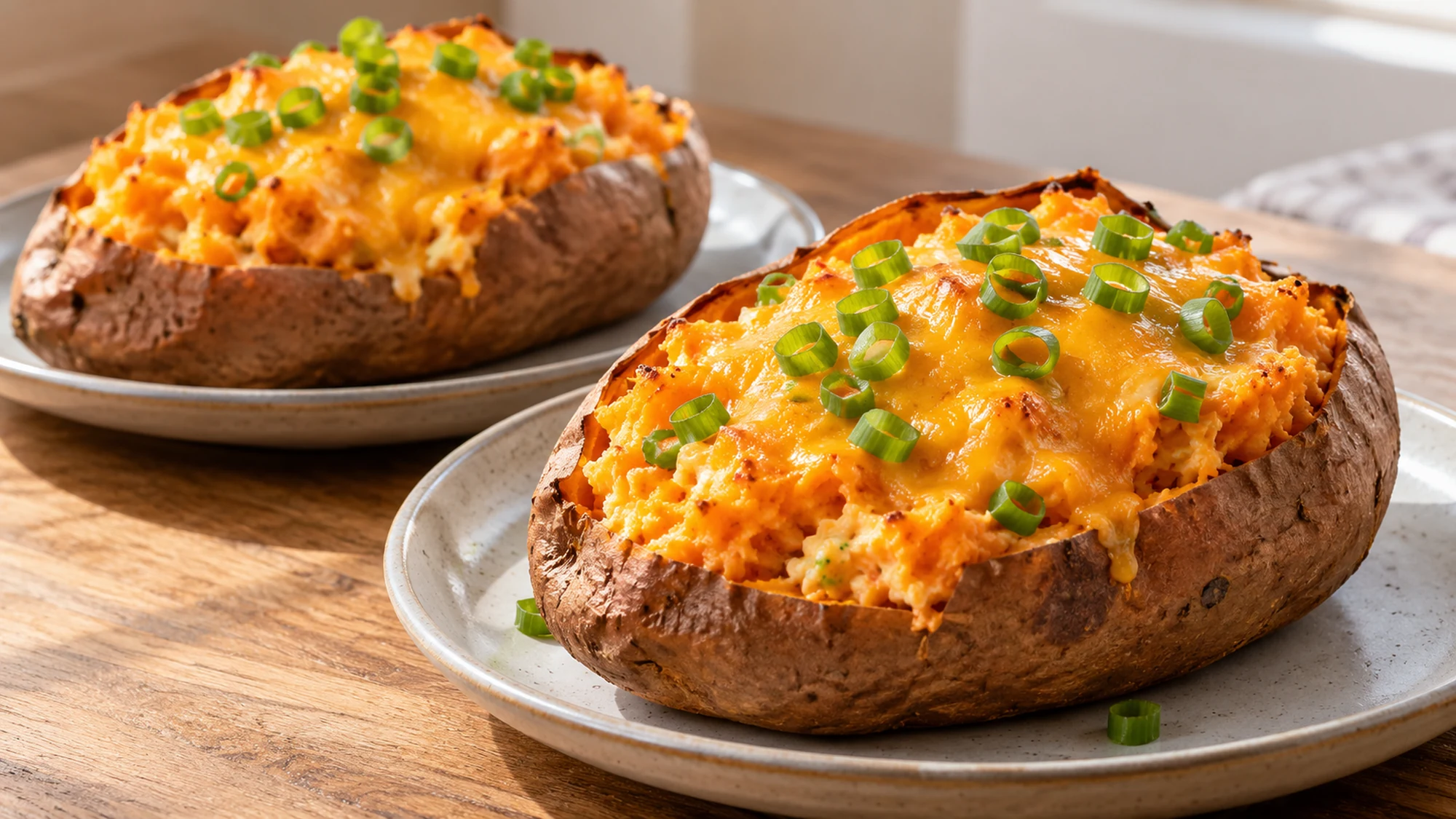
Health Benefits and the Complete Portion
Sweet potatoes contribute carbohydrates, fiber and potassium, as described in the USDA sweet potato fact sheet. Cheddar and yogurt add protein and calcium, but the cheese also contributes saturated fat and sodium. The useful comparison is the whole stuffed potato, not the vegetable before its filling.
The nutrition estimate follows the measured ingredients and one of four portions. Actual potato size, cheese brand and how much skin you eat affect the result. It can be a satisfying vegetable lunch without a health promise.
- Check dairy needs: This version contains milk ingredients. A dairy-free cheese or yogurt may behave and taste differently.
- Taste before salting: Cheddar supplies seasoning already; the base recipe does not call for extra salt.
- Keep the skin if you enjoy it: Scrub it well and trim damaged spots before baking; do not feel obliged to eat a tough patch.
Account for the cheese and yogurt as part of lunch, and let the rest of the meal provide variety rather than expecting one potato to do everything.
Bottom Line
For leftovers, follow FoodSafety.gov’s cooling and reheating guidance: refrigerate promptly in shallow containers, use within three to four days, and reheat to 165°F (74°C). Add fresh scallions afterward. The skin may soften in storage, so aim for a thoroughly hot center rather than promising the same texture as the first bake.
Start with a genuinely tender sweet potato, keep the filling measured, and give the cheddar just enough time to melt. The contrast between sweet flesh, tangy yogurt and savory cheese is the point.
Cheese Stuffed Sweet Potato Recipe


Ingredients
- 4 medium orange-fleshed sweet potatoes about 250 g each, 1 kg total; similar thickness
- 2 teaspoons olive oil 10 ml
- 1 heaped cup freshly shredded sharp cheddar 120 g, divided; weigh for accuracy
- 1/3 cup plain 2% Greek yogurt 80 g
- 2 scallions 20 g, thinly sliced
- 1/4 teaspoon black pepper
Equipment
- Rimmed baking sheet
- Parchment paper
- Fork and small knife
- Box grater
- Oven mitts
Instructions
- Heat the oven to 400°F (205°C). Line a rimmed baking sheet with parchment. Scrub the sweet potatoes under running water, dry them and trim damaged spots. Prick each several times with a fork and rub with the measured oil.
- Bake the whole potatoes for about 45–60 minutes, until a small knife slides easily into the thickest center. Larger or thicker potatoes may need longer; do not add the filling while the flesh is still firm.
- Using oven mitts, carefully slit each potato lengthwise without cutting through the bottom. Open gently and use a fork to loosen the flesh inside, leaving enough intact to support the skin. Divide the yogurt, half the cheddar and pepper among the potatoes and gently mix into the flesh.
- Top with the remaining cheddar. Return to the oven for 5–8 minutes, until the cheese is melted and the filling is hot. Let stand briefly, scatter with scallions and serve one potato per portion.