

That last piece of yesterday’s loaf can be too firm for a sandwich but just right for a breakfast casserole. Here, bread cubes soak up eggs and milk, then bake with cheddar, spinach and sweet red pepper into a savory dish with tender middles and browned corners.

The useful trick is to give the bread time to absorb the custard before baking. Cook the vegetables first so they do not release a puddle into the pan, then check the center with a thermometer rather than judging doneness by the golden top.
I’d choose a sturdy, plain loaf over very soft sandwich bread. It holds recognizable pieces instead of becoming one uniform texture. Day-old is helpful, but discard any bread with mold.
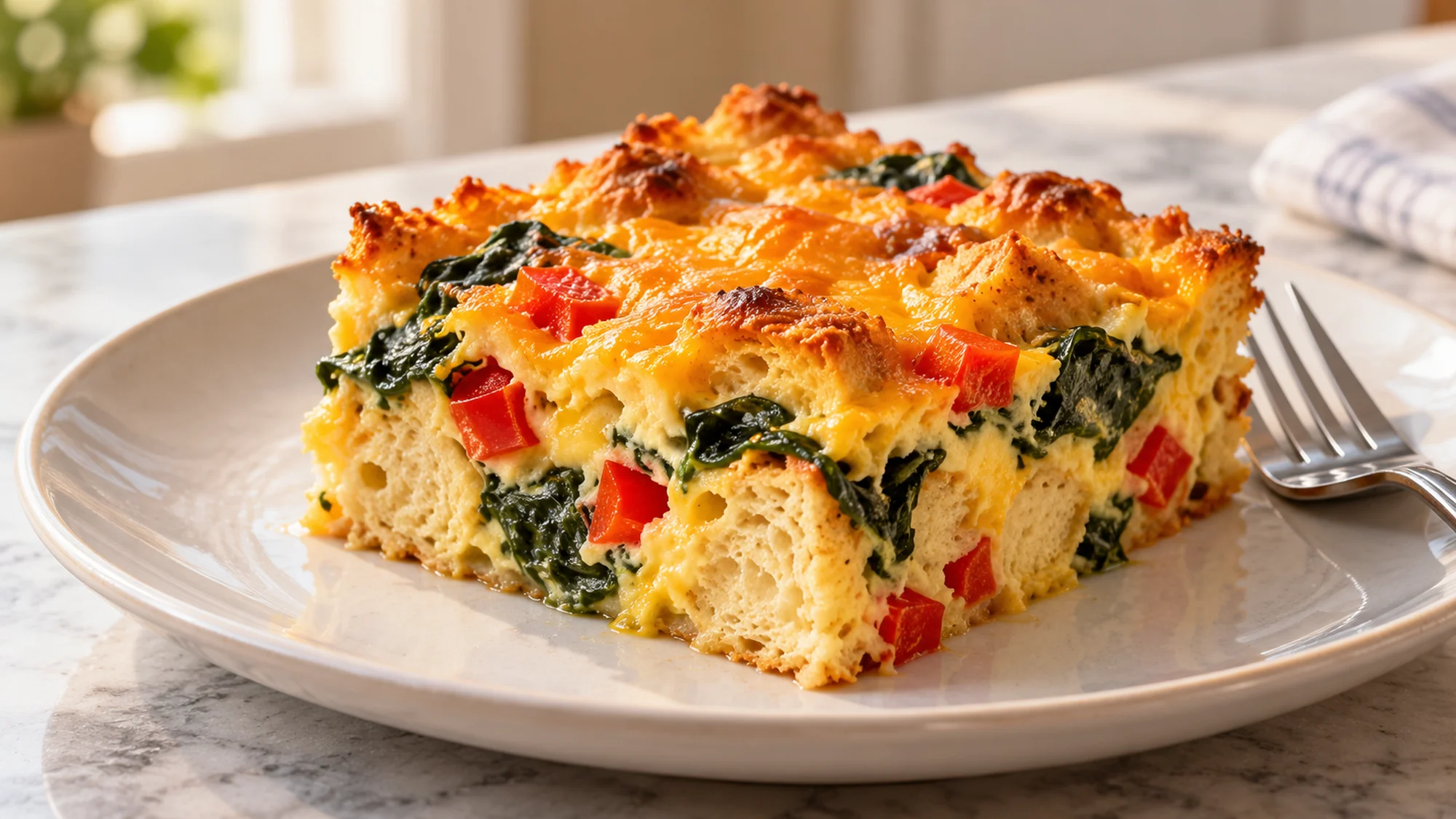
Serving Breakfast Casserole While the Edges Are Still Crisp
Give the baked casserole ten minutes to settle before cutting it into eight portions. That pause helps the interior hold together on the spatula. An edge piece offers more browned bread, while the center stays softer; neither is a consolation prize.
Fresh fruit makes an easy companion, and a lightly dressed green salad turns a square into lunch. For a brunch table with both sweet and savory options, apple cinnamon baked oatmeal provides a separate warm dish without making this casserole sweeter.
- Keep toppings simple: A little freshly ground pepper is enough. The cheddar already brings a clear savory flavor.
- Serve in manageable batches: Refrigerate portions that will not be eaten promptly instead of leaving the whole pan out through a long brunch.
- Use a broad spatula: Slide it beneath the bread layer so each portion lifts with its browned base attached.
- Plan for reheating: Individual portions warm more evenly than an entire deep pan; cover loosely so the exposed bread does not dry out.
I prefer a fresh side to an extra rich sauce here. The casserole already brings bread, eggs and cheese together, so the rest of breakfast can stay pleasantly uncomplicated.

Breakfast Casserole Variations That Respect the Custard
Changing the vegetables is straightforward; changing their moisture needs more thought. Wilted spinach should not bring a pool of liquid into the dish. If using frozen spinach, thaw and squeeze it thoroughly before measuring a modest replacement for the cooked greens.
A firmer loaf may need the full soaking time, while softer bread absorbs faster. Press the cubes gently into the custard without crushing them. The King Arthur explanation of strata also highlights this resting stage: it gives bread time to take in the egg-and-milk mixture.
| Change | Good option | What to watch |
|---|---|---|
| Cheddar | Monterey Jack | Milder flavor; retain the same weight. |
| Red pepper | Cooked mushrooms | Cook off their liquid before adding. |
| Plain bread | Sturdy whole-wheat bread | A nuttier flavor and potentially firmer texture. |
| Bake today | Assemble the night before | Cover and refrigerate immediately; bake within 24 hours. |
Keep the pan size and basic bread, egg and milk quantities unchanged when trying a variation. A different dish depth or a large extra handful of vegetables can change how the center cooks.
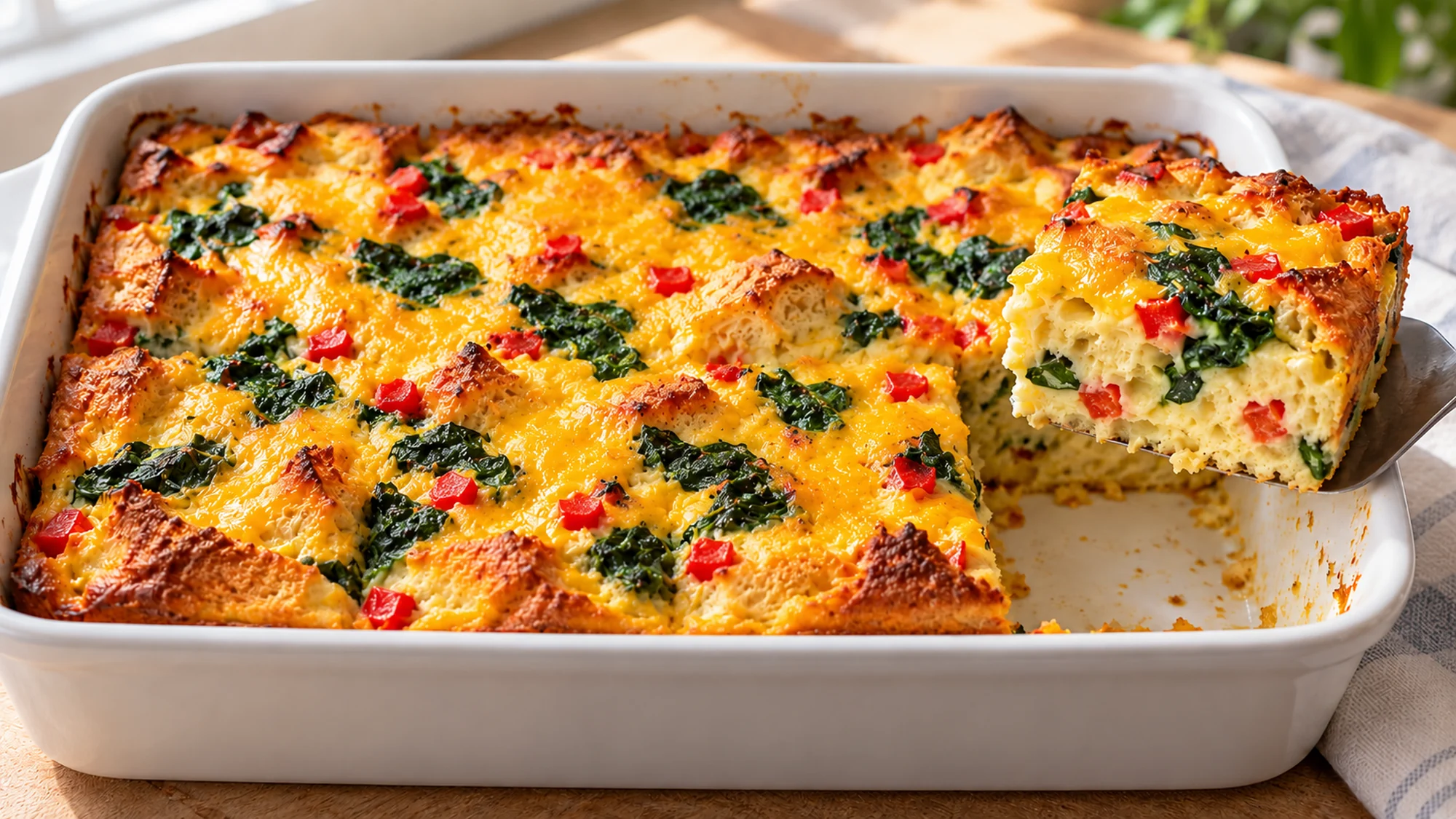
Health Benefits and the Whole Breakfast
Eggs, milk and cheddar contribute protein, while spinach and red pepper add vegetables to a bread-based meal. One eighth of this pan provides an estimated 18 grams of protein. That is a recipe calculation, not a guarantee for every loaf, cheese or serving size.
Cheese also contributes saturated fat and sodium, and bread can supply a noticeable amount of sodium before salt is added. Compare labels if those nutrients matter to your meal planning. A vegetable-filled casserole does not need an exaggerated health promise to be a useful breakfast.
- Know the allergens: This version contains egg, milk and wheat; changing one ingredient does not automatically make the entire recipe suitable for an allergy.
- Check the center: FoodSafety.gov’s egg guidance specifies 160°F for egg dishes without meat or poultry.
- Handle leftovers promptly: Follow Michigan State’s leftover guidance: refrigerate within two hours, use within three to four days, and reheat portions to 165°F.
Use the nutrition panel as an estimate for one of eight equal portions. Pairing the casserole with fruit or vegetables is a practical way to round out the plate without changing its comforting character.
Bottom Line
A good breakfast casserole depends less on elaborate additions than on a few quiet decisions: sturdy bread, vegetables without excess liquid, enough soaking time and a fully cooked center. The cheddar supplies flavor while the bread turns an ordinary egg mixture into something you can slice.
Let day-old bread do a useful job, keep the filling balanced and give the finished pan a short rest. You will have eight savory portions ready for breakfast, brunch or a simple lunch.
Breakfast Casserole Recipe


Ingredients
- 1 tablespoon olive oil plus 1 teaspoon for the pan; 18 g total
- 1 red bell pepper diced; 150 g
- 5 ounces fresh spinach roughly chopped; 140 g
- 10 ounces day-old French or sourdough bread 280 g, cut into 1-inch cubes
- 8 large eggs 400 g without shells
- 2 cups whole milk 488 g
- 2 teaspoons prepared yellow mustard 10 g
- 1/2 teaspoon fine salt 3 g
- 1/4 teaspoon black pepper
- 6 ounces cheddar cheese 170 g, shredded and divided
Equipment
- 9-by-13-inch baking dish Metal or another pan suitable for its starting temperature; follow glass bakeware temperature guidance.
- Large skillet
- Mixing bowl and whisk
- Instant-read food thermometer
Instructions
- Grease a 9-by-13-inch baking dish with 1 teaspoon oil. Heat the remaining tablespoon oil in a skillet over medium heat. Cook the diced pepper for 5–6 minutes, stirring, until softened. Add spinach and cook for 2–3 minutes until wilted and excess liquid has evaporated. Let cool briefly.
- Whisk the eggs, milk, mustard, salt and pepper in a large bowl. Fold in the bread, cooked vegetables and two thirds of the cheese. Transfer to the prepared dish, distribute evenly, and sprinkle the remaining cheese on top.
- Cover and refrigerate for 30 minutes so the bread absorbs the custard. For an overnight option, refrigerate promptly and bake within 24 hours. Preheat the oven to 350°F. Follow the baking-dish manufacturer’s cold-to-hot guidance; use a suitable metal pan if baking directly from refrigeration.
- Uncover and bake for 40–50 minutes, until puffed, golden and set in the center. Check several central spots with a food thermometer; an egg casserole without meat or poultry must reach at least 160°F. If the top browns too quickly, cover loosely with foil. An overnight-chilled casserole may need additional time.
- Rest for 10 minutes, then cut into 8 portions. Refrigerate leftovers within 2 hours in shallow covered containers, use within 3–4 days, and reheat to 165°F. If the air temperature is above 90°F, refrigerate within 1 hour.