
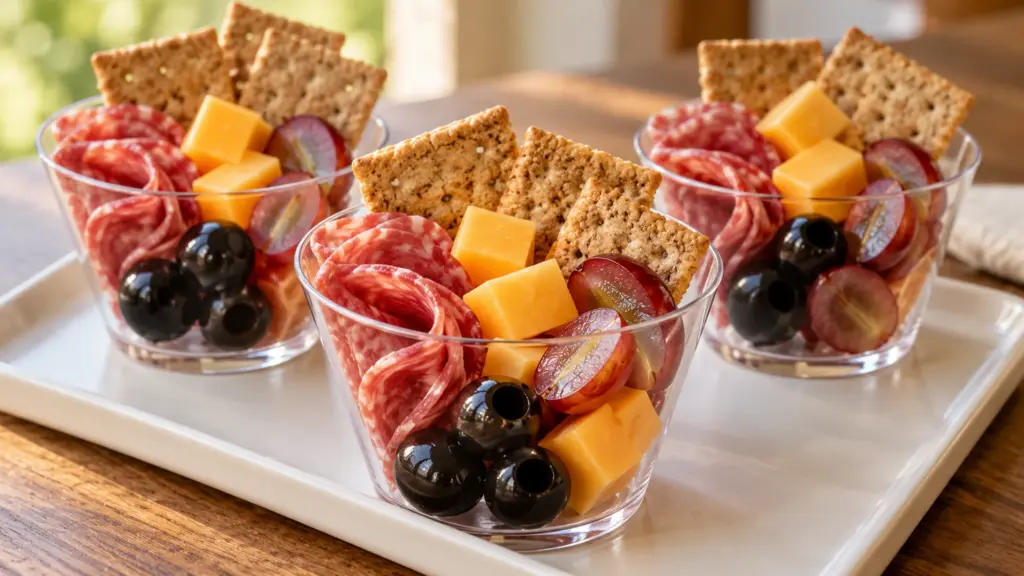
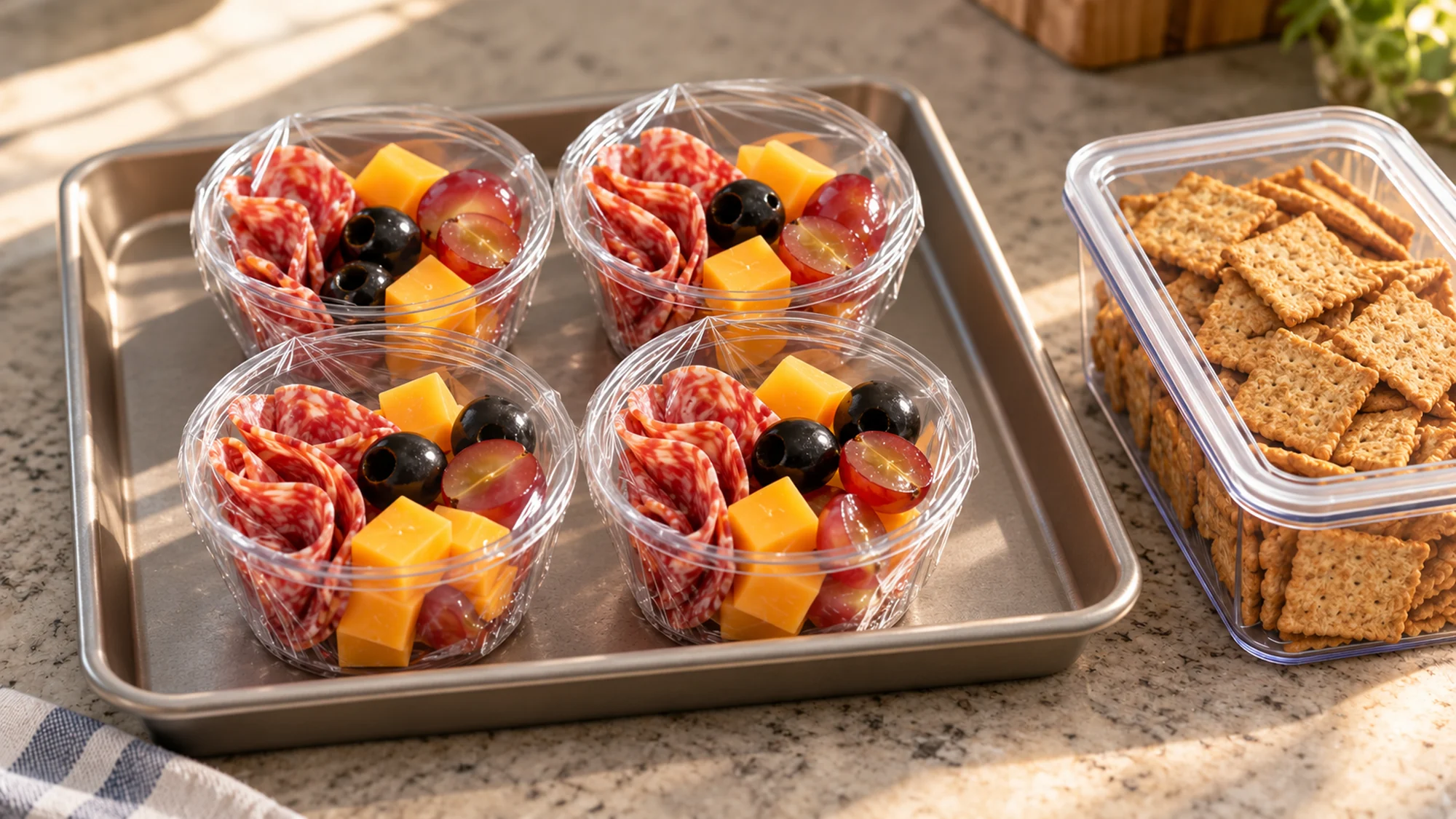
A crowded appetizer table can turn into a balancing act: a plate in one hand, a drink in the other, and the good cheese just out of reach. Charcuterie cups put a small selection in one easy-to-hold container. These combine folded salami, cheddar, juicy grapes and briny olives, with crackers added just before serving.
Prep the chilled components a few hours ahead, keep the crackers dry, and finish the cups when guests are ready to eat. Eight modest portions give you a planned appetizer rather than an oversized snack board.
I would rather offer five ingredients that are easy to eat than pack a cup with decorations guests have to work around. A clear, wide-mouth cup shows the different colors, and leaving a little space at the top makes the food easier to reach.
Serving Charcuterie Cups Without Soggy Crackers
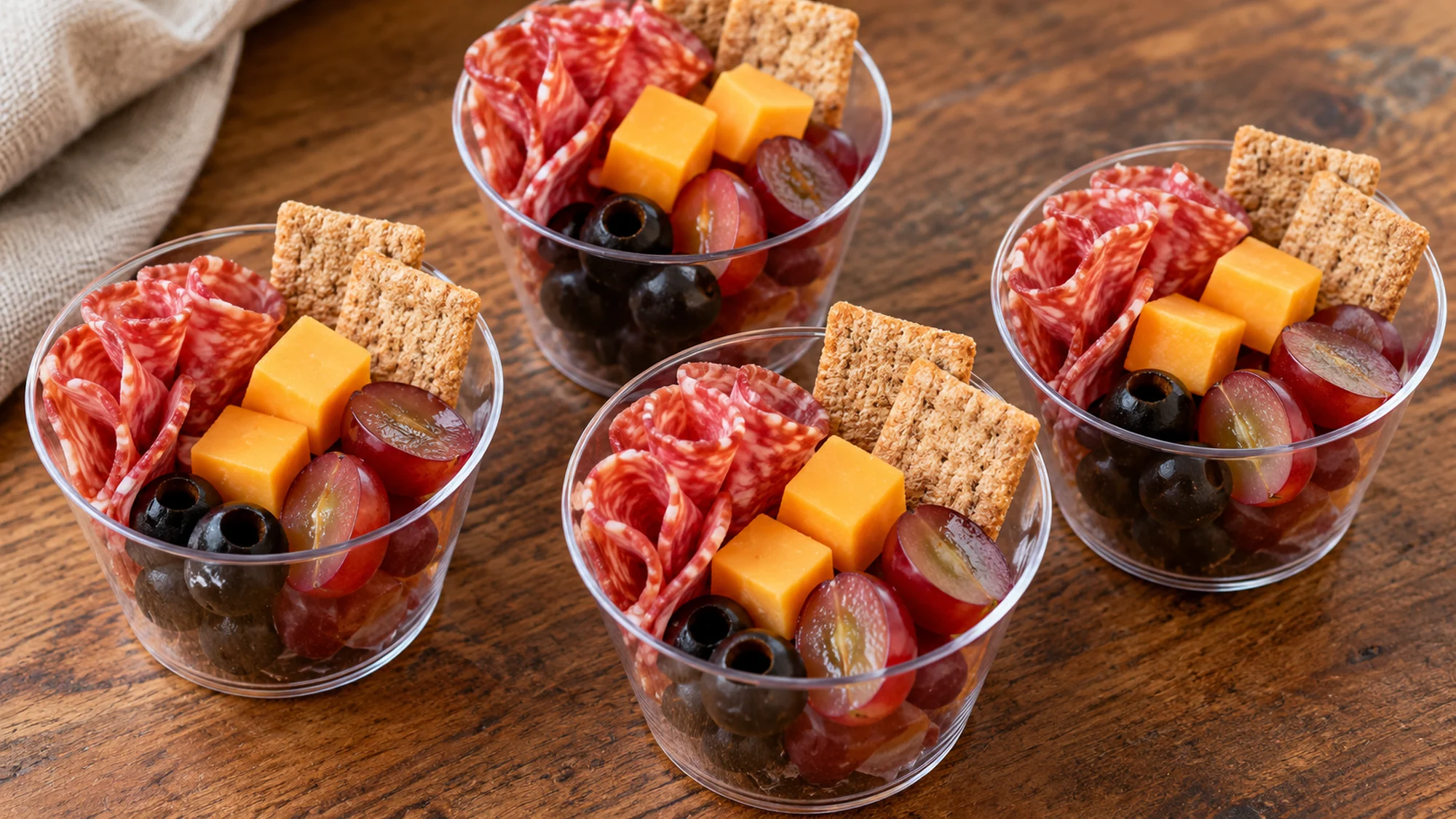
Choose food-safe cups that hold about 9 to 12 ounces by volume and stand securely on a tray. The exact cup size is less important than keeping the filling accessible. Arrange the cheese low in the cup, then let the folded salami sit higher; the grapes and olives fill the gaps without needing elaborate skewers.
Keep the assembled cups covered in the refrigerator until service and offer small forks or picks to adults. Crackers can sit beside each cup in a dry sleeve, or be tucked in at the last moment. I prefer separate crackers for a longer gathering because their texture stays predictable.
- Treat one cup as an appetizer, not a complete dinner.
- Put out small batches and replace the tray with fresh chilled cups rather than topping up partly eaten ones.
- Follow the FDA’s buffet guidance: hold cold food at 40°F or below. Discard perishables left out more than 2 hours, or 1 hour above 90°F.
The make-ahead advantage comes from chilled prep, not from leaving the finished cups on the counter.
Charcuterie Cups Variations for Different Guests
Keep the basic contrast of savory, creamy, fresh and crisp, then swap one component instead of buying a second shopping cart of extras. A firm cheese is easier to portion than a runny one. Dry the grapes and drain the olives well; excess moisture has nowhere useful to go in a small cup. For a bread option, thin slices of baguette can be offered separately instead of crackers.
Ask about dietary needs before assembling. Milk and wheat are present in the base recipe, and packaged meats or crackers may contain other allergens. Separate ingredients and clean utensils matter when preparing an alternative; changing a single item does not automatically make the entire cup suitable.
| Change | Why choose it | What to check |
|---|---|---|
| Cheddar to firm Gouda | A milder, creamy bite | Use pasteurized cheese and the same weight. |
| Grapes to firm berries | A different sweet contrast | Wash, dry and discard damaged fruit. |
| Regular to gluten-free crackers | An alternative crisp element | Check every ingredient and prevent cross-contact. |
| Salami-free cup | An option without cured meat | Keep separate; add extra prepared vegetables if desired. |
A small, clearly identified alternative is more useful than a cup crowded with ingredients no one asked for.
Health Benefits and Portion Trade-Offs
Cheddar and salami contribute protein, and the fruit adds a fresh contrast, but these cups are also fairly rich in saturated fat and sodium. The estimated 300 calories and 14 grams of protein per cup include the crackers. Brands, slice thickness and the amount of cheese can move those numbers noticeably.
For guests who are pregnant, 65 or older, or have weakened immune systems, cold salami is not the right default. CDC Listeria-prevention guidance advises these groups to avoid unheated deli meats and dry sausages. Offer a separately prepared cup without the salami, using pasteurized hard cheese and properly washed produce.
- Compare labels on salami, olives and crackers rather than assuming similar-looking products contain equal sodium.
- The FDA’s sodium guide explains how the Nutrition Facts label helps with those comparisons.
- These are adult-style party cups. Young children need age-appropriate food sizes and textures, not whole olives, large cheese cubes or sharp picks.
Enjoy these as a savory appetizer, with portions and guest needs considered before the assembly starts.
Bottom Line
The best preparation is mostly organizational: clear refrigerator space, portion the ingredients, and keep the crackers away from damp surfaces. There is no need for a salami rose in every cup. A loose fold makes the meat easy to pick up and leaves room for the fruit.
Make charcuterie cups a few hours ahead, cover and chill them, then add the crisp element at serving time. That simple division keeps the party prep manageable and the appetizer pleasant to eat.
Charcuterie Cups Recipe

Ingredients
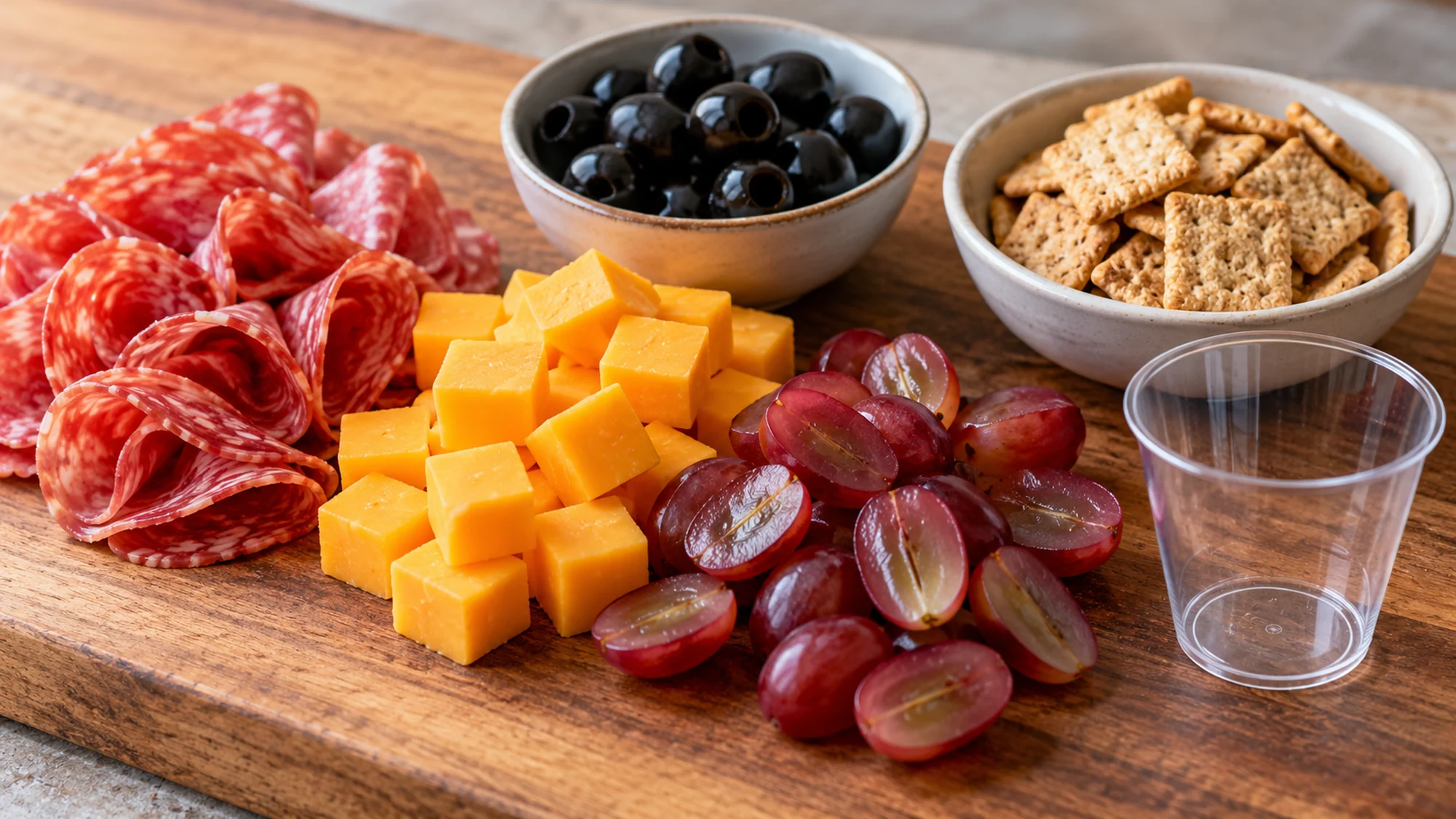
- 8 ounces ready-to-eat sliced hard salami 227 g; divide by weight because slice sizes vary.
- 8 ounces pasteurized cheddar cheese 227 g, cut into bite-size cubes.
- 2 cups seedless grapes About 300 g before cutting; washed, dried and halved lengthwise.
- 24 pitted ripe olives About 96 g drained; pat dry.
- 24 small whole-wheat crackers About 72 g total; keep dry until serving.
Equipment
- 8 food-safe clear cups About 9–12 fl oz capacity each, with wide openings.
- Tray that fits in refrigerator
- Knife and cutting board
- Kitchen scale Useful for even portions.
- Cover or food wrap
- Small forks For serving.
Instructions
- Wash your hands and clean the work surface and utensils. Set eight food-safe cups on a tray that fits in your refrigerator. Wash and thoroughly dry the grapes, then halve them lengthwise. Drain and pat the olives dry.
- Divide the cheddar and salami into eight equal portions, about 1 ounce (28 g) of each per cup. Put some cheese low in each cup. Loosely fold the salami and arrange it above the cheese without packing the cup tightly.
- Divide the grape halves among the cups and add 3 pitted olives to each. Cover and refrigerate at 40°F (4°C) or below. For best quality, prepare only a few hours ahead; keep crackers separately in a dry, sealed container.
- Just before serving, offer 3 small crackers with each cup, either tucked in or in a separate dry sleeve. Serve with small forks. Put out small batches and keep the remainder refrigerated.
- Keep cold food at 40°F or below, or discard after more than 2 hours at room temperature; the limit is 1 hour when the air temperature is above 90°F (32°C). Do not top up partially eaten cups or return them to the serving tray.