
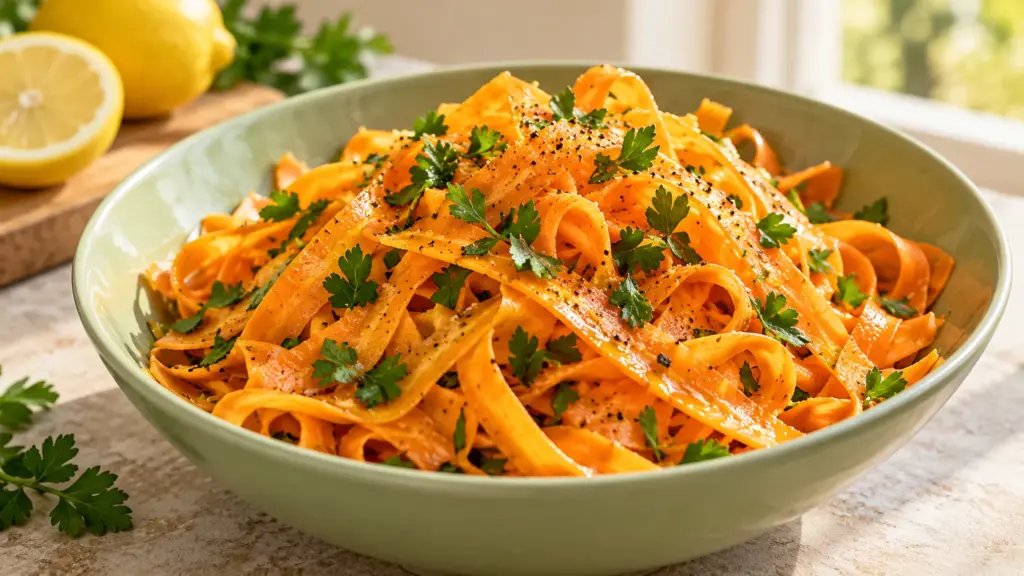
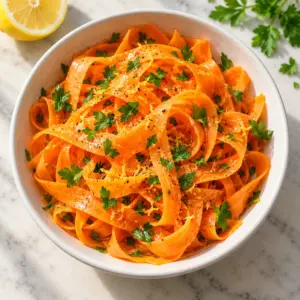
A whole carrot can feel like a snack; shave it into wide, thin strips and it starts to behave like a salad. This carrot ribbon salad uses that small change in shape to help lemon, olive oil and parsley reach more of each bite. The result is still crunchy, just less of a workout for your fork.

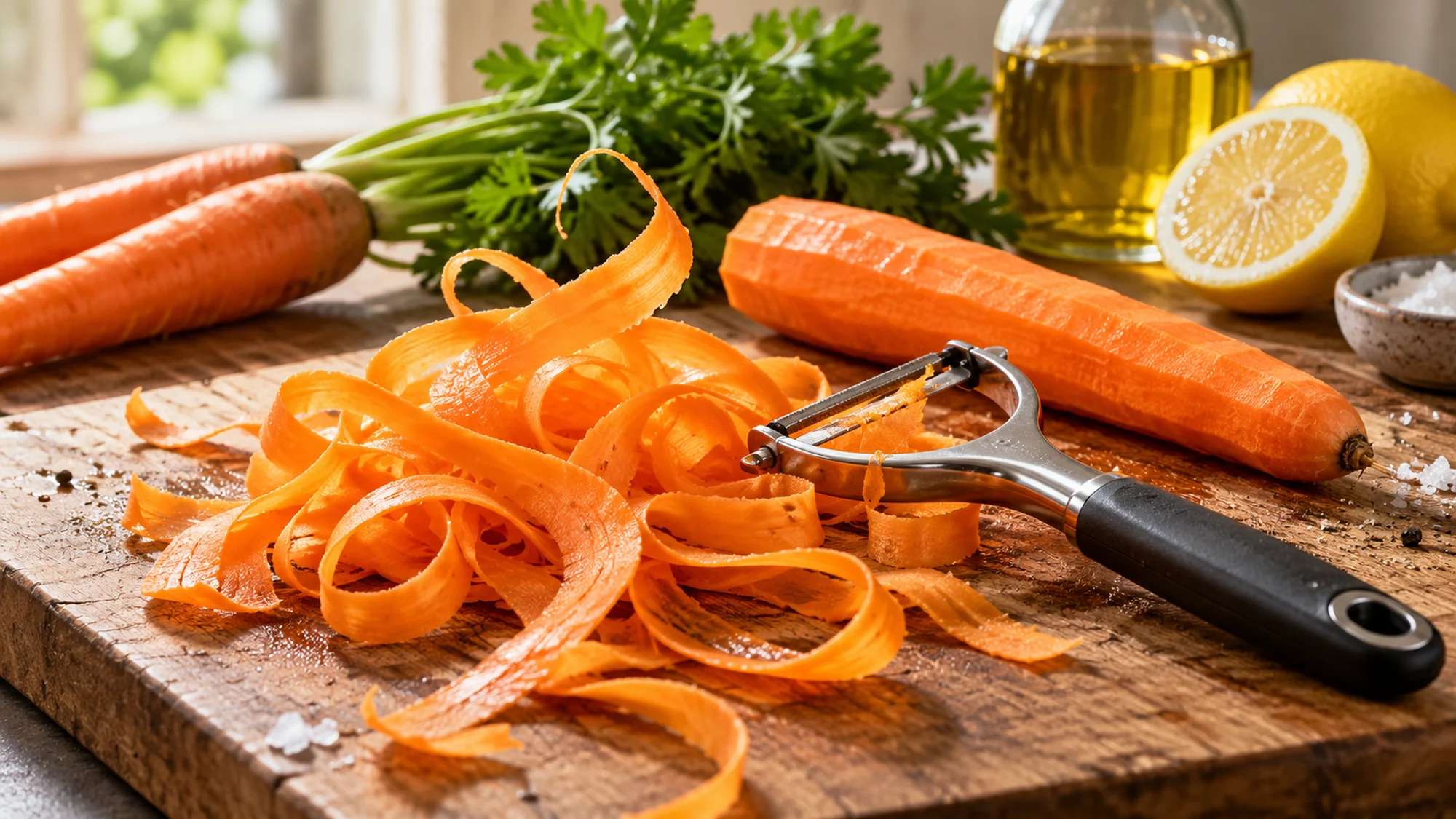
Use a vegetable peeler to make thin ribbons, then toss them lightly with the dressing just before serving. Stop peeling when the remaining carrot becomes awkward to hold; save that center for another use rather than chasing the final strip.
I’d choose medium-large, straight carrots for this job. Their broad sides give you useful ribbons without needing a mandoline or a lesson in elaborate knife skills. A few short strips are perfectly welcome, too; dinner does not need matching lengths.
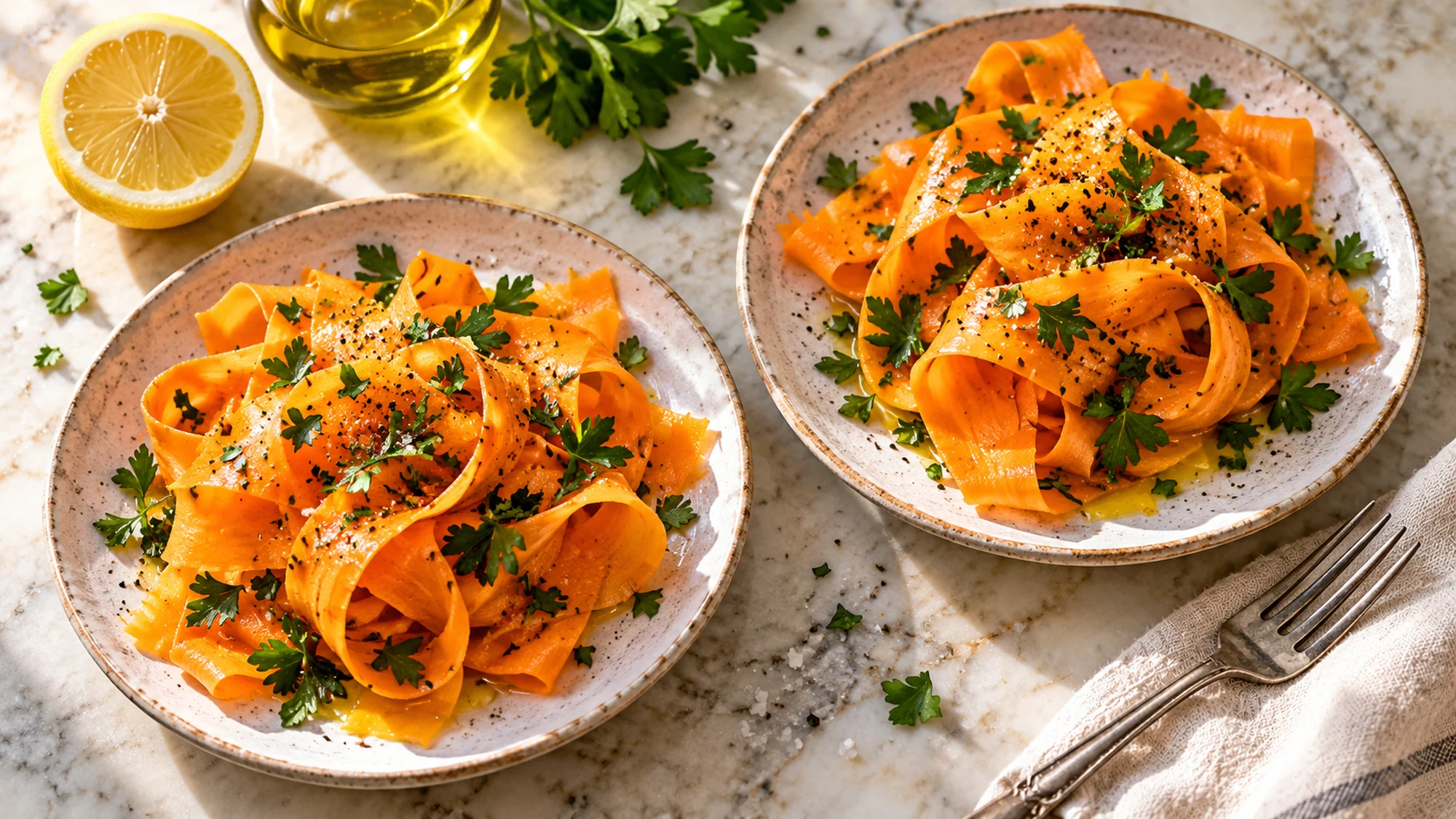
Serving Carrot Ribbon Salad While the Ribbons Are Crisp
The lemony dressing makes this a helpful side for eggs, apricot-glazed chicken, fish or a sandwich. Keep the serving bowl fairly wide so the ribbons can sit loosely instead of becoming a compact orange knot. Lift them gently with tongs, bringing some parsley up from the bottom.
This is a vegetable side, not a complete lunch by itself. For a fuller plate, add a protein food and bread, rice or another grain according to your appetite. I prefer putting the salad beside warm food rather than underneath it, where steam and juices would soften the ribbons quickly.
- For a shared table, dress the salad shortly before everyone sits down.
- For a lunch container, pack the dry ribbons and dressing separately.
- For smaller plates, use the salad as a bright, crunchy accompaniment rather than a large mound.
Give the ribbons room, dress them close to serving, and keep them away from hot pan juices until they reach your plate.
Simple Variations for Carrot Ribbon Salad
The base is deliberately spare: carrot sweetness, lemon acidity, a little olive oil and parsley. Before adding anything else, taste a dressed ribbon rather than the dressing alone. It tells you how the seasoning works with the vegetable, which is the part that actually matters.
One change at a time keeps the flavor clear. Extra wet vegetables can dilute the dressing, while salty toppings change how much seasoning the bowl needs. The comparisons below are options, not additions already included in the recipe’s nutrition estimate.
| Option | Practical adjustment |
|---|---|
| Dill instead of parsley | Use the same chopped volume for a different herbal note. |
| Lime instead of lemon | Start with the same juice amount, then taste a dressed ribbon. |
| Orange zest | Add a little finely grated zest, avoiding the bitter white pith. |
| A pinch of chili flakes | Add after tossing so you can control the heat. |
Keep the dressing light enough that you can still taste the carrot; more ingredients do not automatically make a better salad.
Health Benefits Without the Salad Hype
Carrots supply beta-carotene, a pigment the body can use to make vitamin A. The NIH vitamin A fact sheet explains its role in normal vision and other functions, without turning a carrot dish into a treatment. This recipe also keeps the carrot flesh and its fiber rather than juicing it.
A quarter of the recipe provides an estimated 109 calories and 3.3 grams of fiber. Olive oil contributes most of the fat, while the carrots provide naturally occurring sugars. Those numbers describe the stated portion; they do not make this a high-protein meal or promise a particular health outcome.
- All the measured dressing is included in the nutrition estimate, even if a little stays in the bowl.
- The salt amount is measured, not hidden behind an unlimited ‘to taste’; reduce it if your meal already includes salty foods.
A useful vegetable side can simply be a useful vegetable side: crisp, flavorful and easy to put next to the rest of lunch.
Bottom Line
Wash the carrots before trimming or peeling, even though the outer layer will come off. Follow the FDA’s produce-handling guidance: use running water, not soap, and work with clean tools. Dry the carrots and parsley well so the dressing is not watered down.
Keep prepared ribbons covered in the refrigerator at 40°F or below, and add dressing near serving time for the best texture. Leftover dressed salad will soften; use it the next day for quality rather than expecting the same crispness. It should not spend the afternoon sitting on the counter.
A sharp peeler and a light hand with the dressing do the important work. Stop before the carrot gets slippery, toss gently, and serve while the ribbons still have their snap.
Carrot Ribbon Salad Recipe

Ingredients
- 1 pound carrot ribbons 454 g after trimming; start with about 1 1/4 pounds medium-large whole carrots
- 2 tablespoons olive oil 27 g
- 2 tablespoons fresh lemon juice 30 g
- 1/4 cup chopped flat-leaf parsley 10 g, loosely packed
- 1/2 teaspoon fine table salt 3 g
- freshly ground black pepper Optional, a small pinch
Equipment
- Vegetable peeler A Y-peeler is helpful.
- Cutting board
- Large mixing bowl
- Tongs
Instructions
- Wash the carrots under running water and dry them. Trim the ends and peel away the outer skin. Wash and dry the parsley, then chop it.
- Place a carrot flat on a cutting board. Holding it securely at one end with fingers clear of the blade, draw the peeler away from your hand to make long ribbons. Rotate as needed. Stop when the remaining center becomes too thin to handle safely; save it for another recipe. Repeat until you have 454 g ribbons.
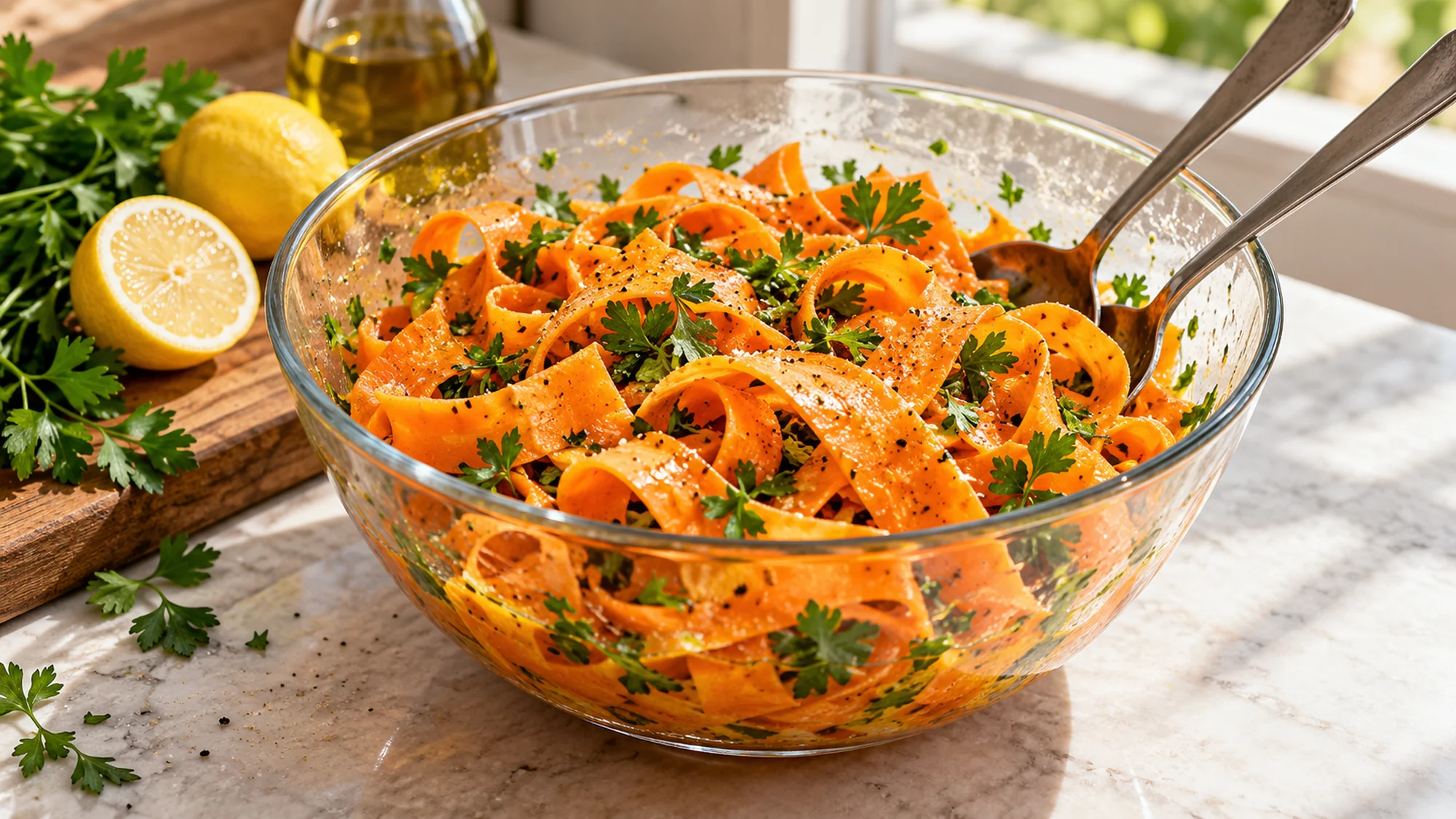
- Whisk the oil, lemon juice and salt together in the mixing bowl. Just before serving, add the carrot ribbons and parsley. Lift and turn gently with tongs until lightly coated. Add the optional pepper if desired.
- Divide among four plates and serve promptly. Keep any prepared ribbons or leftover salad covered and refrigerated at 40°F or below; use dressed leftovers the next day for best texture.