
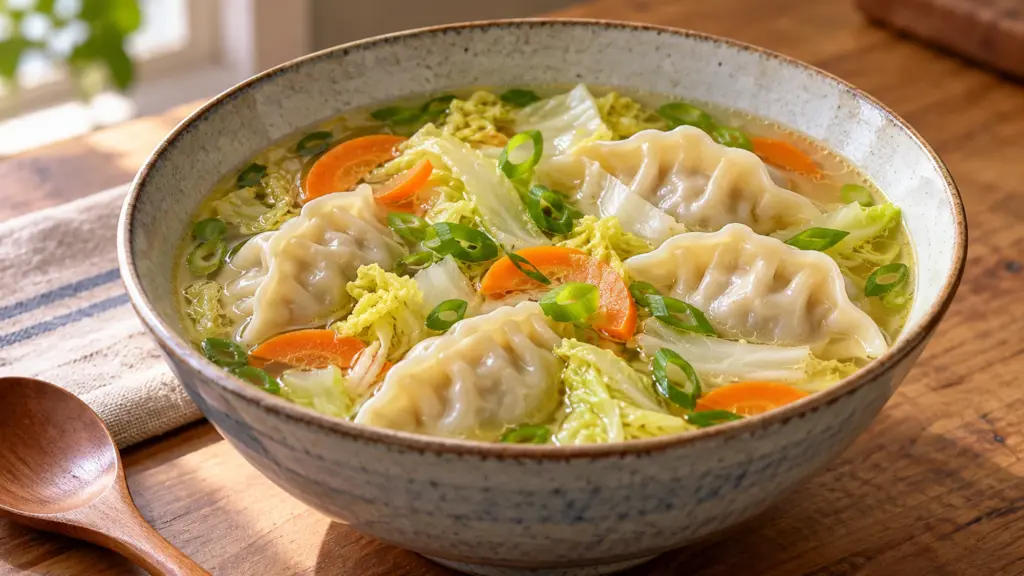
A bag of frozen gyoza can become dinner without asking you to fold a single wrapper. In cabbage dumpling soup, the dumplings provide the filling and dough while sliced cabbage, carrot and fresh ginger give the broth something more interesting to do than simply stay hot.
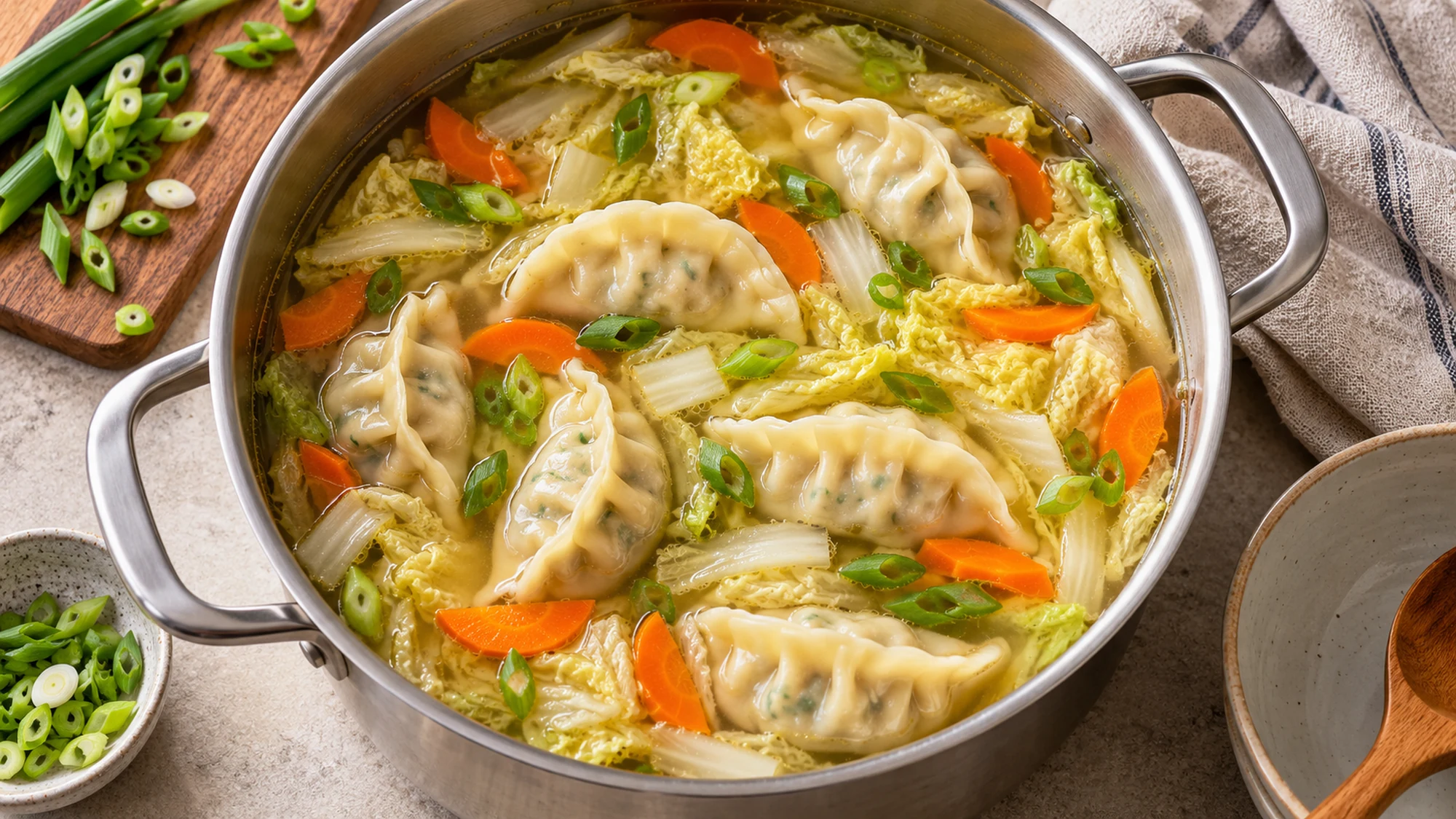
Keep the vegetables tender and the dumplings intact by treating their cooking times separately. Simmer the ginger broth, add the cabbage in stages, and cook the frozen gyoza according to their package before putting everything together in warm bowls.
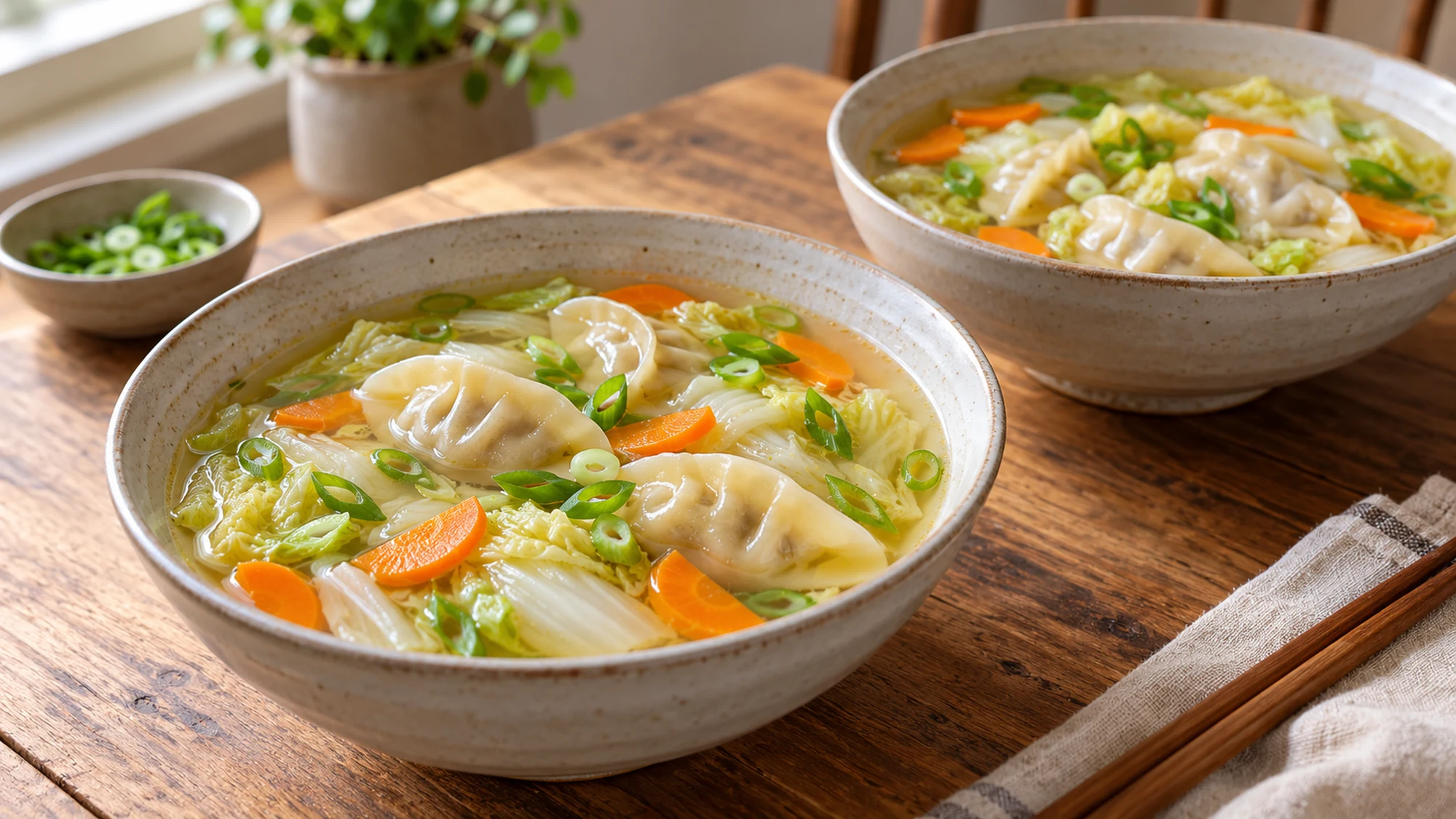
I’d choose a clear, lightly seasoned broth here rather than a thick sauce. The cabbage becomes silky at the edges, the carrot keeps a little shape, and the scallions add a fresh finish. This is a flexible weeknight soup, not a claim to one traditional regional formula.
Serving Cabbage Dumpling Soup Before the Wrappers Soften
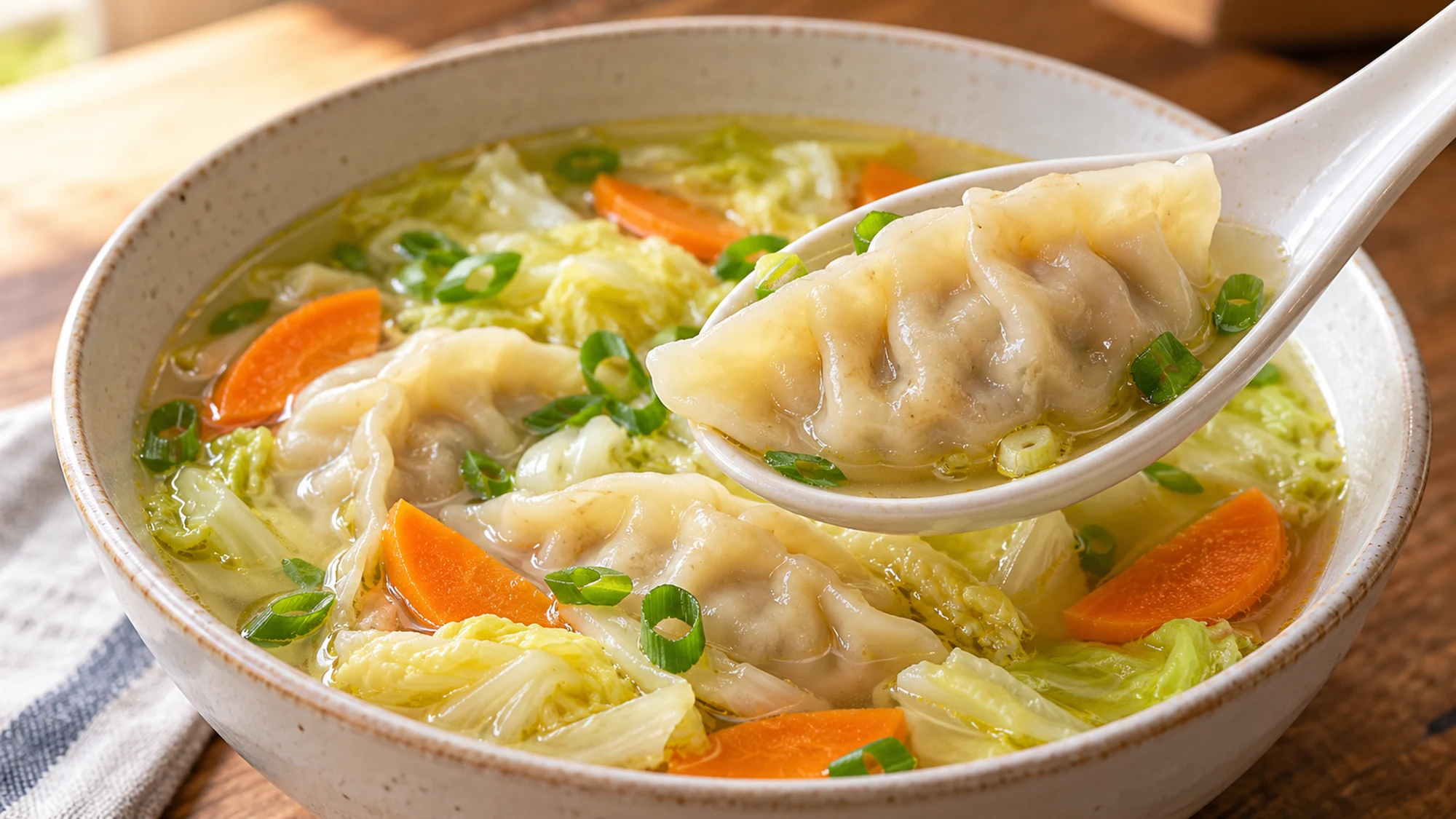
Set the bowls out before the dumplings finish cooking. Thin wrappers continue absorbing liquid while they sit, so the best texture comes from combining the components shortly before eating. Divide the gyoza among the bowls first, then ladle the vegetables and broth around them.
This makes four lighter meal portions. If dinner needs more substance, offer a small bowl of rice or edamame alongside rather than crowding the soup with so many extras that the dumplings become difficult to find.
- Handle gently: Use a slotted spoon or wide spoon to move cooked dumplings. Vigorous stirring can tear the wrappers and release their filling.
- Finish at the table: Offer extra scallions and soy sauce separately. Taste the broth with a bite of dumpling before deciding that it needs more seasoning.
- Plan for leftovers: If you know some soup will be saved, cook only the dumplings needed for that meal and keep the remaining ones frozen.
- Use a roomy bowl: A broad bowl gives the dumplings space and makes it easier to pick up cabbage without sending broth over the rim.
I prefer fewer, clearly defined ingredients to a crowded bowl. Ginger, cabbage and tender dumplings already make a useful combination; the garnish does not need to become a second shopping list.
Cabbage Dumpling Soup Variations and Timing
Napa cabbage has thick pale ribs and delicate green leaves, so separate them while slicing. The ribs need a head start, while the leaves can go in near the end. Thin carrot half-moons follow a similar idea: small, even pieces cook more predictably than an assortment of large chunks.
Choose frozen gyoza with boiling or steaming instructions, and follow the actual package. Yutaka’s chicken gyoza information illustrates why labels matter: it identifies cooking from frozen, ingredients and allergens. Different brands and sizes do not necessarily share one cooking time.
| Ingredient | Alternative | Adjustment |
|---|---|---|
| Napa cabbage | Thinly sliced green cabbage | Allow more simmering time for the firmer leaves. |
| Chicken gyoza | Vegetable gyoza | Use vegetable broth too if you want a meat-free soup. |
| Carrot | Thinly sliced zucchini | Add later so it does not become mushy. |
| Scallions | A little chopped chive | Add at serving time for a fresh onion note. |
Keep the soup at a gentle simmer once the vegetables are nearly tender. The goal is a bowl with separate textures, not a long-boiled mixture in which every ingredient has softened to the same point.
Health Benefits and What the Labels Change
Cabbage and carrots contribute vegetables and fiber; the dumplings bring carbohydrate and some protein. The proportions make this a lighter soup, and the actual filling matters. Chicken, pork and vegetable gyoza can differ substantially in protein, fat and sodium.
The broth and soy sauce deserve the same attention as the dumpling bag. FDA guidance on sodium labels explains how to compare products. Starting with unsalted broth leaves more room for the seasoning already inside the gyoza.
- Compare equal amounts: Check serving weights when comparing dumpling labels; four large pieces are not the same quantity as four miniature ones.
- Keep allergens visible: Wheat, soy and sesame are common in gyoza and seasonings. Read every package rather than assuming the filling name tells the whole story.
- Adjust the meal: Add a protein-rich side if needed, or increase vegetables according to your appetite. Neither choice requires calling the original bowl inadequate.
The nutrition figures are estimates for the stated ingredients and one-quarter of the soup. A different dumpling brand can change the bowl more than a small extra handful of cabbage.
Bottom Line
Let the broth and vegetables cook at their own pace, and give the frozen dumplings the method their package requires. Bringing them together at serving time protects the wrappers and keeps the ginger flavor clear.
Cabbage dumpling soup is a practical way to turn a freezer staple into a warm meal with fresh texture. Keep the seasoning measured, the cabbage tender and the last few minutes calm.
Cabbage Dumpling Soup Recipe

Ingredients
- 2 teaspoons toasted sesame oil divided
- 20 g fresh ginger peeled and finely chopped, about 2 tablespoons
- 3 garlic cloves finely chopped, about 9 g
- 150 g carrots thinly sliced into half-moons
- 6 cups unsalted chicken broth 1.44 liters
- 400 g napa cabbage sliced, ribs and leaves kept separate
- 1 tablespoon reduced-sodium soy sauce about 16 g
- 1 pound frozen chicken-and-vegetable gyoza about 454 g; choose a product with boiling or steaming directions
- 3 scallions thinly sliced, about 30 g
Equipment
- Large saucepan or Dutch oven
- Separate saucepan or steamer suitable for the dumpling package instructions
- Knife and cutting board
- Slotted spoon
- Ladle
- Food thermometer
Instructions
- Wash and prepare the vegetables. Separate the sliced cabbage’s thicker ribs from its leafy pieces. Keep the gyoza frozen until their package directs you to cook them.
- Heat 1 teaspoon sesame oil in a large saucepan over medium-low heat. Add ginger and garlic and stir for about 30 seconds, just until fragrant, without browning.
- Add carrots, broth and cabbage ribs. Bring to a gentle simmer and cook for 6–8 minutes, until the carrots and ribs are nearly tender.
- Meanwhile, cook the frozen gyoza in a separate saucepan or steamer, following their package’s boiling or steaming directions. Cook chicken-filled dumplings until their centers reach 165°F (74°C); floating alone does not establish doneness. Do not substitute a guessed time for the package instructions.
- Add the cabbage leaves and soy sauce to the broth. Simmer for 2–3 minutes, until the leaves are tender but still distinct. Stir in the remaining teaspoon sesame oil.
- Divide the cooked gyoza among four bowls. Ladle in the vegetables and broth, scatter scallions over the top and serve promptly.