
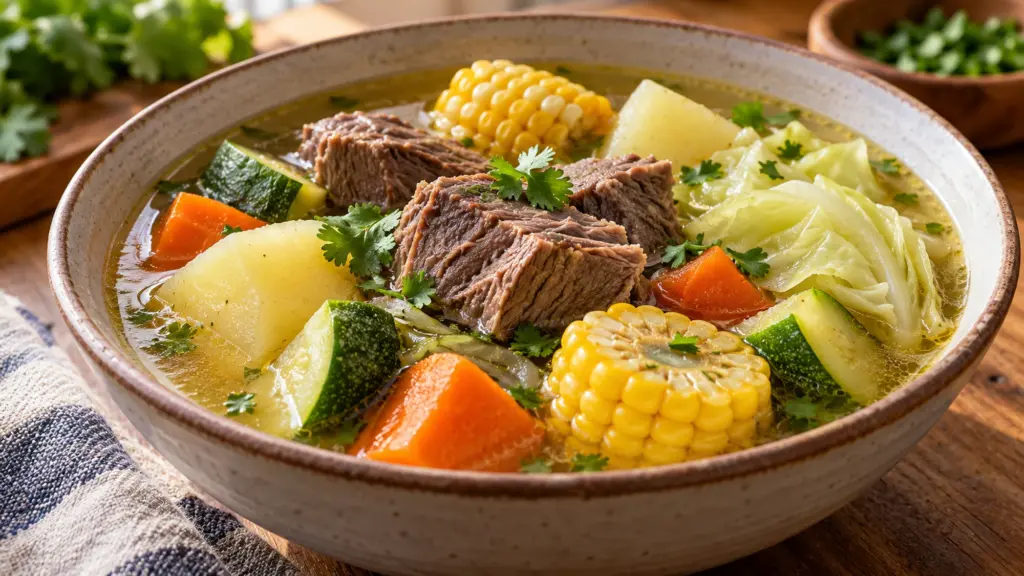
The tricky part of caldo de res is not fitting the vegetables into the pot. It is giving each one enough time without asking a zucchini to survive the same long simmer as a piece of beef. A good bowl keeps the meat tender and the vegetables recognizable, with broth you can still sip between spoonfuls.

Let the beef become fork-tender before adding the firm vegetables, then save the cabbage and zucchini for the end. A gentle simmer and occasional skimming keep this version’s broth clearer than a rolling boil would.
This recipe uses boneless chuck for straightforward portioning rather than bone-in shank. The result is a beef-and-vegetable soup, not a thickened stew: no flour, tomato paste or browning step. I’d give the meat extra time when it needs it rather than put the whole pot on a strict dinner deadline.
Serving Caldo de Res in Generous, Balanced Bowls
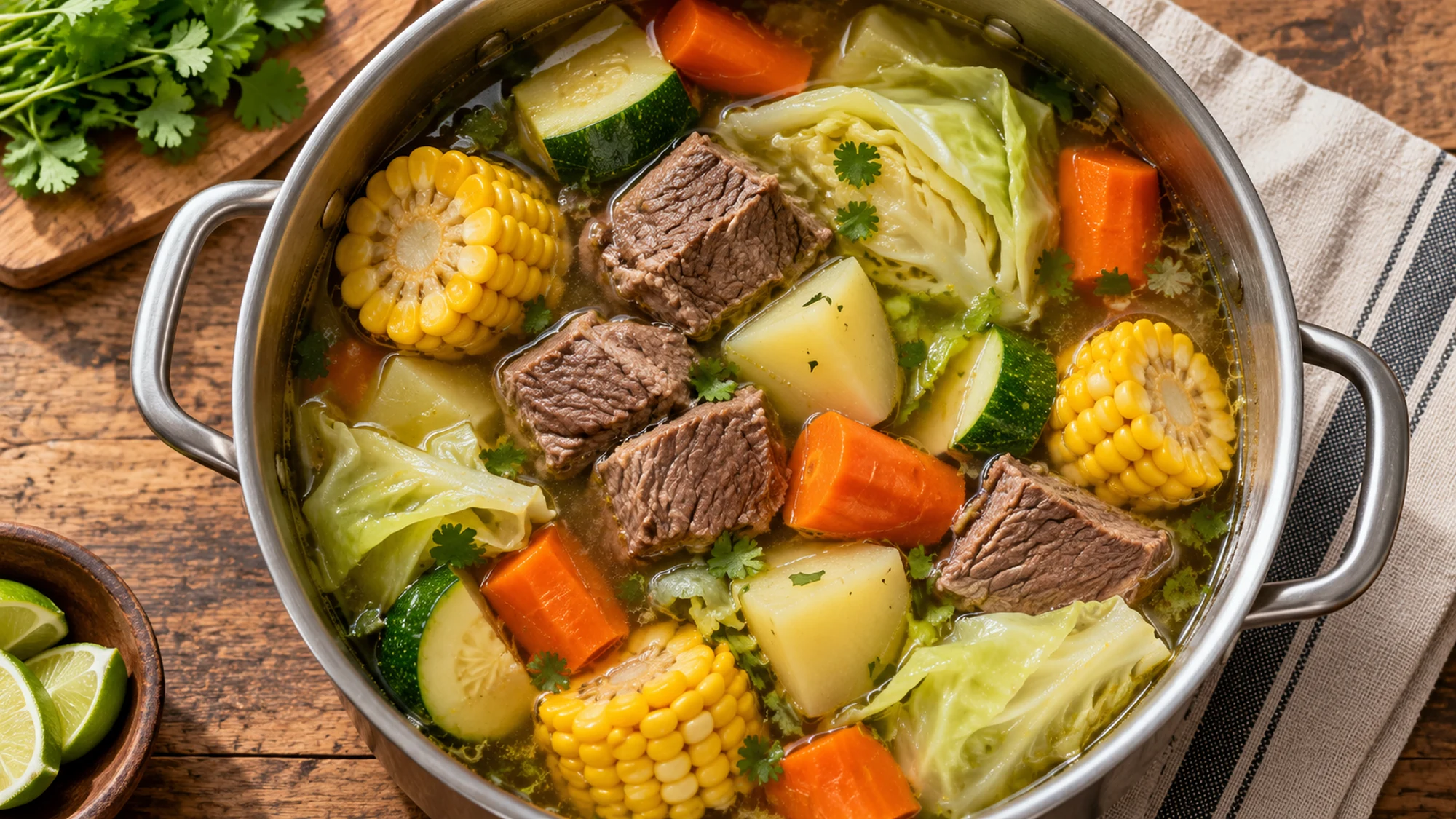
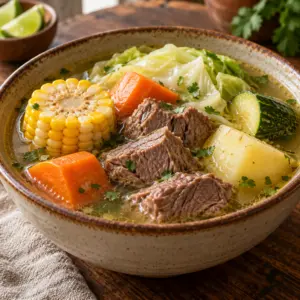
Use a slotted spoon or tongs to divide the beef, corn and vegetables first, then ladle the broth around them. Otherwise the first bowl tends to collect the floating vegetables while the last one becomes a rather serious meat commitment.
The corn rounds are part of the pleasure, but they need a little room. Serve in wide bowls, with a spoon and fork, and let the corn cool enough to handle before eating it off the cob.
- Finish at the table: Offer lime wedges and chopped cilantro separately. A little acidity brightens the broth without changing the flavor of the entire pot.
- Choose one accompaniment: Warm corn tortillas are a natural option; a piece of crisp baguette also works if you want bread for the broth. The potatoes and corn already make the soup substantial.
- Store promptly: Follow Illinois Extension’s leftover guidance: divide the soup into smaller containers and refrigerate within two hours. Use refrigerated portions within three to four days and reheat to 165°F.
I prefer a bowl with a little of everything rather than a mountain of vegetables above the liquid. Keep some broth visible; it ties the beef, sweet corn and tender cabbage together.
Caldo de Res Variations and Vegetable Timing
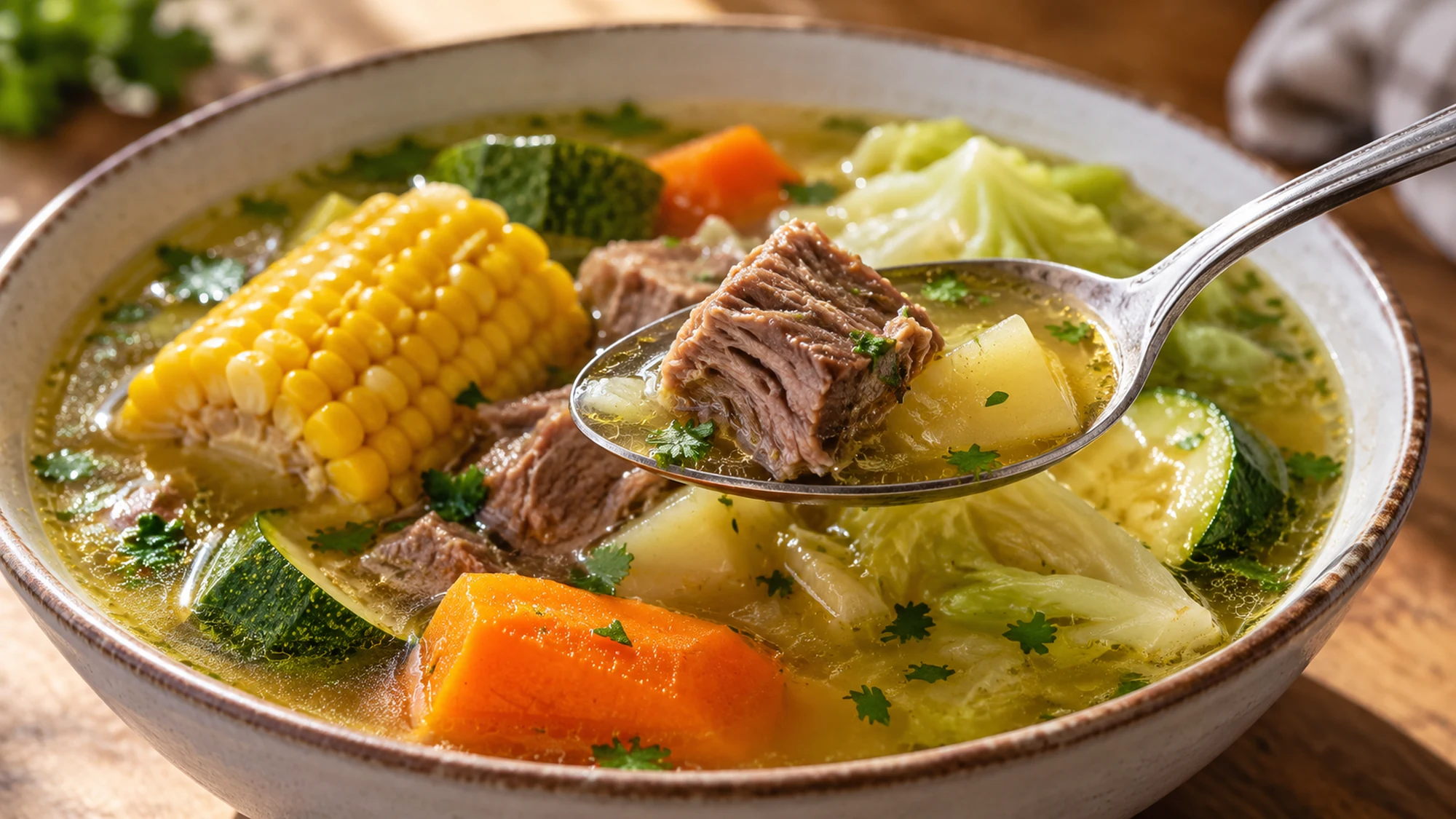
The vegetables can change with what you have, but their cooking times still matter. Keep pieces fairly consistent within each vegetable, and use the table as a guide to when they enter this particular pot, not as a promise that every size cooks identically.
Chuck is a patient-cooking cut. The beef industry’s stewing guide uses fork tenderness as the useful endpoint for beef cooked in liquid. This soup skips the guide’s browning and flour suggestions to preserve its lighter-colored broth.
| Vegetable | When to add | What to watch |
|---|---|---|
| Potato and carrot | After the beef is tender | Pieces should yield to a fork without falling apart. |
| Corn rounds | With potato and carrot | The kernels should become tender and easy to bite. |
| Cabbage | Near the end | Leaves soften while the larger pieces still hold together. |
| Zucchini | Near the end | Stop before the centers collapse into the broth. |
If the beef still resists a fork, keep simmering it on its own. Delaying the vegetables is much easier than rescuing them after an extra hour in the pot.
Health Benefits and the Whole Bowl
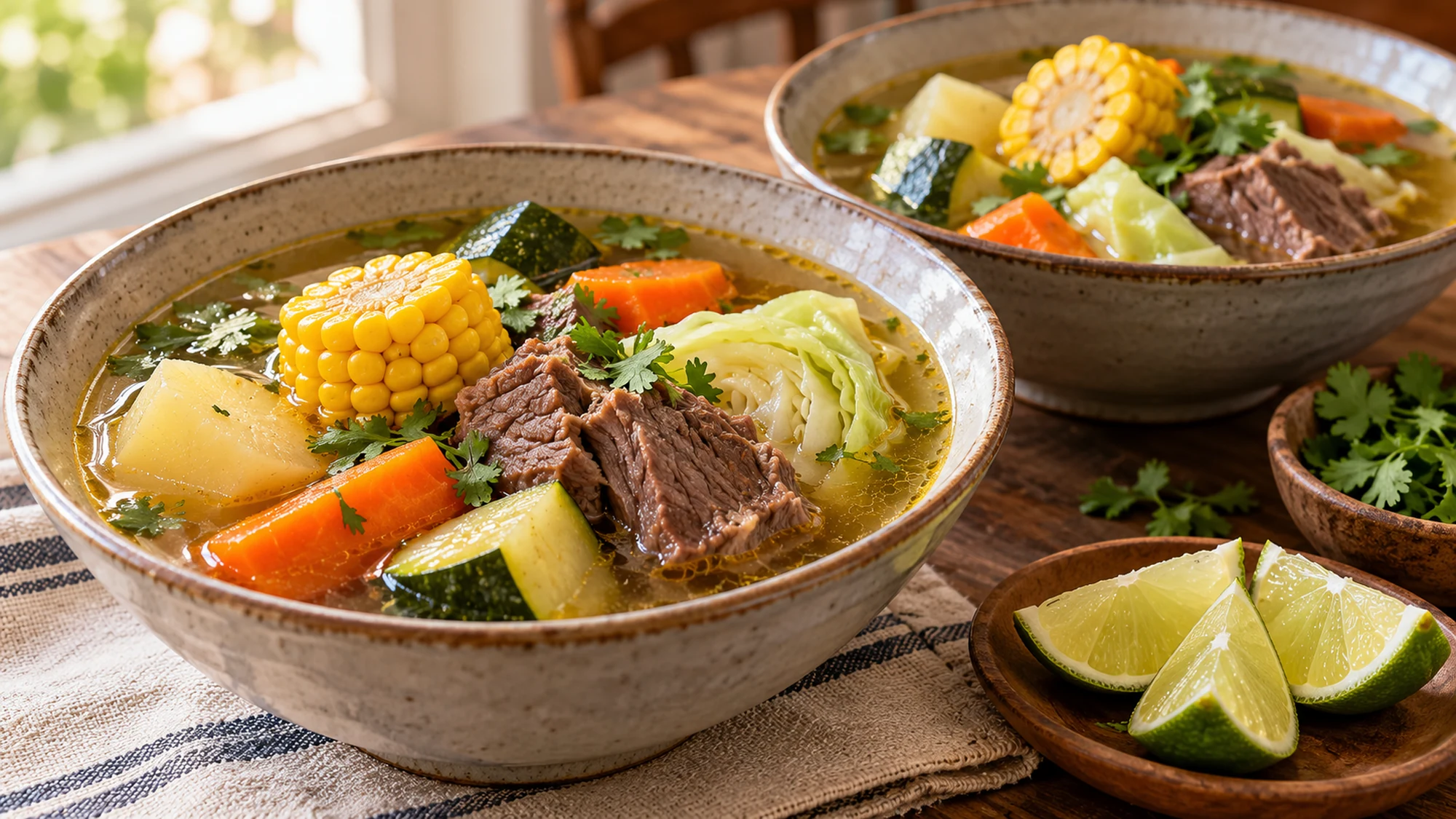
Beef supplies protein and iron, while the vegetables contribute fiber and a range of nutrients. That combination makes a substantial meal, but a clear broth is not automatically low in fat or sodium. The cut of beef, trimming and amount of salt all affect the finished bowl.
The nutrition estimate includes all the listed beef and vegetables, with the soup divided into six generous servings. Skimming fat can lower the amount actually eaten; optional tortillas, bread and garnishes are not included.
- Trim thoughtfully: Remove large, hard pieces of exterior fat before cooking without trying to strip every bit of marbling from the meat.
- Season at the end: As water evaporates, salt becomes more concentrated. Taste only after the beef is cooked and the vegetables are tender.
- Keep the variety: A serving that includes cabbage, carrots and zucchini offers more than a bowl made mostly of meat and potato.
Enjoy caldo de res as a complete, comforting meal rather than assigning special powers to the broth. The useful balance comes from the actual portions of meat, vegetables and accompaniments.
Bottom Line
Give the beef its long, quiet simmer and the vegetables their shorter turns in the pot. That timing is the simplest way to keep caldo de res tender, colorful and brothy instead of turning everything into one soft texture.
Caldo de Res Recipe

Ingredients
- 2 pounds boneless beef chuck roast 907 g, large exterior fat trimmed, cut into 1 1/2-inch chunks
- 10 cups water 2.4 liters, plus hot water as needed
- 1 medium white onion about 150 g, peeled and quartered
- 4 garlic cloves about 12 g, peeled and lightly crushed
- 2 bay leaves
- 1 teaspoon fine salt 6 g; adjust only after cooking if needed
- 1 pound potatoes 454 g, scrubbed and cut into 1 1/2-inch chunks
- 3 medium carrots about 240 g, peeled and cut into thick pieces
- 2 ears of corn husked and cut into 3 rounds each
- 1/4 small green cabbage about 300 g, cut into large wedges
- 2 small zucchini about 300 g, cut into thick half-moons
- 1/4 cup chopped fresh cilantro optional, for serving
- 2 limes optional, cut into wedges for serving
Equipment
- 8-quart heavy stockpot with lid
- Slotted spoon
- Tongs
- Ladle
Instructions
- Put the beef, water, onion, garlic and bay leaves in an 8-quart pot. Bring just to a boil over medium-high heat, then reduce the heat to maintain a gentle simmer. Skim the foam that collects on the surface during the first 15–20 minutes.
- Add the measured salt, partially cover and simmer gently for about 1 1/2–2 hours, until the beef yields easily when pierced with a fork. Check occasionally and add hot water if the meat is no longer covered. If still firm, continue simmering before adding any vegetables.
- Add the potatoes, carrots and corn. Return to a gentle simmer and cook for 15–20 minutes, until the potatoes and carrots are nearly tender.
- Add the cabbage and zucchini, pushing them gently into the broth. Simmer for another 8–12 minutes, until all the vegetables are tender but still hold their shapes. Avoid vigorous stirring or boiling.
- Discard the bay leaves. Skim excess surface fat if desired. Taste the broth and adjust with a little additional salt or hot water only if needed.
- Divide the beef and vegetables among six wide bowls, then ladle over the broth. Offer cilantro and lime separately. Let corn rounds cool enough to handle before eating.