
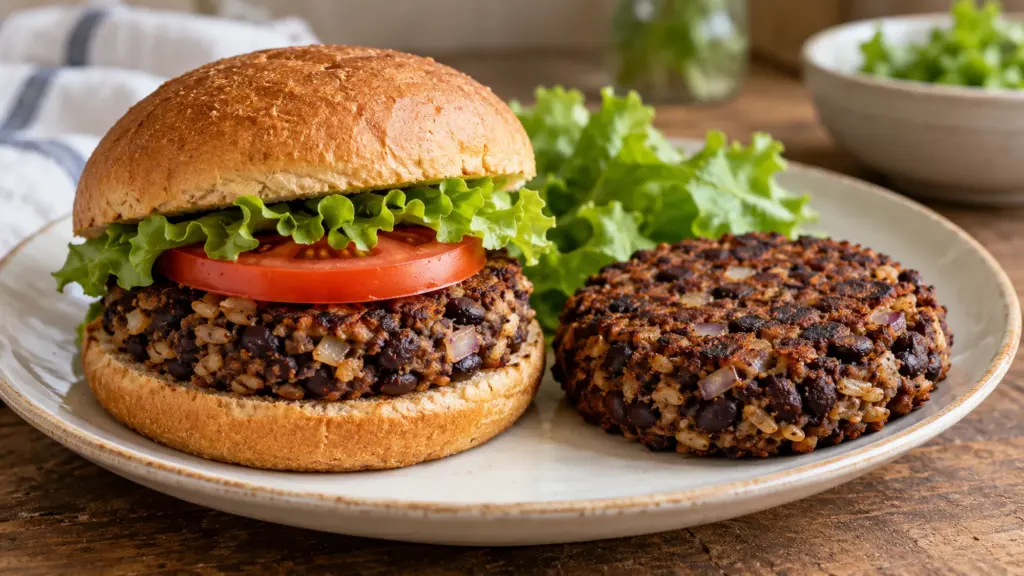
A bean patty should survive the trip from tray to bun, but adding dry ingredients endlessly is not the answer. These black bean burgers start with well-drained beans, then use oats, brown rice and a flax mixture to help hold them together. The result is meant to taste like seasoned beans, with a firm edge and a tender center.

Control moisture before shaping: drain the beans well, cook excess moisture out of the onion and let the mixture rest. Make four evenly sized patties, then turn them carefully after the first side has had time to set.
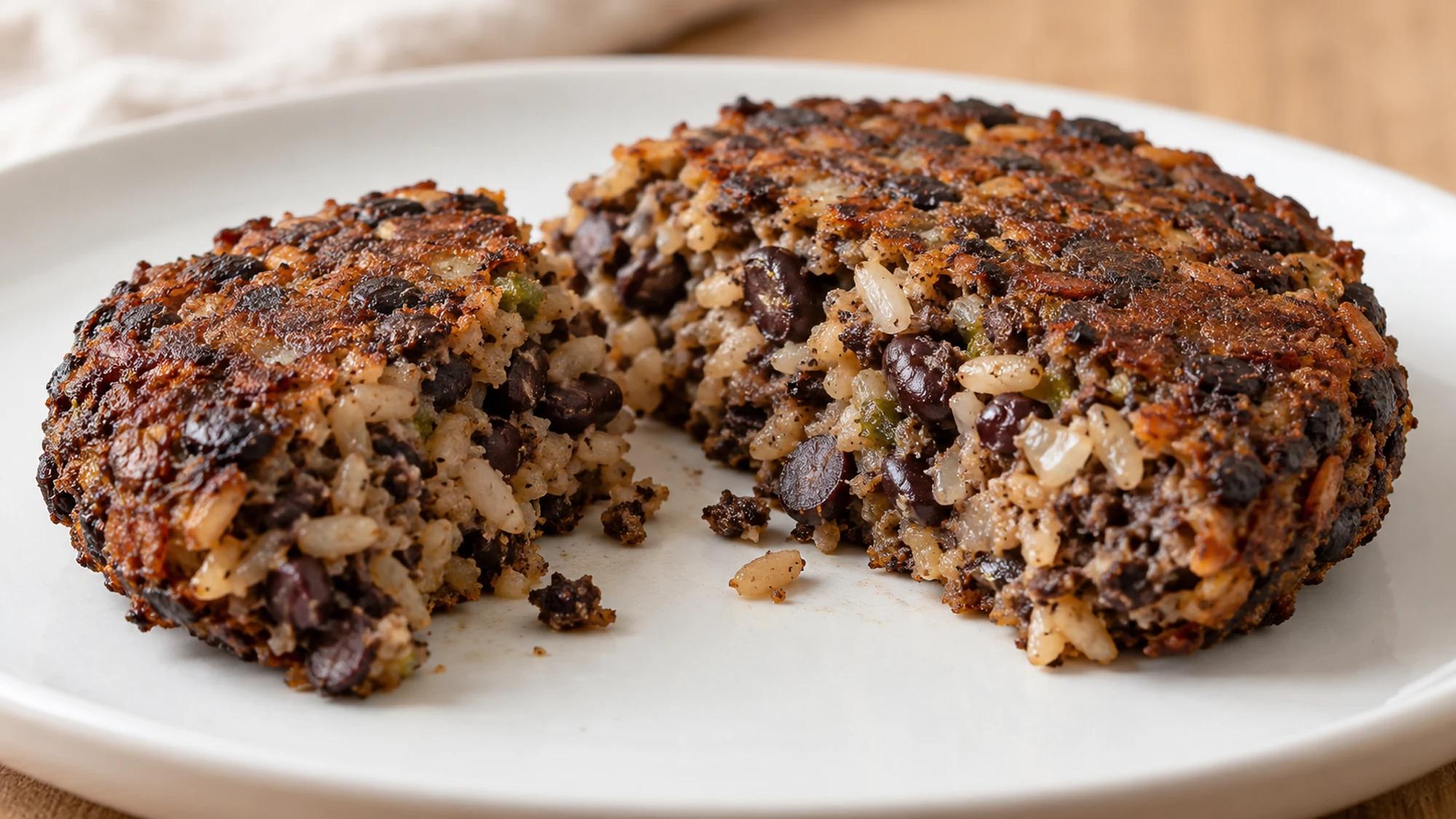
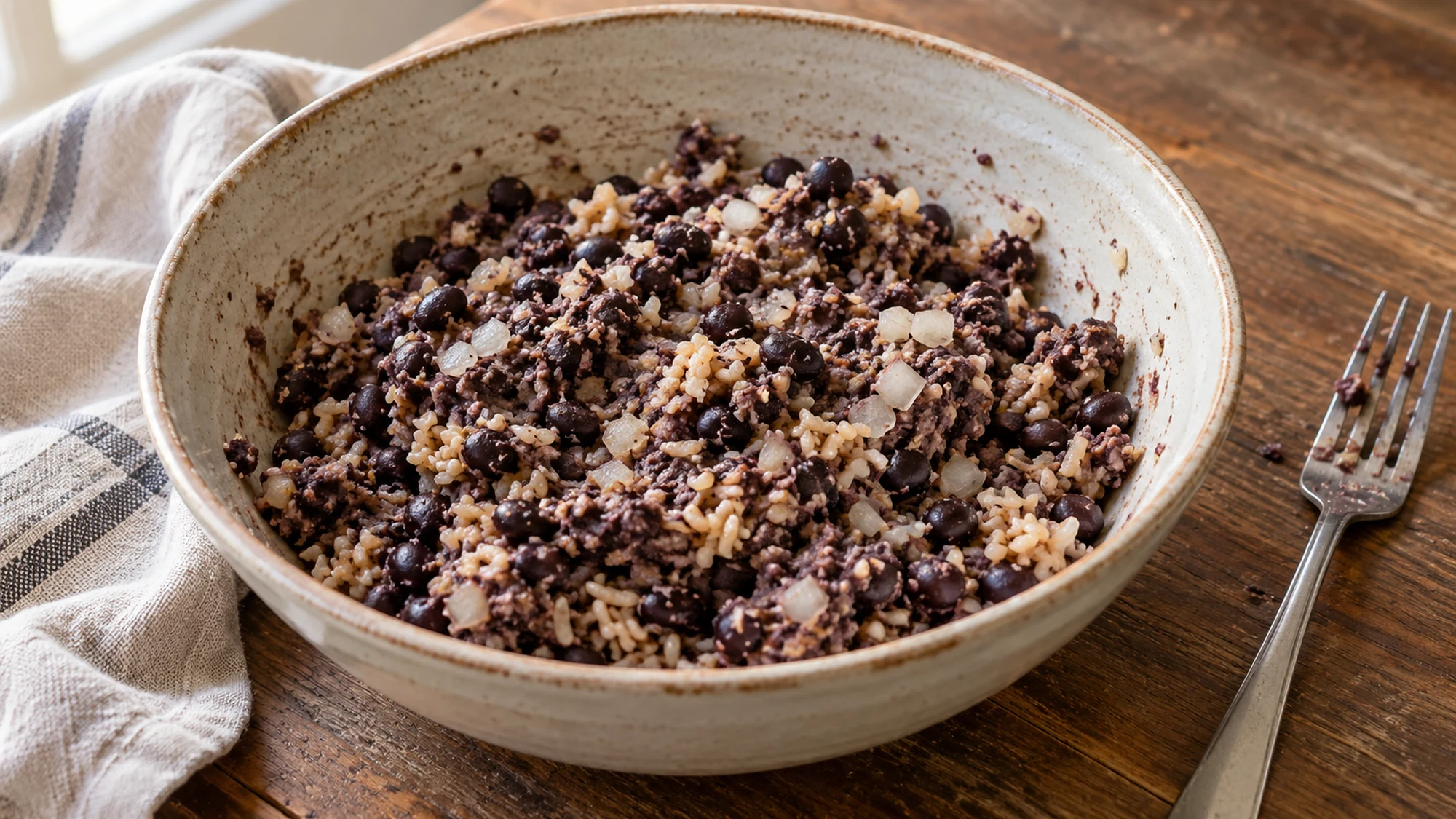
I prefer leaving some bean pieces visible rather than blending everything into a smooth paste. They give each bite a little variation. These are baked bean patties, not a claim to reproduce the texture or flavor of a meat burger.
Serving Black Bean Burgers Without Overloading Them
Choose a bun that does not dwarf the patty, and keep juicy toppings under control. A thick layer of wet salsa can soften a carefully baked surface. Lettuce, tomato and a modest spoonful of sauce provide plenty of contrast without turning the burger into a balancing exercise.
- Keep the assembly simple: Toast the bun lightly and add toppings just before eating. If tomato slices are very juicy, blot them rather than letting liquid run into the bread.
- Skip the bun when you want: Serve a patty beside a grain salad or chopped vegetables. It is still a useful main component without being sandwiched between two halves of bread.
- Add something crisp: Slaw or cucumber gives the soft bean center a welcome companion. Dress the side separately so you can control how much moisture reaches the plate.
Give the patty room to taste like beans and spices. A few well-chosen toppings are easier to eat than a tower that hides the burger.
Variations and a Patty That Holds Together
Cooked rice contributes texture, oats absorb some moisture and ground flax mixed with water helps bind the ingredients. None of those can compensate for beans sitting in a pool of liquid. The University of Maine’s bean-burger recipe uses a different egg-and-breadcrumb binder; keep the two formulas separate.
Troubleshoot the mixture before it reaches the oven.
| Problem | First adjustment | Avoid |
|---|---|---|
| Mixture looks wet | Check draining and allow the rest time | Immediately adding a large amount of oats. |
| Patty cracks at the edge | Compress and smooth the edge gently | Making very thin, fragile patties. |
| Pieces are too large | Mash a little more of the beans | Pureeing the whole bowl. |
| First side sticks | Give it time to set and use a broad spatula | Repeatedly scraping underneath. |
- Use cooked beans: Dry beans must be fully cooked before measuring. Canned beans should be drained and rinsed; their sodium differs from unsalted home-cooked beans.
- Change the seasoning gently: Coriander or a small pinch of chili flakes can join the cumin. Large additions of liquid seasoning also change the mixture’s moisture.
- Respect the resting time: Give the oats and flax a chance to absorb liquid. I would wait before deciding the mixture needs more dry ingredients.
Fix the source of excess moisture instead of burying it under more binder. The goal is a cohesive bean mixture, not a dry ball of oats.
Health Benefits in the Whole Meal
Black beans provide fiber and plant protein, while brown rice and oats contribute grain ingredients. The University of Maine’s bean guide explains their nutrient contribution. That does not make every bun, sauce or serving size nutritionally identical.
- Look beyond the patty: Cheese, mayonnaise and sweet sauces change the finished burger’s nutrition. The recipe estimate describes one plain patty, not an assembled restaurant-style meal.
- Check labels for dietary needs: The patty has no egg or dairy ingredients, but buns and sauces may. For gluten-free needs, check the oats and every packaged ingredient rather than assuming suitability.
- Handle cooked rice properly: Use freshly cooked and cooled rice or promptly refrigerated rice. Do not use rice that has sat out for hours simply because it will be baked again.
- Store in shallow containers: Refrigerate cooked patties promptly and use within three to four days. Reheat thoroughly to 165°F (74°C).
A bean burger can bring satisfying fiber and protein to dinner without needing a health halo. Judge the assembled meal as well as the patty.
Bottom Line
Black bean burgers work best when moisture, texture and handling are considered together. Make the mixture cohesive, shape even patties and let the first side set before turning. Cool extra patties in a single layer before storing them with parchment between layers, so they do not glue themselves together.
Keep some beans chunky, give the binder time to work and use a broad spatula. Those small choices do more for a sturdy burger than packing it with extra flour.
Black Bean Burgers Recipe


Ingredients
- 2 cups cooked black beans 340 g, well drained; unsalted for the nutrition estimate
- 1/2 cup cooked brown rice 100 g, cooled
- 1/2 cup old-fashioned rolled oats 40 g
- 1/2 medium onion 80 g, finely diced
- 1 tablespoon olive oil 15 ml
- 2 garlic cloves 6 g, minced
- 1 teaspoon ground cumin 2 g
- 1 teaspoon smoked paprika 2 g
- 1/4 teaspoon fine salt 1.5 g
- 1 tablespoon ground flaxseed 7 g
- 3 tablespoons water 45 ml
Equipment
- Baking sheet
- Parchment paper
- Skillet
- Mixing bowl and potato masher
- Broad spatula
Instructions
- Heat the oven to 400°F (200°C). Line a baking sheet with parchment. Mix ground flaxseed with the water and set aside for 10 minutes.
- Drain the beans thoroughly and blot away surface moisture. Heat the olive oil in a skillet over medium heat. Cook the onion for 5–7 minutes until softened and no longer wet-looking, then add garlic, cumin and paprika for 30 seconds. Let cool slightly.
- Mash about two-thirds of the beans in a bowl, leaving the rest partly chunky. Stir in the rice, oats, onion mixture, salt and thickened flax mixture. Rest for 15 minutes so the oats can absorb moisture.
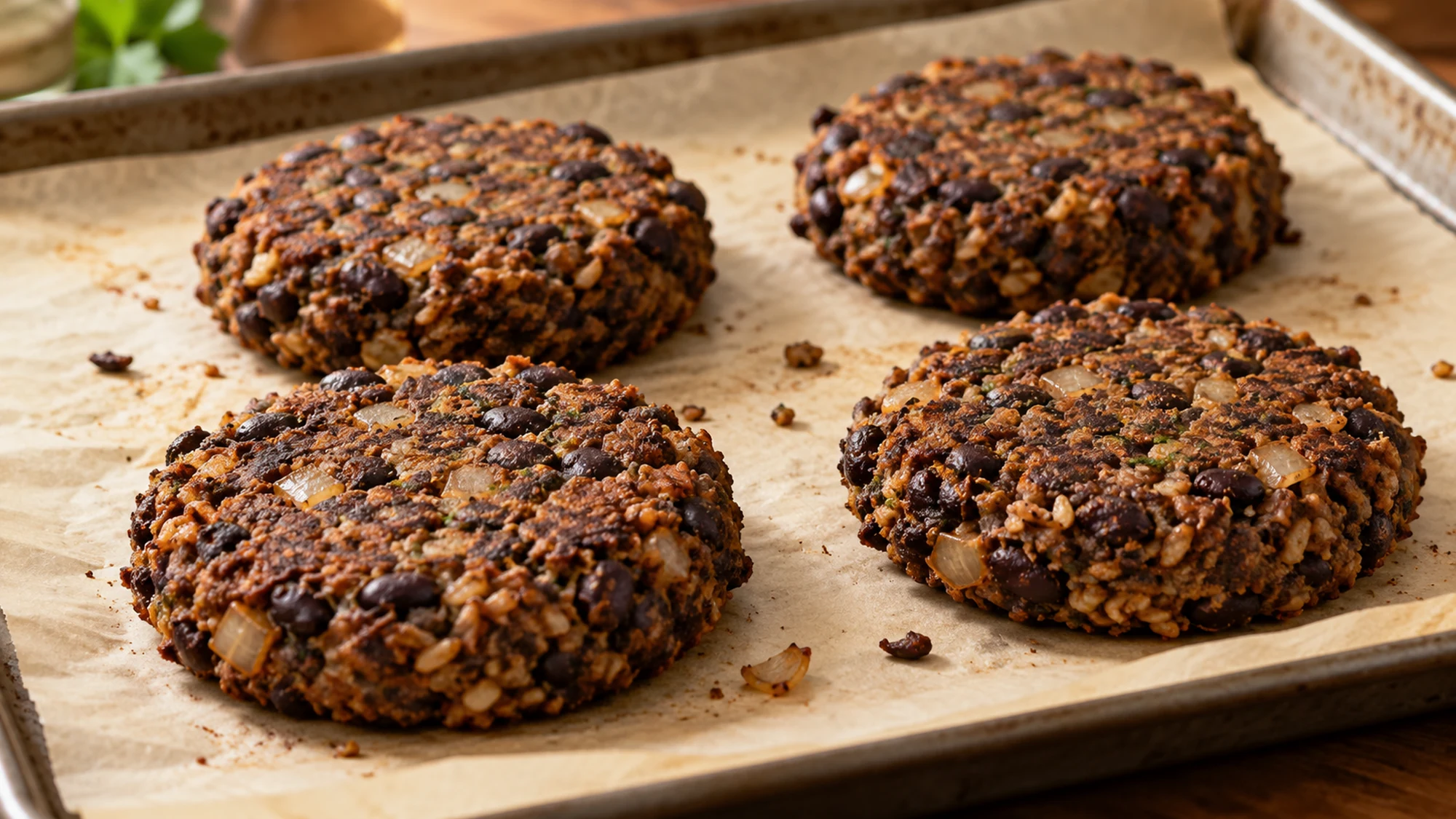
- Divide into four equal portions and form patties about 3 1/2 inches wide and 3/4 inch thick, smoothing the edges. If the mixture is loose, mash a little more of it and rest briefly before shaping; do not add large amounts of dry ingredients.
- Bake for 15 minutes, then carefully flip with a broad spatula. Bake for another 10–15 minutes until the edges are firm and the patties are hot through. Rest on the tray for 5 minutes before lifting. Serve plain or in buns with optional toppings.