
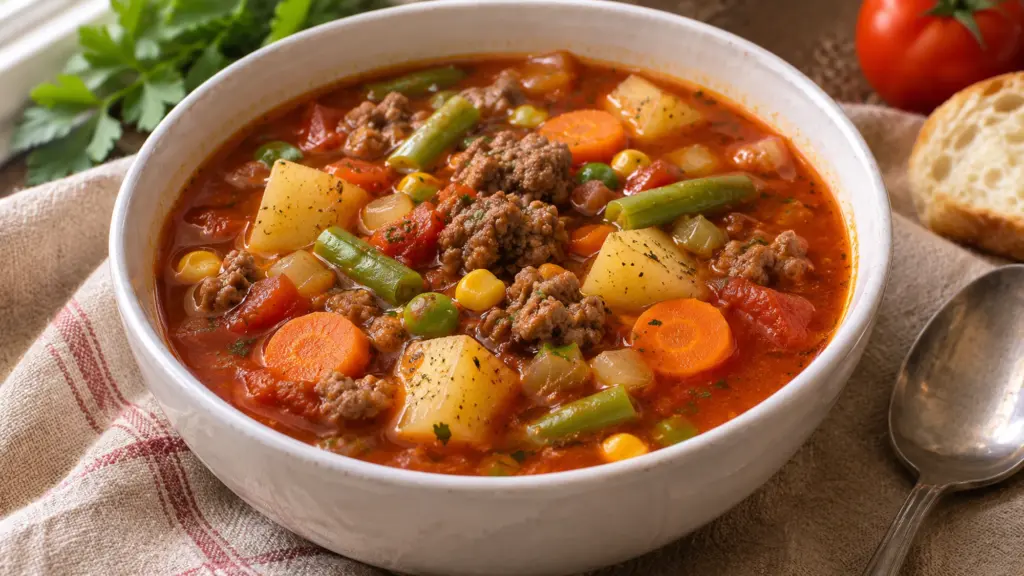
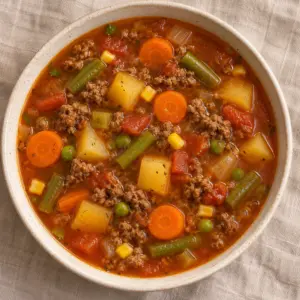
A potato cube that is still firm can hold up an otherwise inviting pot of soup. With hamburger vegetable soup, the answer is to give the potatoes and carrots a head start, then add the frozen vegetables near the end. You get a savory tomato broth, small beef crumbles and vegetables that still feel like themselves.

Brown the beef first, cut the potatoes evenly and simmer until they are genuinely tender before adding the quick-cooking vegetables. This keeps the soup brothy and the final spoonful varied, rather than turning everything soft at once.
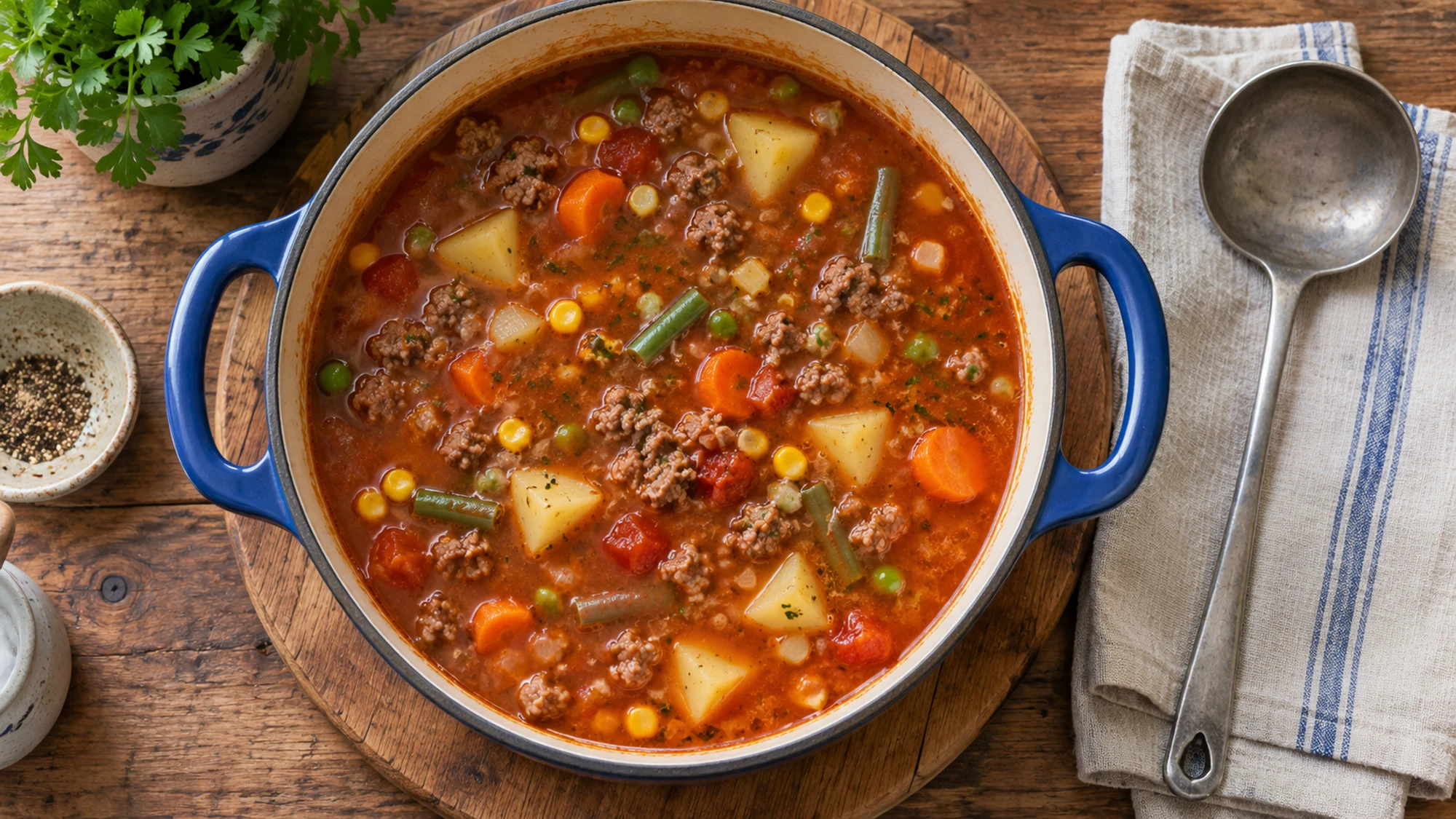
I would choose Yukon Gold potatoes here because their texture suits a soup you want to ladle, not blend. The tomato paste deepens the base without making it heavy, while a modest amount of thyme keeps the seasoning familiar. This is a ground-beef soup, not a cheeseburger soup: there is no cheese sauce, cream or bun to work around.
Serving Suggestions for Hamburger Vegetable Soup
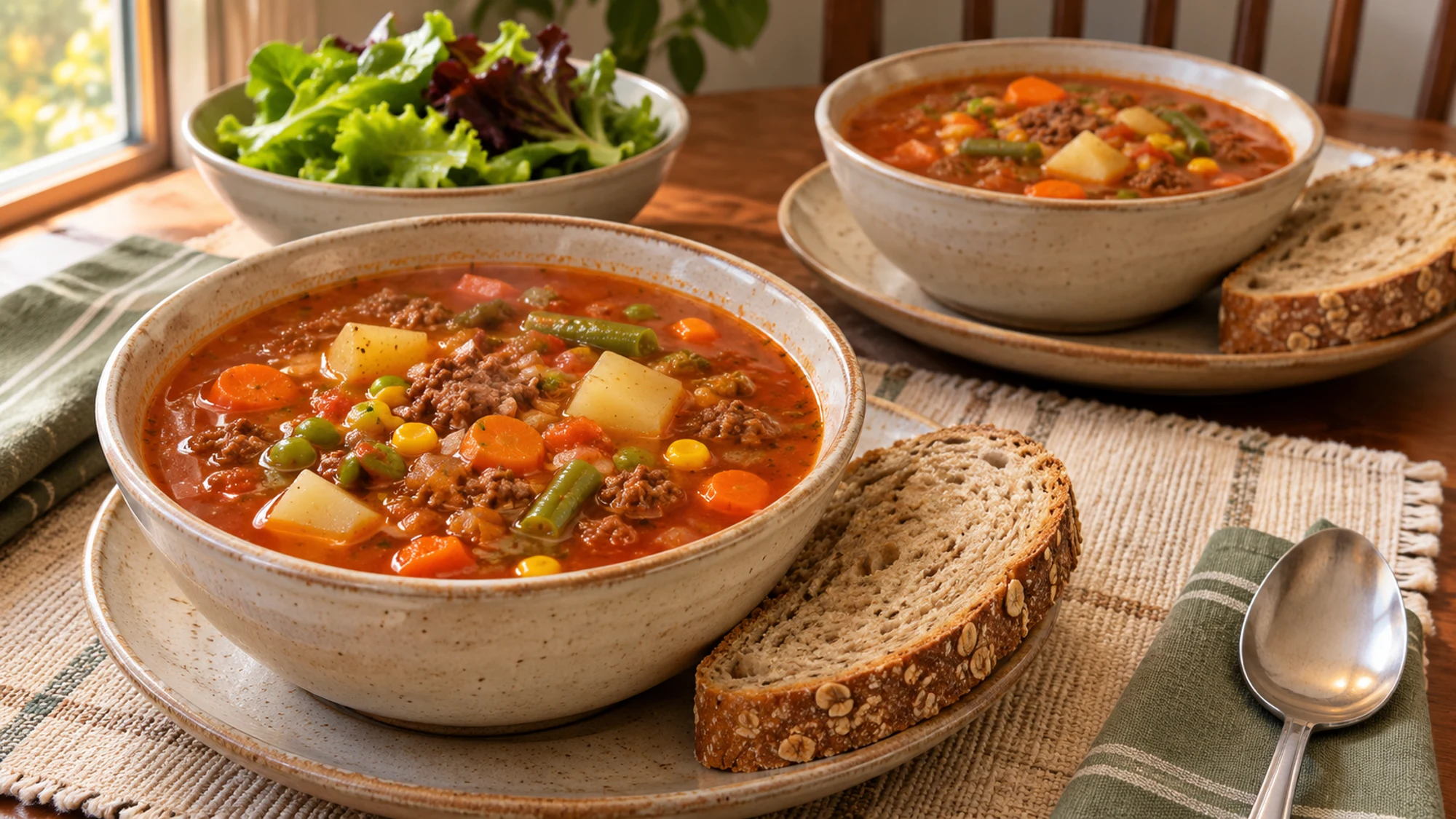
Serve the soup hot in bowls wide enough to catch a little of everything. Stir gently before ladling so the beef and vegetables do not all stay at the bottom. A slice of toast is useful for the last spoonful of broth; a simple leafy salad brings a cool, crisp contrast.
- For a straightforward dinner, pair a bowl with whole-grain bread and leave the toppings optional.
- For smaller appetites, start with a smaller portion and offer more rather than guessing how much everyone wants.
- For a different soup night, try the smooth carrot red lentil soup; its blended texture is deliberately different from this chunky pot.
If dinner will happen in shifts, keep the bread separate so it stays crisp. Do not leave the soup cooling on the stove all evening. Divide leftovers into shallow containers promptly; the large pot is convenient for cooking, but smaller containers are the practical choice for cooling.
Keep the accompaniments simple. The potatoes already give the bowl substance, so bread, a crisp salad or both can be a choice rather than an obligation.
Variations That Keep the Vegetables Distinct
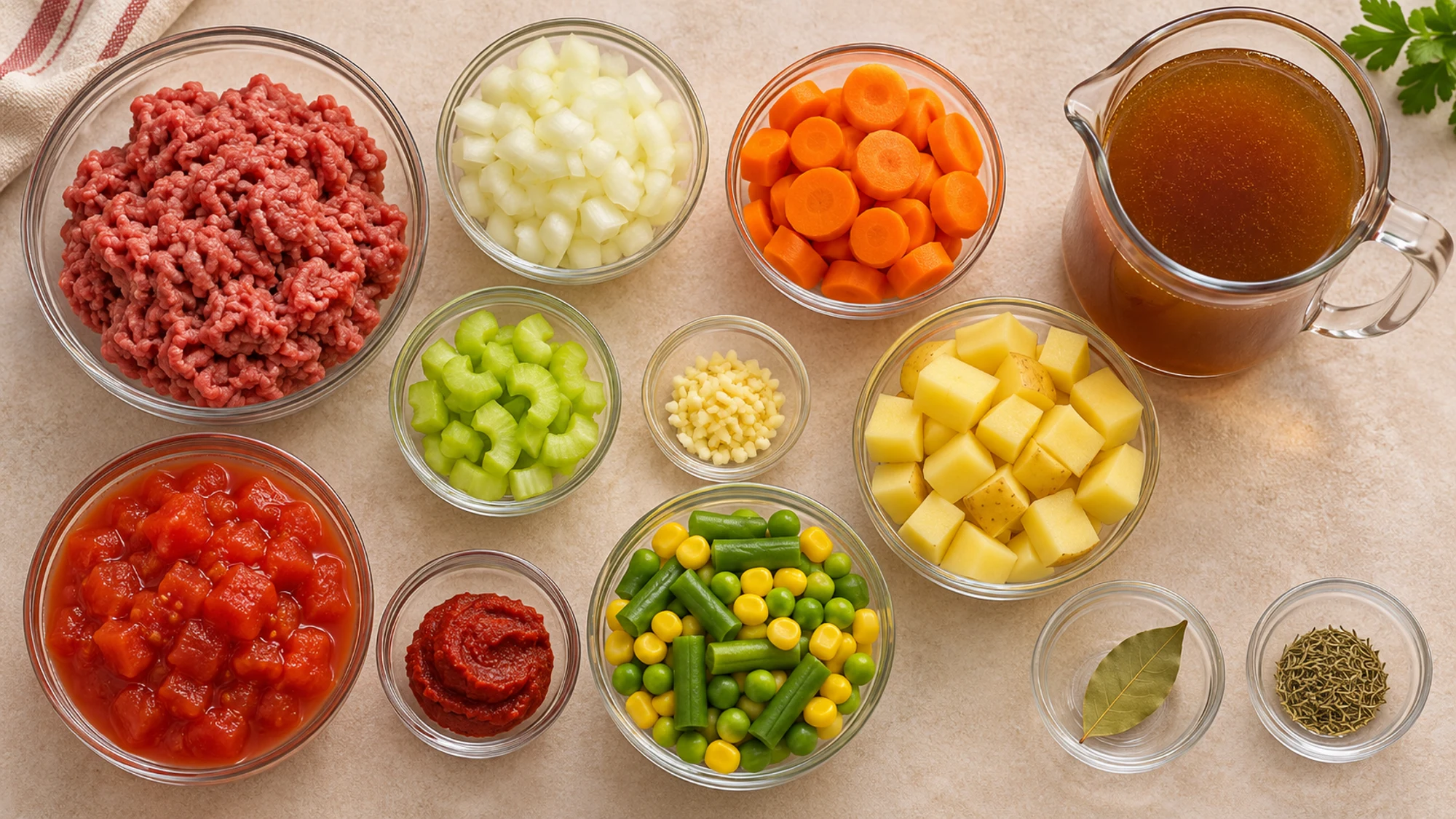
The most useful substitutions preserve the job of each ingredient. Potatoes supply tender chunks, frozen vegetables add variety, and the tomato-broth base carries the savory flavor. I would change one main component at a time so it is easier to judge the liquid level and seasoning.
| Change | What to expect | Useful adjustment |
|---|---|---|
| Russet potatoes | Softer edges and more breakdown | Stir gently and check early |
| Fresh green beans | A firmer starting texture | Add with the potatoes |
| Frozen corn and peas | Quick heating near the end | Wait until potatoes are tender |
| Unsalted broth | More control over seasoning | Taste the finished soup before salting |
Avoid tipping in dry pasta as a casual extra: it absorbs liquid and changes the balance of the whole pot. If you want noodles alongside, cook them separately and add a little to individual bowls. Likewise, extra frozen vegetables can cool the soup quickly, so let it return to a gentle simmer before judging doneness.
Use the potato as your timing guide, not the color of the broth. A fork should pass through a cube easily before the last vegetables go in.
Health Benefits and Practical Trade-Offs
This is a mixed meal rather than a single-ingredient health claim. Beef contributes protein, while the vegetables broaden the meal beyond meat and potatoes. Choosing lean beef and draining excess fat changes the finished soup, but the portion and everything served alongside still matter.
- Use no-salt-added tomatoes and compare broth labels if you want more control over salt.
- Choose a plain frozen vegetable blend rather than one with a prepared sauce.
- Check packaged broth for allergens; a homemade recipe is not automatically suitable for every dietary need.
The useful advantage of cooking soup at home is control over the ingredients. Alberta Health Services makes that same point in its soup guidance. Its nutrient figures belong to its own recipe, not this version, so they should not be treated as interchangeable.
A varied bowl can be satisfying without a dramatic nutrition promise. Let the vegetables, broth choice and portion do the practical work.
Bottom Line
Brown ground beef to 160°F (71°C), then let tenderness guide the simmer. Refrigerate leftovers promptly and use them within 3–4 days; reheat to 165°F (74°C). Add a little water or broth if the potatoes have absorbed more liquid overnight.
The small timing distinction makes this hamburger vegetable soup worth paying attention to: tender potatoes first, quick vegetables last. Keep enough broth in the pot for a spoonful that is hearty without becoming a stew.
Hamburger Vegetable Soup Recipe

Ingredients
- 1 pound 90% lean ground beef
- 1 medium yellow onion diced
- 2 medium carrots sliced into thin rounds
- 2 celery stalks diced
- 2 garlic cloves minced
- 2 tablespoons tomato paste
- 1 pound Yukon Gold potatoes cut into 1/2-inch cubes
- 1 28-ounce can no-salt-added diced tomatoes with their juice
- 4 cups low-sodium beef broth
- 1 teaspoon dried thyme
- 1 bay leaf
- 2 cups frozen mixed green beans, corn and peas no sauce
- 0.25 teaspoon ground black pepper
- 0.25 teaspoon fine salt optional, after tasting
Equipment
- Heavy 6-quart pot
- Wooden spoon
- Knife and cutting board
- Measuring cups and spoons
- Instant-read thermometer
Instructions
- Place a heavy 6-quart pot over medium-high heat. Add the ground beef and break it into small crumbles. Cook for about 6–8 minutes, stirring occasionally, until browned and cooked to 160°F (71°C). Drain excess fat, leaving a thin coating in the pot.
- Reduce the heat to medium. Add the onion, carrots and celery; cook for about 5 minutes, stirring, until the onion begins to soften. Stir in the garlic and tomato paste for 1 minute, without letting the garlic burn.
- Add the potatoes, diced tomatoes and their juice, broth, thyme, bay leaf and pepper. Scrape up the browned bits. Bring to a boil, then reduce to a gentle simmer and partially cover.
- Simmer for 15–20 minutes, stirring occasionally, until a fork slides through a potato cube without resistance. Add a splash of water if the liquid reduces too much.
- Stir in the frozen vegetables and simmer for 5–7 minutes, or until hot and tender. Remove the bay leaf. Taste before adding the optional salt. Divide into six servings and serve hot.