
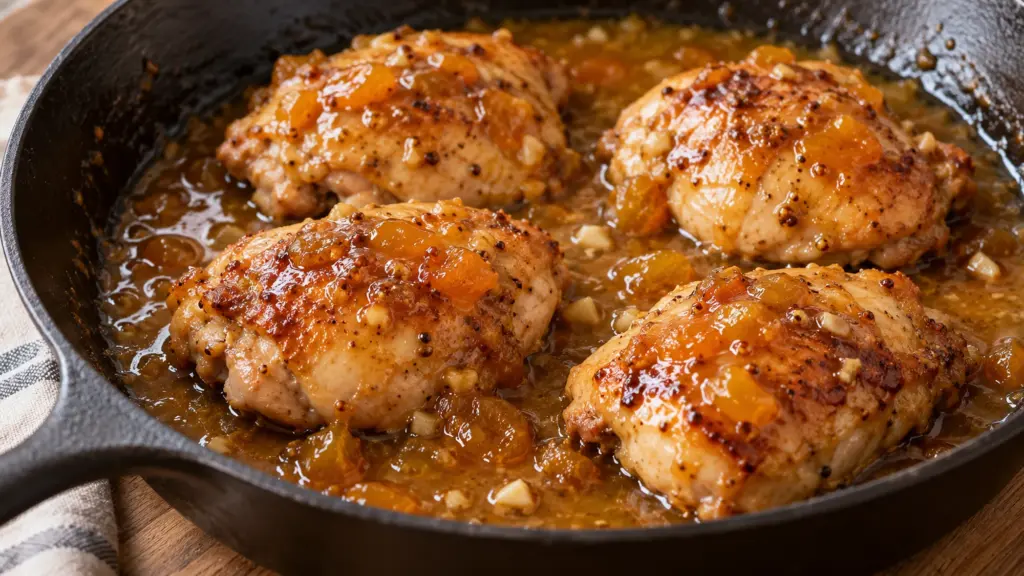
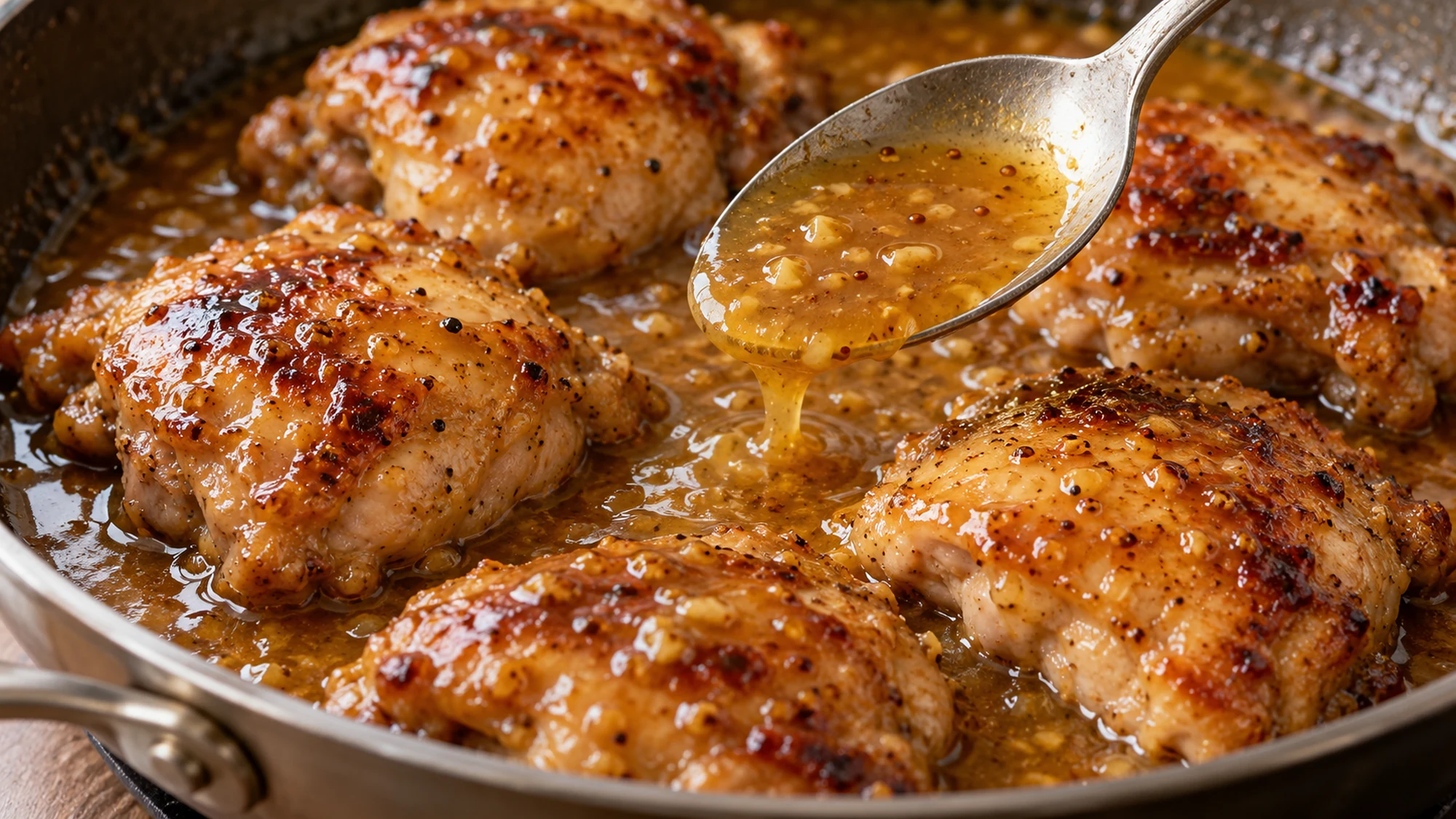
A spoonful of apricot preserves can make a savory sauce taste round and fruity, but it needs something sharp beside it. This apricot chicken recipe pairs preserves with Dijon mustard and vinegar, then coats browned boneless thighs in the glaze. The fruit stays noticeable without being the only flavor in the pan.
Brown the chicken first and add the sweet sauce afterward. Keep the heat gentle once the glaze goes in, and check the thickest part of each thigh reaches 165°F (74°C) before serving.
I’d choose boneless thighs for this skillet version because their shape is easy to turn and coat. They do not all cook at the same speed, though. The thinner pieces may be ready before the largest one, so a thermometer is more useful than insisting that every piece follow the same minute hand.
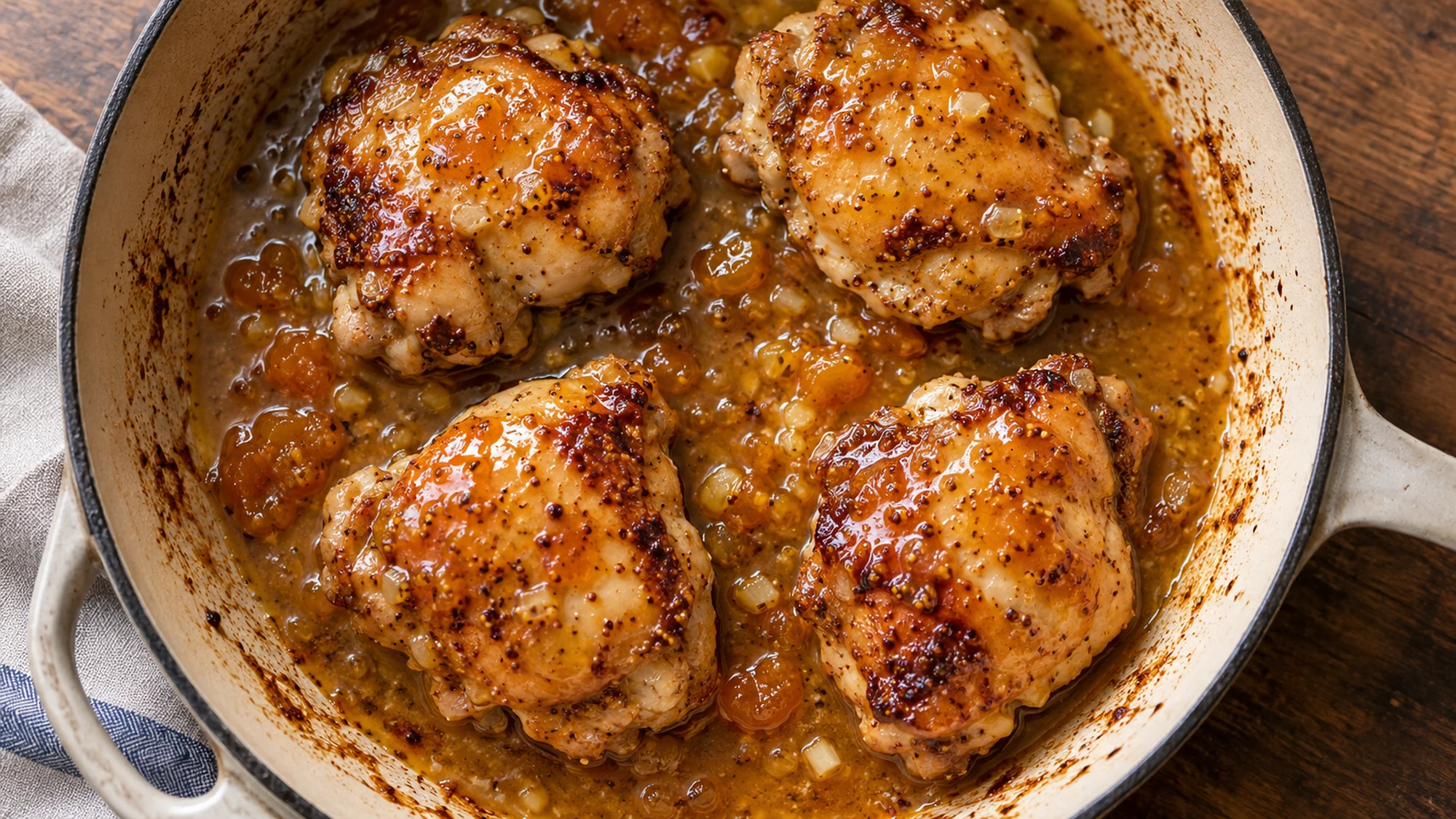
Serving This Apricot Chicken Recipe
The glaze is concentrated enough that you do not need to flood the plate with it. Spoon some over the chicken and let a plain side catch the rest. A green vegetable or something lightly dressed gives the sweetness a little breathing room.
- Rice or another grain: Serve the chicken with plain rice, couscous or a cooked whole grain. Keep the grain’s seasoning simple so the sauce remains distinct.
- A potato side: Choose a baked potato or gently mashed potatoes. I prefer a plain potato here to another sweet-glazed vegetable competing for attention.
- Green vegetables: Steamed broccoli, green beans or sautéed greens bring a different texture. Cook them separately so you can control their finish.
- A crisp salad: A lightly dressed cucumber or leafy salad offers a cool contrast. Avoid adding another very sweet dressing unless that is the balance you want.
Build the plate around one sweet-tangy element: the chicken glaze. Plain sides are useful partners, not an afterthought.
Variations and Sauce Troubleshooting
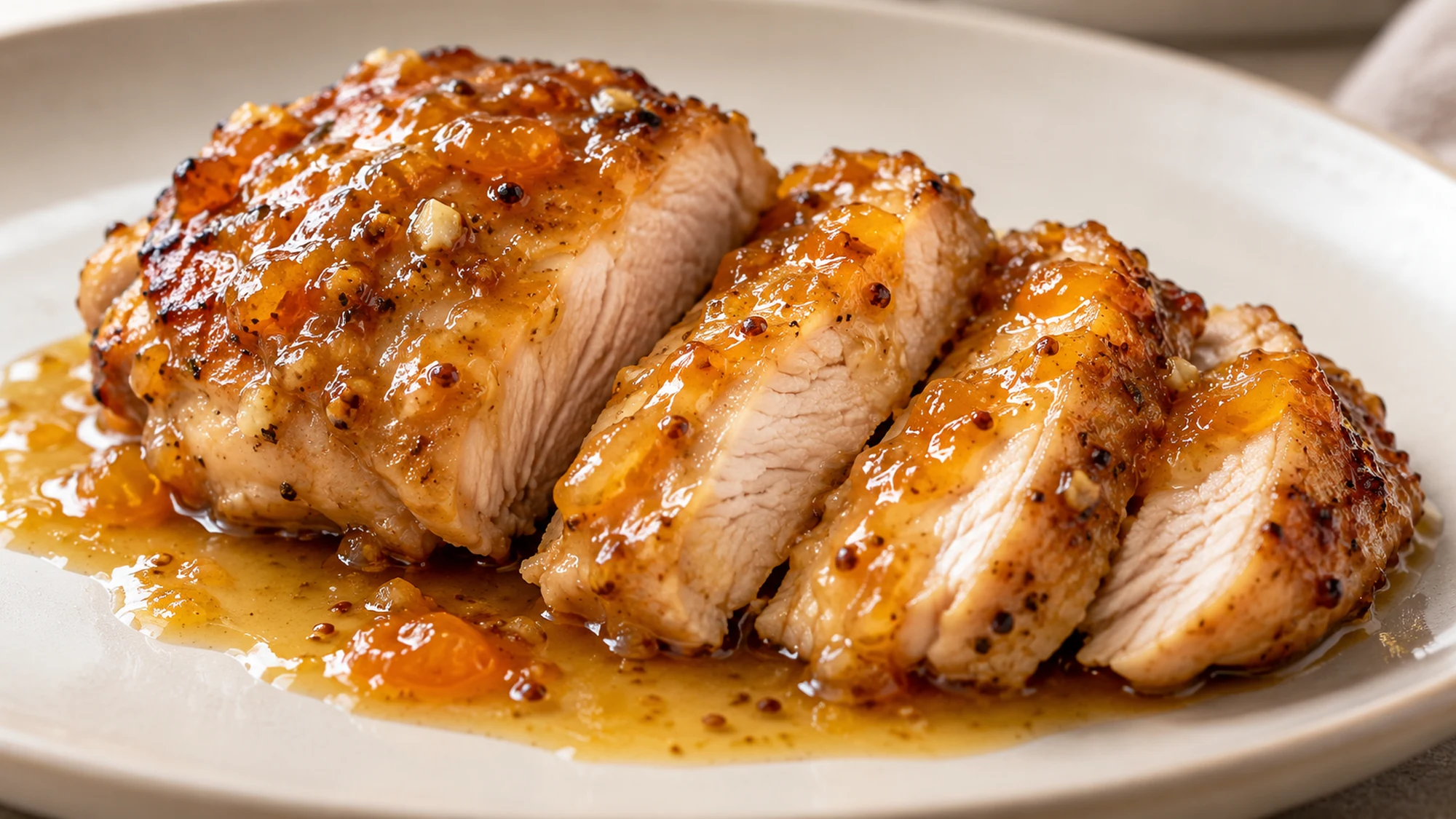
Apricot preserves vary in sweetness, fruit pieces and thickness. Start with the recipe’s balance, then taste the cooked sauce only after it is safe to do so. More preserves will make it sweeter as well as thicker; a little water is often the better answer when the pan looks sticky.
Match the adjustment to the problem in the pan.
| What you notice | Useful adjustment | What to avoid |
|---|---|---|
| Sauce thickens too quickly | Lower the heat and add a small splash of water | Turning up the heat to finish the chicken faster. |
| Sauce is too thin after chicken cooks | Remove cooked chicken and simmer briefly | Overcooking the chicken while waiting. |
| Sauce tastes overly sweet | Add a little vinegar, then taste again | Adding several strong seasonings at once. |
| Chicken pieces vary in size | Check each thickest part with a thermometer | Judging doneness only by the browned surface. |
- Prefer chicken breast?: Use evenly sized pieces and monitor them closely. They can dry out more readily, and their timing will differ from the thighs.
- Want a little heat?: A small pinch of red pepper flakes can sit behind the fruit. Add cautiously so the apricot flavor is still easy to recognize.
- Keep garlic out of scorching heat: Briefly cook it after browning the chicken, then add liquid promptly. Bitter garlic cannot be repaired with more jam.
Adjust the heat before adjusting everything in the sauce. A gentle simmer gives you more control than a hard boil over a sugary glaze.
Health Benefits and Safe Cooking
Chicken contributes protein, while the glaze adds sugar and sodium in amounts that depend on your preserves and mustard. Apricot preserves are an ingredient for flavor, not the same as serving a portion of fresh fruit. A balanced meal is more useful to aim for than a blanket healthy label.
- Use temperature, not color: The safe minimum for poultry is 165°F (74°C). Check the thickest part without touching the pan.
- Keep raw chicken separate: Use separate utensils or wash them before handling cooked food. Do not rinse raw chicken, which can spread splashes around the sink.
- Check the condiment labels: Dijon contains mustard, and ingredient lists differ by brand. Use the actual labels for allergy needs and sodium comparisons.
- Store the meal promptly: Divide leftovers into shallow containers and refrigerate within two hours, or one hour above 90°F (32°C). Use within three to four days.
Keep nutrition claims proportionate and food-safety checks specific. A glossy sauce tells you about texture; a thermometer tells you whether the chicken is ready.
Bottom Line
This apricot chicken recipe works best when the fruit, mustard and acidity share the spotlight. Follow FoodSafety.gov’s leftover guidance for prompt cooling and reheating to 165°F (74°C). Add a splash of water during reheating if the glaze has thickened in the refrigerator.
Brown first, glaze gently and check each thigh. Then serve with a simple side that can make the most of the sauce without competing with it.
Apricot Chicken Recipe

Ingredients
- 1 1/2 lb boneless skinless chicken thighs 680 g, trimmed
- 1/2 teaspoon fine salt 3 g
- 1/4 teaspoon black pepper
- 1 tablespoon olive oil 15 ml
- 1/2 cup apricot preserves 160 g
- 2 tablespoons Dijon mustard 30 g; smooth or whole-grain Dijon
- 1 tablespoon apple cider vinegar 15 ml
- 1/4 cup water 60 ml, plus small splashes as needed
- 2 garlic cloves 6 g, minced
Equipment
- 12-inch skillet with lid
- Instant-read thermometer
- Tongs
- Small mixing bowl
Instructions
- Pat the chicken dry with paper towels and season both sides with salt and pepper. Whisk the preserves, Dijon, vinegar and water in a bowl. Keep this sauce away from raw chicken until it goes into the skillet.
- Heat the oil in a 12-inch skillet over medium-high heat. Brown the thighs in a single layer for about 4–5 minutes per side; work in batches if crowded. Transfer to a plate; the chicken is not yet fully cooked.
- Reduce the heat to medium-low. Add the garlic and stir for about 30 seconds, then promptly pour in the apricot mixture. Stir to loosen the browned bits, avoiding any scorched residue.
- Return the chicken and its juices to the skillet. Bring to a gentle simmer, cover and cook for about 8–12 minutes, turning once, until every thigh reaches at least 165°F (74°C) in its thickest part. Add a splash of water if the sauce catches or thickens before the chicken is done; larger pieces may take longer.
- Transfer cooked chicken to a clean plate. If the sauce is thin, simmer uncovered for 1–3 minutes until it coats a spoon. If too thick, loosen with water. Return the chicken briefly to coat and serve, dividing the chicken and sauce into four portions.