

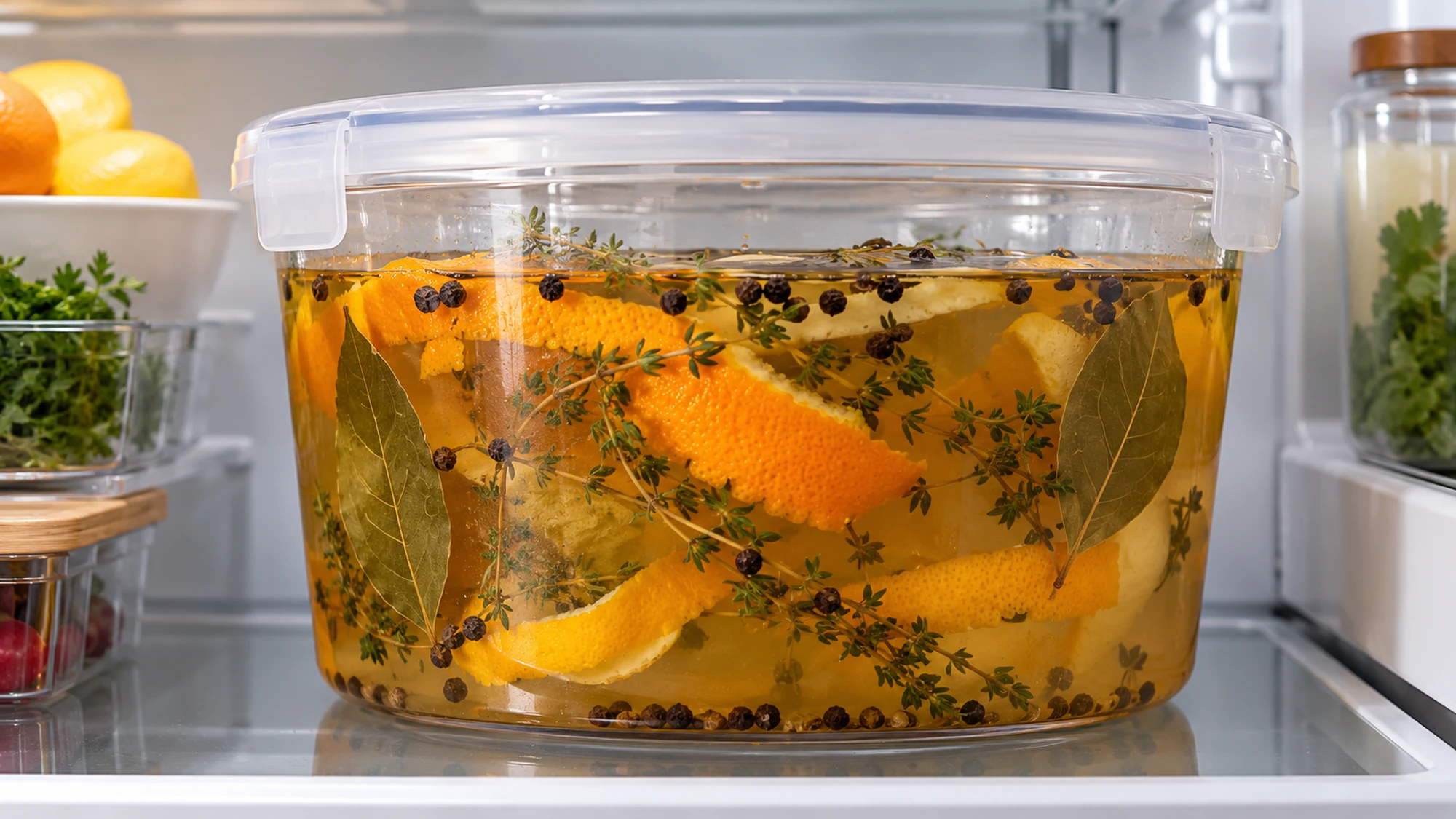
Before a turkey goes into brine, the most important question is surprisingly practical: will the covered container fit in the refrigerator? A salt bath cannot compensate for a bird left somewhere too warm. Clear that space first, then check the turkey label before measuring anything.

This brine for turkey uses 50 grams of salt per liter of water, with brown sugar and restrained aromatics. Chill the solution to 40°F or below before adding a fully thawed, unenhanced turkey, then keep it refrigerated for an eight- to twelve-hour soak.
I’d weigh the salt rather than convert it to cups. Different crystal sizes occupy different amounts of space, so a familiar scoop can deliver an unfamiliar result. Orange peel, thyme and peppercorns add a gentle aromatic direction, but the measured salt and cold storage do the important work.
Serving Suggestions After Using Brine for Turkey
This is a preparation recipe, not a roasting schedule, and the brine itself is never served. After the soak, drain and pat the turkey dry without rinsing it, then follow a suitable roasting method. Season the outside cautiously because the bird has already spent the night in saltwater.
At the table, keep the rest of the meal from becoming a competition in saltiness. Plain roasted vegetables, lightly seasoned potatoes and a tart cranberry accompaniment give the turkey room to taste like turkey.
- Gravy: Taste the cooked pan juices before using them. Brined drippings can be too salty to form the whole gravy base; unsalted stock gives you more control.
- Skin: Thorough drying helps surface moisture stop working against browning. Do not add a wet glaze early simply because the bird was brined.
- Carving: Use a thermometer, not the color of the skin, to judge doneness. The finished turkey must reach 165°F in the breast and innermost thigh and wing.
- Leftovers: Portion cooked turkey into shallow containers and refrigerate within two hours. Use refrigerated leftovers within three to four days, following CDC turkey-handling guidance.
My preference is a simple plate and gravy served separately. A well-seasoned bird needs useful accompaniments, not another layer of salt in every direction.
Brine for Turkey Variations That Keep the Ratio Clear
Change the aromatics before changing the concentration. A few herb sprigs can suggest a different flavor profile, while adding an unmeasured jug of water changes the entire brine. If more liquid is needed to cover the turkey, prepare more at the same salt-to-water ratio and chill it first.
Choose a fresh or refrigerator-thawed bird without an added salt solution. University of Wyoming Extension notes that kosher, enhanced and self-basting turkeys are generally already salted. Giving one another wet brine can push the seasoning too far.
| Choice | Practical change | Keep in mind |
|---|---|---|
| Herbs | Replace thyme with a few sage leaves | Keep the salt and water unchanged. |
| Citrus | Use lemon peel instead of orange peel | Avoid adding lots of bitter white pith. |
| Salt brand | Use the same measured weight | Do not exchange cup measures blindly. |
| Larger container | Make additional matching brine | Chill it fully; do not top up with plain water. |
Keep the basic formula recognizable. This overnight method is not interchangeable with a concentrated quick brine, and a longer soak is not automatically a better one.
Health Benefits and the Sodium Trade-Off
Brining is a texture and seasoning technique, not a health treatment. Salt changes how meat retains moisture during cooking, but it also increases the sodium in the finished turkey. The amount absorbed depends on the bird, concentration, time and other factors; dividing the salt in the bucket by the number of guests would not give a meaningful serving value.
For that reason, this preparation does not claim a precise calorie or sodium figure for the cooked turkey. If you need a tightly controlled sodium intake, an unbrined preparation with measured seasoning may be easier to account for.
- Food-safe equipment: Use a suitable stainless-steel or food-grade container, or a purpose-made brining bag supported inside a container. Never use a trash bag.
- Cold all the way through: Keep both turkey and brine at 40°F or below. A cool porch or chilly garage is not a monitored refrigerator.
- No reuse: Discard brine that has touched raw poultry. It is not stock, gravy or a marinade for the next meal.
Follow USDA’s brining safety guidance, and treat refrigeration as essential. Saltwater does not make raw poultry safe to leave at room temperature.
Bottom Line
Measure the salt, start with the right bird and plan refrigerator space before starting. Those choices make this brine for turkey a manageable overnight preparation rather than a last-minute container puzzle.
Brine for Turkey Recipe


Ingredients
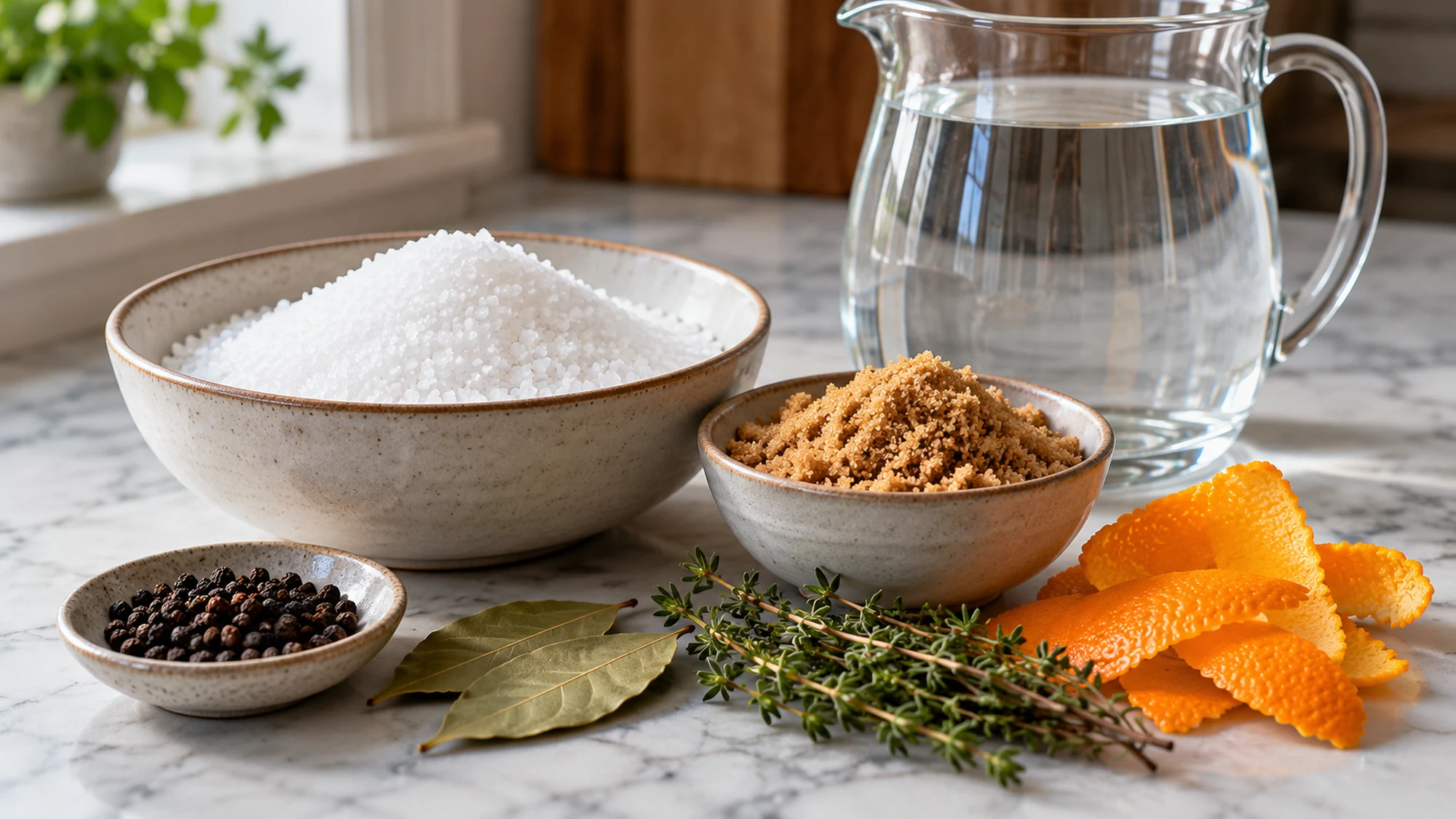
- 8 liters water divided: 2 liters for warming and 6 liters refrigerated
- 400 g plain salt weighed; kosher or table salt
- 150 g light brown sugar
- 1 orange peel only, in broad strips with little white pith
- 6 thyme sprigs
- 3 bay leaves
- 1 tablespoon whole black peppercorns
- 1 whole 10–12-pound turkey fresh or completely thawed in the refrigerator, without added salt solution; neck and giblets removed
Equipment
- Digital scale
- Large saucepan
- Food thermometer
- Food-safe brining container or purpose-made brining bag supported in a leakproof container
- Refrigerator with space for the covered vessel
- Rimmed tray
- Paper towels
Instructions
- Confirm that the turkey is not labeled enhanced, self-basting, kosher or injected with a salt solution. Make room for a covered food-safe container large enough for the turkey, 8 liters of brine and headspace in a refrigerator at 40°F (4°C) or below. Keep the turkey refrigerated while making the brine.
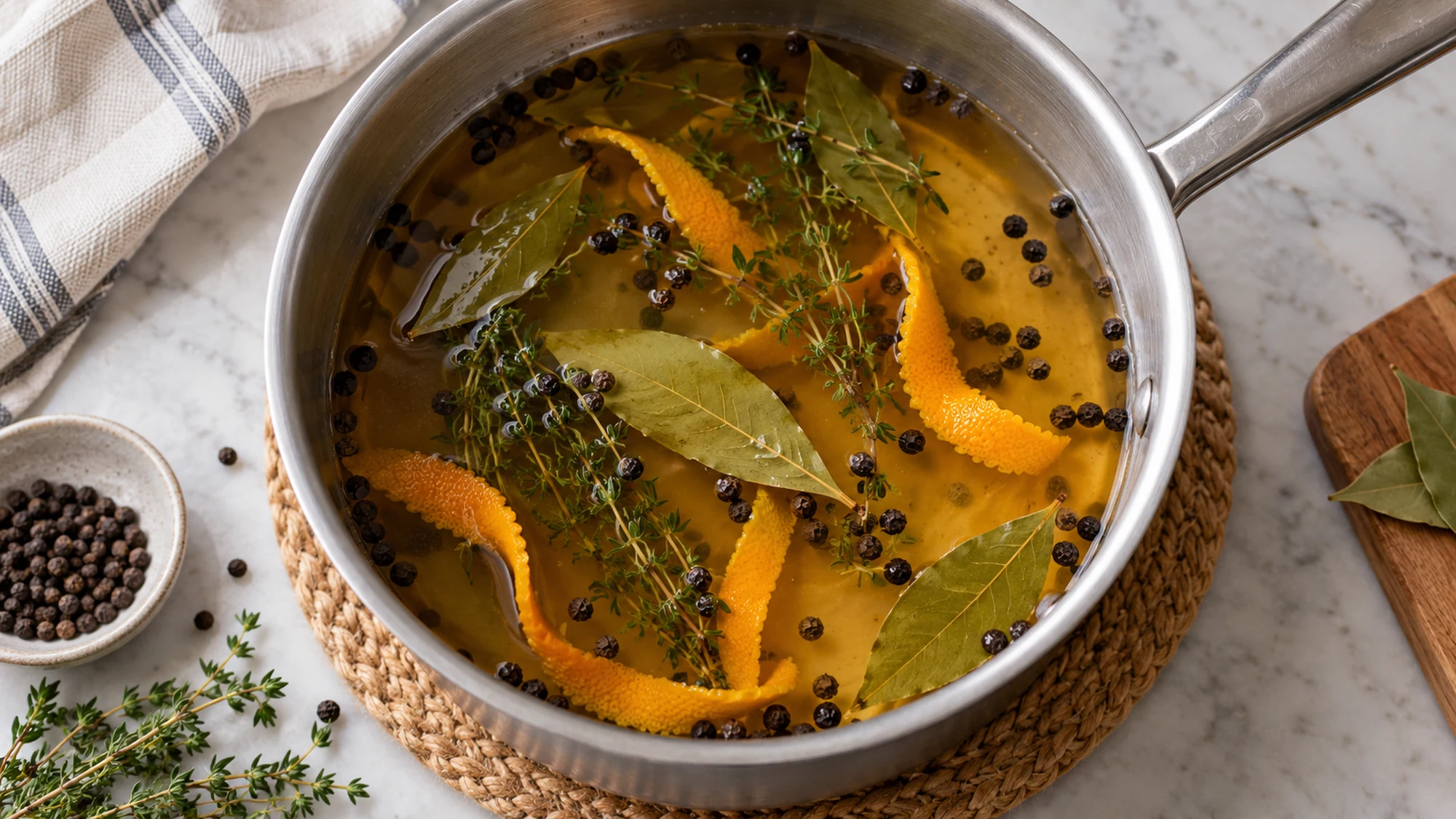
- Combine 2 liters water, salt, brown sugar, orange peel, thyme, bay leaves and peppercorns in a saucepan. Warm over medium heat, stirring, until the salt and sugar dissolve, about 5–10 minutes. Remove from the heat.
- Cool the concentrate in an ice-water bath, stirring occasionally without allowing bath water into the saucepan. Combine with the remaining 6 liters refrigerated water in the food-safe container. Refrigerate until the entire brine is 40°F (4°C) or colder, checking with a food thermometer. Do not add the turkey while the brine is warm.
- Lower the turkey into the cold brine, breast-side down, with the cavity filled and the bird submerged. Cover securely and refrigerate for 8–12 hours. If more brine is needed, prepare and chill additional solution using 50 g salt per liter of water; do not dilute with plain water.
- Lift the turkey out carefully, allowing liquid to drain back into the container. Discard the used brine. Do not rinse the turkey. Pat dry with paper towels, discard the towels and clean and sanitize surfaces that contacted raw poultry or brine.
- Proceed with a suitable turkey roasting recipe. This card’s time does not include roasting. Cook the turkey to at least 165°F (74°C), checking the thickest breast and innermost thigh and wing without touching bone. Keep refrigerated until cooking.