
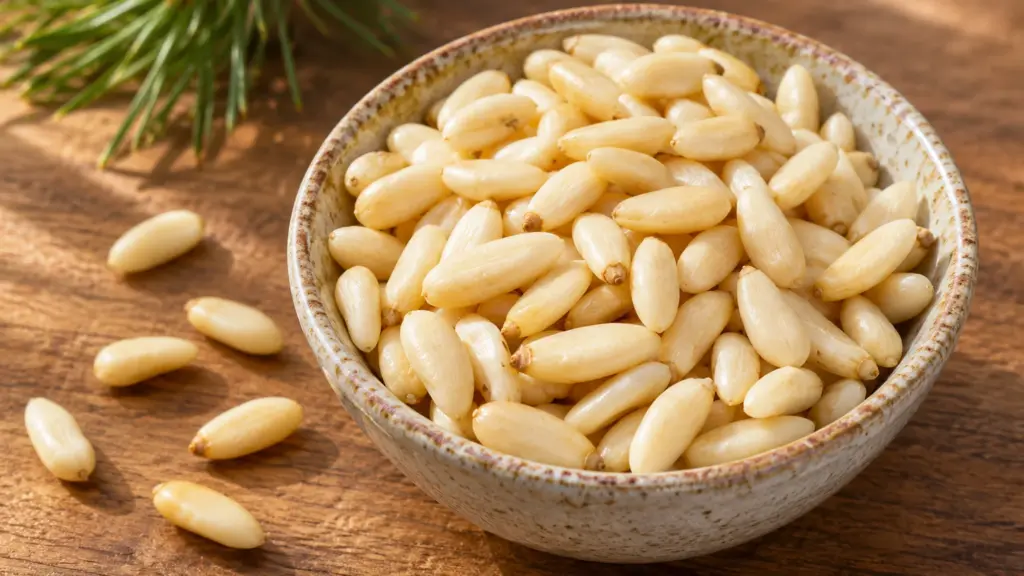
One recipe asks for pine kernels, another asks for pine nuts, and the little bag in the baking aisle looks exactly the same. In ordinary grocery and cooking language, pine kernels and pine nuts usually mean the same edible ingredient: the pale seed inside a pine nut’s hard shell.
You can generally use shelled pine kernels and pine nuts interchangeably in recipes. The useful differences are whether they are shelled, raw or toasted, plus the variety and freshness—not simply which of those two names appears on the label.
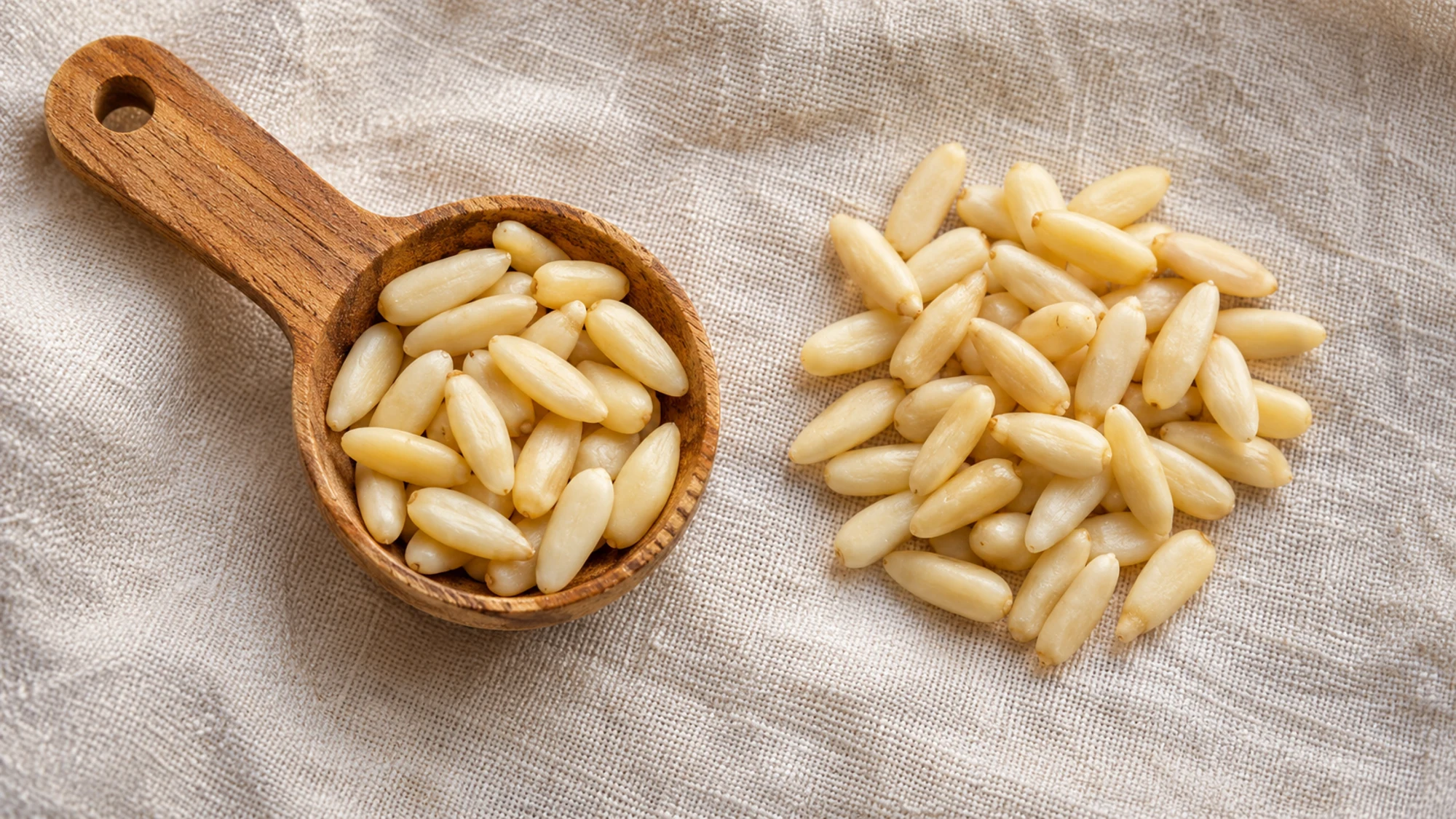
Pine Kernels and Pine Nuts: What the Names Mean
Botanically, these are seeds from certain pine trees, not true nuts. Food Standards Australia New Zealand notes that edible pine nuts come from several species of the genus Pinus; that helps explain why bags do not always contain identical-looking kernels.
“Kernel” emphasizes the edible part with the shell removed. For a real labeling example, Greencity lists pine kernels in its pine-nut range. “Pine nut” is the familiar cooking name, and products sold under it are often already shelled. I would look at the ingredient and product description before assuming the two bags have different uses.
| Package wording | What to check | What changes in the kitchen |
|---|---|---|
| Pine kernels or shelled pine nuts | Whether they are raw or roasted | Usually ready to measure and use |
| In-shell pine nuts | Shell removal instructions and edible yield | Package weight includes material you will not eat |
| Toasted or roasted pine nuts | Added salt, oil or seasoning | Flavor is already developed; avoid unnecessary extra heat |
| Pignoli or pinoli | Product description and origin | Common culinary names, not a separate required ingredient |
Choose for Freshness, Not Just Size
Pine nuts have a creamy, gently resinous character that can get lost if they taste stale. A larger kernel is not automatically better for pesto, and a small one is not automatically inferior; decide whether you want whole pieces for a topping or an ingredient that will be blended.
- Check the pack: Look for an intact seal, a clear date and storage directions. Buy a quantity you can realistically use.
- Compare edible weights: Shelled and in-shell packages are not equivalent simply because the printed weights match.
- Read the seasoning: Salted snack-style kernels will affect a sauce differently from plain ones.
- Inspect before mixing: Do not bury an obviously stale, musty or rancid-smelling batch in expensive basil and oil. A sauce is not a way to rescue an off ingredient.
For a small garnish, I would choose a modest, well-sealed pack over a bargain bag that will sit open for months. Fresh flavor matters more than having a cupboard full of kernels.
Use Gentle Heat and Store the Rest Carefully
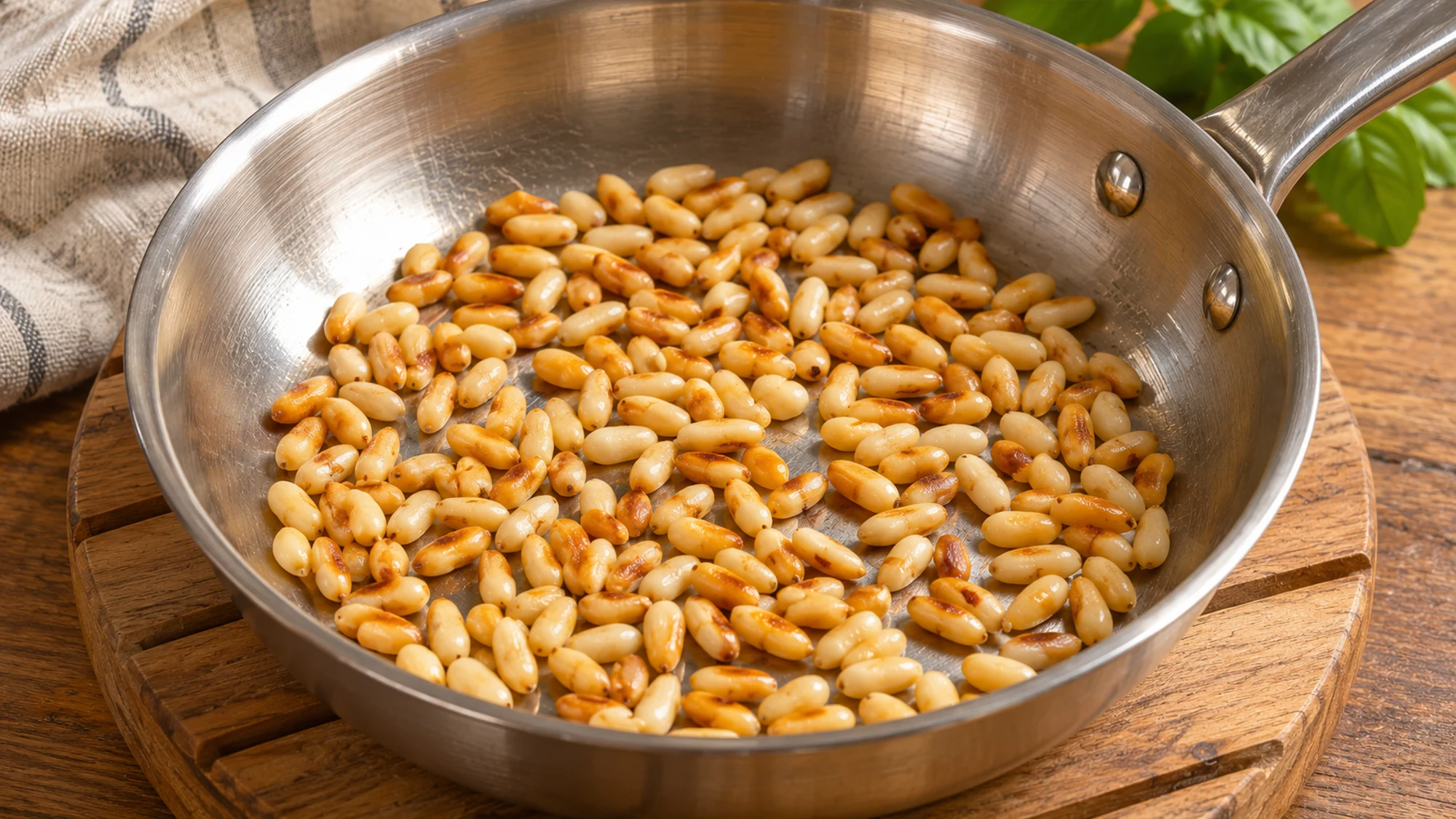
Toasting can make pine nuts more aromatic, but their small size means attention matters. Use the gentle dry-pan approach shown in The Kitchy Kitchen’s video below, keep the kernels moving and transfer them out of the hot pan when they are lightly golden rather than waiting for a uniformly dark color.
For storage, Diamond’s guidance recommends refrigerating opened nuts in tightly sealed containers to help protect flavor. Follow your own package’s directions and date rather than applying one universal shelf life to every species, package and storage condition.
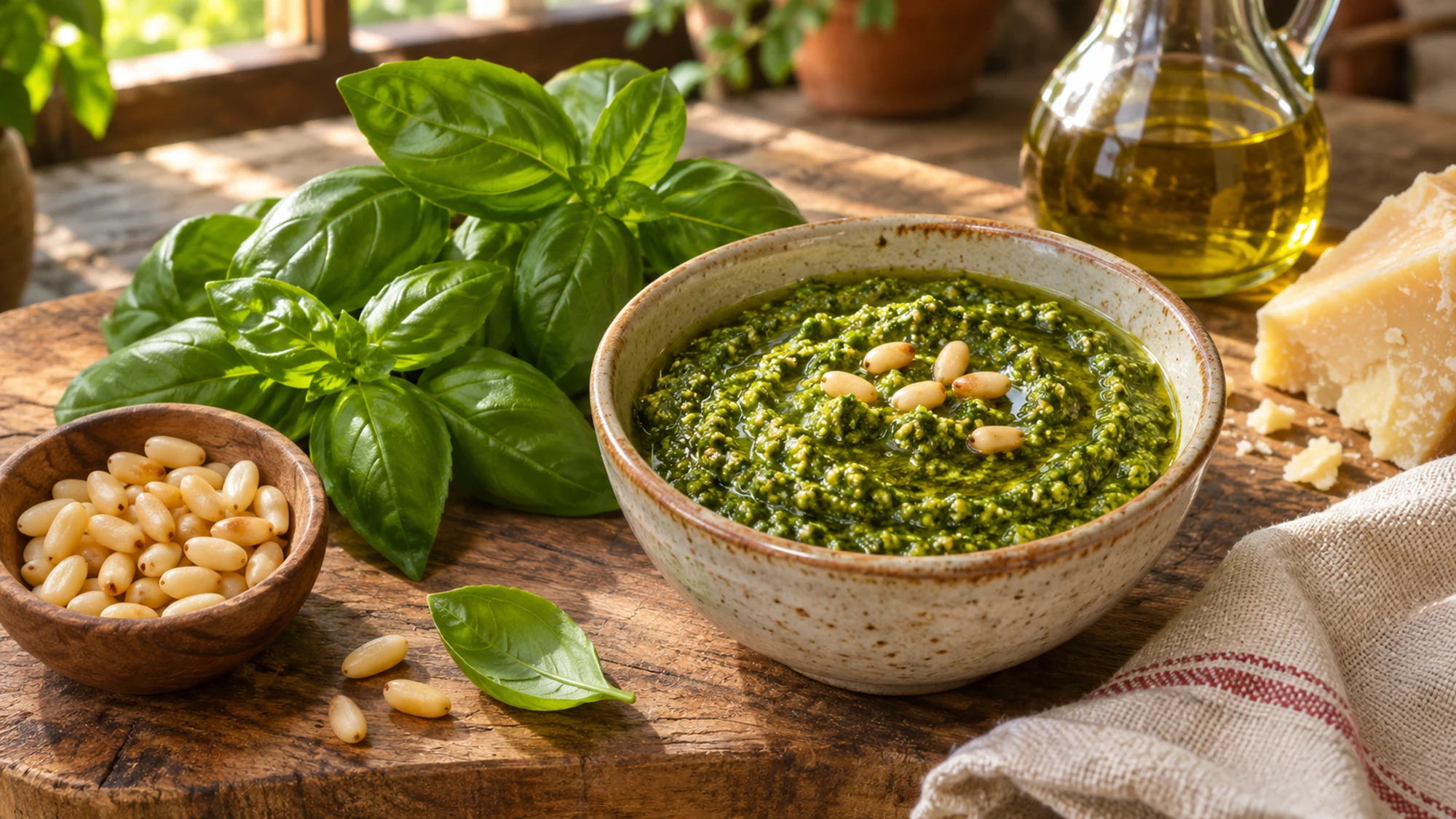
- Blend into pesto: Let toasted nuts cool before combining with delicate fresh herbs; use a recipe’s proportions rather than treating them as an unlimited thickener.
- Finish vegetables: Scatter a small amount over cooked greens or roasted vegetables so the contrast stays noticeable.
- Add to a salad at serving: Keep the kernels separate from wet dressing until you want their texture. A chickpea cucumber salad is a simple base for a small optional sprinkle.
- For a different nut or seed: Expect a different flavor and check allergies. A substitution is a new choice, not the same ingredient wearing a cheaper label.
Light golden color is enough for a toasted accent. I’d rather stop while the flavor stays gentle than push a small pan of pine nuts into bitterness.
Pine Mouth Is Different From an Allergy
Some people develop an unpleasant bitter or metallic taste after eating pine nuts. FSANZ describes this as pine mouth, which can last days or weeks and has occurred after raw, cooked and processed nuts; toasting is not a reliable way to prevent it.
Separately, ACAAI explains that pine nuts can cause serious allergic reactions. Being botanically a seed does not make them safe for someone with a pine-nut allergy or establish safety for every person with another nut allergy.
- Ask an allergist about uncertain allergy restrictions rather than testing a small serving yourself.
- Read pesto and prepared-food labels, where pine nuts may be less obvious.
- Breathing difficulty, throat swelling or faintness after eating needs urgent emergency care; do not dismiss it as a taste disturbance.
Bottom Line
Pine kernels and pine nuts are usually two names for the same shelled cooking ingredient. Check the product form, protect freshness and toast with care; neither the name nor a quick roast settles an allergy question.
The Kitchy Kitchen demonstrates the simple dry-pan toasting technique in the short video below.